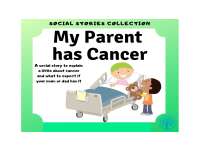
My Parents has Cancer Social Story

- Grades
- Not Grade Specific
- File type
- Preparation
- Print ready


- Subject
- Special Resources, Social Skills
- Topic
- social story, difficult discussions
- Preparation
- Print ready
About this resource
What's inside this resource
Related resources
More resources teachers may find useful
24 related resources were found using this product's title, contributor, categories and tags.


In the classroom
Teaching tips & learning objectives

Learning objectives
Identify sadness, anger, and fear as normal reactions to a parent's cancer diagnosis.
Name at least one coping strategy for difficult feelings, such as talking to a trusted adult or keeping a feelings diary.
Recognize expected physical changes in a parent during cancer treatment, such as fatigue, nausea, or hair loss, as effects of medicine rather than something to fear.

Teaching tips
Choose the version that matches the family's situation and spelling convention — Dad, Mom, or the UK-spelling Mum — the underlying story text is otherwise identical across all three.
Read one page at a time and pause to talk through the child's own feelings before moving on, since each page introduces a single idea.
Identify a specific trusted adult in advance (school counselor, relative) that the story's own suggestion to 'talk to a grown up' can point the child toward.

Skills covered
Emotional vocabulary — the story models naming sad, angry, and scared feelings connected to a parent's illness, page by page.
Coping-strategy application — the story suggests specific actions (talking to an adult, journaling, a hug) a child can use when overwhelmed.
Perspective-taking — reassurance pages help the child understand a parent's changed appearance or energy without losing the sense that the parent is still the same person.
Good to know
Questions teachers ask about this resource
How do the three versions of the story differ from each other?
Only in the parent term and spelling used — My Dad has Cancer, My Mom has Cancer, and the UK-spelling My Mum has Cancer all follow the identical page-by-page story and illustrations.
What treatment side effects does the story prepare a child for?
Feeling tired, feeling nauseous, and hair loss from the medicine — each is presented gently as a normal effect of treatment rather than something to be scared of.

No reviews yet
Downloaded this resource? Tell other teachers how it went.
Resource details
Concepts & topics
Core concepts
 Core concepts
Coping with parental illness
Emotional literacy
Family communication about cancer
 Topics
Explore related searches
More to explore