Reading Activities for Students with a Silent E Phonics Book

Special Resources, ELA, Special Education Needs (SEN), Language Development, Phonics, Reading
Kindergarten, Preschool, Grade 1


About This Product
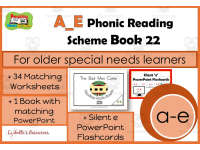
This A-E Digraph decodable reading book + matching PowerPoint and worksheets for guided reading is one of a series that can help children with special needs develop reading fluency. Each book has a matching PowerPoint, making it suitable for various settings. This book tells the story of Caligula's attempt to conquer Britain.
The Jack Stories, of which this book is one, introduce one phonics sound at a time, and subsequent books build on the vocabulary of the books before, constantly revising and reviewing learned sounds. Irregular sight words are only slowly and gradually introduced.
Science of reading aligned. Based on the most up-to-date phonics research.
What is included?
One reading book
One matching PowerPoint
34 supporting worksheets and activities with reading, comprehension and phonemic awareness activities
1 Silent E PowerPoint Flashcards phonics presentation to support learning of this tricky concept
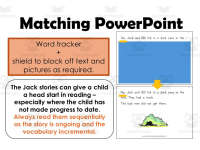
These books should be read sequentially as they tell one long story, each telling a part.
This book contains words with the following sounds: CK: OO, EE and SH and CH, ND & NT Endings, TH, AR and OR and A-E.
The series of books can also be purchased as a growing bundle with a scope and sequence - one file, less clutter!
This series has been written with the aid of one of my pupils, aged 8. He has drawn some of the pictures.
What makes this phonics reading programme for special needs different?
· It has its own, easy-to-download and print phonics reading books, making it accessible to many children worldwide.
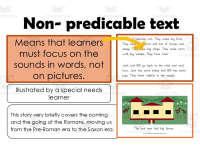
· Each book carefully builds on the vocabulary of those that have gone before, providing much repetition, without relying on predictable text.
· Pictures aid the storyline without encouraging reading from the pictures – i.e. guessing.
· The vocabulary is based on phonics families, which are introduced in a carefully planned way.
· True sight words – those that cannot be sounded out - are kept to a minimum. Most words are introduced in their phonic family wherever possible.
· It is truly multisensory, using the power of the hand. We not only look at the words, but we write them too. This is powerful and has the bonus of turning the child not only into a reader but into a writer as well.
Typical signs that this programme can help:
Those with dyslexia, or suspected of having dyslexia
Difficulty recalling words when seen on flashcards or when reading texts, which results in no or little reading fluency
b/d letter reversal of a chronic nature – i.e. the child has not grown out of it
Difficulty ordering letters in words: E.g. top becomes pot.
Difficulty differentiating between like words: spoon/soon; back/black; sheep/sleep etc…
Difficulty tracking words across a page
How long is the book?
The reading book is 16 pages long.
Resource Tags
0 Reviews
Check out these other great products