Tundra Coloring Pages: Glaciers, Northern Lights and Arctic Animals
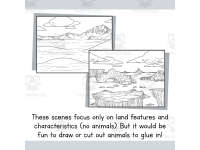
Seven full-page coloring scenes show the tundra and the arctic around it, from a glacier and sea ice to a summer pond and the northern lights, each with a one-line animal or habitat fact.


- Grades
- Not Grade Specific
- Pages
- 8
- File type
- Preparation
- Print ready


- Subject
- Creative Arts, Art
- Topic
- Art Activity, Line Art Template
- Resource types
- Coloring Pages, Worksheets, Worksheets & Printables
- Preparation
- Print ready
About this resource
What's inside this resource
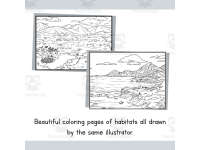
Glaciers, snowy peaks, sea ice and summer ponds fill seven full-page tundra coloring scenes, one landscape per page in bold outline. Seals rest on the rocks below an ice cliff, three caribou cross a plain under snow-capped mountains, and a snowy owl sits on a lichen-covered rock beside an arctic hare, dwarf shrubs, moss and poppies. A polar bear walks out on floating sea ice near a seal, a caribou stands in a summer meadow of poppies and cotton grass, two hares sit under bands of northern lights, and two tundra swans swim on a pond.
Under each picture is one short fact to read aloud, such as why caribou have wide hooves or why tundra plants grow low out of the wind. Children can color the scenes their own way or match nature.
The teacher page gives a real-color guide for ice, water, rock, lichen, flowers, the aurora and each animal, three art project ideas (a crayon-resist watercolor wash, sponge-painted snow and an oil-pastel night sky) and a list of the animals in every picture.
Related resources
More resources teachers may find useful
24 related resources were found using this product's title, contributor, categories and tags.


In the classroom
Teaching tips & learning objectives

Learning objectives
- Name features of the tundra and arctic, such as glaciers, sea ice, low shrubs, moss and lichen.
- Identify tundra animals, including caribou, a snowy owl, arctic hares, a polar bear, seals and tundra swans.
- Recall a one-line fact about how an animal or plant copes with the cold.

Teaching tips
- Read the fact under each picture aloud before children start coloring, then ask what in the picture matches it.
- Keep the real-color guide from the teacher page nearby for children who want to color the ice, rocks, lichen and animals as they really look.
- For a watercolor wash, print on heavier paper and have children go over the lines in crayon first so the wax keeps them bold.

Skills covered
- Habitat vocabulary — children meet glacier, iceberg, sea ice, lichen, cotton grass and northern lights in the page titles, facts and color guide.
- Animal identification — children find and color caribou, seals, a snowy owl, arctic hares, a polar bear and tundra swans.
- Listening for facts — children hear one fact per page about adaptations such as wide hooves, feathered feet and short ears.
Good to know
Questions teachers ask about this resource
What kinds of scenes are in the set?
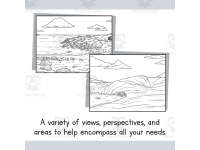
Landscapes lead every page: a glacier ending in an ice cliff, two rows of snowy mountains, a plain of low tundra plants, floating sea ice, a summer meadow, a winter night under the northern lights and a pond. One to three animals appear in each scene, such as caribou, seals or tundra swans.
Which facts appear under the pictures?
Each page has one short fact. Examples: a glacier is a huge river of ice that moves slowly downhill, the snowy owl has feathers on its feet, polar bears walk out on the sea ice to hunt seals, and tundra swans raise their young on tundra ponds in the short summer.
Can the pages be painted?
Yes. The teacher page suggests printing on heavier paper and tracing the lines in crayon first so a watercolor wash leaves them bold, dabbing white paint with a sponge for snow, and gluing on cotton balls for snow and cotton grass.

No reviews yet
Downloaded this resource? Tell other teachers how it went.
Resource details
Concepts & topics
Core concepts
 Core concepts
- Tundra habitat
- Arctic animals
- Animal adaptations
- Seasons
- Coloring pages
 Topics
Explore more
Categories this resource belongs to
Explore related searches
More to explore
You may also like