Reading Medicine Labels | OTC Drug Facts | Life Skills SPED




About This Product
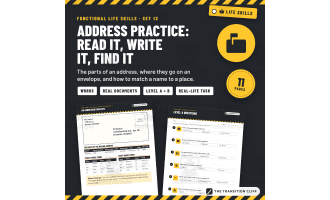
Reading Medicine Labels: a functional reading and math set for high school life skills, special education, and transition programs. Find the dose, the timing, the warnings, and the date. Then check with a nurse, doctor, or pharmacist.
Why I made this: Most adults I know learned to read a medicine label by guessing. Students deserve better than that. This set does not tell anyone what to take. It teaches students where to find the dose, the timing, the warnings, and the expiration date, and it teaches them to ask a nurse, doctor, or pharmacist when they are not sure.
This is the only medicine label set in my store. It teaches reading, not dosing: where the dose, the timing, the warnings, and the date are, and when to ask a nurse, doctor, or pharmacist. The labels are for made-up products and follow the standard Drug Facts layout.
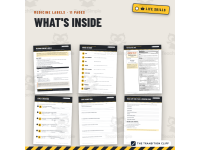
What's included:
• A teacher page: why I made it, how to use both levels, and the skills covered
• Words to know: 10 key words, each with a picture
• 3 pages of practice documents: three practice Drug Facts labels with box fronts: a pain reliever, an allergy medicine, and a cough syrup measured in mL. All businesses, names, and numbers are made up.
• 12 Level A questions, each with a picture and three answer choices
• The same 12 questions at Level B, with open answers and room to show the math
• A real-life task: fill in a medicine card from a label and practice questions to ask a pharmacist
• An answer key that shows where to find each answer
How I use it: Read through the practice documents together, then give each student the level that fits. Both levels ask the same questions, so the whole class can check answers together. I use the real-life task as a wrap-up or right before a community outing.
Skills covered: finding the parts of a Drug Facts label; reading the active ingredient and purpose; reading a dose by age group, in tablets or mL; reading how often and the most in 24 hours; finding warnings and when to stop and ask a doctor; reading an expiration date; knowing who to ask: a nurse, doctor, or pharmacist.
Please note: this set teaches students to read a label. It is not medical advice and does not tell anyone what to take. The labels are for made-up products, and every label reminds students to check with a nurse, doctor, or pharmacist.
Part of the Functional Life Skills series: every set uses the same layout (words, real-looking documents, two levels of the same questions, and a real-life task), so students know the routine when you move to the next set.
Pairs well with:
• Community + Workplace Safety Signs Task Cards (more functional reading for safety)
• Task Analysis Data Sheets (for daily living routines)
Who it is for: high school life skills and special education classes, transition programs for ages 18 to 21, and adult education. Grades 9 to 12 and adult transition.
What you download: one printable PDF, 11 pages, US Letter. Answer key included.
From the author of The Transition Map (Jeremy D. Gooch), available in paperback and Kindle.
Written by Jeremy D. Gooch, a teacher with 20+ years in education. All businesses, names, and numbers are made up.
Resource Tags
0 Reviews
Check out these other great products