Sea Animal Science Lab | Marine Animals, Habitats | Grades 3–5

Science, Earth and Environmental Sciences, Environmental Science, Life Sciences, Biology, Animals


About This Product
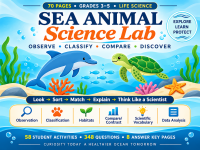
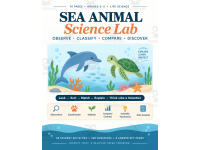
Sea Animal Science Lab | Marine Animals, Classification, Habitats & Adaptations | Grades 3–5 | 70 Pages
Dive into the fascinating world of marine animals with Sea Animal Science Lab, a comprehensive 70-page life science workbook designed for elementary students in Grades 3–5.
Featuring 58 student activities and 348 questions, this resource encourages students to observe, classify, compare, and investigate marine animals while developing essential scientific knowledge, analytical reasoning, and critical thinking skills.
Students explore animal structures, classification systems, ocean habitats, survival adaptations, food webs, and scientific vocabulary through engaging visual activities, sorting challenges, diagrams, graphs, tables, and evidence-based investigations.
What's Included:
70-page printable life science workbook
58 student activity pages
348 science questions
Marine animal anatomy and labeling activities
Vertebrate and invertebrate classification
Ocean habitat investigations
Animal adaptation challenges
Scientific vocabulary activities
Compare-and-contrast exercises
Bar graph and data table interpretation
Scientific misconception correction activities
Evidence-based reasoning challenges
Final integrated sea animal science investigation
8-page teacher answer key
Major Learning Sections:
Marine Animal Structures (Pages 5–12): Explore the body parts, structures, and movement of fish, sharks, sea turtles, octopuses, jellyfish, crabs, and dolphins.
Animal Classification (Pages 13–22): Investigate vertebrates, invertebrates, body coverings, movement strategies, classification keys, and animal groups.
Ocean Habitats (Pages 23–32): Explore coral reefs, tide pools, open oceans, seagrass habitats, kelp forests, sandy seafloors, and deep-sea environments.
Animal Adaptations (Pages 33–42): Investigate camouflage, shell protection, streamlined bodies, gills and lungs, blubber, suction cups, and bioluminescence.
Scientific Reasoning & Vocabulary (Pages 43–50): Compare marine animals, evaluate evidence, correct misconceptions, distinguish observations from inferences, and analyze structure and function.
Data Analysis & Integrated Science Challenges (Pages 51–62): Interpret graphs and tables, investigate food web changes, compare habitats, apply scientific vocabulary, and complete final evidence-based investigations.
Skills Developed:
Scientific observation
Animal classification
Vertebrates and invertebrates
Marine animal anatomy
Structure and function
Ocean habitats
Animal adaptations
Food web relationships
Compare-and-contrast skills
Scientific vocabulary
Graph and table interpretation
Cause-and-effect reasoning
Evidence evaluation
Critical thinking
Scientific problem-solving
Perfect For:
Elementary science classrooms
Life science instruction
Marine biology introductions
Ocean animal units
Animal classification lessons
Habitats and adaptations instruction
Environmental science enrichment
STEM activities
Science centers
Independent learning
Early finishers
Summer learning
Homeschool education
Help young learners discover the incredible diversity of ocean life while developing the observation, classification, and analytical skills used by scientists.
Observe. Classify. Compare. Discover.
Explore the ocean, understand marine animals, and build essential scientific thinking skills for a brighter future.
Resource Tags
0 Reviews
Check out these other great products