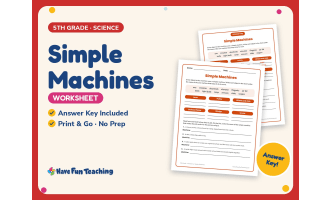
Simple Machines: What Are Force, Motion, and Work?


About This Product
Simple Machines: What Are Force, Motion, and Work?
This is an educational resource designed to make science accessible. It draws from basic elements such as force, motion, and work to explain the complexities of simple machines. It's a perfect tool for educators who want to simplify complex science topics.
The Basics of Force, Motion, and Work
This journey into simple machines begins with the basics - force, motion and work. These are foundational concepts used in day-to-day interactions with simple machines. Real-life examples are used to ensure students understand these principles fully.
A Closer Look at Simple Machines
The learning pathway continues into various types of simple machines:
- Levers
- Inclined Planes
- wedges
- Screws
- Pulleys alongside Wheels and Axles. Finalizing by examining compound machines.
Versatility in Use
This teaching aid suits whole class teaching sessions or small student groups equally well. It can be utilized for individual practice or homework assignments too.
Educational Features
- Vibrant mini posters that enhance understanding visually.
- Crosswords puzzles and word search tasks to consolidate understanding.
Tailored To Meet Educational Standards
The textbook aligns with Common Core State Standards promoting deep engagement while meeting pedagogical effectiveness criteria making it ideal for grades 5 through grade 8 level learners.
Aligning With Bloom's Educational Objectives and STEM initiatives
This resource integrates with school curriculums focused on Science & Engineering subjects. Plus, learners’ reading skills enhancement could be achieved by the 'mini-passages' embedded in it.
Assessing Students' Understanding: The Final Quiz
The textbook offers an excellent opportunity for educators to assess students' understanding of key concepts. Delivered in PDF format as lesson plans, this resource is can't-miss for any educator teaching science and engineering.
What's Included
Contains 1 Product File
Resource Tags
0 Reviews
Check out these other great products