STEM Basics: Build a Density Column & Hydrometer Lab (SB13)



About This Product
Bring liquid mass-to-volume density ratios (g/mL), 45-degree wall-trickle pouring mechanics, unmixed multi-layer density column construction, solid object buoyancy equilibrium, and hydrometer specific gravity float reading to life with STEM Basics: How to Build a Density Column & Hydrometer Lab (SB13)! Designed for Middle School Physical Science, General Science, Earth Science, Chemistry, Math, and STEM classes across Grades 6–8, this comprehensive 7-page print-ready lab skills packet transforms messy fluid-mixing habits into industrial laboratory precision.
What Is Included in This 7-Page Packet?
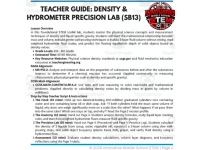
🧪 Page 1: Teacher Guide & Lesson Overview
Provides foundational skill context, NGSS alignment (MS-PS1-2), CCSS math connections (ratio division and g/mL density calculations), fluid safety protocols, and a flexible pacing roadmap.
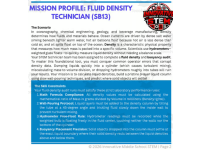
🎯 Page 2: Student Mission Profile (The Hook)
Engages students through a real-world fluid density technician career scenario establishing strict laboratory wall-pouring rules and buoyancy constraints.
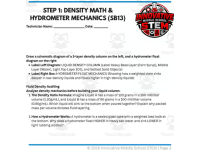
📐 Page 3: Density Math & Hydrometer Mechanics Sheet
Features pre-lab exercises where students diagram 3-layer density columns, analyze hydrometer float equilibrium physics, and evaluate mass-to-volume ratios.
📋 Page 4: Laboratory Operation & Step-by-Step Procedure Card
A dedicated instructional card providing step-by-step guidance on mass-volume density calculations, 45-degree wall-trickle pouring techniques, solid object buoyancy drops, and hydrometer scale readings.
📊 Page 5: Measurement Practice Log & Variance Matrix
A structured data log for recording liquid mass and volume data, calculating g/mL density ratios, logging solid object settled positions, ranking material densities, and completing hydrometer audits.
💡 Page 6: Teacher Lab Metrology Cheat Sheet
Offers quick solutions for preventing accidental layer mixing, assembling low-cost DIY straw hydrometers, referencing expected liquid density benchmarks, and managing safe oil cleanup.
📝 Page 7: Fluid Density Master Rubric
A 4-point assessment rubric evaluating mass-to-volume density calculations, 45-degree column construction technique, buoyancy equilibrium tracking, and technical science mastery.
Educational Value & Key Benefits:
Solves the #1 Density Lab Mistake: Teaches the "45-Degree Wall-Trickle Rule" so students stop dumping fluids straight down the center and ruining their density layers!
Essential Physical & Earth Science Foundation: Prepares students for oceanography current units, weather atmospheric pressure labs, and characteristic property chemistry units.
Independent Classroom Flow: Separate procedural cards keep lab groups focused and self-directed.
Resource Tags
0 Reviews
Check out these other great products