STEM Basics: How to Measure Turbidity Water Quality Lab (SB12)




About This Product
Bring suspended sediment light-scattering physics, vertical 90-degree sight-line alignment, extinction depth determination, liquid color versus particle turbidity differentiation, and centimeter-to-NTU unit conversions to life with STEM Basics: How to Measure Turbidity Water Quality Lab (SB12)! Designed for Middle School Earth Science, Environmental Science, General Science, Physical Science, Math, and STEM classes across Grades 6–8, this comprehensive 7-page print-ready lab skills packet transforms sloppy water clarity checks into industrial environmental metrology precision.
What Is Included in This 7-Page Packet?
🧪 Page 1: Teacher Guide & Lesson Overview
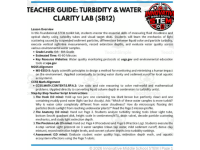
Provides foundational skill context, NGSS alignment (MS-ESS3-3), CCSS math connections (ratio conversions and scale tables), safety protocols, and a flexible pacing roadmap.
🎯 Page 2: Student Mission Profile (The Hook)
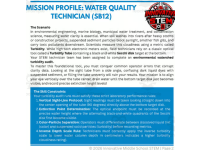
Engages students through a real-world water quality technician career scenario establishing strict laboratory sighting protocols and classification boundaries.
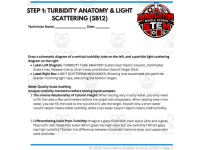
📐 Page 3: Turbidity Anatomy & Light Scattering Sheet
Features pre-lab exercises where students diagram turbidity sight tubes, analyze suspended sediment light scattering vectors, and distinguish dissolved dyes from suspended particle cloudiness.
📋 Page 4: Laboratory Operation & Step-by-Step Procedure Card
A dedicated instructional card providing step-by-step guidance on sight tube zeroing, controlled water drainage techniques, vertical 90-degree sighting, and depth-to-NTU conversion lookups.
📊 Page 5: Measurement Practice Log & Variance Matrix
A structured data log for recording pre-test tube checks, logging multi-sample extinction depth heights (cm), converting measurements into Nephelometric Turbidity Units (NTU), and running retest reliability checks.
💡 Page 6: Teacher Lab Metrology Cheat Sheet
Offers quick solutions for constructing low-cost DIY turbidity sight tubes, preventing student head-shadow errors, mixing consistent soil suspension samples, and maintaining clean tube optics.
📝 Page 7: Water Quality Metrology Master Rubric
A 4-point assessment rubric evaluating extinction depth accuracy, vertical sight-line alignment, centimeter-to-NTU conversions, and technical science mastery.
Educational Value & Key Benefits:
Essential Environmental Science Foundation: Prepares students for watershed studies, stream health monitoring, runoff pollution labs, and ecosystem units!
Teaches True Optical Metrology: Solves common student errors like head-shadowing or side-angle viewing, ensuring repeatable extinction depth readings.
Independent Classroom Flow: Separate procedural cards keep lab groups focused and self-directed.
Resource Tags
0 Reviews
Check out these other great products