STEM Basics: How to Read a Vernier Caliper Lab (SB3)



About This Product
Bring metric sub-millimeter dimensional precision, multi-mode jaw mechanics, dual-scale Vernier alignment math, zero-point offset corrections, and digital validation loops to life with STEM Basics: How to Read a Vernier Caliper Precision Measurement Lab (SB3)! Designed for Middle School Physical Science, General Science, Engineering, Shop Safety, Math, and STEM classes across Grades 6–8, this comprehensive 7-page print-ready lab skills packet transforms everyday student measurement habits into industrial laboratory precision.
What Is Included in This 7-Page Packet?
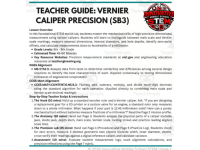
📏 Page 1: Teacher Guide & Lesson Overview
Provides foundational skill context, NGSS alignment (MS-ETS1-3), CCSS math connections (decimal algorithms), safety protocols, and a flexible pacing roadmap.
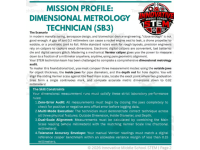
🎯 Page 2: Student Mission Profile (The Hook)
Engages students through a real-world metrology technician career scenario establishing strict laboratory accuracy parameters and multi-mode tolerance boundaries.
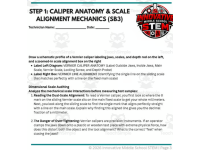
📐 Page 3: Caliper Anatomy & Scale Alignment Sheet
Features pre-lab exercises where students diagram caliper components, analyze Vernier alignment lines, and evaluate proper clamping force.
📋 Page 4: Laboratory Operation & Step-by-Step Procedure Card
A dedicated instructional card providing step-by-step zero-error adjustments, outside jaw measurement rules, inside jaw positioning, depth probe usage, and digital caliper validation runs.
📊 Page 5: Metrology Practice Log & System Variance Matrix
A structured data log for tracking zero-offset checks, processing a dual-scale addition matrix across three measurement modes, calculating tool variance logs, and computing percent error formulas.
💡 Page 6: Teacher Lab Metrology Cheat Sheet
Offers quick solutions for selecting scale resolutions, correcting tilted jaw positioning errors, locating the Vernier zero line, and proper tool care and storage.
📝 Page 7: Dimensional Metrology Master Rubric
A 4-point assessment rubric evaluating dimensional measurement precision, multi-mode technique, scale division matching, and technical science mastery.
Educational Value & Key Benefits:
Essential Engineering Foundation: The ideal "Week One" or "Engineering Bootcamp" module to prepare students for 3D printing design, physics labs, and manufacturing blocks.
Digital Validation Loop: Forces students to verify manual Vernier logic against an electronic reference caliper for immediate proof of alignment accuracy within a strict 0.15 mm window.
Independent Classroom Flow: Separate procedural cards keep lab groups focused and self-directed.
Resource Tags
0 Reviews
Check out these other great products