STEM Basics: How to Use a Triple Beam Balance Lab (SB2)



About This Product
Bring mechanical mass calibration, counterweighted gravitational leverage, coarse-to-fine rider notch alignment mechanics, multi-beam decimal scale aggregation math, and digital cross-check validation to life with STEM Basics: How to Use a Triple Beam Balance Mass Lab (SB2)! Designed for Middle School Physical Science, General Science, Life Science, Chemistry, Math, and STEM classes across Grades 6–8, this comprehensive 7-page print-ready lab skills packet transforms everyday student weighing habits into industrial laboratory precision.
What Is Included in This 7-Page Packet?
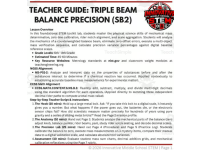
⚖️ Page 1: Teacher Guide & Lesson Overview
Provides foundational skill context, NGSS alignment (MS-PS1-2), CCSS math connections (decimal addition algorithms), safety protocols, and a flexible pacing roadmap.
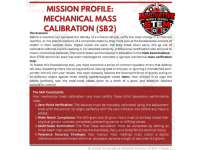
🎯 Page 2: Student Mission Profile (The Hook)
Engages students through a real-world metrology technician career scenario establishing strict laboratory mass accuracy parameters and calibration boundaries.
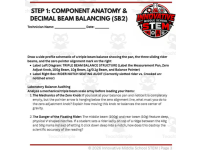
📐 Page 3: Component Anatomy & Decimal Beam Balancing Sheet
Features pre-lab exercises where students diagram balance fulcrums, analyze zero-adjust thumb threads, and audit groove notch seating errors.
📋 Page 4: Laboratory Operation & Step-by-Step Procedure Card
A dedicated instructional card providing step-by-step zero-line adjustment checks, coarse rider notch alignment rules, fine decimal line sliding steps, and digital scale validation runs.
📊 Page 5: Calibration Practice Log & System Variance Matrix
A structured data log for tracking pre-test verification passes, processing a 3-beam addition matrix for mystery specimens, calculating tool variance logs, and computing percent error formulas.
💡 Page 6: Teacher Lab Metrology Cheat Sheet
Offers quick solutions for clearing sticky magnetic dampening channels, fixing the "missing 10-gram" scale aggregation math error, and setting up safe specimen stations.
📝 Page 7: Mechanical Mass Balancing Rubric
A 4-point assessment rubric evaluating mass accuracy envelopes, rider placement precision, zero calibration tracking, and technical science mastery.
Educational Value & Key Benefits:
Stops Lab Data Disasters Early: The ultimate "Week One" or "Lab Bootcamp" module to guarantee students record accurate mass data all year.
The Genius Digital Cross-Check: Forces students to verify manual balance readings against an electronic digital scale for immediate proof of proper rider notch seating!
Independent Classroom Flow: Separate procedural cards keep lab groups focused and self-directed.
Resource Tags
0 Reviews
Check out these other great products