"The Outsiders" Activities + Project Menu
- Grades
- Grades 7–9, Middle School, High School
- File type
- Preparation
- Print ready


- Subject
- ELA, Literature
- Topic
- project menu, novels
- Resource types
- Projects
- Preparation
- Print ready
- Standards
- CCSS.W.8.3 CCSS.RL.7.1
About this resource
What's inside this resource
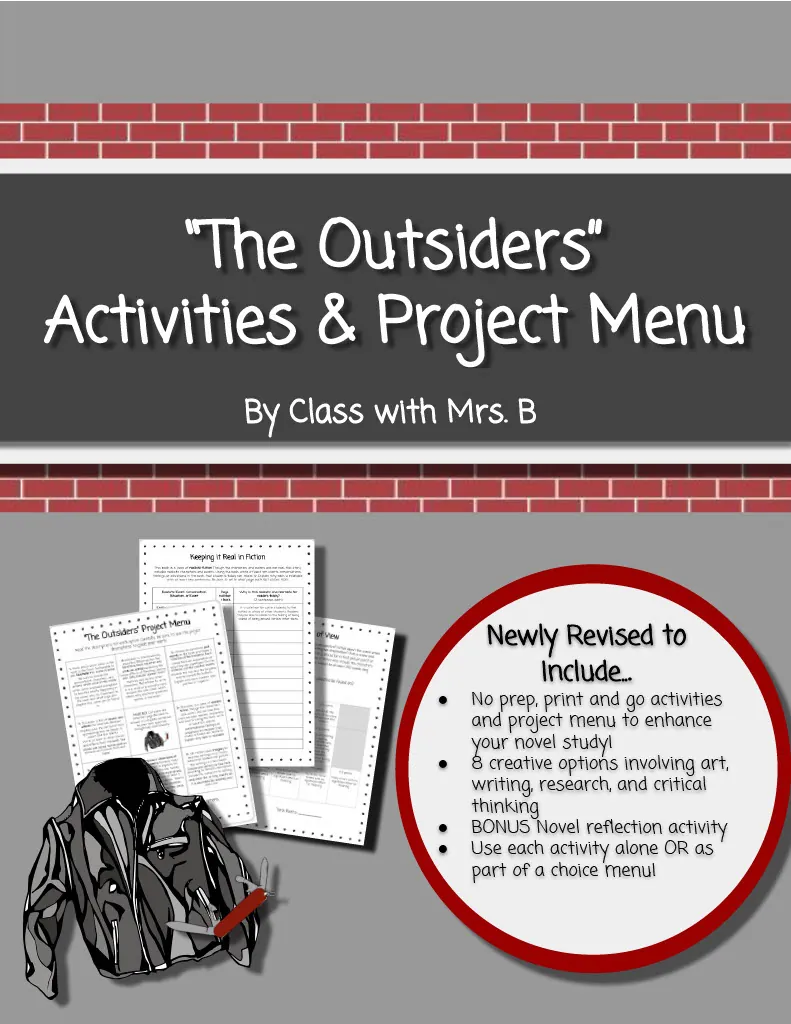
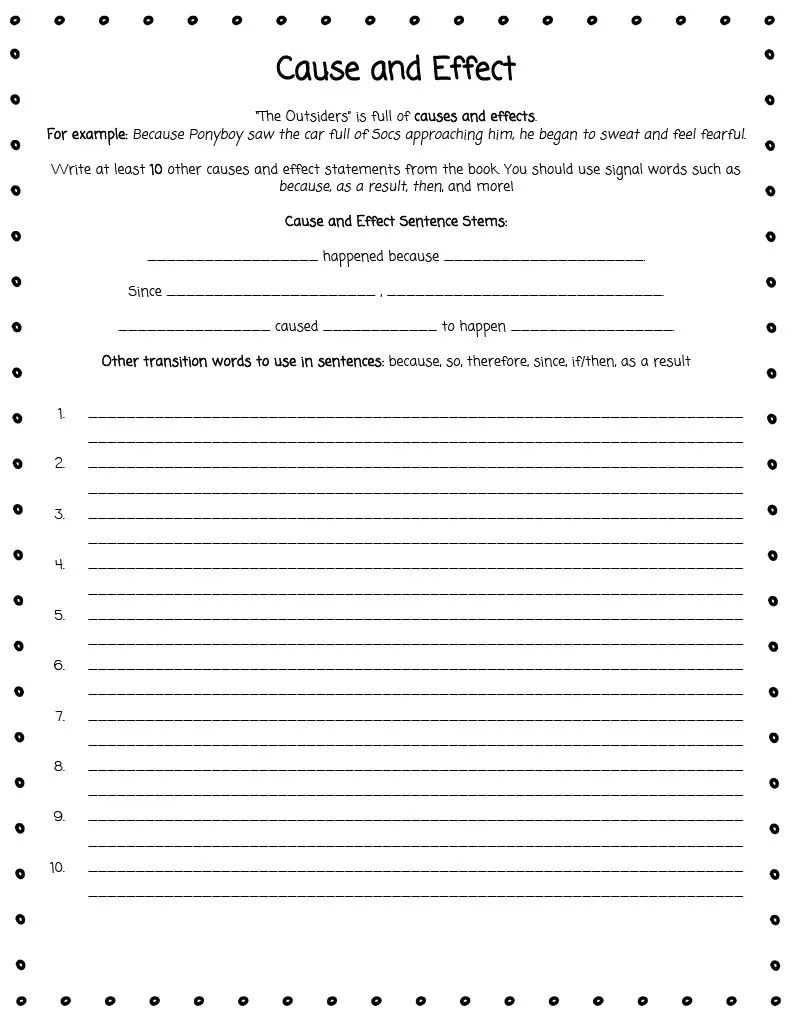
This is a "The Outsiders" Project Menu + Activities.
There are 8 unique options for students to choose from and complete.
From letter writing to being a news reporter, students will have many fun options.
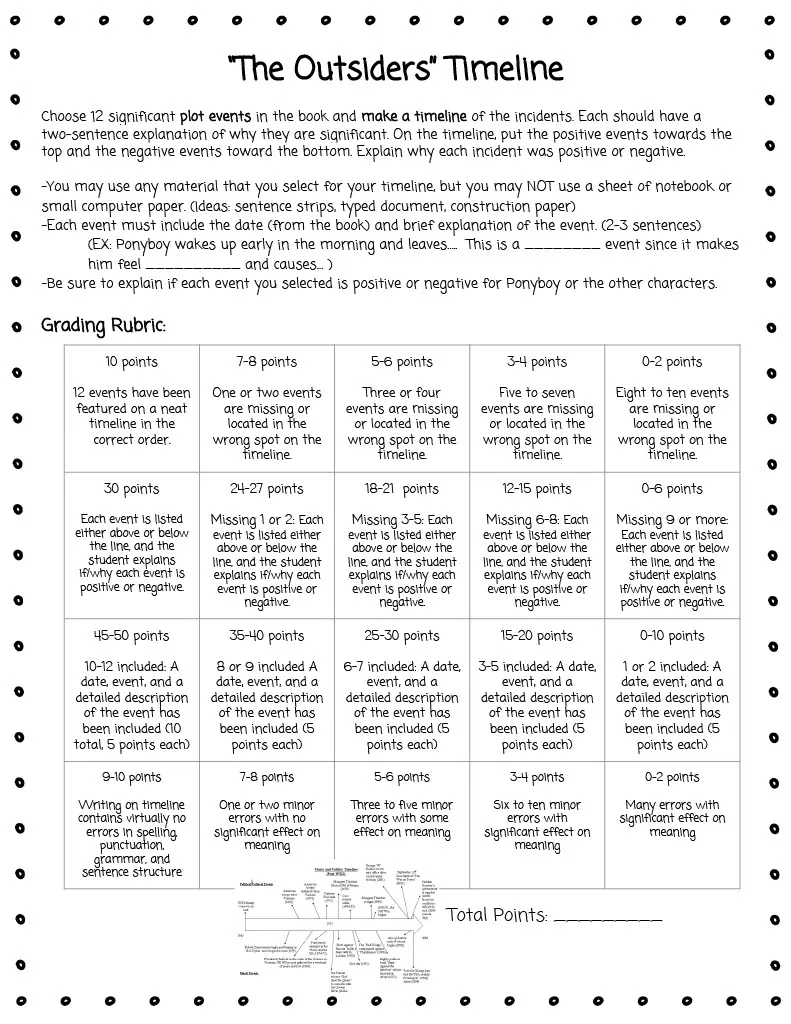
Grading rubrics are included.
Related resources
More resources teachers may find useful
24 related resources were found using this product's title, contributor, categories and tags.

In the classroom
Teaching tips & learning objectives

Learning objectives
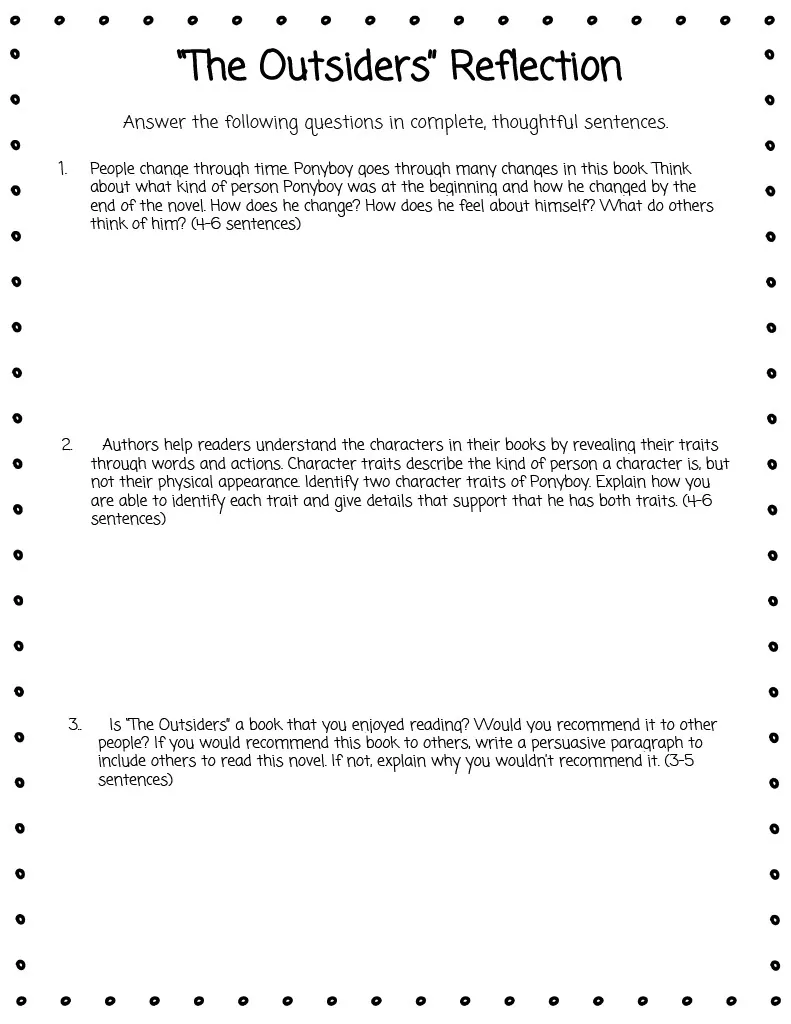
Analyze a character's growth over the course of a novel by comparing traits at the beginning and end of the story
Identify and explain textual character traits using supporting details from the novel
Write cause-and-effect statements using signal words (because, as a result, since, therefore) drawn from specific events in the novel

Teaching tips
Require the mandatory reflection page plus a set number of additional options (the file leaves the exact count for the teacher to fill in) rather than assigning all eight activities.
Use the point-based rubrics provided for each major task (illustration, article, timeline, poetry, alternate point of view) to grade consistently across a class choosing different options.
Preview the external poetry-forms link before assigning 'The Poetry of Ponyboy,' since that option depends on a website outside this file for examples of cinquains, diamantes, and other forms.

Skills covered
Character analysis and growth tracking — students compare a character's traits and self-perception at the start and end of a novel with supporting textual evidence.
Cause-and-effect writing — students compose original cause-and-effect statements from novel events using explicit signal words.
Perspective-shift narrative writing — students rewrite a chosen scene in first-person point of view from a different character.
Good to know
Questions teachers ask about this resource
How does the 'Cause and Effect' activity connect to specific events in the novel rather than general statements?
Students must write at least ten original cause-and-effect statements drawn directly from novel events (following the model about Ponyboy seeing the Socs' car approach) and use explicit signal words like because, as a result, and therefore, which ties the grammar skill directly to textual comprehension rather than treating it as an isolated writing exercise.
Why does the poetry option require five different poem types instead of five poems in any style?
Requiring distinct forms (cinquains, concrete, diamantes, narrative, free verse, or others) pushes students to practice varied poetic structures rather than repeating one familiar format five times, and the file links to an external site with examples and instructions for each form to support students unfamiliar with them.

No reviews yet
Downloaded this resource? Tell other teachers how it went.
Curriculum
Standards, concepts & topics
Standards
 Standards
- CCSS.W.8.3 — Write narratives to develop real or imagined experiences or events using effective technique, relevant descriptive details, and well-structured event sequences. a. Engage and orient the reader by establishing a context and point of view and introducing a narrator and/or characters; organize an event sequence that unfolds naturally and logically. b. Use narrative techniques, such as dialogue, pacing, description, and reflection, to develop experiences, events, and/or characters. c. Use a variety of transition words, phrases, and clauses to convey sequence, signal shifts from one time frame or setting to another, and show the relationships among experiences and events. d. Use precise words and phrases, relevant descriptive details, and sensory language to capture the action and convey experiences and events. e. Provide a conclusion that follows from and reflects on the narrated experiences or events.
- CCSS.RL.7.1 — Cite several pieces of textual evidence to support analysis of what the text says explicitly as well as inferences drawn from the text.
Core concepts
 Core concepts
character development
cause and effect
point of view
textual evidence
poetry forms
 Topics
More to explore
You may also like