AP Psychology Final Research Paper & Presentation
- Grades
- Grades 11–12
- Pages
- 9
- File type
- Microsoft Word
- Editable
- Yes


- Subject
- Social Studies, Psychology
- Topic
- AP psychology, Research paper
- Resource types
- Worksheets, Activities, Projects
- Editable
- Yes
Product description
From the author
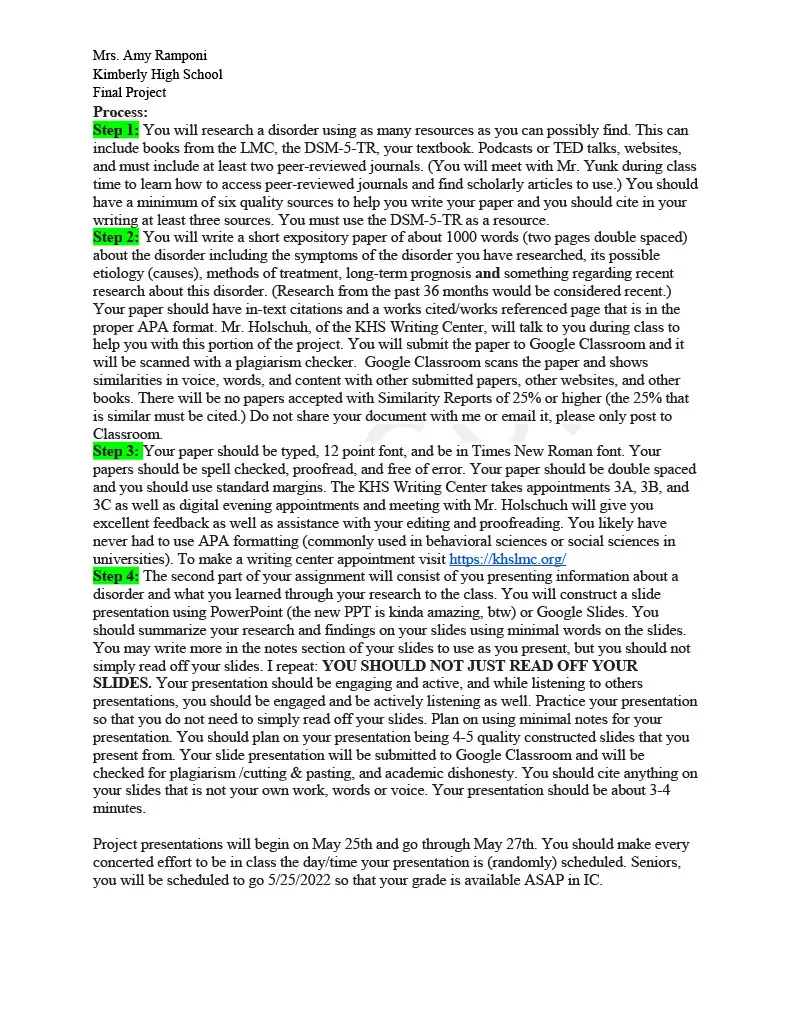
This resource is an AP Psychology Final Research Paper & Presentation.
This will provide students with the assignment directions and rubrics for a final AP Psychology project; students need separate research sources.
Included:
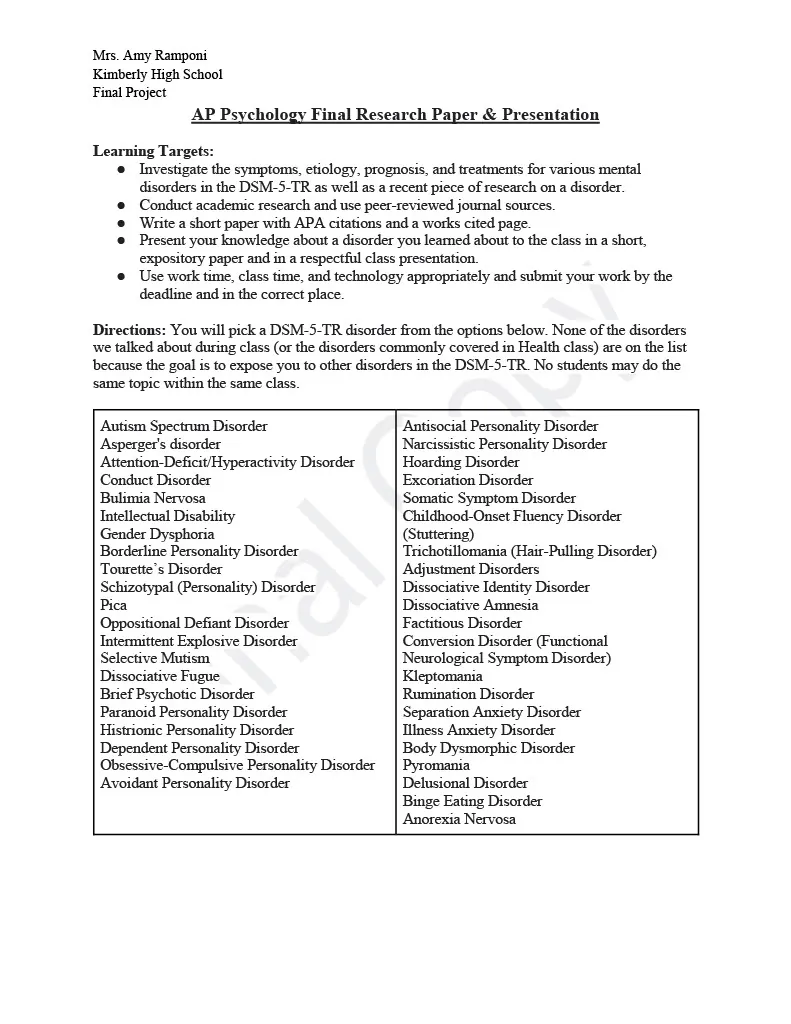
- Learning targets
- Directions
- Process
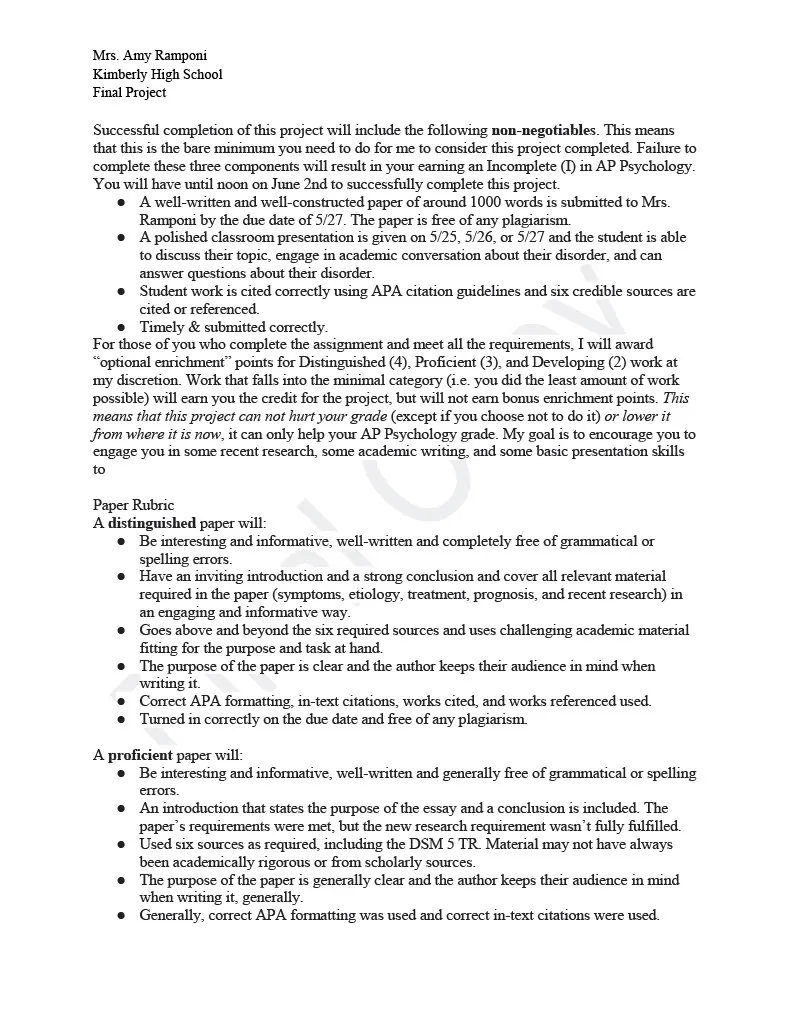
- Paper Rubric
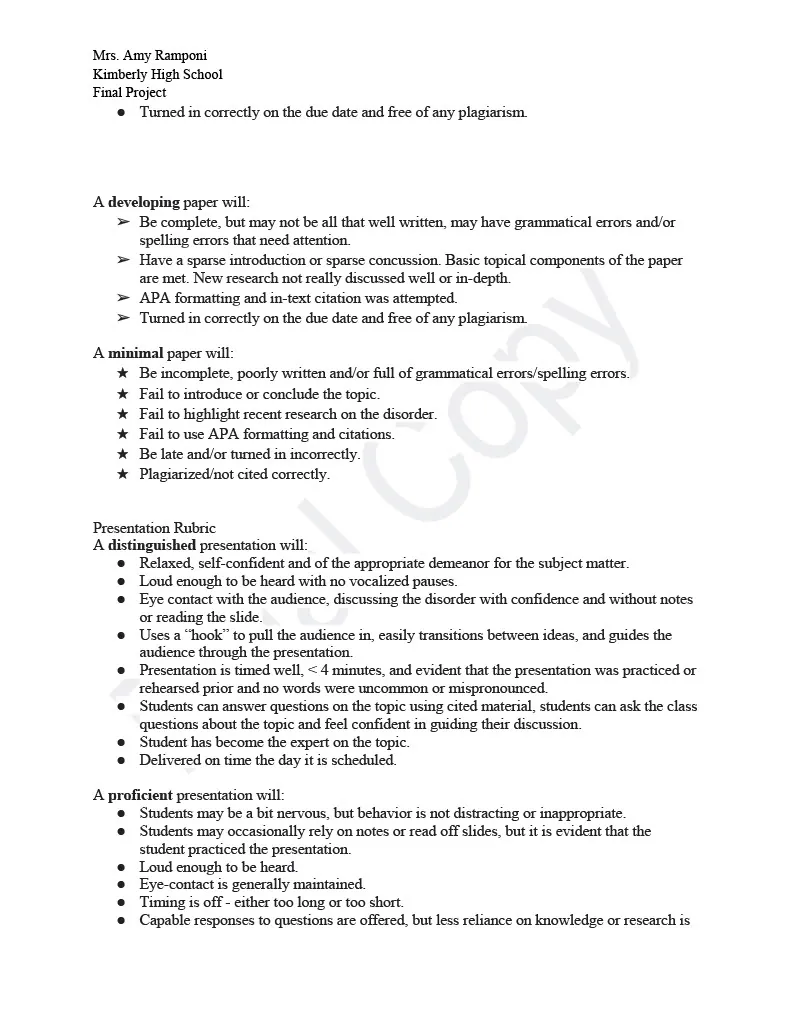
- Presentation Rubric
Related resources
More resources teachers may find useful
24 related resources were found using this product's title, contributor, categories and tags.


In the classroom
Teaching tips & learning objectives

Learning objectives
Research the symptoms, etiology, prognosis, treatment, and recent research on a chosen DSM-5-TR mental disorder using at least six sources, including two peer-reviewed journal articles.
Build and deliver a four-to-five-slide, three-to-four-minute presentation that summarizes research findings without reading directly from the slides.
Evaluate a paper or presentation's quality against explicit rubric criteria ranging from distinguished to minimal.

Teaching tips
Schedule a class session with the school librarian to teach students how to search and access peer-reviewed journal databases before independent research begins, as the assignment builds this step in directly.
Share the four-level rubric language (distinguished/proficient/developing/minimal) with students before drafting, since it spells out concretely what separates each quality level for both the paper and the presentation.
Use the bonus-points scoring table as a quick rubric during presentations, checking off paper, presentation, sourcing, and timeliness in real time.

Skills covered
Academic research -- students locate and evaluate at least six sources, including two peer-reviewed journal articles, on a specific psychological disorder.
APA research writing -- students compose a roughly 1,000-word expository paper with in-text citations and a references page.
Self-assessment against a rubric -- descriptive quality-band language lets students gauge their own paper and presentation before submission.
Good to know
Questions teachers ask about this resource
Can students research any DSM-5-TR disorder they want, or is the list restricted?
Students choose from a provided list of roughly forty specific disorders, and the assignment deliberately excludes conditions already discussed in class or covered in Health class so that students research something new; no two students in the same class may choose the same disorder.

No reviews yet
Downloaded this resource? Tell other teachers how it went.
Resource details
Concepts & topics
Core concepts
 Core concepts
DSM-5-TR mental disorders
APA research writing
Academic presentation skills
Rubric-based assessment
 Topics
Explore more
Categories this resource belongs to
Explore related searches
More to explore
You may also like