Types of Lines Posters Pack


- Grades
- Grades 2–5
- Pages
- 53
- File type
- Preparation
- Print ready


- Subject
- Art
- Topic
- Types of lines, Art elements
- Resource types
- Posters, Teacher Tools
- Preparation
- Print ready
Product description
From the author
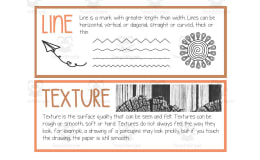
This 53-page PDF includes illustrated art-line posters in color and black-and-white layouts, additional line-vocabulary references and tracing/drawing practice. Select one-type or two-type pages for display and use the blank drawing grid for students’ examples.
Related resources
More resources teachers may find useful
24 related resources were found using this product's title, contributor, categories and tags.


In the classroom
Teaching tips & learning objectives

Learning objectives
Identify and name common line types, such as curved, zigzag, wavy, spiral, and dotted lines.
Draw an example of a named line type on a practice worksheet.
Distinguish between related line-type vocabulary, such as vertical vs. horizontal or thick vs. thin.

Teaching tips
Choose the color poster set for wall display and the black-and-white, one-type-per-page version for individual student reference sheets or coloring.
Use the "Let's Practice Lines" drawing worksheet as a follow-up task right after introducing the poster set, since it reuses the same line-type vocabulary.
Introduce the bonus terms (short, long, thick, thin, diagonal) as a second lesson once students are comfortable with the core poster vocabulary.

Skills covered
Line-type identification — students name and recognize lines such as zigzag, wavy, spiral, and dotted from labeled visual examples.
Fine motor drawing practice — students draw their own examples of named line types on a practice worksheet.
Vocabulary application — students draw a line example beside each printed line-type word.

No reviews yet
Downloaded this resource? Tell other teachers how it went.
Resource details
Concepts & topics
Core concepts
 Core concepts
Types of lines
Art vocabulary
Fine motor skills
 Topics
More to explore
You may also like