Worksheets for Día de los Muertos Cultural Detective




About This Product
The majority of holiday worksheets ask children to fill in a blank or colour a skull.
They are asked to consider this.
As Cultural Detectives, students investigate actual customs, pose challenging queries, and draw conclusions based on facts rather than conjecture.
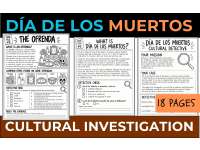
Día de los Muertos is covered in detail in this course, including what it is and isn't, why it important to the families who celebrate it, and why different families celebrate it in different ways.
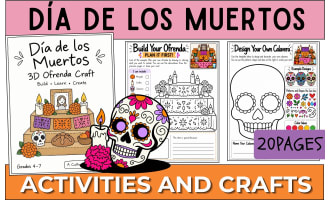
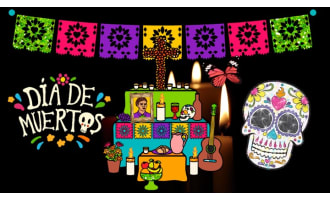
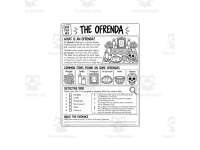
Students delve into ofrendas and determine what goes on one and why over the course of ten investigation pages.
They discover the true meaning of marigolds and cempasúchil, not only that they are significant.
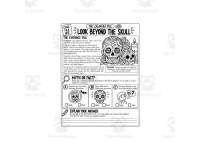
They come across calaveras and learn to distinguish between a symbol used by a society and one used by outsiders.
After that, they distinguish myth from reality, create a Detective Evidence Board, and use a variety of sources to compose a final cultural study.
The course is based on four abilities that are often overlooked in October lessons: attentively reading, considering the facts, writing explanations, and accepting that some answers are actually difficult.
Students learn to label things as they depend, which is frequently the honest answer, because the myth vs. reality exercise does not pretend that every topic has a clear solution.
The unit concludes with a student comment and a Cultural Detective certificate.
Where applicable, answer keys are provided.
Both single-sided and double-sided black-and-white prints are available.
No need for colour ink.
Cultural studies, social studies, ELA integration, Hispanic/Latino heritage month, lessons in October and November, individual work, small groups, or whole-class instruction are all appropriate.
For early finishers who require something with real substance, this is a great option.
Regarding cultural accuracy, this resource views Día de los Muertos not as a series of facts but as a dynamic tradition.
Instead of assuming that one version is correct, students are taught to observe differences throughout families and communities.
Resource Tags
0 Reviews
Check out these other great products