Young Inventors: Design & Pitch Your Invention, Grades 3-5



About This Product
Turn students into real inventors with this 30-page Young Inventors pack for Grades 3-5. Students do not just read about inventing: they find a real everyday problem, brainstorm wild ideas, plan and sketch an invention, explain how it works, build and test a model, improve it, and then advertise it and pitch it to a real audience. Design thinking meets persuasive writing and speaking in one complete project.
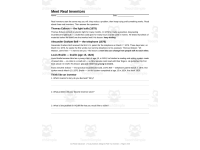
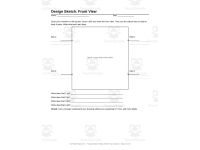
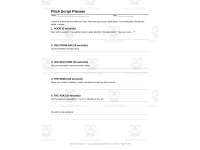
Teacher guides on pages 2 and 3 lay out the five-step invention journey, Find, Imagine, Plan, Test, Pitch, with a five-lesson pacing plan, differentiation for Grades 3, 4, and 5, and grading at a glance. Meet Real Inventors introduces Thomas Edison and the practical light bulb of 1879, Alexander Graham Bell and the telephone patent of March 7, 1876, and Louis Braille and his six-dot system, completed at age fifteen in 1824, with questions that get students thinking like inventors. A Problem Finder gives an Everyday Problems Hunt with twelve labeled boxes across home, school, classroom, lunchtime, outside, and on the go, then helps students choose one problem and say who has it, how often it happens, and why it matters. Brainstorming pages offer a twenty-idea Brainstorm Blitz, a SCAMPER-style Idea Stretcher with seven stretch questions in the pack's own wording, and a Pick Your Best Idea scorecard with four questions at one to three stars each, twelve stars maximum. Plan and sketch pages include an Invention Planning Sheet, a front-view Design Sketch with a labeled-diagram frame, four callout lines, and a What does it do line for each of the four parts, side-view and top-view sketches with a parts list, and a six-step How It Works writing page using First, Next, Then, After that, Later, Finally. Build, Test, Improve pages give a materials list with a cost table of eight items plus a total-cost row, a Build and Test Plan with a prediction, a Test It results table for three tests, and an Improve It redesign page with a small sketch box. Advertise and Pitch pages include an Ad Poster template with invention name, drawing space, slogan, and price, a Persuasive Writing page with sentence starters and a five-sentence paragraph frame, a Pitch Script Planner in five timed parts, Hook, Problem, Solution, Demo, Ask, about one minute in all, and a Pitch Practice Checklist with three timed practice rounds. Feedback and rubric pages give a Peer Feedback form, a Peer Scoring Rubric with four criteria at five points each for twenty points, and a Teacher Scoring Rubric with five criteria at ten points each for fifty points, with the point totals printed on each rubric so students can check the math. A showcase planner, a certificate, a twelve-word Inventor Word Bank with plain-English definitions, and a reflection journal follow. Teacher sample responses on page 29 show one fictional example invention, the Dry Homework Folder, with a sample persuasive paragraph, pitch, and rubric scores, and a fifteen-item Finish Line Checklist on page 30 confirms every step is done before the showcase.
Resource Tags
0 Reviews
Check out these other great products