



3,993 products added recently
Page 77 - Science Activities
Ignite your students' interest in science with activities that make learning interactive and exciting. This collection offers experiments, demonstrations, and inquiry-based projects covering various scientific fields. By integrating these science activities into your lessons, you can encourage critical thinking, foster curiosity, and deepen understanding of scientific concepts.

 Show filters


Deepest Space Probe Activity
Science, Earth and Environmental Sciences, Space, Grade 2, 3, 4, 5, 6, 7, 8, Activities
Activity Introduction An amazing activity designed for the students to learn more about famous places in different countries. Deepest Space Probe Do you like reading about space? If yes, what is your favorite topic? What do you know about our solar system? What is the smallest planet in our solar system? What is the biggest plant in our solar system? What is the hottest plant in our solar system? And what is the coldest one? Do you think there are aliens? If yes, what do you think they look like? What do they eat and how they speak to each other? Where do they live? What is a galaxy? And what is a milky way? Have you recently saw a shooting star? If yes, tell us more about it, like when did it happen and where? What is a blackhole? Can a blackhole gets bigger by time? Do you like counting the stars? What do you think a star is made of? Deepest Space Probe Activity The activity is perfect for encouraging the researching skills for the students, while learning more about this fantastic place. Space This friendly designed worksheet is suitable for students at school, homeschooling, and as a group activity. Instructions Voyager 1 is the most famous space probe. Can you write some facts about it? What is Voyager 1? Write what you know about Voyager missions. Glue a picture taken by Voyager. Make a quick comparison between Voyager 1 & 2. Format Available in a PDF format.
Author Educational Voice
Tags Deepest Space Probe Activity, Deepest Space Probe, Space Probe, Space Probes, Space Probes Facts, Space Probe Facts For Kids, Space, Apace Facts, Space Facts For Kids
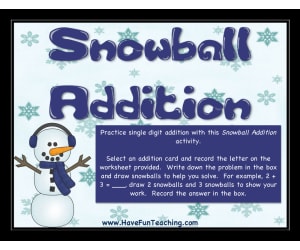
Snowball Addition Activity
Holiday & Seasonal, Math, Addition and Subtraction, Addition, Science, Earth and Environmental Sciences, Earth Sciences, Preschool, Grade 1, Activities
This product is great for teachers who want to help their students practice single digit addition. The Snowball Addition Activity is a great way for students to learn by drawing pictures to solve the problems.
Author Have Fun Teaching
Tags Seasons

Nature Scavenger Hunts | Indoor Outdoor Seasonal Science Activity
Reading, ELA, Nature & Plants, Life Sciences, Science, Kindergarten, Preschool, Grade 1, 2, Activities, Teacher Tools, Worksheets & Printables
Turn nature exploration into an engaging literacy and science experience with this printable Nature Scavenger Hunts resource! Designed for PreK–2nd grade learners, these easy-to-use scavenger hunts encourage children to observe, identify, describe, and discuss the world around them while getting active and engaged. Use the hunts indoors, outdoors, at school, during nature walks, or as seasonal classroom activities. The black-and-white format is printer-friendly and easy to photocopy, while the clear layouts give young learners plenty of room to check, circle, draw, and record their discoveries. What's Included • A colorful cover page • Indoor observation scavenger hunt • Outdoor nature scavenger hunt • Spring exploration hunt • Summer exploration hunt • Fall exploration hunt • Winter exploration hunt • Picture-supported observation activities • Simple check-and-find activities • Nature observation recording page • Seasonal comparison activity • Final nature discovery reflection Skills Developed • Reading and word recognition • Science observation skills • Nature and seasonal awareness • Vocabulary development • Visual discrimination • Critical thinking • Oral language and discussion • Beginning recording and drawing skills Perfect For • Science centers • Literacy centers • Nature walks • Outdoor learning • Indoor recess • Seasonal classroom activities • Early finishers • Small-group instruction • Homeschool learning • Spring, summer, fall, and winter exploration Why Teachers Love It These low-prep scavenger hunts give young learners a meaningful reason to read, observe, move, and talk about what they discover. The simple visual structure makes the activities accessible for emerging readers while allowing teachers to use the same resource across different seasons and learning environments. Print the pages and go, or place reusable copies in protective sleeves for repeated classroom use. This flexible nature-themed resource makes an easy addition to elementary reading and science activities throughout the year.
Author TeachTrend Studio
Rating
Tags Activities; Printables; Student Practice; Worksheets; Spring; Winter

Pumpkin Life Cycle Craft Foldable Science Cut and Paste Activity
Nature & Plants, Life Sciences, Science, Middle School, Elementary, Crafts, Activities
This interactive and hands-on teaching resource is designed to help students explore the life cycle of a pumpkin through a creative craft activity. The Pumpkin Life Cycle Craft Foldable provides an engaging way for students to learn about the stages of a pumpkin's growth, from seed to fruit, while reinforcing key science and plant biology concepts. This activity is perfect for science lessons, plant life cycle units, or studies on agriculture and horticulture. It encourages sequencing, critical thinking, and creativity, making it ideal for elementary and middle school students. The foldable can be used individually, in small groups, or as a whole-class project, and it also serves as a great display piece or take-home item to share learning with families. Great for homeschooling, classroom education, or extra practice. Number of pages: 8 pages Format PDF file size: 11*8.5 Inches If you and your students or your children enjoy using this educational and engaging resource. please rate it and follow my store to be the first to know about my new teaching resources and freebies. Enjoy!
Author Wonderland School
Tags Life Cycle Of A Pumpkin, Life Cycle Of A Pumpkin Craft, Life Cycle Of A Pumpkin Craft Foldable, Plant Life Cycle, Fall , Pumpkin Life Cycle, Autumn Craft, Autumn , Science Lesson , Science Craft

Science: Investigation Booklet
Science, Basic Science, Not Grade Specific, Activities, Projects
The Science: Investigation Booklet The Science: Investigation Booklet is an invaluable resource suitable for all grade levels, promoting active participation in scientific processes. This wide-ranging tool can assist educators in enhancing their students' comprehension and engagement with scientific investigations, applicable in both public school or homeschooling contexts. Design & Usability This resource encompasses an editable 5-page booklet that can be adjusted to any science experiment. It includes straightforward headings for clean organization, enabling teachers and students to seamlessly comprehend its intentional design. It fits perfectly into whole-class laboratory experiments , small-group investigations, individual projects at home or even extended research tasks. Key Features: Editable 5-page booklet customizable to any science experiment Clean organization with straightforward headings Versatile usage including lab experiments , group investigations & homework projects Reusability & Customization A notable strength of the Science: Investigation Booklet lies within its reusability across unimaginable possibilities—ideal for promoting continuity across different topics within the expansive subject of science. The blank format permits flexibility letting teachers tailor-fit the content appropriate to their lesson plans covering diverse competencies or interests. For instance, biology lessons may vary from chemistry or physics classes—all these achievable via one informative tool! Note: Fully editable feature grants complete autonomy over instruction manual bespoke aligned with personalized strategies. Additional Convenience Feature: Packaging: This package comes as a Zip file - ensuring ease of downloading and storage whilst maintaining high-quality displays during class hours. The Science: Investigation Booklet offers a practical solution that promotes involved learning experiences enhancing critical thinking skills enabling students to delve deep into basic sciences with guided procedures. It simplifies cooperative analysis across settings, turning every lab period into interesting explorations. Avail this versatile educational material today!
Author Elementary Resources 4 U
Tags Science Investigation, Active Participation, Scientific Processes, Teaching Strategies, Critical Thinking
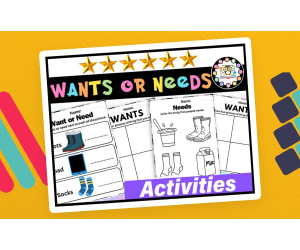
Need or Wants Worksheet 1st 2nd Grade Social Studies Activities
ELA, Language Development, Vocabulary, Classroom Management, Resources for Teachers, Basic Science, Science, Earth and Environmental Sciences, Environmental Science, Geology, Kindergarten, Preschool, Infant, Toddler, Activities, Classroom Decor, Teacher Tools, Worksheets & Printables
Students will find, recognize Wants or Needs Worksheets. These Wants or Needs Worksheets are aligned with the science of reading Wants or Needs Worksheets Activities for Special Education identity practices worksheet and in fact your prescript and kinderrain needs to master the Wants or Needs Worksheets Activities for Special Education names, Wants or Needs Worksheets seem that I have designed these Wants or Needs Worksheets Activities for Special Education, which have designed these Wants or Needs Worksheets Activities works, which is a Wants or Needs Worksheets Activities for Special Education about a paper about the practice of the practice of guide practices, which is a Wants or Needs Worksheets Activities for Special Education and plants about the practice To create a Wants or Needs Worksheets Activities to create, which helps find different Wants or Needs Worksheets , ensures a fun and structured approach to learning the Wants or Needs Worksheets Activities . This worksheet provides a fun activities to identify the sounds of any pre -PR -Lafabet Wants or Needs Worksheets Activities for Special Education, the formation of Wants or Needs Worksheets Activities for Special Education, including a series of small activities on each page, including a series of students to involve a series of skills for Wants or Needs Worksheets Activities for Special Education reviews. for Special Education. Wants or Needs Worksheets are aligned with the science of reading Wants or Needs Worksheets Activities for Special Education identity practices worksheet and in fact your prescript and kinderrain needs to master the Wants or Needs Worksheets Activities for Special Education names, Wants or Needs Worksheets seem that I have designed these Wants or Needs Worksheets Activities for Special Education, which have designed these Wants or Needs Worksheets Activities works, which is a Wants or Needs Worksheets Activities for Special Education about a paper about the practice of the practice of guide practices, which is a Wants or Needs Worksheets Activities for Special Education and plants about the practice To create a TWants or Needs Worksheets Activities to create, which helps find different Wants or Needs Worksheets, ensures a fun and structured approach to learning the Wants or Needs Worksheets Activities . This worksheet provides a fun activities to identify the sounds of any pre -PR -Lafabet Wants or Needs Worksheets Activities for Special Education, the formation of Wants or Needs Worksheets Activities for Special Education, including a series of small activities on each page, including a series of students to involve a series of skills for CTurn Around Wants or Needs Worksheets Activities for Special Education reviews.
Author LAMO
Rating
Tags Basic Principles, English Language Arts, Economics, Activities, Worksheets, Homeschool, Printables

Matching Card Halves: Dinosaurs + Monsters Pack
Science, Life Sciences, Animals, Preschool, Grade 1, 2, 3, Activities
Matching Card Halves: Dinosaurs + Monsters Pack - Description A comprehensive teaching resource, this pack is designed for educators in public school settings and those involved with homeschooling. The intriguing dinosaurs and monsters theme makes it an interesting aid during learning sessions. Aimed at Early Education Levels This activity pack primarily caters to learners from Kindergarten to Grade 3 levels. It successfully blends science learning with fun activities, thereby stimulating young minds exploring the zoology subfield. Dual Purpose of Activity Task The main task involves piecing together two corresponding parts of a creature on separate cards. While offering enjoyment, this task also aids in developing students' logic and critical thinking skills. This resource can be used effectively during whole-group sessions or within small groups for collaborative decision-making. It can also serve as take-home tasks where children independently apply their gained knowledge at home. Flexible Printing Choices & Quality Assurance Educators have an option between colored or black-and-white printing based on preferences. Regardless of the choice, students will find engaging visual aspects thereby promoting regular usage. Given that these are prepared for frequent use, it's highly recommended to print individual halves followed by lamination to ensure durability while maintaining its tactile appeal for kinesthetic learners. In Conclusion... The Matching Card Halves: Dinosaurs + Monsters Pack is undeniably a valuable tool in any educational setting - encouraging active engagement while imparting acquired scientific knowledge about various species.
Author WORDS ASIDE
Tags Dinosaurs, Monsters, Matching Cards, Science Education, Critical Thinking

Atomic Trends Practice ESL: Spanish version
Science, Chemistry, Grade 9, 10, 11, 12, Activities
Atomic Trends Practice Questions for ESL Students provides 14 practice problems for high school chemistry students to examine periodic trends like atomic radius, ionization energy, electronegativity, and reactivity. Students will compare, rank, and justify the placement of elements on the periodic table based on atomic trends. This versatile resource works for whole-class instruction, small groups, homework, or individual practice. The questions feature Spanish translations to aid ESL students, providing vocabulary support for English language learners. Editable so educators can customize the content to align with current lessons on periodic trends. This teaching resource helps chemistry students master analyzing periodic trends through practice questions with embedded support for ESL students.
Author Schrim's Chem
Tags Atomic Trends, Chemistry Practice, Chemistry Spanish, ESL Chemistry
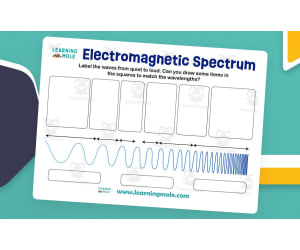
Electromagnetic Spectrum Activity
Science, Physics, Grade 4, 5, 6, 7, 8, 9, 10, 11, 12, Activities
Activity Introduction An amazing activity designed for the students to learn more about STEM subjects. Electromagnetic Spectrum Do you like STEM subjects? what is your favorite one? Have you ever tried to plant a seed? If yes, tell us more about it. Or have you ever tried to invent something? If yes, tell us more about it. And how do you think it will help us? Have you ever seen a microorganism under a microscope? What was it? And how it looked like? Mathematics is a marvelous subject. Let' sharpen our brains and solve some equations. Do you like timetable tricks? What is your favorite one? Do you know how to code? Have you ever created an app or a game before? If yes, how was it like? Electromagnetic Spectrum Activity The activity is perfect for encouraging the researching skills for the students, while learning more about this topic. Electromagnetic Spectrum This friendly designed worksheet is suitable for students at school, homeschooling, and as a group activity. Instructions Label the waves from quiet to loud. Con you draw some items in the squares to match the wavelengths? Format Available in a PDF format.
Author Educational Voice
Tags Electromagnetic Spectrum Activity, Electromagnetic Spectrum, Electromagnetic Spectrum Facts, Electromagnetic Spectrum Facts For Kids, Electromagnet, Electromagnets, Electromagnets Facts

Famous Women in Science | An Inquiry Based Project
Science, Inventors, Grade 5, 6, 7, 8, 9, 10, 11, 12, Projects, Activities
Famous Women in Science | An Inquiry Based Project Welcome to the realm of an enriching and inspirational classroom experience that enhances your students' understanding of STEM (Science, Technology, Engineering and Math) subjects. The Famous Women in Science| An Inquiry-Based Project sheds light on the remarkable accomplishments and contributions of women in science from the past till today. Inspiring stories The project starts with a recounting of womankind’s important milestones in science - from innovative inventions to groundbreaking discoveries forming a solid basis for productive classroom discussions. An overview of tasks After the inspiring beginning we provide an overview that guides learners step by step through their exploration process. This project's design offers flexibility and can accommodate different education levels ranging from grade 3 up to senior physics class. It fits perfectly into various curriculum scopes including homework assignments or small group activities. Versatile rubrics for assessment : Peer review: A specialized rubric designed for student-peer based evaluation. Teacher Assessment : A detailed marking scheme intended for teachers. The documents are fully editable so you can adjust them according to your specific classroom needs. With this inquiry-based project, students gain essential skills like intensive research capabilities and constructive presentation talents. The impact: The Famous Women in Science | An Inquiry-Based Project offers more than just academic merits—it provides inspiration. Using it as an educational tool can: Increase representation especially engaging female students towards male-dominated fields like physical sciences Show boys that girls too excel within these spheres paving a path free from outdated stereotypes – empowering all learners within your educational environment! Start the movement today for a gender-balanced STEM education landscape. Let's offer that encouragement to all our learners and let them know they have every right to succeed in their learning pursuits.
Author Teach With Fergy
Tags Women In Science, STEM Education, Gender Stereotypes, Inquiry-based Learning, Female Representation

Scribble Notes - Interactive Notebook - Force, Motion, and Energy
Science, Basic Science, Grade 1, 2, 3, Activities
The Scribble Notes - Interactive Notebook about Force, Motion, and Energy is an essential resource for making complex scientific concepts engaging for young learners. Primarily targeted at grade 1 to grade 3, it can be handy for any educators teaching basic scientific principles centered on force, motion and energy. Scribble Notes Core Value Central to this teaching tool lie the scribble notes. Their value comes from their potential to enhance concept retention in students by enabling them to build tangible links between information through synthesis. This hands-on approach promotes focus and creativity among students, enriching the learning experience. Coverage of Subjects Force (Examples: push, pull magnetism) Patterns of movement Different forms of energy (Examples: mechanical energy, thermal energy) Mechanism of light travel Sound Energy Notebook Highlights & Utilization Guide This user-friendly notebook consists a total of 86 printer-friendly pages, available both as colored sheets or black and white versions allowing flexible usage. It gives various ways educators can incorporate scribble notes into their lessons – including teacher-led note-taking sessions during classes or student-led assignments such as independent research homework projects; some even use them to develop Classroom Anchor Charts making abstract teachings more relatable. Differentiation & Adaptability Benefit: This package offers differentiation options letting you select an approach that best fits your group’s specific educational needs while remaining practical with its downloadable pdf format.
Author Rodriguez's Resources
Tags Force, Motion, Energy, Interactive Notebook, Scribble Notes

Ions - Exit Ticket and Review Activity
Science, Chemistry, Grade 8, 9, 10, Activities
Ions - Digital Exit Ticket and Review Activity Assess and enhance student comprehension of core concepts with this interactive exit ticket and review. This digital resource features a series of questions that gauge understanding of essential topics covered in class including; Subatomic Particles, Inside the Atom, Atoms and Ions, Knowing the Charge, Bohr-Rutherford Ion Diagrams, Multivalent Ions – Naming and Formula Writing, and the Role of Ions. With a single click, this Google Form will be copied into your Google drive for easy access. You will then be able to make any changes you feel necessary and distribute out to your students. With this exit ticket, educators can: Check for student understanding of key areas. Get instant insights into students' grasp of concepts through automatically graded questions and easy-to-read results charts. Identify areas students are struggling with to refine instruction. Incorporate exit ticket data into student grades as a formative assessment . Students are able to: Demonstrate their knowledge of concepts through short answer and multiple choice questions. Get immediate feedback on their responses to support metacognition. Review core ideas before a test or the next class. This digital review resource allows teachers to quickly assess student learning outcomes related to essential principles. The automatically graded Google Form provides data visualizations that highlight comprehension gaps to address. An engaging way to end or begin a class while promoting understanding without adding to your workload as a teacher.
Author Teach With Fergy
Tags Elements, Subatomic Particles, Atoms, Ions, Bohr-rutherford Diagrams, Multivalent Ions

Beginning Sounds Animal Activity
ELA, Science, Life Sciences, Animals, Language Development, Phonics, Preschool, Kindergarten, Grade 1, Activities
This activity is great for helping students learn to identify beginning sounds in words. It is also a fun and engaging way for students to practice their matching skills. This activity can be used in a small group or as a whole class. The Beginning Sounds Animal Activity is a great way for students to learn to identify beginning sounds in words. It is also a fun and engaging way for students to practice their matching skills. This activity can be used in a small group or as a whole class.
Author Have Fun Teaching
Tags Beginning Sounds, Consonants

Biomes – Lab Station Activity
Science, Earth and Environmental Sciences, Environmental Science, Grade 6, 7, 8, 9, Labs, Experiments, Activities
Biomes Lab Station Activity Bring the diverse biomes of planet Earth into your middle or high school science classroom with this engaging lab station activity . Students will rotate through 9 stations to get hands-on experience with concepts like major biome types, adaptation, and more. Activities range from creative drawing prompts to knowledge checks and inquiry-based reading. An included recording sheet allows students to document their learning journey. This ready-to-implement resource covers terrestrial biomes like grasslands, forests, deserts and tundra as well as aquatic environments. Word scramble, word search and answer keys provide built-in differentiation. Modify the content or instructions as needed with the fully editable teacher version. Turn key lab stations make biome exploration interactive, memorable and fun.
Author Teach With Fergy
Tags Biomes, Freshwater, Marines, Environment, Science
Nonfiction Book Report: Thunder and Lightning
Science, Earth and Environmental Sciences, Environmental Science, Research, Grade 2, 3, 4, Activities
This is a Nonfiction Book Report: Thunder and Lightning. Students will love researching and reporting on this type of weather. There are a variety of pages to choose from. All you have to do is print and go. A cover page is included for students' research report.
Author Katie Maurice
Tags Nonfiction, Book Report, Environment, Cross Curricular, Natural Disaster, Science, Thunder, Lightning, Research, Writing
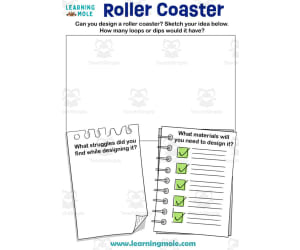
Roller Coaster Activity
Science, Technology, Engineering, Grade 3, 4, 5, 6, 7, 8, 9, 10, Activities
Activity Introduction An amazing activity designed for the students to learn more about STEM. Roller Coaster Do you like STEM subjects? what is your favorite one? Have you ever tried to plant a seed? If yes, tell us more about it. Or have you ever tried to invent something? If yes, tell us more about it. And how do you think it will help us? Have you ever seen a microorganism under a microscope? What was it? And how it looked like? Mathematics is a marvelous subject. Let' sharpen our brains and solve some equations. Do you like timetable tricks? What is your favorite one? Do you know how to code? Have you ever created an app or a game before? If yes, how was it like? Roller Coaster Activity The activity is perfect for encouraging the researching skills for the students, while learning more about this fantastic topic. Roller Coaster This friendly designed worksheet is suitable for students at school, homeschooling, and as a group activity. Instructions Can you design a roller coaster? Sketch your idea below. How many loops or dips would it have? Format Available in a PDF format.
Author Educational Voice
Tags Roller Coaster Activity, Roller Coaster, Roller Coaster Facts, Roller Coaster Facts For Kids, Engineering, Engineering Facts, Engineering Facts For Kids, STEM, STEM Facts

Elements and Compounds - Find the Pair - Team Game
Science, Chemistry, Grade 6, 7, 8, 9, Activities, Games
This is an engaging and enjoyable memory game on atoms, molecules, elements, compounds, chemical symbols, chemical formulae and naming compounds. Pupils work in teams of three or four. Each team lays out their 42 cards face down in a square and take it in turn to turn over two cards. If the cards are a question and its correct answer, the pupil keeps the pair. If they are not a match they are turned face down and the next pupil gets a turn. This process continues until all cards are matched and the winner is the pupil with the most pairs. If a team member thinks that the selectors pair is not a correct match, they can challenge. Pupils are encouraged to check their books for the correct answer but the teacher also has a quick-check answer sheet. If the challenge is correct, the challenger keeps the pair. Included in this Pack. 42 question and answer cards Teacher’s answer sheet. Instruction sheet Preparation Use double-sided printing to copy 1 set per group of 4 pupils. Sheets could be laminated to enable year-on-year use. Cut sheets into cards. Prior Knowledge Required Atoms combine to form molecules. If combining atoms are from the same element, a molecule of an element is formed but if they are from different elements, a molecule of a compound is formed. An element contains only one type of atom. A compound contains two or more different types of atom combined together chemically. Each element has its own symbol. Some symbols are the capitalized first letter of the name of the element . Some symbols have two letters from the name with only the first capitalized. Some symbols are taken from the Latin name of the element. Know that a chemical formula tells you how many atoms of each element are in a compound. Know that if there is no letter after a symbol in a formula, there is only one atom of that element in the compound. Know that if a formula contains brackets, every element inside the bracket is multiplied by that number. Know that compounds ending in ide contain only two elements. Know that compounds containing CO3 are carbonates, SO4 are sulphates and NO3 are nitrates. Know that mono is one, di is two and tri is three. Be able to name and work out the number of atoms of each element in a compound without brackets in its formula. See more resources from Elf Off the Shelf
Author Elf off the Shelf Resources
Tags Science Team Game, Chemistry Team Game, Elements Pairing, Compounds Pairing, Elements Team Game

Robot Cut Outs
Science, Technology, Engineering, STEM, Creative Arts, Art, Preschool, Kindergarten, Grade 1, 2, 3, 4, 5, 6, Activities
Robot Cut Outs help you create templates that can be easily cut and applied for classroom decoration or student activities. They are perfect for adding a little fun to your classroom!
Author Have Fun Teaching
Tags Machines

Cell Analogy Choice Board
Science, Life Sciences, Biology, Grade 7, Activities, Projects
The Cell Analogy Choice Board will provide your 7th graders with an engaging way to apply what they know. The choice board presents them with 4 analogy options and then 4 delivery options to choose from. When students have completed their project, they will submit it in Google Classroom.
Author Sarah Miller Tech
Tags Science Project, Choice Board, Cell Analogy, Narrative Essay, Prezi, Choice Boards For Social Studies, Project Choice Board, Thanksgiving Choice Board

Nervous System – Lab Station Activity
Science, Life Sciences, Biology, Grade 8, 9, 10, 11, 12, Labs, Experiments, Activities
This fully editable Lab Station on The Nervous System is meant to get your students out of their seats and engaged in the content. Each station not only offers a unique opportunity to test your students knowledge (offer an opinion, answer questions based on a video or reading, draw, etc.), but also provides a fantastic learning opportunity where your kids are learning through assessment. Each station comes with a description card while some also contain more detailed instructions, a reading, questions to answer, etc. Students are equipped with a recording sheet (passport) to write their answers. There is almost no prep for you. Simply print the cards, lay them out around the room and you're all set. An answer key is also provided where applicable. This lab activity covers: - Structure, Parts and Functions of the Nervous System - Structure, Types and Functions of the Neuron - Reflex Arc - Nerve Signal Transmission and Action Potential - The Schwann Cell and Action Potential - Sodium-Potassium Pump - Neurotransmitters and its Functions ---------------------------------------------- Bonus Activities: To ensure your students don’t have any downtime between stations, your lab also includes a 10-word word scramble and word search, both with an answer key. You can use them as part of their mark, as a bonus so it’s not mandatory, etc. However you choose to use it, it will ensure that your students are always busy and never idle. Note: For stronger classes, I give the word scramble and for weaker ones, the word search. ----------------------------------------------- How do the Lab Stations work? Each station is specially designed to be a unique complement to the material while at the same time, provide a valuable learning experience. Below is an overview of how each station works. In your activity , each will be tailored to the specific content. Station 1: Get Hands-On – using their creative skills, students are required to draw or build. Station 2: Research – using a classroom computer or their own device, students must research a specific question/issue surrounding the topic. Station 3: Explain yourself – students write down an opinion to a question in paragraph form. Station 4: Rest Station - students can use this time to catch up on work they didn't have time to complete at a previous station or prepare themselves for an upcoming one. Station 5 - Applicability reading – students read a short passage from an article, website, etc. which directly connects the classroom content to a real life application. Station 6: Test your knowledge – students answer 5 multiple choice questions then provide a written explanation for how/why they came to their conclusion. Station 7: Learn from the expert – using a classroom computer or their own device, students must watch a short video clip and answer the associated questions. They may stop, rewind and restart as often as they like during the time frame. Station 8 - Rest Station. Station 9: Become the question master – Students must create 2 multiple-choice questions, 2 true/false questions and 1 short answer question. Students must also supply the answers. ------------------------------- You might also be interested in my other lab station activities Biology: • Cell and the Cell Theory • The Human Digestive System • The Circulatory System • The Human Respiratory System • Mitosis and the Cell Cycle • Cellular Respiration and Photosynthesis • Photosynthesis • Cancer: Cell Division Gone Wrong - Volume I • Cancer: Cell Division Gone Wrong - Volume II • Cell Membrane and Transport • Hearing and the Human Ear • The Human Eye • Genetic Material: DNA and RNA • The Nervous System • Energy Flow In Ecosystems Ecology and the Environment: • Ecosystems • The Classification of Living Things • Biodiversity and Invasive Species • The Carbon and Water Cycle • Climate Change • Photosynthesis • Cellular Respiration and Photosynthesis • Ecological Succession • Plant Sexual and Asexual Reproduction • Earth's Seasons • Interactions Within Ecosystems Physics: • Newton's Three Laws of Motion • Kinetic and Gravitational Potential Energy • Current Electricity and Circuit Diagrams • Static Electricity • Light Optics and the Production of Light • Sound, Sound Energy and Speed • One and Two-Dimensional Motion • Uniform Acceleration • How Planes Fly • Refraction • Friction • Energy and Its Forms • Density and Buoyancy Space Science: • The Life and Death of Stars • The Moon and its Phases • Life In Space • Our Solar System • Solar and Lunar Eclipse • Earth's Seasons • Asteroids, Comets and Meteors Chemistry: • Atomic Model, Notation and Atoms • Chemical Reactions and Balancing Equations • Molecular and Ionic Compounds • Physical and Chemical Properties & Changes • Acids, Bases, and Neutralization Reactions • The Periodic Table • Single and Double Displacement Reactions • Balancing Chemical Equations • Synthesis, Decomposition and Combustion Reactions • Atomic Theory, Atomic Structure and Isotopes • Types of Bonds and Intermolecular Forces • The Mole/Avogadro's Number • Density and Buoyancy These station cards are meant to be used as a lab activity but can also be utilized in a review task before a test or a quiz. Used either way, your students will love it! I know mine do and I'm telling you from first-hand experience as I've used this activity in my own class. Thank you for your interest in my products. If you have any questions, please send me an email - devon@teachwithfergy.com
Author Teach With Fergy
Tags Nervous, System, Neurons, Disorders, Lab Station, Nervous System Activity, Nervous System Lab, Nervous System Activities, Nervous System Activities Middle School

Science Revision for Grade 4
Science, Grade 4, Activities, Worksheets & Printables, Assessments, Teacher Tools
This Grade 4 Science Worksheet is perfect for busy teachers. It includes 30 ready-to-use activities that cover key science topics. Students will learn about plants, animals, matter, energy, weather, ecosystems, and more. Each task helps students think, observe, and explain. They match, classify, label, draw, read data, and answer questions. The worksheet builds skills step-by-step. It includes scientific vocabulary, diagrams, and real-world examples. Students practice reading graphs, identifying changes in matter, and describing the water cycle. They also explore conservation, food chains, and the scientific method. All the activities can be done on paper. There is no prep needed. Just print and go! The answer key is included at the end to save time. This worksheet works well for classwork, homework, or revision. It supports science learning in a clear and fun way. Use it to check understanding or as a review before tests. It’s simple, engaging, and effective. Give your students the tools they need to succeed in science!
Author Bright Classroom Ideas Marketplace
Rating
Tags Science, Revision, Grade 4
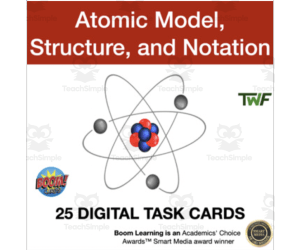
Atomic Model, Structure, and Notation Digital Boom Cards
Science, Chemistry, Grade 9, 10, 11, 12, Activities
25 Digital Boom Cards on Atomic Model, Structure, and Notation. Boom Cards are highly interactive Digital Task Cards that are self-grading and highly interactive. Boom Cards are the perfect addition to your curriculum . Perfect for practice, distance learning, reinforcement, and homework Provides immediate feedback to your students via self-grading assessments Interactive Self-Grading Paperless 100% Digital - Perfect For Online Learning Free Boom Learning Account Although they are not editable, there is the option to 'Hide' any card that you don't want your students to access The Boom Cards can also be printed from the Boom Learning website if you choose Within your download, I've also included a Quick Start pdf and video walkthrough so that you can get started easily and quickly no matter your prior knowledge of Boom Cards. **************************************** This bundle also includes my Boom Cards Quick Start Guide and Video Walkthrough so even if you're new, you can utilize your cards in under 5 minutes. You can use Boom Cards for independent work, stations, homework, group work, classroom games, quiz, or test prep. Concepts Covered: Atomic Theory Democritus Dalton – Ball Model J.J. Thompson – Raisin Bun Model Rutherford – Gold Foil Experiment Bohr – Rutherford Model Bohr – Rutherford Diagrams Atoms and subatomic particles Protons, Neutron and Electrons Atomic Number Atomic Mass Isotopes Calculating Average Atomic Mass Periodic Table Notation Students Can Access Them Anytime On Any Digital Device Desktop Laptop Tablet Netbooks iPhone Android Mac PC Whiteboards I've also created a quick walkthrough video that will get you set up on Boom Learning in under 5 minutes. Click here to have a look. Please Note: To use Boom Cards, you must be connected to the Internet. Boom Cards play on modern browsers (Chrome, Safari, Firefox, and Edge). Boom Cards can also be accessed via apps that are available for Android, iPads, iPhones, and Kindle Fires. For security and privacy, adults must have a Boom Learning account to use and assign Boom Cards. You will be able to assign the Boom Cards you are buying with "Fast Pins," (play provides instant feedback for self-grading Boom Cards). Fast Play is always a free way for students to engage with Boom Cards decks. For additional assignment options, you'll need a premium account. If you are new to Boom Learning, you will be offered a free trial of their premium account. Read here for details: http://bit.ly/BoomTrial . There are four levels of Boom memberships: There is one free level and 3 levels of paid subscriptions. All three levels of paid memberships are currently $25 or less per year. At the end of the free period, it is NOT required that you purchase a Boom membership. Fast Play will ALWAYS be available to you at no charge.
Author Teach With Fergy
Tags Chemistry, Boom Card, Interactive, Notation, Atomic Model
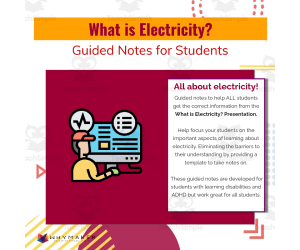
What is Electricity? Guided Notes
Science, Technology, Computer Science, Grade 3, 4, 5, 6, 7, 8, 9, 10, 11, Activities
What is Electricity? Guided Notes What is Electricity? Guided Notes is a digitally accessible PDF file that serves as an educational tool for advancing students' understanding of electricity. It comprises three pages of detailed and engaging guided notes. Suitable for Different Grades and Teaching Methods This learning resource can be used by learners from Grade 3 to Grade 11. Given its versatility, it can accommodate various teaching methods, including traditional in-class teaching or homeschooling. Thus, it serves as a perfect choice for public school teachers and homeschoolers. Aiding Diverse Learners in Understanding Complex Concepts Catering to students with diverse learning abilities, this product uses straightforward language and explanations that make it particularly beneficial for students with ADHD or learning disabilities. Different Ways of Utilizing the Guided Notes In a physical classroom setting, the whole class can study these notes together during a presentation on electricity. This encourages collaborative discussions among peers about the scientific concepts covered. If small group study or individual use best suits the classroom dynamic, educators may choose to adopt these guided notes according to their needs. The material could also be given out as homework to consolidate what was taught during classroom instruction. A Versatile Learning Resource in Various Academic Settings " What Is Electricity? Guided Notes " proves highly effective across broad science curriculum areas- from Computer Science lessons to general Science topics. It is substantive enough to work independently but also complement broader academic instruction skillfully. Whether you wish to support subjects already discussed in class or gradually introduce new material through note-taking exercises - these guided notes offer a practical means of achieving these learning goals. Educators can effectively disseminate knowledge and improve students' understanding of key concepts in electricity by using such resources.
Author WhyMaker
Tags Electricity, Guided Notes, Learning Disabilities, Science Education, Virtual Homeschooling

Space Solar System Planets Coloring and 6 Facts Worksheets
Physics, Science, Basic Science, Earth Sciences, Earth and Environmental Sciences, Space, Life Sciences, Elementary, Early Learning, Pre-K, Worksheets & Printables, Activities
Use the Space Solar System Planets Coloring and Six Facts Worksheets and Activities to let your kids discover the wonders of our solar system! Important attributes: Interactive Coloring Pages: From Mercury to Neptune, and even the Moon and Sun, color these entertaining, intricate drawings to bring each planet to life! Six Interesting Facts: Six concise, understandable facts about each planet are included in each worksheet. Have Fun While Learning: makes learning about planets interesting and memorable by fusing education with art. Ideal for Homes or Classrooms: Perfect for educators, parents who homeschool, or children who are interested in space exploration. .. .. . . . . .. . .. .. .. . . . . .. . . . . . . .. .. . . . . . .. . . .. .. . . . . . . . . . . . . . . . .
Author Educa Mirth
Tags Space Solar System Planets Coloring And 6 Facts Worksheets And Activities.