



3,901 products added recently
Page 161 - Activities By Subject
Simplify lesson planning by accessing activities organized by subject. Whether you're focusing on math, science, language arts, or social studies, these resources provide targeted support to enrich your teaching. Incorporate them to align with curriculum standards and engage students effectively.

 Show filters

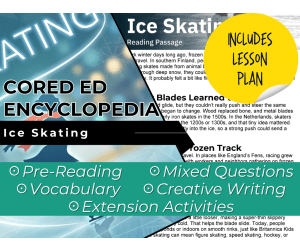
Ice Skating Reading Comprehension Passage - Cored Ed Encyclopedia
ELA, Reading Comprehension, Reading, Language Development, History, Social Studies, Science, Physics, Sports, P.E. & Health, Grade 2, 3, 4, 5, Worksheets & Printables, Worksheets, Teacher Tools, Centers, Activities, Writing Prompts, Assessments, Quizzes and Tests, Quizzes, Lesson Plans
This Ice Skating reading comprehension with lesson plan includes: Visualization (on the front cover) Start your lesson by taking a minute to think and share something about the topic. Read the script aloud (slowly), perhaps prepare some music or sound effects. Student close their eyes and let their imaginations wander. Students open their eyes, read the question aloud and give them a few minutes to complete. Ask a few students to share or keep answers until the end to compare with what they learn in the passage. Quick pause—thousands of Cored Education products are included with your TeachSimple membership. Download links and encyclopedia index available here. Pre-Reading Trivia Students will write down one thing they already know about the subject and then read five more facts and discuss. These facts are fun, and the students will enjoy learning about the subject before reading more. Give 1 minute for students to write what they already know (no pressure—best guess is fine). Read the five facts together. After each fact, do ask a student for their opinion, was it surprising? Set a purpose by asking students to highlight/underline one fact they want to learn more about during the reading. Reading Passage The text is a high-interest reading passage with set paragraphs, roughly three to four paragraphs long. It contains a variety of themes about the topic, anywhere from history to technology. The passage is between 250 and 350 words in length. First, ask students to look at the headings and see what they’ll learn about today. What do they know about the topic/heading? First read options: Teacher read-aloud (best for support). Partner reading (paragraph by paragraph). While reading, students underline important details, and vocabulary words they think may come up in the questions section. Mixed Questions The first question page contains four multiple-choice questions, each with a choice of four answers, and three written response questions that require a sentence or two from the student. Students complete the mcqs first independently, then review quickly as a class. For the 3 written responses, try to get students giving the answer with some form of evidence: “I think ___ because the text says ___.” If students get stuck, send them back to check the passage. Vocabulary Questions Practice seven key words from the text in this section across two activities. First section is scrambled words where students will unscramble three words given a clue for each. The second section is a word to meaning matching activity. Before starting, have some students read out words they underlined in the passage. Ask students to say the word and read aloud the sentence(s) around each word. Ask students to do scrambled words and the matching exercise in pairs then go through answers as a class. For the scrambled spelling task, get four pairs to come up to the board and write the words for extra practice with the other student reading out the clue. For the matching task, prompt students to give full sentences: “I matched ___ with ___ because ___.” Creative Writing In this question, the student will be required to write a five to eight sentence paragraph on a question related to the topic. Before starting, ask students write down 3 key ideas they are going to include in their piece. Ask students for ideas to share around the class to help those struggling. Pro writing expectations: 5–8 sentences At least 2 facts or details from the passage At least 2 vocabulary words from the previous page Students read their paragraphs while classmates listen for facts and vocabulary words. Extension Activities This page is optional for fast finishers or to take home. There are several activities, each one requiring a different skill. Do some, do none, do all, completely optional - but you will feel reassured knowing every possibility is planned for. Includes summary writting question and additional facts. Answer Key There are answers for the multiple-choice questions, written response questions have sample answers, vocabulary answers and if there is a summary question then a sample summary will be provided as well. Lesson Plan Included Customized lesson plan for this lesson is included. Lesson Snapshot Title: Ice Skating Genre: Nonfiction (informational text) Subject: Reading (Informational Text) / Science Primary Topic: How ice skating began and why blades glide Estimated Guided Reading Level (A–Z): R What This Lesson Teaches Best Explains how ice skating was first used for winter travel long ago (frozen lakes and rivers as “the easiest way to travel”). Describes how skates changed over time (from animal bones to wood to metal blades) and why sharpened edges mattered for control. Shows how skating shifted from travel to organized sport, including races, rules, championships, and the Olympic stage. Introduces a simple science idea for why skates glide: a super-thin slippery surface layer where ice molecules are a little looser. Uses text features (section headings) to chunk information and support comprehension. Learning Goals Identify the main idea and key details about how ice skating began and changed over time. Describe the difference between early bone skates and later skates with sharpened metal edges. Explain how sharpened edges helped skaters push, steer, and move with control. Explain, using the text, why a skate blade can slide well on ice. Describe how skating became an organized sport with rules, championships, and worldwide attention. Key Vocabulary From the Text blades — thin metal parts of skates that touch the ice. edges — sharpened sides that help a skate grip ice. molecules — tiny pieces that make up ice. championships — contests to find winners in a sport. standards — agreed rules that keep things consistent. FULL CATALOG OF DOWNLOAD LINKS AND ENCYCLOPEDIA INDEX HERE
Author Cored Education
Rating
Tags Vocabulary, Reading Comprehension, Reading Passages, Lesson Plans, Ela Lesson Plans, Reading Comprehension Lesson Plans, Pre-reading, History, P.e. Lesson Plans, Sports

Waves, Light, Imaging: Physical Science Reading Comprehension (PDF)
Science, ELA, Reading, Reading Comprehension, Strategies, Resources for Teachers, Physics, Grade 6, 7, 8, 9, Writing Prompts, Worksheets & Printables, Centers, Activities, Teacher Tools, Assessments, Quizzes and Tests, Quizzes, Tests
Waves, Light, Imaging: Physical Science Reading Comprehension Passages and Questions (PDF) This very engaging collection of physical science reading passages about Waves, Light, and Imaging is designed to bridge the gap between science and literacy through strengthening reading comprehension and sparking scientific curiosity in middle school students. Each passage blends English Language Arts skills with accurate science content that supports NGSS classroom practice. Ideal for interdisciplinary learning in ELA and Science. Suitable for Grade 9 review, too! What Is Included? There are (3) informational passages: How Sound Travels: Sound starts with a vibration that squeezes and stretches nearby matter, sending a wave through air, water, or solid material. The ear and brain team up to turn those moving pressures into the pitch and loudness we hear, which is why sound needs a medium. Seeing Color: Reflection, Absorption, Refraction: Color shows up only when light hits an object and some wavelengths bounce back to the eye. Materials reflect, absorb, or bend light differently, so a prism, a black backpack, or even dim lighting can change what we see. Cameras: From Dark Rooms to Smartphones: A simple darkened box with a tiny opening once projected faint, upside-down scenes onto a wall. Adding lenses, mirrors, film, and later digital sensors turned that idea into cameras for art, news, and everyday life, ending with phones that can snap and share in seconds. Student Tasks for Each Passage: 5 multiple-choice questions targeting main idea, key details, inference, vocabulary in context, and use of evidence 5 vocabulary matching items with clear, student-friendly definitions 5 text-based questions that require citing specific lines or facts 1 summary prompt that asks students to condense central ideas accurately Full answer key for every section Available Formats for this Resource Word Docs Google Docs FULL CATALOG OF DOWNLOADING LINKS HERE Other Science Reading Collections and Topics You May Find in the Store: 1. Astronomy & Space Science 2. Volcanoes, Rocks, & Mountains 3. Rock Cycle, Soil, & Sinkholes 4. Mars, Glaciers, & Antarctica 5. Water Cycle, Acid Rain, & Wastewater 6. Insects, Animals, & Ecosystems 7. Bioluminescence & Insects 8. Animal Skin, Cats, & T. Rex 9. Human Body and Senses 10. Health & Applied Bioscience 11. Waves, Light, & Imaging 12. Electricity & Energy 13. Motion & Materials 14. Chemistry and Materials Science 15. Electromagnetism 16. Acids and Bases 17. Gas Laws 18. Biotechnology 19. Periodic Trends 20. Protists and Fungi 21. Microevolution 22. Blood 23. Chemical Bonding 24. Magnets 25. Muscles 26. Nuclear Chemistry 27. Electromagnetic Devices 28. Epigenetics 29. The Law of Conservation of Mass 30. Atomic Models 31. Isotopes and Ions 32. Light 33. Human-Environment Interaction 34. Theory of Evolution 35. Photosynthesis 36. Origins of Life and Early Earth 37. Gene Expression and Regulation 38. Thermochemistry 39. Allergies 40. Coevolution 41. Birth to Adulthood 42. Cells 43. Entropy and Free Energy 44. The Human Brain 45. Mixtures and Solutions 46. Invertebrates 47. Zoo Animals 48. Biochemistry 49. Animal Behavior 50. Population Ecology ...and many more engaging science reading passages that cover intriguing and important topics designed to spark curiosity and support student learning. Product Details Length: 14 pages total Grades: 6–8, also suitable for Grade 9 review Use cases: close reading, stations, homework, intervention, test prep, and sub plans Standards support: reinforces informational-text skills and supports NGSS-style sense making through observation, modeling, and clear use of claim, evidence, and reasoning Why Teachers Choose This Set Authentic science content paired with rigorous literacy practice Consistent task structure across all passages for easier planning and smoother student routines Clear, age-appropriate writing that builds confidence without oversimplifying Use this set to reinforce ELA skills in science, to add literacy to your lessons, or to support independent work. The passages strengthen main idea, evidence use, vocabulary in context, inference, cause and effect, and summary writing. With ready-to-use assessments and complete answer keys, you can provide focused practice that is simple to run and fast to review.
Author Middle & High School - CORED Education
Rating
Tags Middle School, Reading Comprehension, Reading Strategies, ELA, Centers, Reading Passage, Assessments, Vocabulary, Physical Science, Physics

Mole and Avogadro’s Number – Lab Station Activity
Science, Chemistry, Grade 8, 9, 10, 11, Labs, Experiments, Activities
Practical Chemistry Lab for Middle and High School Students Mole and Avogadro's Number Lab Stations provide an engaging hands-on learning experience for 8th-12th grade chemistry students. Learners will rotate through 9 interactive stations focused on key concepts like molar mass, Avogadro’s number, stoichiometry calculations, and real-world applications. Activities range from creative tasks like drawing models to knowledge checks through video and reading comprehension. The variety builds interest while allowing learners to demonstrate understanding. Use this lab to complement instruction on the mole or as review before exams. Includes teacher instructions, recording sheets, answer keys, bonus vocabulary puzzles to minimize idle time between stations. Suitable for individual or group work in classroom or homeschool environment.
Author Teach With Fergy
Tags Calculation, Application, Mole, Avogadro, Lab Station, Avogadro And The Mole Lab Key

skip counting by 5s bingo - boards 26-30
Math, Patterns, Early Math, Numbers, Grade 1, 2, 3, Activities, Games
Skip Counting By 5s Bingo - Boards 26-30 Let's make math concepts like skip counting more engaging, interesting and clear for grade 1 to grade 3 students. This Skip Counting by 5s Bingo game is a fast-paced, engaging activity that will have your students eager to practice and perfect their counting skills. The package contains five colourful sets of bingo boards, fitting for a large group activity in the classroom. Also included are black-and-white versions of the game materials for ease of printing. The design allows patterns in numbers to emerge visually as they play and learn simultaneously. This bingo variant requires strategic thinking while reinforcing skip counts by increments of five. It readily stimulates a healthy competitive spirit among participants in an effort to fill three squares vertically, horizontally or diagonally on their cards shouting Bingo! To use this resource effectively, print and laminate enough bingo boards for each student or small group. Use playing squares provided within the package or substitute with your own manipulatives such as buttons or counters - adding flexibility on how you wish to execute the game session. It's important for learners to remember that they can only cover one block per turn with unmovable playing squares once placed over called-out numbers. As versatile as it comes; this can also entertain smaller breakaway groups during free time and be utilized beyond just classroom boundaries into homes where parents can partake fun-filled learning moments with their young ones. Enjoy endless rounds - thanks to a renewable pile of calling cards which also come colour-coded apart from black-and-white option but primarily developed keeping reusable nature intact year after year through lamination! Meanwhile if exhausted before declaring victory, simply reshuffle them for continued delight— no opportunity lost from grasping those vital maths fundamentals at early stages! This Math Bingo set offers itself as an effective learning tool not only helping individual players improve understanding of number patterns but fostering class-wide mathematical discourse stimulating a joyful learning environment. Get ready to revel in the excitement of counting by 5s while encouraging essential numeracy skills amongst your younger learners! There's nothing like a good game of Bingo to facilitate skill acquisition and retention, wouldn't you agree?
Author Colleen's Cosmic Collection
Tags Skip Counting, Bingo Game, Math Activity, Number Patterns, Numeracy Skills

Spin To Win - Break 1 Addend Apart Whole Number Mental Math Game (+)
Math, Addition and Subtraction, Addition, Grade 3, 4, 5, 6, 7, Activities, Games
Do you integrate daily Number Talks into your math lessons? In search of a dynamic, zero-prep way to refine your students' mental math prowess? Introduce them to the Spin To Win - Break 1 Addend Apart Whole Number Mental Math Game through this interactive game. This PowerPoint-based game is suitable for up to four players on a single device, or can be showcased for the whole class from a teacher's PC. With 25 diverse questions, it's an effective platform for mastering the Break One Addend Apart Strategy. The game not only sharpens mental math abilities but also promotes teamwork and mutual encouragement among peers. An unpredictable twist awaits as players spin to unveil their points for a correct answer, making the outcome thrillingly unpredictable! HOW TO PLAY: Students choose their question then solve it mentally. When done, they say the answer out loud, then check it by clicking the “check answer” button. If their answer is correct they then get to spin the wheel to be awarded their points! Some questions actually give a reward or a punishment! Where are they hidden? Who know!? Winner is the player with the most points when your time is up! More Addition Strategies with Whole Number SPIN TO WIN Games : · Round & Adjust · Take & Give · Start From the Left · Break One Addend Apart · Add Up
Author Made 4 The Middle
Tags Math, Mental Math, Basic Skiils, Centers, Activities, Addition, No Prep, Self Checking, Games, Engaging

Math Day Word Search 2rd 3th 4th 5th Grade worksheet activity
Language Development, ELA, Spelling, Vocabulary, Addition, Addition and Subtraction, Math, Subtraction, Grade 2, 3, 4, 5, Games, Activities, Word Searches, Worksheets, Worksheets & Printables
Celebrate numbers and problem-solving with this Math Day Word Search worksheet activity ! 🔢 Students will examine math vocabulary, practice spelling and scanning, and build familiarity with concepts. This no-prep printable worksheet will make Math Day fun, engaging, and classroom-ready. Purpose: This activity provides students the opportunity to... Learn and review math vocabulary and concepts ➗✖️ Practice spelling, word recognition, and concentration ✏️ Improve scanning and attention to detail 👀 Develop an interest in mathematics and problem-solving 🧠 Order of Events / Steps: 1️⃣ Distribute the Math Day Word Search printable worksheet. 2️⃣ Review the word list and talk about the meanings of the terms / symbols. 3️⃣ Students will search for words, circling or highlighting. 4️⃣ Have students connect words to math operations, shapes, or examples of problem-solving. 5️⃣ Use the answer key provided to easily check to see how students did ✅ Grades or Age: For students in 2nd grade through 5th grade 🌟. Way of Implementation: Great for independent work, math centers, early finishers, sub plans, or partner activity 🤝. Works great in-class or in remote learning. Answer Key: ✅ Included for easy student self-checking & correction How to Use & Variations: Timed challenge ⏳ - to be completed in record time Partner puzzle 🤝 - to be solved together Vocabulary extension ✏️ - writer examples or make math sentences using the words provided Create-your-own 🧩 - students can create a math- themed word search Standards: Supports CCSS/ELA vocabulary practice and math content knowledge inclusive of operations, shapes, and number recognition. 📘🔢 File Types & Pages: - PDF format - Color + black & white - Answer key included - Ink-friendly printout 🖨️ Teacher Encouragement: Make Math Day, both fun and educational. The Math Day Word Search can showcase literacy while having fun with numbers and math ideas! ➗🧮✨
Author Classsim
Rating
Tags Math , Day , Word Search , 2rd 3th 4th 5th Grade , Worksheet , Activity, Math Day , Math Day Word Search , Math Day Word Search 2rd 3th 4th 5th Grade , Math Day Word Search 2rd 3th 4th 5th Grade Worksheet Activity

Shape Sorting Activity
Math, Early Math, Geometry, Kindergarten, Preschool, Activities
Sorting shapes builds important early math skills like recognizing attributes, making comparisons and identifying patterns. This Shape Sorting Activity set provides engaging hands-on practice with 2D shapes that kids will love. The set includes 6 colorful shape sorting boards, each featuring a different shape in a variety of bright colors. Shapes include classics like circle, square, triangle and rectangle, as well as more advanced hexagons and pentagons. To play, students simply match the removable foam shapes to the correct silhouettes on the boards. The self-correcting format allows children to check their own work, building confidence. Kids will have a blast sliding the pieces into place as they learn to identify sides, angles and attributes of each distinct shape. Sorting the shapes exposes students to essential geometric vocabulary and concepts. The various shape, size and color patterns boost critical thinking as children analyze how to sort each piece. This activity set is ideal for math centers , small group instruction, and independent practice. With their hands-on, engaging format, these Shape Sorting boards provide the focused repetition little learners need to master shape recognition and attributes. Early childhood educators will love having this versatile set in their math manipulative toolkit! For continued use i would recommend laminating the boards and shapes and then using velcro to place them.
Author SEN Resource Source
Tags 2d Shape, Sorting, Matching, Math, Early Math, Shape Recognition, Hands-on Learning, Shape Identification, Shape Matching
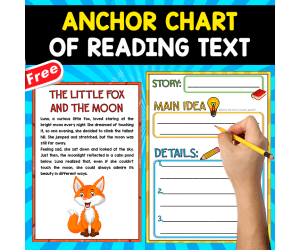
FREE ANCHOR CHART OF READING | The Little Fox and the Moon
ELA, Reading, Writing, Adult Education, Early Learning, High School, Elementary, Homeschool Resources, Middle School, Not Grade Specific, Activities, Worksheets & Printables
FREE ANCHOR CHART OF READING | The Little Fox and the Moon INTRODUCTION; We are EDITORIAL ARENAS EDUCATIVAS, a publisher dedicated to designing educational resources for primary school children approximately between the ages of 3 and 12 who are learning mathematics, literacy, as well as worksheets for learning Spanish and some brain exercises. MAIN INFORMATION: 1. Brief introduction: Hello, thank you very much for being interested in this educational document. This document will help you a lot both in the classroom if you are a teacher, as well as if you homeschool and want to stimulate your children from home. 2. Title of the educational resource: This document is titled "Teaching material for children" 3. Topic to work on: Thanks to this educational document, we are going to work on a basic topic that every child and/or student should master. 4. Area of knowledge where it should be applied: Thanks to this document, we will address a topic and at the same time an important area of learning. 5. Number of pages it contains: This educational document contains the following number of pages available and ready to be used by you, you just have to download and print the document to start using it in your classroom. 6. Is it available in color or black/white? This document and/or set of educational sheets is available in color and also in certain parts contains black and white, however it is generally suggested that the teaching material be designed in color so that it is much more attractive for your students, awakening their attention and interest. SECONDARY AND COMPLEMENTARY INFORMATION: 7. Should I apply it individually or as a group in my class? Also, according to your criteria, see if it is better for these sheets to be applied individually or as a group. 8. What size and format is this resource in? This set of teaching sheets has been published in A4 size, PDF format, so that it is much easier to use. 9. Do I need any extra elements to apply it? Yes, perhaps your students need pencils, colors, markers and even sometimes scissors and erasers. 10. Is it in color or black and white? This educational document has been designed mostly in color so that it is highly attractive to students. 11. Is this resource free or do you have to pay to use it? This document is available for free, so take advantage of the opportunity to download it now. 12. Does it have an answer key attached? No, it does not contain an answer key attached. This file is for personal use only. It is not allowed to be resold or shared with others.
Author EDITORIAL LAURA EDUCA
Tags FREE ANCHOR CHART OF READING, Reading, Comprehension, Free, Free Resources, Anchor Chart

Multiplication Picture Word Problems for Primary Students Gr 1 2 3
Math, Early Math, Multiplication and Division, Division, Grade 1, 2, 3, Worksheets & Printables, Word Problems, Activities
Multiplication Picture Problems for Primary Students (Grade 1-3) Here's a ready-to-print 8 page booklet for your primary students. It introduces the concept of multiplication with simple word problems that can all be solved by drawing pictures! It is made to be easily differentiated: some students may simply draw the pictures and count the answer, while others may try repeated addition, or even start to write multiplication equations. This product helps young students instinctively grasp the concepts integral to the more complex math skills of multiplication and repeated addition, but at at a developmentally appropriate level. It helps student practice the skill of visualizing mathematical situations. Sample Questions: One alien has 4 eyes. How many eyes do 4 aliens have? One cookie has 5 sprinkles. How many sprinkles do 4 cookies have? Each problem has 5 levels of differentiation: Drawing a picture Counting to complete a final answer: "4 aliens have ____ eyes" Completing a groups of sentence: " ____ groups of _____ equals ______ Writing a repeated addition equation: 4 + 4 + 4 + 4 = 16 Writing a multiplication equation: 4 x 4 = 16 You can assign all five levels or differentiate based on your individual students' needs (for example, the fox math group might do parts A through E and the butterfly math group might do parts A through C). Use this resource during whole group instruction or implement it during small group tutorials or even independent work from home. What's Included: A total of 9 pages. in PDF format: Teacher Instructions Student Booklet Title Page 7 Pages of Word Problems Grades to Use With: Because this lesson is designed to be accessible to even the youngest students, it could be used in grades one through grade three. It could also be used in the middle grades in special education settings or for homeschooling.
Author Grace Under Pressure
Rating
Tags Multiplication, Word Problems, Primary Students, Visualizing Math Problems, Kindergarten Math, Grade 1 Math, Grade 2 Math, Early Multiplication, Grade 1 Word Problems
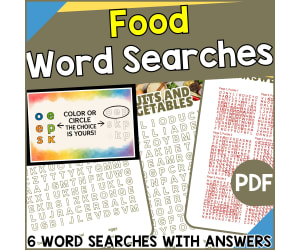
Food Word Searches (PDF)
ELA, Language Development, Resources for Teachers, Vocabulary, Spelling, ESL, Grade 2, 3, 4, 5, Worksheets & Printables, Worksheets, Teacher Tools, Centers, Activities, Word Searches
Wordsearch Series This wordsearch series is designed for students in grades 2–5. Each set of wordsearches is built around a clear vocabulary theme, helping students develop word recognition, improve spelling, and boost topic-related understanding through engaging visual puzzles. Every wordsearch also includes a fun hidden shape for students to guess—adding an interactive twist to traditional vocabulary practice. These wordsearches are student-friendly, classroom-ready, and perfect for integrating into literacy warmups, seasonal units, fast-finisher tasks, or home learning extensions. Each puzzle reinforces themed vocabulary in a playful, structured format that keeps learners motivated. Food Word Search Word List 1. Fruits and Vegetables Apple, Banana, Carrot, Grapes, Lettuce, Orange, Tomato, Berry 2. Breakfast Foods Eggs, Toast, Pancake, Cereal, Milk, Juice, Butter, Honey 3. Sweet Treats Cake, Cookie, Chocolate, Candy, Ice cream, Cupcake, Sprinkles, Lollipop 4. Drinks and Snacks Water, Juice, Milk, Tea, Popcorn, Crackers, Yogurt, Nuts 5. Foods from Around the World Pizza, Taco, Rice, Noodles, Cheese, Bread, Soup, Sushi 6. Healthy Foods Carrot, Apple, Fish, Eggs, Beans, Nuts, Spinach, Water PDF Version Other versions will appear here when available. Follow the store for the lastest on new products. How to Use These Wordsearches These wordsearches are ideal for: Morning work or early finisher bins Vocabulary centers or anchor activities Holiday or seasonal review lessons Independent literacy stations or take-home enrichment Each puzzle includes a themed word list and a shaped grid for students to complete. Word directions may vary (horizontal, vertical, diagonal), and answer keys are included for easy checking. Optional vocabulary challenges or writing tasks can be added to extend the learning experience. Whether you're reviewing key vocabulary, exploring a seasonal topic, or offering fun literacy practice, these wordsearches provide a flexible and engaging tool to support vocabulary growth in grades 2–5. More Food Themed Products CROSSWORDS FULL CATALOG OF DOWNLOAD LINKS HERE Themed Word Search Links Addition PDF Animals PDF Around the Home PDF Birthday PDF Candy PDF Christmas PDF Cinco de Mayo PDF Clothes PDF Colors PDF Days and Months PDF Division PDF Earth Day PDF Easter PDF Easy Word Searches PDF Fall PDF Father's Day PDF Food PDF Geography (Set 1) PDF Geography (Set 2) PDF Geography (Set 3) PDF Graduation PDF Health PDF History (Set 1) PDF History (Set 2) PDF History (Set 3) PDF Human Body PDF Kindness PDF Life Skills PDF Mother's Day PDF Multiplication PDF Science Word Searches (Set 1) PDF Science Word Searches (Set 2) PDF Science Word Searches (Set 3) PDF Shapes PDF Social Skills PDF Spring PDF Sports PDF St. Patrick's Day PDF Subtraction PDF Summer PDF Thanksgiving PDF Transport PDF Valentine's Day PDF Winter PDF Wordsearches in Depth Structure Each wordsearch is crafted around a focused sub-theme and includes a visual puzzle shaped like a related object (e.g., balloon, gift, snowman). Students complete each puzzle using the provided themed word list, strengthening both content knowledge and spelling skills in a highly engaging format. Each completed set includes: A shaped wordsearch puzzle with 10 vocabulary words A student instruction guide with search directions (horizontal, vertical, diagonal) An answer key for teacher support or student self-checking A Did You Know? fact connected to the theme for enrichment or discussion Themes Included The wordsearches cover a wide range of fun, age-appropriate themes, including: Seasons & Holidays (e.g., Halloween, Easter, Valentine’s Day) Math Concepts (e.g., Addition, Number Words) Everyday Topics (e.g., Animals, Weather, School) Special Units (e.g., Health, Earth Day, Sports, Kindness) Each topic is selected to reflect students’ real-life experiences and interests while reinforcing literacy skills and content understanding in a playful, visual way. For similar downloads and other frees, do check out Cored Group on TeachSimple.
Author Cored Education
Rating
Tags Vocabulary, Spelling, Food, Fruits And Vegetables, Breakfast Foods, Foods From Around The World, Healthy Foods, Food Activities, Word Searches, Food Word Searches

U.S. History | Great Depression | The New Deal | A Webquest & Student Activities
Social Studies, History, History: USA, Grade 9, 10, 11, 12, Activities
You are purchasing a 14 slide, Google Hyper-Slides Activity on the Great Depression: New Deal that is ready to load on to Google/Google classroom and Go! This is a highly interactive Google slides activity in which your students will complete the following: 1) Students will examine an online New Deal timeline then complete a Drag n' Drop activity to exhibit their understanding of Major New Deal events/programs created. 2) After exploring an interactive online map of the locations around the U.S. affected by New Deal programs, your students will randomly select 3 locations and will complete a graphic organizer to illustrate what they learned about the impact the New Deal had on these locations. 3) Who were some important New Deal figures? Students will choose 2 people that were pivotal in the New Deal era and will complete a Venn Diagram comparing their 2 chosen people. 4) Students will look through a set of primary source photographs from the 1930's, select one, then complete a photo analysis of their photograph. 5) Conclusion/Exit Card- Students will look at a set of New Deal statistics and will use this evidence to support the argument that the New Deal was successful. A highly visual set of activities that bring the New Deal era to life! You can have students complete all activities in the activity or pick and choose! Includes an answer key! **Includes a GOOGLE version for your use! About: Learning is a Passion Store - I have taught 6th-12th grade during my 20 year teaching career. I prefer to use lessons in my teaching practice that allow my students to become facilitators and active participants in their own learning rather than merely an audience of "my show". I love to create hands- on, interactive activities that really engage my students in the learning process.
Author Learning is a Passion
Tags Webquest, U.S. History, New Deal, History Project, Writing Tasks, Great Depression, Franklin D. Roosevelt, Webquest Chinese New Year
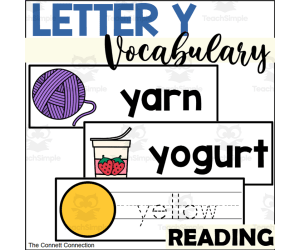
Letter Y Vocabulary and Tracing Cards
ELA, Writing, Handwriting, Language Development, Phonics, Vocabulary, Kindergarten, Preschool, Activities
These vocabulary and tracing cards all students to practice reading and writing letter Y words. These cards include bold, clear, easy to recognize images of objects and ideas that begin with the initial sound of the letter Y that are easily recognized by students. This set contains a total of 12 unique vocabulary cards with their corresponding tracing card, making these cards perfect for a wall display or a writing center activity. What is Included: There are 12 letter Y vocabulary cards There are 12 letter Y tracing cards These vocabulary and tracing cards are suitable for preschoolers and kindergartners who are beginning to learn about words, letters and handwriting. The vocabulary cards provide a way for students to identify things that start with the letter Y and the tracing cards provide students with a fun way to practice letter formation and writing words. When to Use Literacy Center Writing Center Wall display in writing or reading center Small Group Activity Pocket Chart Display Word Wall Cards The vocabulary cards can make a great wall display in a writing center or as part of a word wall. Students will be able to reference the cards when writing or labeling pictures. These cards can also be used as a pocket chart activity where the teacher can introduce different letter V words. Students will love the vibrant, easy to identify pictures and the big, bold words. Skills Assessed Beginning Sounds Tracing Skills Letter Formation for capital and lowercase letters Manuscript Handwriting These cards are a low prep activity for teachers to create. The teacher simply needs to print the cards and cut them out. The cards can be laminated if desired. By laminating the tracing cards, the teacher can create a write and wipe activity with dry erase markers that students can reuse over and over.
Author The Connett Connection
Tags Alphabet Activities, Handwriting Practice, Handwriting Center, Writing Center, Vocabulary Cards, Alphabet Vocabulary, Letter Of The Week, Preschool Literacy, Letter Y, Letter Y Activities
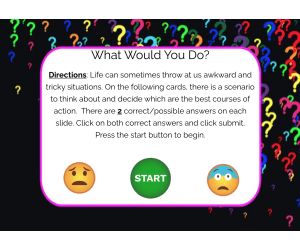
What would you do? An SEL Boom Cards about Awkward and Tricky Situations
Special Resources, Life Skills, Grade 6, 7, 8, 9, 10, 11, 12, Activities
What Would You Do? An SEL Boom Cards about Awkward and Tricky Situations: This unique teaching resource is designed to help upper-middle and high school students navigate unexpected challenges in day-to-day life. It's a vital tool for educators preparing their students for the myriad of complex scenarios, ethical questions, and sometimes difficult choices that come with the transition to middle or high school. About this 15-card deck: Each card presents a tricky scenario likely found in typical adolescent settings. Students read each scenario then choose from two options on how best to resolve it. The cards foster not only problem-solving skills but also spark meaningful class discussions on ethics and decision making. Digital Learning & Technology Integration: The use of modern technology in this product enhances learning while developing tech-savviness. Accessible via up-to-date browsers such as Chrome, Safari Firefox etc., on iPad, iPhone Android devices or Kindle Fires apps - provided an internet connection is present. A Premium Feature: Fast Pins Students can get instant grading feedback when using 'Fast Pins' feature while teachers receive progress data if opting for a premium account service. Potential Implementations: Counseling session activities In-classroom group discussion driver A part of online learning initiatives Casual assignments for self-work at home In conclusion,'What Would You Do?' offers versatile means of targeted implementation towards psychological well-being & thoughtful decision-making instruction at middle & higher education levels–a rare mix amongst educational resources.
Author Jennifer Moyer Taylor
Tags SEL, Social Scenarios, Problem-solving, Ethics, Life Skills

24 FREE EXERCISES | COUNT AND CLIP
Math, Elementary, Early Learning, Pre-K, Activities, Worksheets & Printables
24 FREE EXERCISES OF COUNTING HELLO! WELCOME TO THE EDITORIAL ARENAS EDUCATIVAS RESOURCE STORE! This time we bring you these fantastic resource for you! Your children's afternoons will no longer be boring thanks to these fantastic resource. MAIN INFORMATION: 1. Product name: You can use this educational resource in the primary education classroom. 2. Number of pages: This document contains the following number of pages. 3. Is it editable or not? This educational document is not editable, because this way you can use it better and you will not have any problem with the composition or design undergoing any variation. 4. Theme: This educational resource contains a topic for the primary education of children. 5. Document version: This educational document is available in PDF version, size A4. 6. Color or black/white: This educational product is designed in color because we believe that this will be much more attractive for your children. 7. Aimed at children of ages: This educational document is specifically aimed at children in primary education. SECONDARY INFORMATION:8. What size and format is this resource in? This set of teaching sheets has been published in A4 size, PDF format, so that it is much easier to use. 9. Do I need any extra elements to apply it? Yes, perhaps your students need pencils, colors, markers and even sometimes scissors and erasers. 10. Is it in color or black and white? This educational document has been designed mostly in color so that it is highly attractive to students. 11. Is this resource free or do you have to pay to use it? This document is available for free, so take advantage of the opportunity to download it now. 12. Does it have an answer key attached? No, it does not contain an answer key attached. This file is for personal use only. It is not allowed to be resold or shared with others.
Author EDITORIAL LAURA EDUCA
Tags COUNT AND CLIP, NUMBERS, FREE RESOURCES, MATH, MATH RESOURCES
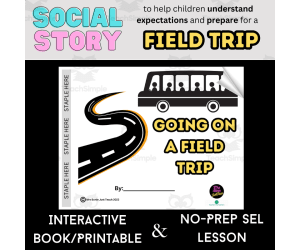
Preparing for a Field Trip - Rules and Expectations | Interactive Book
, Grade 3, 4, 5, 6, Activities
Preparing for a Field Trip - Rules and Expectations | Interactive Book A new, dynamic teaching tool is now available to educators looking for innovative ways to prepare students for a field trip. The Preparing for a Field Trip - Rules and Expectations | Interactive Book seamlessly combines education and interactive play in the format of an engaging social story. This multi-faceted resource enables students aged 7-12 to gain comprehensive knowledge about various dos and don'ts on field trips before they even embark on one. The interactive book throws light upon intricate details associated with these educational outings. It paints the vivid picture of expectations while on a field trip, allowing children to assume the role of lead characters in the story. As they proceed through the book, learners answer questions, color illustrations, draw depictions and comprehensively prepare themselves by understanding rules. Versatility The resource can be used in whole class lessons where each student gets their own half-page booklet guided by an ActiveBoard presentation from Google Slides that accompanies it. For individual reinforcement due behavior management issues or non-compliance during actual visits, it can be utilized privately in calming spaces within classroom ensuring further assimilation. In small group structures educators such as counselors or therapists can curate sessions based around behavioral needs using this guidebook. This also transforms into personal behavior interventions via one-on-one sessions targeted at individual requirements followed by storage inside desks for frequent reference when needed. Format & Access This textbook comes in a downloadable PDF format which is easy to access and print out. With utility reaching across grades 3-6; adopt this indispensable tool today for an enjoyable, educative field trip experience tomorrow!
Author Mrs Bonie Just Teach
Tags Field Trips, Interactive Book, Rules And Expectations, Educational Resource, Social Story
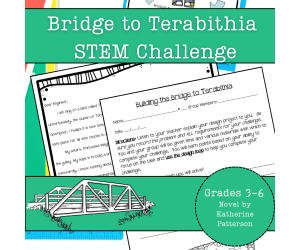
Bridge to Terabithia STEM Experiment + STEM Project for Grades 4, 5, 6
Science, Technology, Engineering, STEM, Grade 4, 5, 6, Experiments, Activities, Projects, Diagrams, Teacher Tools, Graphic Organizers, Rubrics
Bring literature to life with this exciting STEM activity inspired by Bridge to Terabithia! This challenge sparks creativity and problem-solving as students plan and construct a bridge for King Jesse as he plans to make entrance to Terabithia safer. Perfect for blending literature with science, it allows students to explore engineering concepts using simple supplies while promoting teamwork and critical thinking. What’s Inside This Resource: Student Letter: A letter from Jesse introduces the challenge, linking the story to a real-world engineering task. Design Loop Graphic: A visual students can attach to their science journals, serving as a step-by-step guide throughout the activity. Detailed Instructions: Choose to print the guide as a packet or have students record each stage in their journals for an interactive experience. Teacher Tips: Practical guidance for crafting a clear problem statement with time constraints, materials, and success criteria tailored to your classroom. Skills Your Students Will Build: ✔ Problem-Solving: Identify obstacles and create inventive solutions. ✔ Engineering Design: Navigate the design loop—plan, construct, test, and refine. This page can easily be enlarged for a classroom poster. ✔ Critical Thinking: Assess their prototype’s performance and pinpoint ways to enhance it. ✔ Teamwork: Collaborate effectively to accomplish shared goals. Versatile Classroom Application: Whether as guided instruction or part of an integrated literature and science unit, this STEM activity encourages students to think creatively, document their process, and meet science and engineering standards. The rubric included is based on engineering concepts, but can also be used as a nonfiction writing rubric for cross-curricular options. Why Educators Love This Resource: ⭐ “My students were fully engaged, combining their passion for reading with STEM!” ⭐ “Simple to set up and encourages creativity and teamwork.” ⭐ “A seamless connection between literature and science for cross-curricular learning!” Empower your students to solve Jesse’s challenge and experience the excitement of engineering with this standards-aligned STEM adventure!
Author Kel's Klass
Tags 4th Grade Science Project, 4th Grade Science Experiment, 5th Grade Science Project, 5th Grade Science Experiment, 6th Grade Science Project, 6th Grade Science Experiment, Engineering Diagram, Science Graphic Organizer, Science Rubric, Bridge To Terabithia
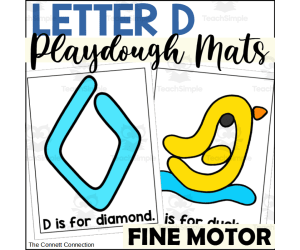
Letter D Playdough Mats
ELA, Language Development, Phonics, Kindergarten, Preschool, Activities
Letter D Playdough Mats allow preschool and kindergarten students to build fine motor skills while learning the letter D. Students use playdough to mold objects that start with the letter D onto activity mats. The 4 mats feature clear images of a duck, diamond, dice, and donut. Children recognize initial letter sounds and match playdough colors to the objects. Teachers can use the mats during literacy centers, small groups, tabletop activities, and more. The no-prep mats target fine motor development, color matching, and phonics. Simply print, laminate if desired, and add playdough. The durable mats are reusable for multiple school years. Students engage in open-ended creation while connecting the letter D to the beginning sounds of words. Fine motor practice helps develop pre-writing abilities.
Author The Connett Connection
Tags Letter D, Letter D Activities, Letter D Playdough Mats, Alphabet Playdough Mats, Playdough Mats, Fine Motor Skills, Fine Motor Activity, Letter Of The Week, Preschool Activities

Kids Yoga Stories: Tropical Island Yoga Cards for Kids
P.E. & Health, Yoga, Kindergarten, Preschool, Grade 1, 2, Activities
Use yoga poses to teach about Tropical Islands! This set of Tropical Island Yoga Cards for Kids will help your students learn through movement either at home, in the classroom, or in a studio. Included in this deck of Tropical Island Yoga Cards for Kids - A card with an index - Tips to teach yoga -18 cards illustrating the yoga poses -18 matching Tropical Island Cards The index indicates the order in which the yoga poses are to be used to flow from one pose to the next. There is multicultural representation featured in yoga kids! Recommended for ages 3+ Ways in which you can use these cards as homeschoolers or in the classroom include: -For transition times -Morning routines or circle times -Brain breaks to calm their minds and bodies -Physical education -Occupational and/or physical therapy -With one child, small, or large groups Benefits of Yoga for kids include: -Increased strength -Increased flexibility -Improves sleep -Promotes positive interactions amongst adults and children -Develops self-confidence -Improves self-expression -Improves body awareness -Promotes a lifestyle that is active and healthy.
Author Kids Yoga Stories
Tags Kids Yoga Stories, Tropical Island Yoga, Yoga Cards, Kids Yoga, Yoga Poses

Earth Science Reading Comprehension Passage: Ice Age Leftovers (Docs)
Science, ELA, Reading, Reading Comprehension, Strategies, Resources for Teachers, Earth and Environmental Sciences, Earth Sciences, Grade 6, 7, 8, 9, Writing Prompts, Worksheets & Printables, Centers, Activities, Teacher Tools, Assessments, Quizzes and Tests, Quizzes, Tests
Science Reading Comprehension Passages and Questions: Ice Age Leftovers (Docs) This very engaging earth science reading passage about how ice left from the Ice Age still affects Earth today . It explains the differences between glaciers, ice sheets, ice shelves, icebergs, and sea ice , and shows how each one shapes land, oceans, weather, and climate. This passage is designed to bridge the gap between science and literacy through strengthening reading comprehension and sparking scientific curiosity in middle school students. The passage blends English Language Arts skills with accurate science content that supports NGSS classroom practice. Ideal for interdisciplinary learning in ELA and Science. Suitable for Grade 9 review, too! Student Tasks for The Passage: 5 multiple-choice questions targeting main idea, key details, inference, vocabulary in context, and use of evidence 5 vocabulary matching items with clear, student-friendly definitions 5 text-based questions that require citing specific lines or facts 1 summary prompt that asks students to condense central ideas accurately Full answer key for every section Available Formats for this Resource PDF Fillable PDF Word Docs FULL CATALOG OF DOWNLOADING LINKS HERE Product Details Length: 5 pages total Grades: 6–8, also suitable for Grade 9 review Use cases: close reading, stations, homework, intervention, test prep, and sub plans Standards support: reinforces informational-text skills and supports NGSS-style sense making through observation, modeling, and clear use of claim, evidence, and reasoning Why Teachers Choose This Set Authentic science content paired with rigorous literacy practice Consistent task structure across all passages for easier planning and smoother student routines Clear, age-appropriate writing that builds confidence without oversimplifying Other Science Reading Collections you May find in the store: 1. Astronomy & Space Science 2. Volcanoes, Rocks, & Mountains 3. Rock Cycle, Soil, & Sinkholes 4. Mars, Glaciers, & Antarctica 5. Water Cycle, Acid Rain, & Wastewater 6. Insects, Animals, & Ecosystems 7. Bioluminescence & Insects 8. Animal Skin, Cats, & T. Rex 9. Human Body and Senses 10. Health & Applied Bioscience 11. Waves, Light, & Imaging 12. Electricity & Energy 13. Motion & Materials 14. Chemistry and Materials Science Use this set to reinforce ELA skills in science, to add literacy to your lessons, and to support independent work. The passages strengthen main idea, evidence use, vocabulary in context, inference, cause and effect, and summary writing. With ready-to-use assessments and complete answer keys, you can provide focused practice that is simple to run and fast to review.
Author Middle & High School - CORED Education
Rating
Tags Middle School, Reading Comprehension, Reading Strategies, ELA, Centers, Reading Passage, Assessments, Vocabulary, Environmental Science, Space

Human Digestive System – Lab Station Activity
Science, Life Sciences, Human Body, Grade 7, 8, 9, 10, Labs, Experiments, Activities
Human Digestive System – Lab Station Activity This interactive human digestive system resource engages students through eight diverse lab stations. Learners examine models, draw diagrams, watch videos, research online, solve puzzles, and respond to questions. The self-guided format enables customized implementation for individuals, small groups, or whole class. The non-repetitive blend of creativity, writing, media, and critical thinking caters to multiple learning styles. Students reinforce anatomy concepts like organs and disorders while connecting ideas to digestion processes. The activity concludes with an assessment where learners develop their own questions. Educators save prep time since the package provides content cards, recording sheets, and answer keys. Extendable to a unit on body systems.
Author Teach With Fergy
Tags Human, Digestive, System, Lab Station, Anatomy, Hands On Digestive System Activities, Digestive System Hands-on Activities, Digestive System High School Activities

Go Fish! A Vocabulary Card Game (Letters A-J)
ELA, Language Development, Vocabulary, Not Grade Specific, Activities, Games
Go Fish! A Vocabulary Card Game (Letters A-J) An excellent resource treasured by educators in public schools or those engaged in homeschooling. This unique, fun, and educational game aids students to broaden their vocabulary and enhance memory skills. The excitement of collecting card sets while facilitating language arts learning is a value add. Inclusive & Flexible Gameplay: The game has been designed for 2-4 players promoting cooperation among learners. Included are 16 groups of 4 vocabulary cards each totaling to 64 cards. To suit beginners, educators can also start with just eight sets (32 cards), although optimal enjoyment can be achieved with at least twelve sets (48 cards). Diverse Thematic Appeal: The game includes numerous themes encompassing everyday life aspects from airport terminologies to descriptions of household items. Natural world vocabularies such as birds or insects along with human body parts graphs are included which enhances health literacy. In addition, understanding different food items through breakfast nomenclature adds a substantial linguistic learning edge. A Simple Setup Process: To set it up, print out the Go Fish! PDF files and laminate them for sustainability. For aesthetic purposes and maintaining the game strategy by preventing players from recognizing card content while stacked - double-sided print featuring decorative patterns on each card's reverse side is suggested. Versatile Application: This product offers manifold versatility: it may be utilized as an engaging group activity during class hours irrespective of grades; divided into smaller cohorts for concentrated focus; or even assigned as homework tasks - fostering individual & collective learning experiences making it perfect for any teaching environment including classrooms or homeschool settings. By merging language arts comprehension with enjoyable gameplay, Go Fish! not only enables students to boost their communication & conservation potential but also showcases to the world how educational and fruitful learning can indeed be pleasant!
Author Tom's Talk
Tags Vocabulary, Card Game, Educational Resource, Language Arts, Memory Skills
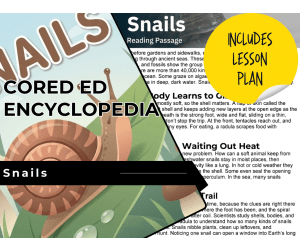
Snails Reading Comprehension Passage - Cored Ed Encyclopedia
ELA, Language Development, Reading Comprehension, Reading, Pre-Reading, Writing, Science, Animals, Life Sciences, Strategies, Grade 2, 3, 4, 5, Worksheets & Printables, Worksheets, Teacher Tools, Centers, Activities, Writing Prompts, Assessments, Quizzes and Tests, Quizzes, Lesson Plans
This snails reading comprehension includes: Visualization (on the front cover) Start your lesson by taking a minute to think and share something about the topic. Read the script aloud (slowly), perhaps prepare some music or sound effects. Student close their eyes and let their imaginations wander. Students open their eyes, read the question aloud and give them a few minutes to complete. Ask a few students to share or keep answers until the end to compare with what they learn in the passage. Quick pause—thousands of Cored Education products are included with your TeachSimple membership. Download links and encyclopedia index available here. Pre-Reading Trivia Students will write down one thing they already know about the subject and then read five more facts and discuss. These facts are fun, and the students will enjoy learning about the subject before reading more. Give 1 minute for students to write what they already know (no pressure—best guess is fine). Read the five facts together. After each fact, do ask a student for their opinion, was it surprising? Set a purpose by asking students to highlight/underline one fact they want to learn more about during the reading. Reading Passage The text is a high-interest reading passage with set paragraphs, roughly three to four paragraphs long. It contains a variety of themes about the topic, anywhere from history to technology. The passage is between 250 and 350 words in length. First, ask students to look at the headings and see what they’ll learn about today. What do they know about the topic/heading? First read options: Teacher read-aloud (best for support). Partner reading (paragraph by paragraph). While reading, students underline important details, and vocabulary words they think may come up in the questions section. Mixed Questions The first question page contains four multiple-choice questions, each with a choice of four answers, and three written response questions that require a sentence or two from the student. Students complete the mcqs first independently, then review quickly as a class. For the 3 written responses, try to get students giving the answer with some form of evidence: “I think ___ because the text says ___.” If students get stuck, send them back to check the passage. Vocabulary Questions Practice seven key words from the text in this section across two activities. First section is scrambled words where students will unscramble three words given a clue for each. The second section is a word to meaning matching activity. Before starting, have some students read out words they underlined in the passage. Ask students to say the word and read aloud the sentence(s) around each word. Ask students to do scrambled words and the matching exercise in pairs then go through answers as a class. For the scrambled spelling task, get four pairs to come up to the board and write the words for extra practice with the other student reading out the clue. For the matching task, prompt students to give full sentences: “I matched ___ with ___ because ___.” Creative Writing In this question, the student will be required to write a five to eight sentence paragraph on a question related to the topic. Before starting, ask students write down 3 key ideas they are going to include in their piece. Ask students for ideas to share around the class to help those struggling. Pro writing expectations: 5–8 sentences At least 2 facts or details from the passage At least 2 vocabulary words from the previous page Students read their paragraphs while classmates listen for facts and vocabulary words. Extension Activities This page is optional for fast finishers or to take home. There are several activities, each one requiring a different skill. Do some, do none, do all, completely optional - but you will feel reassured knowing every possibility is planned for. Includes summary writting question. Answer Key There are answers for the multiple-choice questions, written response questions have sample answers, vocabulary answers and if there is a summary question then a sample summary will be provided as well. Lesson Plan Included Customized lesson plan for this lesson is included. Lesson Snapshot Title: Snails Genre: Nonfiction (informational text with support pages) Subject: Science (Life Science) Primary Topic: Snail traits, habitats, and how they survive Estimated Guided Reading Level (A–Z): S What This Lesson Teaches Best What snails are (gastropods, “belly-footed” mollusks) and how they move using a strong foot on the bottom of their bodies. How snail body parts work, including the mantle making the shell, tentacles with tiny eyes, and a radula that scrapes food with many tiny teeth. How snails live in many habitats (mostly ocean; also land and freshwater), including near shore, on reefs, and in deep, dark water. How snails stay safe and survive tough conditions by pulling into their shell, becoming dormant, and sometimes sealing the opening with mucus or an operculum. How scientists use evidence (shell growth spirals and silvery trails) to study snails and understand how they live in so many places. Learning Goals Explain what “gastropods” means and how snails move using a strong foot. Describe how a snail’s mantle helps make and grow its shell. Identify what a radula is and how it helps a snail eat. Describe how land and freshwater snails avoid drying out and handle hot or cold weather. Use details from the passage to describe where snails live (near shore, reefs, deep water, and moist land places). Key Vocabulary From the Text gastropods — “belly-footed” animals that move using a strong foot. mantle — a flap of skin that makes the shell. radula — a scraper with many tiny teeth for eating. dormant — resting and not active for a while. operculum — a little door that can seal a shell opening. FULL CATALOG OF DOWNLOAD LINKS AND ENCYCLOPEDIA INDEX HERE
Author Cored Education
Rating
Tags Vocabulary, Reading Comprehension, Reading Passages, Reading, Creative Writing, Reading Strategies, Writing Prompts, Lesson Plans, Snails, Life Science

Basic Math Skills | Counting Estimation Comparison 1
Special Resources, Special Education Needs (SEN), Math, Early Math, Numbers, Place Value, Preschool, Grade 1, Teacher Tools, Lesson Plans, Worksheets & Printables, Flashcards, Activities
Basic Math Skills | Counting Estimation Comparison . This is a comprehensive and resourceful teaching aid series designed to instill foundational math skills in kindergarten and grade 1 students . It is an essential tool for educators in varied environments, including public schools and homeschooling . Resource Contents : Each PDF file features 24 pages of vibrant, picture - based materials . Covered concepts include quantity counting, estimations, and comparisons . The resources emphasize visual representation of quantities for easier understanding . Inclusive are pages where equal or unequal amounts are arranged either linearly or randomly . Certain sheets feature objects appearing up to 20 times for learners to cut out, point, count and paste - reinforcing manual learning techniques . All materials come both as colored illustrations as well as blackline versions catered to different printing preferences or learner needs . The resource can be used either as larger A4 size work mats / screen view slides or smaller task cards / flash cards - proving effective during group instruction sessions or individualized tutoring . The range of visuals from apples & worms to elephants & coconuts provides fun reinforcement while maintaining student’s interest in counting skills . Furthermore these sustainable resources can be laminated post - printing thus ensuring their longevity while enhancing tactile engagement among young learners . In addition to basic numeracy, the Basic Math Skills | Counting Estimation Comparison, lays the groundwork for number comprehension & place value ! It provides teachers with reliable support while forming the strong numeric foundations crucial at this important educational stage . The material is presented either in A4 size, as work mats / screen view slides or as 4-on-a-page flash cards to use as task cards as well . It is a great resource for your math stations and math centers and once you print and laminate, you can store forever . 1 pdf file . 24 pages with mats / screens / task cards / flash cards to work on counting, estimation and comparison basic math skills . For more pdf materials on numeracy, basic math and pictorial / manipulative approach to learning, you can click WORDS ASIDE .
Author WORDS ASIDE
Tags Math, Numbers, Task Cards, Mats, Manipulatives, Math Station, Math Center, Pictorial , Slides, Words Aside

Letter U Games
ELA, Language Development, Phonics, Kindergarten, Preschool, Activities, Games
This letter U beginning sound game is an interactive way for students to work on words that begin with the letter U. This alphabet game provides students with a fun and engaging way to practice on the initial sound of the letter U. This game focuses on the most common sound of the initial /u/ sound. What is Included: One gameboard in color One gameboard in black and white What do you need to play: One of the gameboards A die Something to mark the inner spaces with A player piece to move around the edge of the board This game can be a single player game or a two player game. To play, each student will need one gameboard, one die, 20 objects to mark the inner part of the game board, and a game piece for each student playing. First, a student will roll the die and move his game piece around the outside of the gameboard. The student will then cover the corresponding picture in the middle of the gameboard. The winner or end of game can be determined by one of the following rules below, depending on if the student is playing alone or with a partner. This can be a single player game using the following rules: The player tries to get 4 pictures covered in a row to win The player tries to cover all the spaces in a set time limit This can be a two player game by using the following rules: Who can cover the most spaces in a specific time limit Who can cover half (10 spaces) of the board first When to Use: Literacy Center Small Group Activity Morning Tubs or Baskets Individual Activity Early Finisher Game File Folder Game Partner Activity Skills Assessed: Beginning Sound of the Letter U Counting Following Directions
Author The Connett Connection
Tags Alphabet Activities, Alphabet Games, Beginning Sounds, Initial Sounds, Letter Of The Week, Phonics Game, Alphabet Center, Letter U, Letter U Games, Letter U Activities