



3,984 products added recently
Page 649 - Newest Teaching Resources

 Show filters
Self-esteem journal (#2023)
P.E. & Health, Health, Adult Education, Not Grade Specific, Worksheets & Printables, Worksheets
"Self-Esteem Journal" is your daily companion to boost confidence and cultivate positivity. Reflect on your achievements, moments of pride, and positive experiences throughout the week. With structured prompts, this eBook helps you celebrate successes and foster a strong sense of self-worth. Elevate your self-esteem, one empowering journal entry at a time. Here is the list of the worksheets available to support your mental health: Grief and bereavement (#2011) Time management tips (2012) OCD Diary (#2022) Self-esteem journal (#2023) Advantages and disadvantages of change (#2031) Considering different perspectives (#2032) Challenging negative thoughts (#2043) Progressive muscle relaxation (#2045) Healthy lifestyle categories (#2050) Goodbye letter when grieving (#2055) Hierarchy of anxiety producing situation (#2056) Questions to explore a mood (#2061) Avoidance behavior diary (#2066) Self-care assessment (#2067) Activities related to values (#2071) Identifying your thinking errors (#2074) Challenging thoughts with CBT (#2087) Antecedent behavior consequence model ABC (#2089) Helpful and unhelpful ways to cope with emotions (#2090) Family, friends, acquaintances (#2092) Self-care plan (#2094) Triggers behavior payoff (#2100) Smart goals (#2102) Self-management of health anxiety (#2113) Cost of anxiety (#2114) Assessment of your assertiveness in different situations (#2115) How to deal with guilt and shame (#2119) Checking the facts about shame and guilt (#2121) Using the I statement (#2123) Core beliefs (#2124) Self-compassion and compassion for others (#2125) Assessing your self-esteem (#2126) Safety plan (#2133) Communicating clearly (#2134) Resilience plan (#2135) Distracting yourself from distressing emotions (#2136) Your anger triggers (#2139) Expressing your anger (#2140) The stages of grief (#2142) Forgiveness (#2143) Exploring values (#2146) Values discussion questions (#2147)
Author Learn it ANY way
Tags Self-esteem, Happiness, Well-being
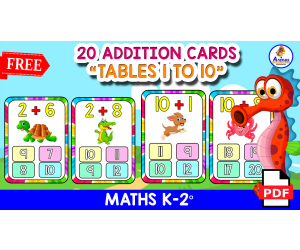
20 ADDITION CARDS | Exercises With Options
Math, Addition and Subtraction, Addition, Kindergarten, Preschool, Grade 1, 2, Worksheets & Printables, Flashcards
THANK YOU FOR BEING PART OF THE ARENAS EDUCATIVAS EDITORIAL! We are a publisher dedicated to the development of fabulous educational resources for the areas of mathematics, language, reading and writing, as well as Spanish and brain exercises. FOR EXAMPLE WE HAVE SOME PRODUCTS AVAILABLE FOR FREE FOR YOU TO DOWNLOAD NOW: ADDITION WORKSHEETS : https://teachsimple.com/product/200-addition-exercises-5-worksheets SUBTRACTION WORKSHEETS : https://teachsimple.com/product/200-subtraction-exercises-5-worksheets NUMBERS FLASHCARDS | FROG THEME: https://teachsimple.com/product/10-flashcards-numbers-1-to-10-frog-them NUMBERS FLASHCARDS | BEE THEME: https://teachsimple.com/product/10-numbers-flashcards-bee-theme A. HOW TO USE THIS DOCUMENT? First you have to print this document, then cut out each of the primers, then proceed to get a laminate machine to laminate each of the primers so that they are resistant and do not get damaged when your children use them. Then proceed to tell your students to use whiteboard markers to mark the correct answer to each addition question. Otherwise, if you do not have a laminating machine, you can directly print each page and staple everything, and ask your students to use pencil and markers to mark the appropriate option. IMPORTANT TO REMEMBER: This file is for personal use only. It is not allowed to be resold or shared with others. B. IMPORTANT INFORMATION REGARDING THIS RESOURCE: Now I will present important information regarding this resource, so that you are encouraged to decide on it and download it: 1. The name of this educational resource is "20 1-digit addition cards, from tables 1 to 10" 2. This document contains this number of pages This educational document is made up of 10 pages, on each page you will find 2 flashcards, so in total you will have 20 flashcards with addition exercises from 1 to 10. 3. This educational resource has been prepared by: Prepared and designed by EDITORIAL ARENAS EDUCATIVAS. 4. You can apply this educational document in different contexts such as: You can apply this document in the classroom if you are a mathematics teacher and you are teaching the mathematics course and especially if you are on the topic of adding 1 digit, and on the other hand if you are a parent, you can apply it with your children , to practice addition with your children. 5. Is this document in black and white or color? This document is prepared in color. 6. For what ages is this document recommended? Recommended for children from 4 to 7 years old who are learning addition.
Author EDITORIAL LAURA EDUCA
Tags Addition Flashcards, Addition Exercises, Addition Worksheets, Addition Resources

Peter Pan - Finger Puppets - Story
ELA, Literature, Grade 1, 2, 3, 4, 5, 6, Activities
Finger Puppets - "Peter Pan - Fairy Tale With this material, you get craft templates for finger puppets for the story "Peter Pan". Perfect for language lessons at primary school. The students deal creatively with the story by coming up with suitable dialogues and acting out the story. The special thing about the finger puppets is that the characters show different emotions by turning the finger puppets or change according to the narrative. The finger puppets are suitable for language lessons in grades 1, grades 2, grades 3, grades 4, grades 5 and grades 6. The finger puppet templates are available in two versions: one in color and one in black and white. You can decide for yourself whether you want to use the time-saving or printer-friendly version. The students can design the black and white templates themselves, for example. With the colored templates, you can quickly create a finger puppet set that you can give to the students to play with. To store it in the binder, the students can make a bag. For the finger puppet show, I have also added suitable backdrops. The students can also design and use their backdrops for their finger puppet show. Teaching Ideas: The finger puppets can be used in various ways in the classroom: Students use the finger puppets during a book presentation to bring the characters to life and practice retelling. Students act out dialogues between the main characters of the fairy tale. The students use the finger puppets in assigned roles while reading. They take turns playing with the different characters. The students continue to tell the story with the finger puppets or come up with dialogues for gaps within the story. The students design the finger puppets in color or cut, fold and make the colored templates into finger puppets. Best regards, Doreen Blumhagen - Die Relitante
Author Die Relitante
Tags Fairy Tales, Finger Puppets, Primary School, Peter Pan, Language Lessons, Literature
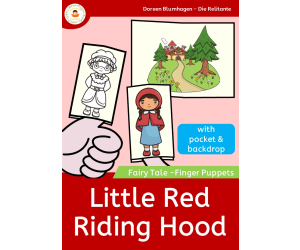
Little Red Riding Hood – Finger Puppets Craft
ELA, Literature, Preschool, Kindergarten, Grade 1, 2, 3, 4, Activities
Finger Puppets - Little Red Riding Hood - Fairy Tale With this material, you get craft templates for finger puppets for the story "Little Red Riding Hood". Perfect for language lessons at primary school. The students deal creatively with the story by coming up with suitable dialogues and acting out the story. The special thing about the finger puppets is that the characters show different emotions by turning the finger puppets or change according to the narrative. The finger puppets are suitable for language lessons in grades 1, grades 2, grades 3, grades 4, grades 5 and grades 6. The finger puppet templates are available in two versions: one in color and one in black and white. You can decide for yourself whether you want to use the time-saving or printer-friendly version. The students can design the black and white templates themselves, for example. With the colored templates, you can quickly create a finger puppet set that you can give to the students to play with. To store it in the binder, the students can make a bag. For the finger puppet show, I have also added suitable backdrops. The students can also design and use their backdrops for their finger puppet show. Teaching Ideas: The finger puppets can be used in various ways in the classroom: Students use the finger puppets during a book presentation to bring the characters to life and practice retelling. Students act out dialogues between the main characters of the fairy tale. The students use the finger puppets in assigned roles while reading. They take turns playing with the different characters. The students continue to tell the story with the finger puppets or come up with dialogues for gaps within the story. The students design the finger puppets in color or cut, fold and make the colored templates into finger puppets. Best regards, Doreen Blumhagen - Die Relitante
Author Die Relitante
Rating
Tags Fairy Tale, Little Red Riding Hood, Brother Grimm, Finger Puppets, Language Lessons, Primary School
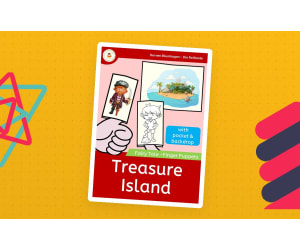
Finger Puppets - Treasure Island - Story
ELA, Literature, Grade 1, 2, 3, 4, 5, 6, Activities
Finger Puppets - Treasure Island - Story With this material, you get craft templates for finger puppets for the story "Treasure Island". Perfect for language lessons at primary school. The students deal creatively with the story by coming up with suitable dialogues and acting out the story. The special thing about the finger puppets is that the characters show different emotions by turning the finger puppets or change according to the narrative. The finger puppets are suitable for language lessons in grades 1, grades 2, grades 3, grades 4, grades 5 and grades 6. The finger puppet templates are available in two versions: one in color and one in black and white. You can decide for yourself whether you want to use the time-saving or printer-friendly version. The students can design the black and white templates themselves, for example. With the colored templates, you can quickly create a finger puppet set that you can give to the students to play with. To store it in the binder, the students can make a bag. For the finger puppet show, I have also added suitable backdrops. The students can also design and use their backdrops for their finger puppet show. Teaching Ideas: The finger puppets can be used in various ways in the classroom: Students use the finger puppets during a book presentation to bring the characters to life and practice retelling. Students act out dialogues between the main characters of the fairy tale. The students use the finger puppets in assigned roles while reading. They take turns playing with the different characters. The students continue to tell the story with the finger puppets or come up with dialogues for gaps within the story. The students design the finger puppets in color or cut, fold and make the colored templates into finger puppets. Best regards, Doreen Blumhagen - Die Relitante
Author Die Relitante
Tags Finger Puppets , Treasur Island

FREE MINIBOOK TRACING | 30 PAGES
Special Resources, ELA, Writing, Handwriting, Speech Therapy, Kindergarten, Preschool, Grade 1, 2, Worksheets & Printables, Worksheets
SOME OTHER FREE PRODUCTS YOU MIGHT BE INTERESTED IN! Below, we offer you other totally free resource alternatives that are found in our "EDITORIAL ARENAS EDUCATIVAS" resource store, so go ahead and download them now so that you can use them in class. These resources are the following, so simply click on the link that will be placed next to each title and go ahead and download them now: 40 SUBTRACTION CARDS: https://teachsimple.com/product/40-subtraction-flashcards-animal-theme 40 ADDITION CARDS: https://teachsimple.com/product/40-addition-flashcards-game 40 MULTIPLICATION CARDS: https://teachsimple.com/product/40-multiplication-flashcards-animal-theme 40 DIVISION CARDS: https://teachsimple.com/product/40-division-flashcards-game -A. IMPORTANCE OF THE PRACTICE OF GRAPHOMOTRICITY IN CHILDREN: --As is known, graphomotor skills are those set of skills and aptitudes that will allow the child to develop legible writing in the future. These skills consist of the child's ability to control the movement of the pencil to produce well-formed and precise strokes on the paper. --This is why graphomotor skills will also involve eye-hand coordination, which will allow the child to copy letters and words effectively. --Graphomotor skills bring multiple benefits because this activity stimulates and develops multiple cerebral and neuronal connections in the brain. In this way, children who exercise graphomotor skills will have greater activity in the areas of the brain related to cognition and language. -- In addition to everything, graphomotor skills will have a very positive impact on the child's self-esteem because by learning to write legibly and effectively, children will feel more capable and self-confident, which will later allow them to learn new skills and develop in different areas of life. B. BRIEF DESCRIPTION OF THIS PRODUCT: Now, I give you quick information about this product: 1. Title of the pedagogical resource: This document is titled "30 pages of strokes" 2. Topic to work on: Graphomotor skills and animals. 3. Area of knowledge where it should be applied: Graphomotor skills, early stimulation. 4. Number of pages contained: Contains 30 pages. 5. Is it available in color or white/black? Available in colors. 6. What version is it available in? Available in PDF version, A4 size. 7. Editable/Not Editable: Not editable.
Author EDITORIAL LAURA EDUCA
Tags Tracing, Tracing Lines, Tracing Worksheets, Tracing Exercises

40 NUMBERS CLIP CARDS | Numbers 1 to 10
Math, Numbers, Kindergarten, Preschool, Grade 1, 2, Worksheets & Printables, Flashcards
TAKE ADVANTAGE OF THIS OPPORTUNITY AND DOWNLOAD THIS FABULOUS EDUCATIONAL RESOURCE FOR MATHEMATICS NOW! COUNT AND CLIP - 40 Numbers Cards - Number of pages: This document contains 10 pages. - Animal Theme. - To learn to count numbers from 1 to 10. A. GENERAL INFORMATION ABOUT THIS PRODUCT: Below I will provide you with detailed information about this product. 1. Why should teachers use educational materials in the classroom? Teachers must use teaching materials in class because multiple research confirms the importance and impact of the use of teaching materials on children. 2. What is the name of this document? The name of this product is "40 clip cards with numbers from 1 to 40" 3. What topic will you address in this resource? The topic of numbers from 1 to 10 will be addressed. 4. For what ages is it recommended? This product is recommended for children ages 5 to 7 who are learning numbers from 1 to 10. 5. Who is the author of this document? The author of this educational game is EDITORIAL ARENAS EDUCATIVAS. 6. In what area of knowledge can it be applied? You can apply this document in the area of mathematics. 7. Should I apply it individually or in groups in my class? You can apply this as a group in groups of children of 2 to 3. B. SECONDARY INFORMATION ABOUT THIS PRODUCT: Below I will provide you with secondary information about this product, so that you can decide to download it now. 8. What size and format is this resource in? This document is in A4 size, PDF format. 9. Do I need some extra elements to apply it? Yes, you will need a printer, then scissors to cut each of the cards. It is also preferable that you laminate these cards so that they are protected from continuous use and wear. 10. Is it in color or black and white? These flashcards are made in colors so that they are much more interesting for children. 11. Is this resource free or do I have to pay to use it? This resource is free, so make the decision to download it now. C. OTHER RESOURCES THAT MAY INTEREST YOU: Below, we give you a list of resources that might interest you, such as these:
Author EDITORIAL LAURA EDUCA
Tags Numbers Flashcards, Numbers, Flashcards Numbers, Numbers 1 To 10, Numbers Resources

I HAVE, WHO HAS? Game | Subtraction 1 to 10
Math, Addition and Subtraction, Subtraction, Kindergarten, Preschool, Grade 1, 2, Activities, Games
WELCOME TO THE ARENAS EDUCATIVAS PUBLISHING RESOURCE STORE! We are a publisher dedicated to creating fabulous and incredible resources for children. 1. GENERAL INFORMATION ABOUT THIS PRODUCT: Below I will provide you with information about this resource: A. The name of this educational resource is: The title of this resource is "20 Subtraction Game Cards" B. This document contains this number of pages This document contains 10 pages, on each page you will find 2 flashcards , in total you will have 20 flashcards . C. This educational resource has been prepared by: Prepared and designed by EDITORIAL ARENAS EDUCATIVAS. D. You can apply this educational document in different contexts such as: You can apply this document both in the classroom and at school. a) In the classroom: If you are a mathematics teacher, you can apply this in your subtraction class, in groups of children of 2 to 3 members maximum, because this game is super easy to play and will take little time to solve. E. Is this document in black and white or color? This document is prepared in color, so that it is much more attractive to students. F. For what ages is this document recommended? You can apply this to children ages 4 to 7 who are learning about subtraction. G. At what point in class can I apply it? You can apply this during the class, as an activity or at the end to evaluate learning. H. Should I apply it individually or in groups? Preferable to apply it in a group. I. Keywords that describe the product: subtraction, subtraction exercises, subtraction worksheets, subtraction resources. 2. OTHER FREE DOCUMENTS THAT MAY INTEREST YOU: We also have other resources available that may interest you, such as: "I have | Who has?" Multiplication Game: https://teachsimple.com/product/i-have-who-has-multiplication-game "I have | Who Has?" Numbers: https://teachsimple.com/product/i-have-who-has-numbers-1-to-10 "I have | Who Has?" The shapes: https://teachsimple.com/product/i-have-who-has-las-figuras-geometricas-espanol "I have | Who Has?" The fruits: https://teachsimple.com/product/i-have-who-has-las-frutas-en-espanol IMPORTANT: This file is for personal use only. It is not allowed to be resold or shared with others.
Author EDITORIAL LAURA EDUCA
Tags Subtraction, Subtraction Game, Subtraction Worksheets, Subtraction Resources, Subtraction For Kids, Maths Game, Elementary Maths

I HAVE, WHO HAS? | Addition Game of Tables 1 to 12
Math, Addition and Subtraction, Addition, Kindergarten, Preschool, Grade 1, 2, Activities, Games
WELCOME TO THE EDITORIAL ARENAS EDUCATIVAS RESOURCE STORE! We are a publisher dedicated to the development of material resources for primary education for the areas of Spanish, language, literacy, as well as mathematics and brain games . On this occasion we bring you the following: "WHO HAS, I HAVE" GAME! - Topic to discuss: The sums from 1 to 12 - ANIMALS Theme TAKE ADVANTAGE NOW TO DOWNLOAD THIS PRODUCT COMPLETELY FREE THAT WILL HELP YOUR CHILDREN PRACTICE ADDITION IN A DIDACTIC AND FUN WAY! 1. BASIC PRODUCT INFORMATION: Now through the following points, I will offer you information about this product: A. The name of this educational resource is: The title of this product is "WHO HAS | I HAVE" games / games -by-subject/math- games /addition-and-subtraction- games /addition- games ">addition game . B. This document contains this number of pages: This educational product contains 12 fabulous pages ready to be used in your classroom. C. This educational resource has been prepared by: Prepared by EDITORIAL ARENAS EDUCATIVAS. We are a publisher dedicated to creating fabulous educational resources for children. D. You can apply this educational document in different contexts such as: You can apply this at home if you want to enhance the addition exercise, for which you must have at least 2 people to play it. In the other case, if you are a primary school teacher, you can apply this in groups of 2 children who are learning addition. E. Is this document in black and white or color? Document available in colors, so that it quickly attracts children's attention. F. For what ages is this document recommended? This game is recommended for children ages 5 to 7 who are learning addition. 2. OTHER PRODUCTS THAT MAY INTEREST YOU: We recommend that you take a look around the store and see some of our available products, such as:
Author EDITORIAL LAURA EDUCA
Tags Addition, Addition 1 To 12, Addition Game, Addition Worksheets
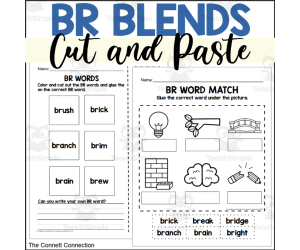
BR Beginning Blend Cut and Paste Worksheets
ELA, Language Development, Phonics, Preschool, Grade 1, Worksheets & Printables, Worksheets
Practice BR words with these beginning blend cut and paste worksheets for practicing beginning blends with these cut and paste worksheets. This initial blends worksheet packet provides a variety of activities to practice this particular phonics skill. This product is suitable for kindergartners and first graders who are learning about how to read and recognize words with beginning blends. There are a number of different cut and paste worksheets included for students to practice this spelling rule. Worksheets included: Match the picture to the BR word Match the word to the picture Sorting words into alphabetical order Sort pictures that begin with BR from pictures that do not Sort words that begin with BR from words that do not. Sorting real and nonsense BR words With these cut and paste worksheets, students will practice reading BR beginning blend words in isolation by matching words and pictures or by sorting words into categories. Students will have fun and stay engaged in learning with the variety of activities included in this worksheet set. The pictures included are easy to recognize, making these sheets easy for students to understand. When to Use Early Finishers - When students finish their work, they can complete this dot painting activity while waiting on their classmates to finish their assignments. Quiet Time Activity - Students who have trouble napping can complete one of these worksheets during quiet times. Independent practice - Students can work on these worksheets alone at their desks. Sub Plans - The no-prep nature of these worksheets makes them perfect to include in sub plans. These worksheets are great for teachers to use for independent practice, word review or as extra practice with BR words. They are great to include for substitutes as they have easy to understand instructions and focus on a single skill at a time. Skills Assessed Reading BR Words Real and Nonsense Words Each word family worksheet is no prep. The teacher just needs to print out the worksheets and give to the students to complete. Some sheets will require extra materials like scissors and glue, to complete. These worksheets will keep student engaged as they read, spell and recognize words with initial blends.
Author The Connett Connection
Tags Cut And Paste Worksheets, Literacy Worksheets, Kindergarten Worksheets, Phonics Worksheets, Beginning Blends, Initial Blends, BR Blends, BR Words
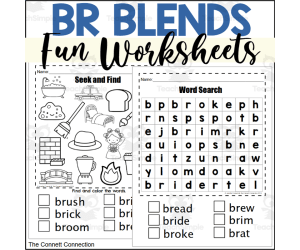
BR Beginning Blends Fun Worksheets
ELA, Language Development, Phonics, Preschool, Grade 1, Worksheets & Printables, Worksheets
Do you want your kindergarten and first grade students to have fun while learning BR words? Then check out these fun beginning blend worksheets! Students will have fun and stay engaged with each of these worksheets as they learn about these initial blend words. What is Included Word Search Worksheet - Find 6 BR words hidden in the wordsearch Seek and Find Worksheet - Find all 6 BR word pictures inside the box Each worksheet features bold and easy to recognize pictures so students can be successful in learning or review the BR words in this resource. An answer key for each worksheet is also available within this download. Students will love learning in a more unique way with worksheets that allow them to do more than rote memorization. When to Use Early Finishers - When students finish their work, they can complete this dot painting activity while waiting on their classmates to finish their assignments. Quiet Time Activity - Students who have trouble napping can complete one of these worksheets during quiet times. Independent practice - Students can work on these worksheets alone at their desks. Sub Plans - The no-prep nature of these worksheets makes them perfect to include in sub plans. Teachers will love the versatile nature of these worksheets. They can be used in a variety of locations in the classroom, including for independent practice, small group times and as homework. Subs will love these sheets because they are easy to motivate students to complete work that is fun and engaging. Skills Assessed: Reading BR words Identifying BR words These worksheets are no prep. They just need to be printed out and handed to students to complete. Students can use markers, crayons, colored pencils, or any other type of writing utensil to complete each page to make them more engaging and fun for students to complete.
Author The Connett Connection
Tags Phonics Worksheets, Literacy, Kindergarten Worksheets, Beginning Blends, Initial Blends, BR Blend, BR Words

BR Beginning Blends Worksheets - Read Write and Spell
ELA, Language Development, Phonics, Kindergarten, Grade 1, Worksheets & Printables, Worksheets
Practice reading, writing and spelling BR words with these beginning blends worksheets . This phonics worksheet packet provides a variety of ways to practice this phonics skill. This product is suitable for kindergartners and first graders who are learning about how to read and spell BR words. There are a number of different worksheets included for students to work on this spelling rule as well as alphabetical order, matching and reading comprehension. Worksheets included: Write the Word - write the correct word under each picture Spell and Write - color each dot to spell each word then write the word on the line provided Match the Picture - read the word then circle the correct picture Match the Word - look at the picture and circle the correct word Beginning Blend Sentences - read the sentences and write the correct word to fill in the blanks Beginning Blend Stamp It - use stamps to spell each word Beginning Blend Cut and Paste - use magazine letter cut outs to spell each word What am I? - write the word under each picture Beginning Blend Story - read each story and write each BL word that you find in the story With these beginning blends worksheets , students will practice reading BL words in isolation as well as in the context of sentences and short stories. Students will spell and write BR words using picture clues and prompts. When to Use Early Finishers - When students finish their work, they can complete this dot painting activity while waiting on their classmates to finish their assignments. Quiet Time Activity - Students who have trouble napping can complete one of these worksheets during quiet times. Independent practice - Students can work on these worksheets alone at their desks. Sub Plans - The no-prep nature of these worksheets makes them perfect to include in sub plans. Each worksheets is no prep. They just need to print out the worksheets and give to students to complete. Some sheets will require extra materials like scissors and glue, or stamps. These worksheets will keep student engaged as they read, write, spell and recognize words with the initial blend of BR. Skills Assessed These worksheets assess students in their ability to read, write, and spell words with the beginning blend BR.
Author The Connett Connection
Tags Phonics Worksheets, Reading Worksheets, Initial Blends, Beginning Blends, Phonics, Blends, Consonant Blends

BR Beginning Blends Posters
ELA, Language Development, Phonics, Preschool, Grade 1, Posters, Classroom Decor
Introduce or review words that begin with the BR blend with these beginning blends posters. These initial blends posters are perfect for kindergarten and first grade classrooms to use as display or as a teaching tool. What is Included: In this set, there are two posters what show BR words. One poster is in color, and the other one is in black and white. Each poster features a clear, bold image that represents each BR word. The easy to recognize images will allow students to be successful while they are working on activities that use words with the BR beginning blend. The colorful images will help students stay engaged with the posters when practicing reading and writing beginning blend words. How to Use: These beginning blend posters can be used as a reference poster in a writing or literacy center for students to refer to when write stories or sentences. These beginning blend posters can be used as a teaching tool to introduce or to review beginning blends with the whole class. These beginning blend posters can be given to students to store in a writing journal so they can easily reference the words while at their desk. The black and white poster can be used as a coloring page for students to work on as an early finisher activity or just for fun. Skills Assessed: These beginning blends posters allow students to practice reading and recognizing words that contain the BR initial blend. These beginning blend posters are a no-prep option for teachers to use with students. They just need to be printed out and placed in their desired location. The poster can be laminated for durability, especially if the teacher plans to hang the poster on the wall or intends for the poster to be handled by students.
Author The Connett Connection
Tags Literacy, Phonics Posters, Kindergarten Literacy, Beginning Blends, Initial Blends, BR Blends, BR Words

Microscope Diagram Labeling Activity
Science, Basic Science, Grade 6, 7, 8, 9, 10, Diagrams, Teacher Tools
This activity allows your students to label a diagram of a microscope in a variety of ways. There is a black-and-white graphic microscope, a real microscope photo at the same scale, two variations for each diagram - with and without a word bank (scaffold for students who need more support or challenge those ready for independent labeling), answer keys for all four diagrams to facilitate self-paced learning, and Word and PDF versions of each. This activity allows your students to label a diagram of a microscope in a variety of ways. There is a black-and-white graphic microscope, a real microscope photo at the same scale, two variations for each diagram - with and without a word bank (scaffold for students who need more support or challenge those ready for independent labeling), answer keys for all four diagrams to facilitate self-paced learning, and Word and PDF versions of each. If you have any questions, please email me - devon@teachwithfergy.com
Author Teach With Fergy
Tags Microscopes, Microscope Parts, Science Reading, Microscope Reading

Microscopes - Science Reading Article - Grade 5-7
Science, Basic Science, Grade 6, 7, 8, 9, 10, Activities
Microscopes. This resource is suitable for students in grades 5-7. Here are the first few paragraphs to give you an idea of the product. Microscopes History of the Microscope Microscopes let us see tiny things by making them look bigger. People have been using microscopes for hundreds of years. The first microscopes were invented in the late 1500s. They were simple magnifying glasses. Magnifying glasses made things look a little bigger. They let people see small objects like insects up close for the first time. In 1590, two eyeglass makers named Hans and Zacharias built the first compound microscope. Compound microscopes use more than one lens. More lenses mean you can see things that are much smaller. Hans and Zacharias' microscope let them study tiny things like bugs, fabric, and plant and animal cells. But early microscopes blurred the images. Over many years, scientists improved how microscopes worked. In 1665, a scientist named Robert Hooke first used the word "cell." He saw tiny cell structures in cork using a simple microscope. Later, Antonie van Leeuwenhoek built a microscope with just one lens. This let him see microorganisms for the first time. In the 1800s, engineers developed better lenses. These new achromatic lenses made the images in microscopes much clearer. They also let them magnify more. This let scientists see smaller things. In the late 1800s, two German engineers named Carl Zeiss and Ernst Abbe made huge advances in microscopes. Their microscopes could see cells in much greater detail.
Author Teach With Fergy
Tags Microscopes, Microscope Parts, Science Reading, Microscope Reading

Microscopes - Reading Comprehension Article - Grade 8 and Up
Science, Basic Science, Grade 7, 8, 9, 10, Activities
Microscopes. This resource is suitable for students in grades 8 and up. Here's the first few paragraphs for your review. Microscopes History: The microscope has a long and storied history dating back centuries. Early microscope technology arose in the late 16th century with the invention of spectacles for vision correction. These simple magnifying glasses laid the groundwork for more complex microscopy instruments. In 1590, two Dutch spectacle makers named Hans Lippershey and Zacharias Janssen, created the first compound microscopes, which use two or more lenses to produce an enlarged image of tiny objects. This allowed a closer examination of materials like insects, fabrics, and animal and plant tissues. However, early microscopes distorted and blurred images. Over the next 150 years, microscope design slowly improved through the work of scientists like Robert Hooke and Antonie van Leeuwenhoek. In 1665, Hooke first coined the term “cell” after observing the cell structures in cork using a primitive compound microscope. Leeuwenhoek perfected the single lens microscope in the 1670s, enabling the discovery of microorganisms. By the 1830s, innovations in lens grinding and fabrication drove rapid advancement in microscope development. Engineers like Joseph Jackson Lister created achromatic lenses that reduced optical aberrations and enabled higher magnification with clearer images. Staining techniques also emerged, using dyes to enhance contrast in microscopic samples.
Author Teach With Fergy
Tags Microscopes, Readings, Science Reading, Microscope Parts

Addition by bridging through 100 up to 1000 - A Mental Strategy
Math, Addition and Subtraction, Addition, Grade 3, Worksheets & Printables, Worksheets
Bridging through 100s helps students in a number of ways: It makes addition with large numbers feel much easier because they are broken down into smaller numbers according to their place value and dealt with one step at a time. It helps in the understanding of place value as students think about tens and ones separately. It's excellent for developing mental math skills It provides an alternative strategy to using the standard method or algorithm. You have a choice of four sets of worksheets. The first set contains addition questions where the first and second addends are multiples of 10, so the focus here is on the bridging of a multiple of 100 in the simplest form. The second set has the first addend a multiple of 10, whilst the second addend is a number between 11 and 99. Both of the above sets have the questions laid out in a visual format that emphasizes the bridging through 100. The third and fourth sets contain the same range of numbers for both addends as above. but now the worksheets are presented in a way that students can either continue with the visual format of the previous two sets or choose how to present their workings demonstrating their understanding of addition through bridging. How many worksheets in each set ? A standout feature is the worksheet randomization. With a single click, educators can generate an entirely new set of questions, making it a renewable resource for the entire school year. Be it for classwork, revision, or homework, adaptability ensures students achieve proficiency in the topic. As these worksheets need little explanation and no preparation, they are ideal if you need to leave work for a substitute teacher. Answers found on the second page of every worksheet are automatically generated when you create a new worksheet. Teaching Pages These cover the visual format of the first two worksheets. They are ideal for a whole class activity as an introduction to the worksheets or as a means to review the topic later on if needed. Pupils can come to the Whiteboard and enter solutions and get immediate feedback. Lastly, it's essential to note that these resources are compatible PDF documents. They operate seamlessly with the official Adobe Acrobat Reader on both Windows and Mac. Plus, the randomizing features are effortlessly accessible via touchscreen devices or interactive whiteboards.
Author Jeff's Notebooks
Tags Math, Addition, Mental Math, Place Value, Number Line

OCD diary (#2022)
P.E. & Health, Health, Adult Education, Not Grade Specific, Worksheets & Printables, Worksheets
"OCD Diary" is your personalized tool for understanding and managing obsessive-compulsive tendencies. Document triggers, intrusive thoughts, emotions, and coping strategies. With a clear format to track patterns, this eBook empowers you to gain insights, reduce compulsions, and cultivate a healthier mindset. Take control of your journey to mental well-being. Here is the list of the worksheets available to support your mental health: Grief and bereavement (#2011) Time management tips (2012) OCD Diary (#2022) Self-esteem journal (#2023) Advantages and disadvantages of change (#2031) Considering different perspectives (#2032) Challenging negative thoughts (#2043) Progressive muscle relaxation (#2045) Healthy lifestyle categories (#2050) Goodbye letter when grieving (#2055) Hierarchy of anxiety producing situation (#2056) Questions to explore a mood (#2061) Avoidance behavior diary (#2066) Self-care assessment (#2067) Activities related to values (#2071) Identifying your thinking errors (#2074) Challenging thoughts with CBT (#2087) Antecedent behavior consequence model ABC (#2089) Helpful and unhelpful ways to cope with emotions (#2090) Family, friends, acquaintances (#2092) Self-care plan (#2094) Triggers behavior payoff (#2100) Smart goals (#2102) Self-management of health anxiety (#2113) Cost of anxiety (#2114) Assessment of your assertiveness in different situations (#2115) How to deal with guilt and shame (#2119) Checking the facts about shame and guilt (#2121) Using the I statement (#2123) Core beliefs (#2124) Self-compassion and compassion for others (#2125) Assessing your self-esteem (#2126) Safety plan (#2133) Communicating clearly (#2134) Resilience plan (#2135) Distracting yourself from distressing emotions (#2136) Your anger triggers (#2139) Expressing your anger (#2140) The stages of grief (#2142) Forgiveness (#2143) Exploring values (#2146) Values discussion questions (#2147)
Author Learn it ANY way
Tags Ocd, Mental Health, Obsessive Compulsive Disorder

Zebra Connect the Dots – 866-Dot Extreme Puzzle
Math, Numbers, Grade 1, 2, 3, 4, 5, 6, Dot To Dots, Worksheets, Worksheets & Printables
Connect 866 dots to complete the scene of the zebra roaming the grasslands of Africa! Grab your pencil and race your friends - who can complete this extreme difficulty dot-to-dot puzzle first? For best results, print at high quality settings on sturdy paper. Once you’ve finished connecting all the dots, complete the artwork by adding a bit of color. What’s it going to be - colored pencils, crayons, watercolor? It’s all up to you! This zebra dot-to-dot is a good challenge for students in elementary and middle school. However, adults often like completing them too! The dot-to-dot process can be relaxing after a day’s work, allowing your mind to unwind, due to the simple nature of the puzzle. The dot-to-dot is on page 1 of the PDF, and the answer key is on page 2. The page dimensions are 8.5”x11”, and the drawing has been rotated for easy printing. Zebra Dot-to-Dot is copyright Tim’s Printables. Terms of use - For personal and educational purposes only.
Author Tim's Printables
Rating
Tags Dot-to-dot, Connecting The Dots, Puzzle, Zebras, Safari, Africa, Animal, Animals, Mammals, Worksheet

I HAVE, WHO HAS? | Multiplication Game
Math, Multiplication and Division, Division, Grade 3, 4, 5, 6, Games, Activities
WELCOME TO THE ARENAS EDUCATIVAS PUBLISHING RESOURCE STORE! We are a publisher dedicated to the development of teaching materials for reading, writing, Spanish, mathematics, as well as brain exercises. On this occasion, I will provide you with information regarding this material. A. GENERAL INFORMATION OF THE MATERIAL: - Product name: Game "I HAVE, WHO HAS" - Multiplication - Number of pages: 11 pages - Number of primers: 22 primers B. OTHER FREE RESOURCES YOU MAY BE INTERESTED IN: We have other free resources available in our store, such as: C. SECONDARY RESOURCE INFORMATION: Now I will provide you with secondary information about this product, such as: 1. The name of this educational resource is This product is titled "Who Has, I Have Game"; with the theme of multiplication. 2. This document contains this number of pages It contains 11 pages, on each page you will find 2 flashcards , in total you will then have 22 cards. 3. This educational resource has been prepared by: Prepared by EDITORIAL ARENAS EDUCATIVAS. 4. You can apply this educational document in different contexts such as: You can apply it a) at home if you are a parent, you must use this product with 2 or more children. b) At school, if you are a mathematics teacher, you should also use this in even groups of children, plus the game is quick and simple. 5. Is this document in black and white or color? It is available in colors. 6. For what ages is this document recommended? It is recommended to use this in children from 7 to 9 years old who have already surpassed learning addition and subtraction and who now want to learn multiplication or practice said operation. 7. At what point in class can I apply it? You can apply it during class or at the end as a game or evaluation of learning. 8. Should I apply it individually or in groups? You can apply it in groups of a maximum of 2 children, due to the simplicity of the game. 9. Keywords that describe the product: math games, multiplication, multiplication exercises, multiplication worksheets , multiplication resources. IMPORTANT TO REMEMBER: This file is for personal use only. It is not allowed to be resold or shared with others.
Author EDITORIAL LAURA EDUCA
Tags Multiplication, Multiplication Game, Multiplication Resources
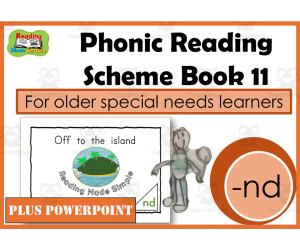
Phonic Reading Scheme for Older Students: _ND Endings: Book 11
Special Resources, ELA, Special Education Needs (SEN), Language Development, Phonics, Reading, Kindergarten, Preschool, Grade 1, Literacy Readers, Teacher Tools
This _ND Endigns decodable reading book is the 11th book in a series that can help children with special needs pupils develop reading fluency. Each book comes with a matching PowerPoint making it suitable for use in a range of settings. The Jack Stories, of which this book is one, introduces one phonic sound at a time, and subsequent books build on the vocabulary of the books before, constantly revising and reviewing learned sounds. Irregular sight words are only slowly and gradually introduced. Science of reading aligned. Based on the most up-to-date phonic research. Follow the adventures of Jack in sequence! These books should be read sequentially as they tell one long story, each telling a part. This book contains words with the following sounds: CK: OO, EE and SH and CH and _ND. The whole series to date can also be purchased as a growing bundle here, with a scope and sequence. This series has been written with the aid of one of my pupils, aged 8. He has drawn some of the pictures. What makes this phonic reading programme for special needs different? · It has its own, easy-to-download and print phonic reading books, making it accessible to many children worldwide. · Each book carefully builds on the vocabulary of those that have gone before, providing much repetition, without relying on predictable text. · Pictures aid the storyline without encouraging reading from the pictures – i.e. guessing. · The vocabulary is based on phonic families, which are introduced in a carefully planned way. · True sight words – those that cannot be sounded out - are kept to the very minimum. Most words are introduced in their phonic family wherever possible. · It is truly multisensory, using the power of the hand. We not only look at the words, but we write them too. This is powerful and has the bonus of turning the child not only into a reader but into a writer as well. Typical signs that this programme can help: Those with dyslexia, or suspected of having dyslexia Difficulty recalling words when seen on flashcards or when reading texts, which results in no or little reading fluency b/d letter reversal of a chronic nature – i.e. the child has not grown out of it Difficulty ordering letters in words: E.g. top becomes pot. Difficulty differentiating between like words: spoon/soon; back/black; sheep/sleep etc… Difficulty tracking words across a page How long is the book? The reading book is 16 pages long. What is included? 1 PDF 16 pp X A5 Print as a booklet Flip on the short edge One 16-slide PowerPoint
Author Lilibette's Resources
Tags Decodable Reading Books, Download And Print Decodable Readers, Reading Fluency, Guided Reading, Special Needs, PowerPoint, Phonics Intervention, ND Endings
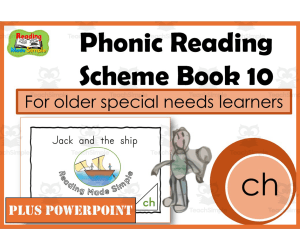
Phonic Reading Scheme for Older Pupils: CH Book 10
Special Resources, ELA, Special Education Needs (SEN), Language Development, Phonics, Reading, Kindergarten, Preschool, Grade 1, Literacy Readers, Teacher Tools
This CH decodable reading book is the 9th book in a series that can help children with special needs pupils develop reading fluency. Each book comes with a matching PowerPoint making it suitable for use in a range of settings. The Jack Stories, of which this book is one, introduces one phonic sound at a time, and subsequent books build on the vocabulary of the books before, constantly revising and reviewing learned sounds. Irregular sight words are only slowly and gradually introduced. Science of reading aligned. Based on the most up-to-date phonic research. These books should be read sequentially as they tell one long story, each telling a part. This book contains words with the following sounds: CK: OO, EE and SH and CH. The whole series to date can also be purchased as a growing bundle here, with a scope and sequence. This series has been written with the aid of one of my pupils, aged 8. He has drawn some of the pictures. What makes this phonic reading programme for special needs different? · It has its own, easy-to-download and print phonic reading books, making it accessible to many children worldwide. · Each book carefully builds on the vocabulary of those that have gone before, providing much repetition, without relying on predictable text. · Pictures aid the storyline without encouraging reading from the pictures – i.e. guessing. · The vocabulary is based on phonic families, which are introduced in a carefully planned way. · True sight words – those that cannot be sounded out - are kept to the very minimum. Most words are introduced in their phonic family wherever possible. · It is truly multisensory, using the power of the hand. We not only look at the words, but we write them too. This is powerful and has the bonus of turning the child not only into a reader but into a writer as well. Typical signs that this programme can help: Those with dyslexia, or suspected of having dyslexia Difficulty recalling words when seen on flashcards or when reading texts, which results in no or little reading fluency b/d letter reversal of a chronic nature – i.e. the child has not grown out of it Difficulty ordering letters in words: E.g. top becomes pot. Difficulty differentiating between like words: spoon/soon; back/black; sheep/sleep etc… Difficulty tracking words across a page How long is the book? The reading book is 16 pages long. What is included? 1 PDF 16 pp X A5 Print as a booklet Flip on the short edge One 16-slide PowerPoint
Author Lilibette's Resources
Tags Decodable Reading Books, Phonic Reading Scheme, Download And Print Decodable Readers, Reading Fluency, Guided Reading, Special Needs, PowerPoint, Phonics Intervention, Ch Reading Book

Phonic Reading Scheme for Older Pupils: SH Book 8
Special Resources, ELA, Special Education Needs (SEN), Language Development, Phonics, Reading, Kindergarten, Preschool, Grade 1, Literacy Readers, Teacher Tools
This SH decodable reading book is the 8th book in a series that can help children develop reading fluency. Each book comes with a matching PowerPoint making it suitable for use in a range of settings. The Jack Stories, of which this book is one, introduces one phonic sound at a time, and subsequent books build on the vocabulary of the books before, constantly revising and reviewing learned sounds. Irregular sight words are only slowly and gradually introduced. Science of reading aligned. Based on the most up-to-date phonic research. This book is the next in our new series for budding historians who may be older pupils and may have special needs and need a more mature storyline than cats and dogs! It follows on from our previous sets of ' Learn to Read' packs covering the 5 vowels and the previous books in the series so the pupil is expected to be able to blend 3 and 4 sounds securely and be ready to read words with /oo/. These books are best read in sequence. This book contains words with the following sounds: CK: OO, EE and SH. The whole series to date can also be purchased as a growing bundle here, with a scope and sequence. This series has been written with the aid of one of my pupils, aged 8. He writes his ideas and draws pictures and then I formulate them into a fool-proof reading book using only decodable words. Reading Made Simple for Special Needs A 100% systematic phonic reading programme for all ages and abilities. Give your child a Head start in reading! Due to its 100% systematic nature, this reading programme is highly suitable for any child with a special need, including dyslexia (or suspected), or any other need that is causing a child to have difficulties learning to read. What makes this reading programme different? · It has its own, easy-to-download and print phonic reading books, making it accessible to many children worldwide. · Each book carefully builds on the vocabulary of those that have gone before, providing much repetition, without relying on predictable text. · Pictures aid the storyline without encouraging reading from the pictures – i.e. guessing. · The vocabulary is based on phonic families, which are introduced in a carefully planned way. · True sight words – those that cannot be sounded out - are kept to the very minimum. Most words are introduced in their phonic family wherever possible. · It is truly multisensory, using the power of the hand. We not only look at the words, but we write them too. This is powerful and has the bonus of turning the child not only into a reader but into a writer as well. Typical signs that this programme can help: · Difficulty recalling words when seen on flashcards or when reading texts, which results in no or little reading fluency · b/d letter reversal of a chronic nature – i.e. the child has not grown out of it · Difficulty ordering letters in words: E.g. top becomes pot. · Difficulty differentiating between like words: spoon/soon; back/black; sheep/sleep etc… · Difficulty tracking words across a page To help all children succeed, each phonic family is taught in two lessons, each a week in duration. This speed has been tried and tested to be the optimum speed to allow children to absorb new information without mental overload. You may find that some children need longer - but never less. Each phonic family is split into half and only 5/6 words in a family are studied each week. Activities are provided to give the child plenty of exposure to the new sound and the set of words that contain it. These activities are not hard, but simply bring the child face to face with the words, first individually, then in sentences, and finally in longer passages. We also seek to strengthen knowledge of blends and develop phonemic awareness through the activities, much needed by these learners. In all, the way that Reading Made Simple has been designed reduces the burden on the working memory, making it easier for children to learn to read. Children relax as they meet familiar words again and again. They begin to say – sometimes for the first time, ‘I can read’. With this programme, you can help a non-reader today! How long are the books? The reading books are 16 pages long. Why are these books FREE when other people's books cost so much? Are they of lesser quality? They are free as I regard the ability to read as being a fundamental right of every living person. Why should some miss out on top-quality resources because they cannot pay for them? In terms of content, they are top quality, carefully planned and sequenced to help as many children as possible get started on the phonic road to reading. What is included? 1 PDF 16 pp X A5 Print as a booklet Flip on the short edge One 16-slide PowerPoint
Author Lilibette's Resources
Tags Decodable Reading Books, Phonic Reading Scheme, Download And Print Decodable Readers, Reading Fluency, Guided Reading, Special Needs, PowerPoint, Phonics Intervention, Sh Reading Book

Phonic Readers, Matching Worksheets and PowerPoint Pack 2: OO
Special Resources, ELA, Special Education Needs (SEN), Language Development, Phonics, Reading, Kindergarten, Preschool, Grade 1, Literacy Readers, Teacher Tools
A pack of two, OO, decodable readers, 48 supporting worksheets and a matching PowerPoint This is the second pack of Jack Stories in our Phonic Reading Scheme for older Pupils. It is suitable for those with poor phonemic awareness/poor processing skills, be that due to autism, dyslexia or any other need. The whole series to date can also be purchased as a growing bundle here, with a scope and sequence. These books should be read in series as they are incremental. Typical signs that this programme can help: · Difficulty recalling words when seen on flashcards or when reading texts, which results in no or little reading fluency · b/d letter reversal of a chronic nature – i.e. the child has not grown out of it · Difficulty ordering letters in words: E.g. top becomes pot. · Difficulty differentiating between like words: spoon/soon; back/black; sheep/sleep etc… · Difficulty tracking words across a page Objectives: To help children to develop a core set of decodable words, that they have seen enough times so that they no longer have to sound them out but can recognise them easily and recall them when needed. One of the biggest problems for struggling readers is that often, phonic reading books do not give the child a chance to see the same words again and again and so some children are forced to sound out nearly every word, which slows their speed of reading right down and means that they often cannot understand what they have read. Order, outlined and steps: The Reading Made Simple Reading and Spelling programme for struggling readers focuses the child's attention on around ten words containing the same phonic sound, at a time. For struggling readers, these lists are subdivided into two sets of 5 and the lesson is spread over 2 weeks. During these two weeks, the words are practised in various ways: On flashcards provided Sentence building with the flashcards Speed reading of just the ten words Sentence writing activities Fluency charts Games Reading books which only contain the words that have been introduced. The reading books should be used as a form of assessment and any words that the child needs to sound out can be practised further, while you move on to the next sound. Multisensory: Children who struggle to learn to read often need a multisensory approach. This phonic reading scheme uses the power of the hand to provide the multisensory dimension so often lacking in many 'learn to read' programmes. The child not only sounds out the words to read but also to write. The words are then put into sentences to read and write, building up as we go into a longer text Confidence building Because we are working with a discrete set of words, with the same sound, the child soon learns to recognise the words in each lesson, having sounded them out, read them, and written them many times in many fun ways. As the child reads each book, you can watch as s/he finally begins to say, 'I can do this!' as s/he meets familiar words. Directions Full teaching notes are provided. What is included? 2 reading books PDF - both 16 pages X A5 1 PDF of 48 supporting activities One 16-slide PowerPoint
Author Lilibette's Resources
Tags Decodable Reading Books, Phonic Reading Scheme, Reading Fluency, Autism, Dyslexia, Guided Reading, Oo Phonics, Reading Intervention, Digraphs, Phonics