Whole-number operations
Rounding Down Activity
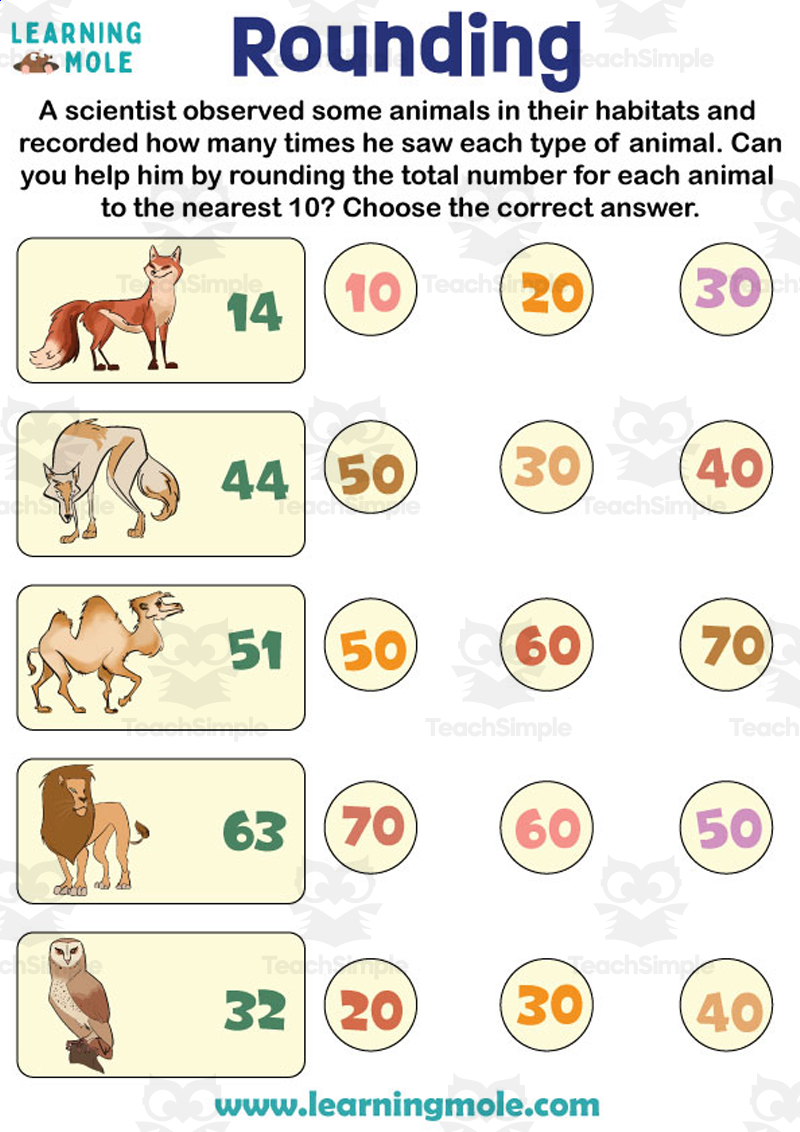
Round given totals (numbers of animals observed) to the nearest 10 by choosing the correct multiple-choice answer from four options.




Classroom resources
Browse by lesson focus
Choose the topic or kind of practice you need.
Showing 193–216 of 396 resources

 Show filters
 Round given totals (numbers of animals observed) to the nearest 10 by choosing the correct multiple-choice answer from four options.
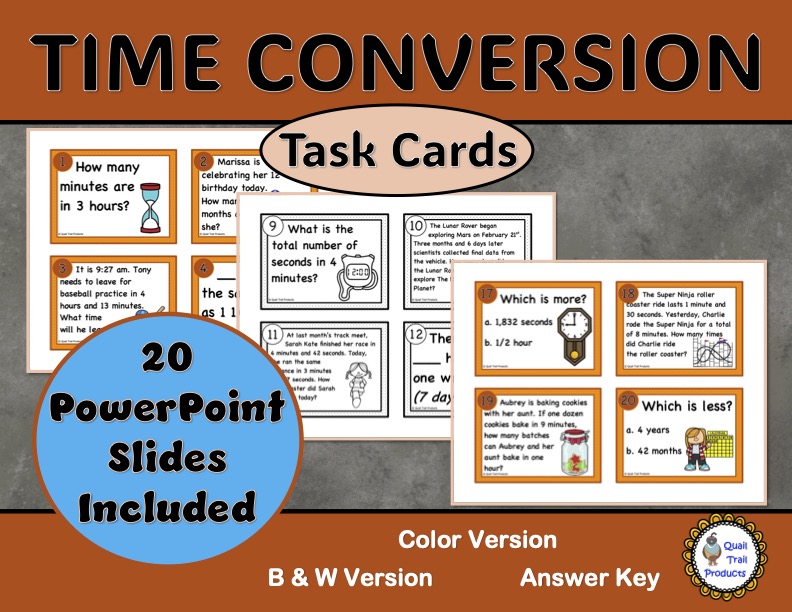
Solve 20 numbered word-problem task cards that require converting between seconds, minutes, hours, days, weeks, months, and years, and calculating elapsed time; record answers on a provided answer sheet.
Number & Operations - Task Sheets Vol. 5 Gr. 6-8

Rotate through 5 stations: solve area/volume word problems and write an original one; measure real boxes to calculate volume (and bonus surface area); design a backyard and calculate area/cost of different zones plus fencing perimeter; find area and perimeter of compound shapes (with an online game extension); and explain in…
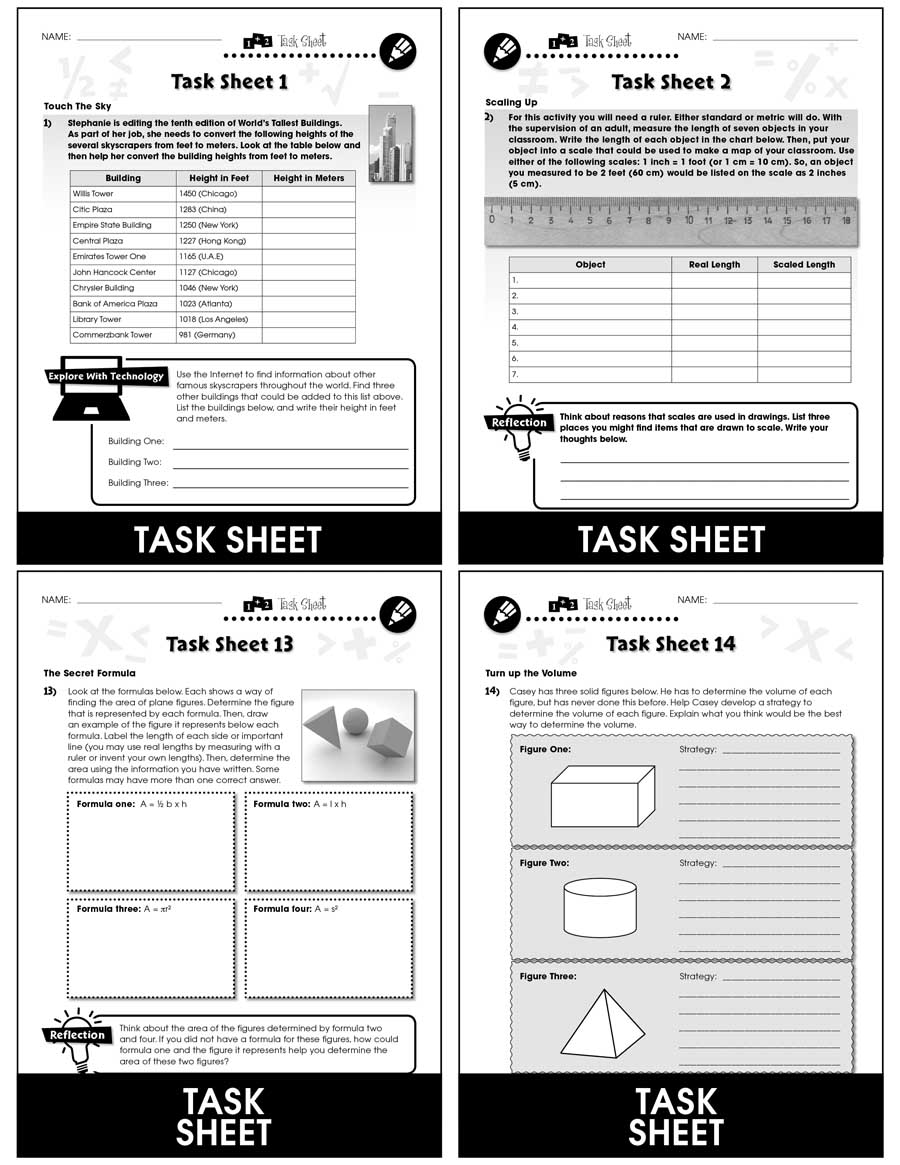
Complete 15 measurement task sheets involving real-life scenarios (e.g., converting building heights from feet to meters, scaling tasks), plus drill sheets and review sheets; check work against an included 'EASY MARKING' answer key; reference included mini posters and optional bonus activity pages available via the publisher's website.
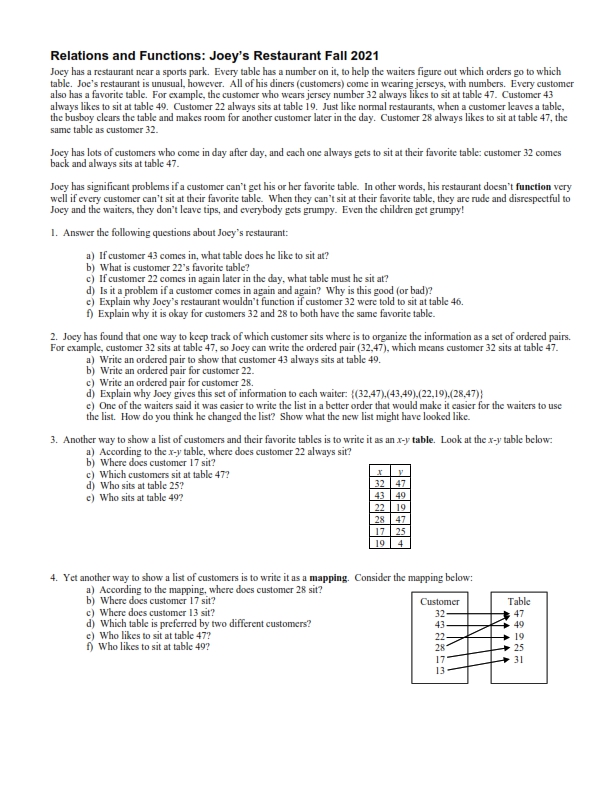
Answer scenario-based questions about which customers sit at which tables; convert relations between ordered-pair lists, x-y tables, and mappings; determine whether a given relation 'functions' (is a valid function) and explain why or why not; identify domain and range.
Number & Operations - Task Sheets Vol. 4 Gr. 6-8

Solve four multi-step percent scenarios (e.g., simple interest, tax, markups/markdowns, gratuities) and show written work; available as a printable version or a Google Slides version for digital submission.
Complete 22 worksheet activities across 5 scripted 45-minute daily lessons: My Year in Numbers (skip counting, integers, and reflection); Math with Friends (multi-step problems and pre-algebra practice); Math Story Adventure (story problems with proportions, percents, and equations); Number Detectives (proportions, integers, equations,…
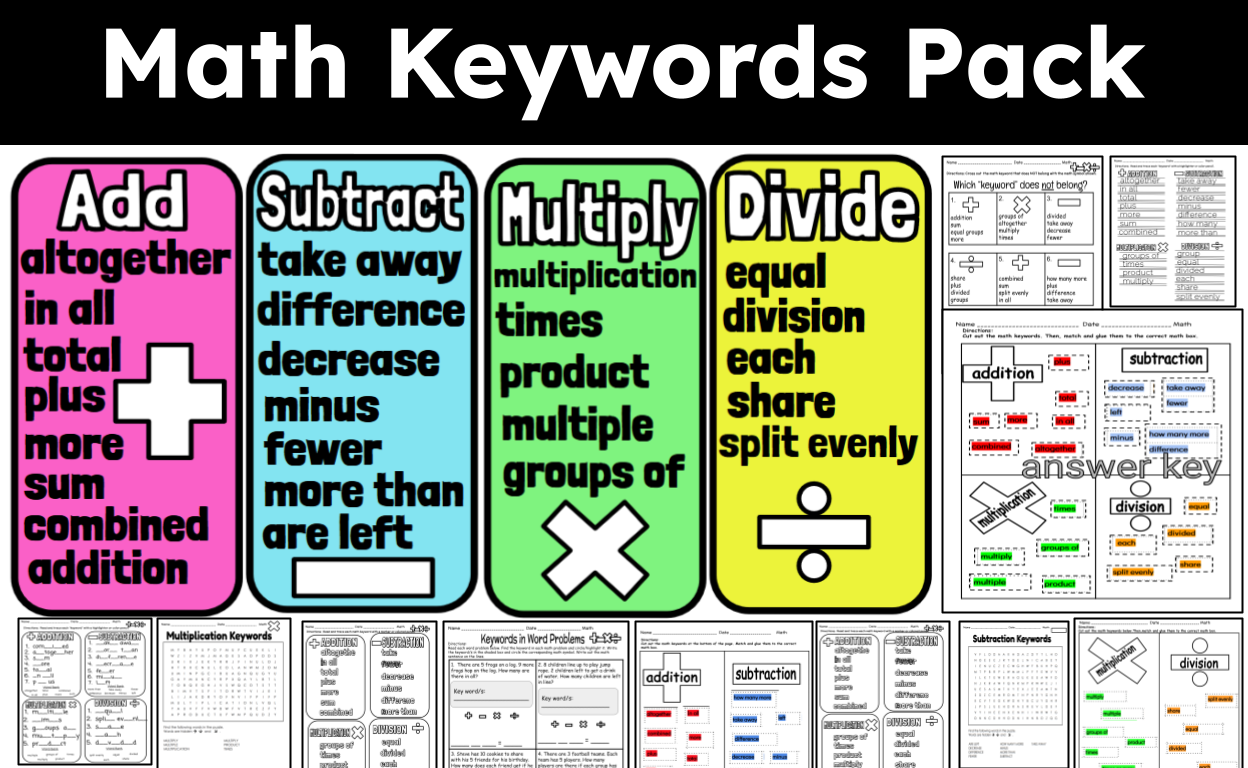
Read and trace math operation keywords, glue small posters into interactive math journals, and complete practice worksheets that reinforce keyword-to-operation recognition.
Number & Operations - Task Sheets Vol. 1 Gr. 6-8

Four remainder-interpretation strategies — Drop It, Use It, Add It, and Keep It — are each explained with teacher notes describing when to apply them, then practiced through a modeled example and a matching word problem that students solve and illustrate. A 'Match It' page has students pair word problems with their correct division model, a 'Write It' page asks students to compose and solve their own word problem for each of the four categories, and a six-question 'Test It' mastery check closes the booklet. A complete answer key follows, showing worked division and the correct strategy applied to every practice page and mastery-check question. The booklet is copyrighted by 'Teachers R Us,' 2016.
Complete 22 worksheet activities across 5 scripted 45-minute daily lessons: My Year in Numbers (skip counting and reflection); Math with Friends (multi-step problems and decimal/fraction practice); Math Story Adventure (story problems with all operations); Number Detectives (decimals, fractions, and volume); Dreams for Sixth Grade (math…
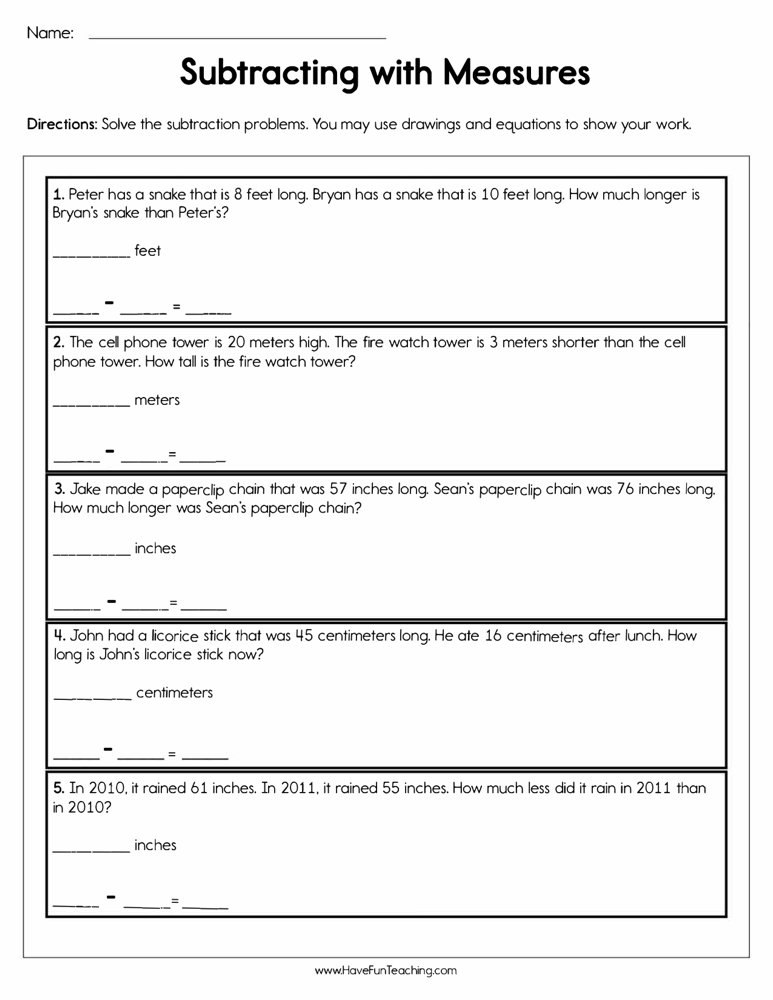
Solve subtraction word problems involving lengths/heights in feet, meters, inches and centimeters, showing work with drawings or equations.
For the crossword, students solve geometry vocabulary clues (angles, polygons, fractions, etc.). For the math circuit, students solve a word problem, find its answer in another box to identify the next problem, and continue until all 8 problems are completed in sequence, showing their work.

Students solve vertically stacked multiplication problems (factor x factor) and, on many pages, also solve word problems requiring multiplication (e.g. calculating totals of hotdog toppings, balloons, boxes of fruit, etc.).
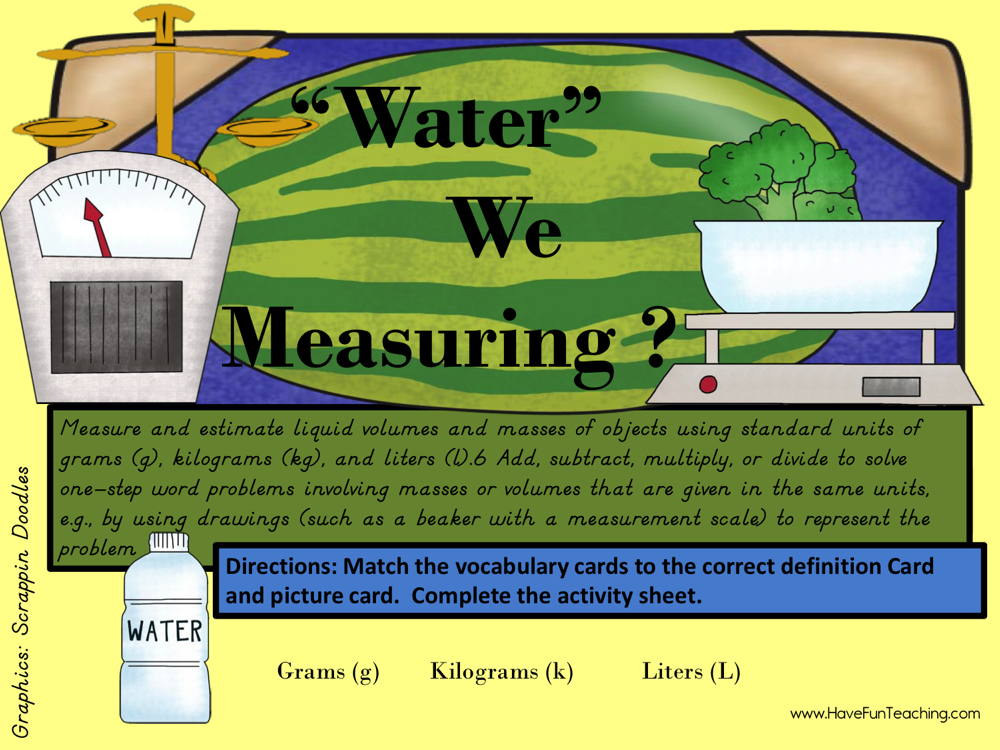
Match vocabulary cards to definitions, play a board game answering estimation questions about grams/kilograms/liters, and complete a worksheet choosing the best metric unit for everyday objects and solving related word problems.

Play a face-down memory-matching game in pairs/groups: flip two cards at a time trying to match a word-problem card to its corresponding function/answer card, record matches on a 'Student Answer Sheet', and check answers against the provided key at the end.

Solve division facts, find quotients with remainders (writing 'r' for remainder), circle problems that have (or don't have) remainders, solve division-based word problems (e.g. money, ice cream scoops, juice glasses), decode a riddle using a remainder-to-letter code, and divide three-digit numbers by one-digit divisors including with…
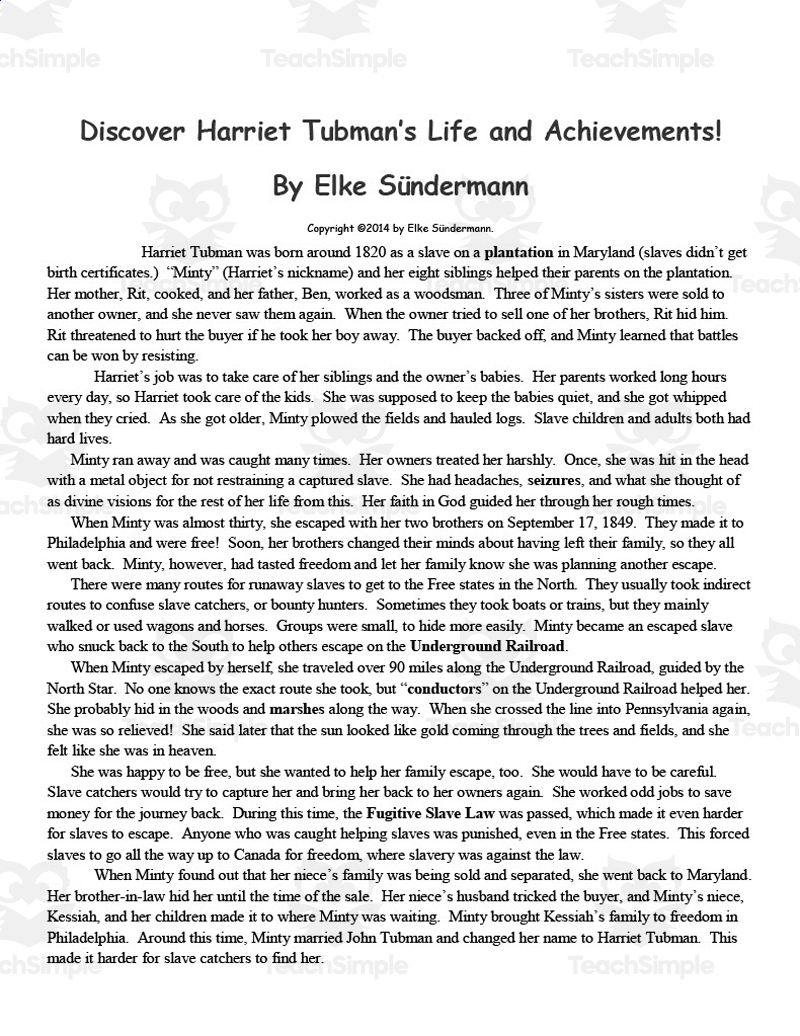
Read a multi-page biographical narrative about Harriet Tubman's life, use the glossary to learn key vocabulary, answer 10 multiple-choice comprehension/vocabulary/literary-device questions, and solve 5 math word problems based on facts and dates from the passage.

Solve word problems involving money, timetables, measuring circumference, area/perimeter, graphs, and working backwards across a series of themed activity pages.
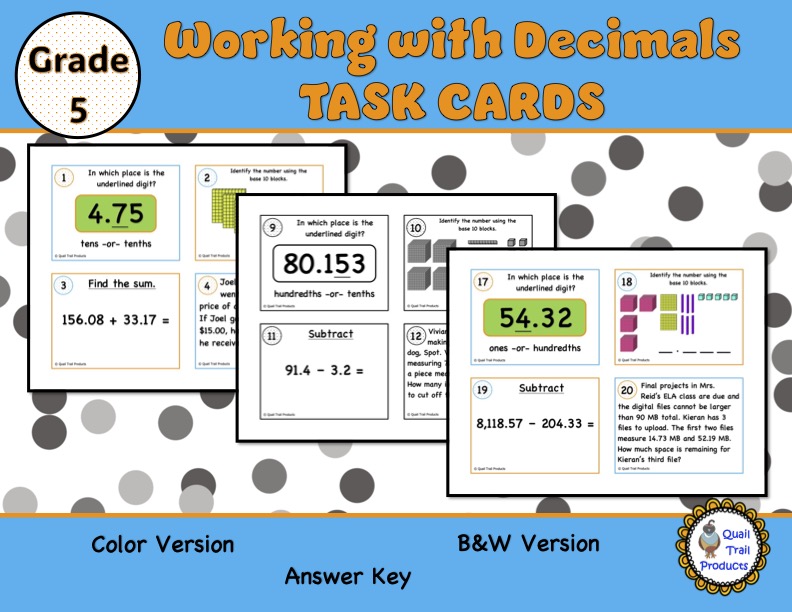
For each numbered task card, identify the place value of an underlined digit in a decimal number, write the decimal number shown by base-10 blocks, add or subtract multi-digit decimal numbers, or solve a word problem involving decimals (money, measurement, weight, or file size), recording each answer on a numbered recording sheet.
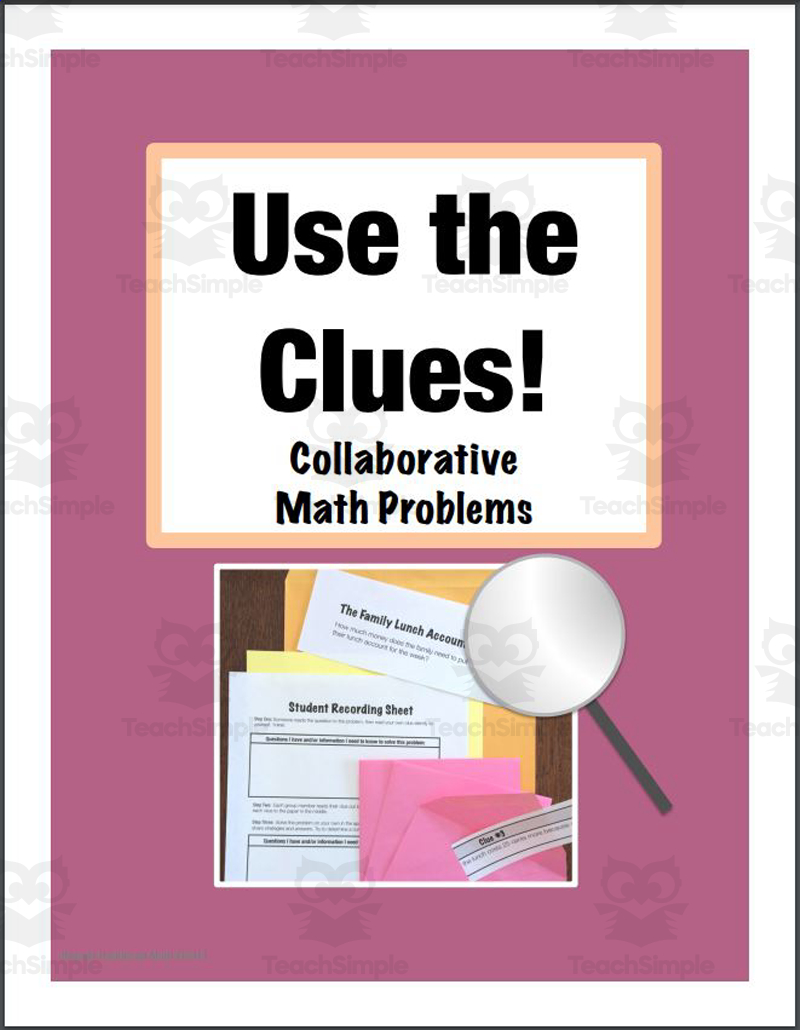
Take a pre-test to be grouped by level; participate in a modeled 'fishbowl' demonstration of group-work expectations; in groups of 3-4, each read a private clue aloud, combine clues to solve a multi-step word problem, show work, agree on a common answer, then complete a written self/group reflection.
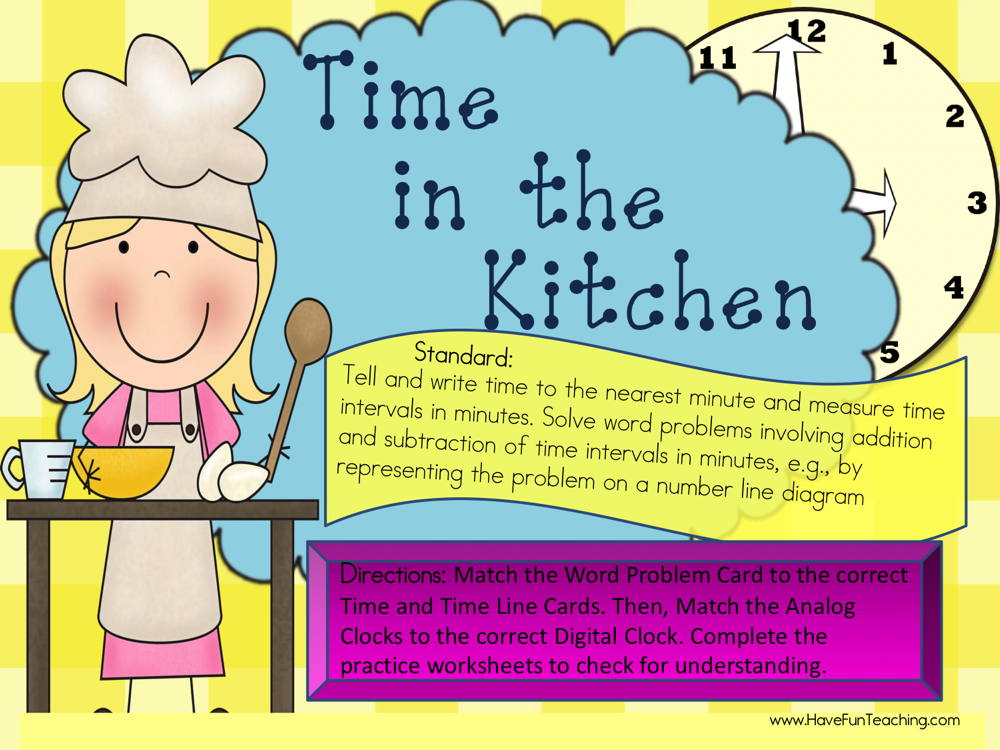
Match word-problem cards to the correct time and timeline cards; match analog clocks to the correct digital clock; complete elapsed-time worksheets (figure elapsed time and draw a line to the final time; fill in a start-time/elapsed-time/end-time table; circle the digital clock matching an analog clock).