



3,911 products added recently
Page 3 - High School Word Searches

 Show filters

Evaluating Open Source Evidence (OSINT)
Math, Measurements, Money, Statistics, Time, Business, Life Studies, Finance, Career, Home Economics, Grade 6, 7, 8, 9, 10, 11, 12, Worksheets & Printables, Workbooks, Worksheets, Word Searches, Teacher Tools, Assessments, Lesson Plans, Quizzes and Tests, Quizzes, Tests
Transform your students from passive consumers of information into sharp, critical digital investigators! In an age of corporate greenwashing and slick marketing, this comprehensive curriculum on Open Source Intelligence (OSINT) equips high school students with the essential skills to pierce the veil of public relations and uncover factual truth. This is not your average media literacy lesson. This is a deep dive into the real-world tools used by journalists and investigators to hold powerful entities accountable. Students will learn to navigate complex public databases, deconstruct corporate narratives, and synthesize evidence to form their own reasoned conclusions. Move beyond discussing "fake news" and empower your students to actively verify information using primary source data from the SEC, EPA, OSHA, and more. This complete, no-prep unit is perfect for Civics, Economics, Media Literacy, Journalism, and AP-level courses. It's meticulously structured into three phases: Introduction & Methodology: Four engaging chapters that build the theoretical foundation of corporate OSINT, introducing key databases and the C.O.R.E. investigative methodology. Student Workbook: Ten rigorous worksheets, including a final capstone investigation, that turn theory into practice. Students will tackle real-world scenarios, analyze mock press releases, and get hands-on experience with database research. Teacher Resources: Everything you need to teach with confidence, including visual aids (flowcharts and diagrams), a comprehensive answer key with model answers and grading rubrics, and a detailed Teacher Implementation Guide covering pacing, instructional strategies, and crucial ethical frameworks. Equip your students with the 21st-century's most vital skill: the ability to think critically and verify everything. Keywords: Media Literacy, OSINT, Open Source Intelligence, Critical Thinking, Digital Citizenship, Fact-Checking, Corporate Accountability, High School, Research Skills, Civics, AP Government, Economics, Journalism, Fake News, Primary Source, Data Analysis, SEC EDGAR, EPA, Project-Based Learning, No-Prep, Curriculum. Why Parents/Schools Love It: Builds Real-World Skills: This curriculum teaches practical, 21st-century skills in critical thinking, data analysis, and digital verification that are directly applicable to college, careers, and informed citizenship. Comprehensive & Teacher-Friendly: It is a complete, ready-to-use package with student-facing material, visual aids, and a robust teacher guide with answer keys and rubrics, saving educators dozens of hours of prep time. Promotes Ethical Digital Citizenship: The dedicated "Ethical Frameworks" section ensures students learn to use these powerful skills responsibly, focusing on verification and accountability, not online vigilantism. Engaging & Relevant Content: Students investigate timely, relevant issues like environmental claims ("greenwashing") and labor practices, making learning more dynamic and impactful than a standard textbook. Cross-Curricular Application: Its versatile design allows it to be seamlessly integrated into multiple subjects, including Social Studies, English Language Arts, and even STEM, making it a valuable resource for an entire school. Target Audience Analysis : Based on the advanced vocabulary ("epistemological," "fiduciary duty"), complex subject matter (SEC filings, lobbying disclosures), and the explicit "Teacher Implementation Guide" on page 33, this PDF is targeted at: Grade Level: Advanced High School (Grades 10-12) and potentially introductory College/University students. The guide mentions 8th grade, but the content is most suitable for older, more mature students. Specific Classes: AP Government / Civics: Perfect for units on corporate influence, lobbying, and regulatory agencies. Economics: Excellent for analyzing corporate finance, risk, and the gap between marketing and financial reality (Form 10-K). Media Literacy / Digital Citizenship: A cornerstone unit for teaching students to be critical consumers and verifiers of online information. Journalism: An essential, practical toolkit for aspiring investigative reporters. Advanced English / Rhetoric: A fantastic resource for analyzing non-fiction texts (corporate PR vs. legal filings) and understanding persuasive strategies. Computer Science: Can be used in a data literacy or data ethics context, teaching students how to query and interpret structured data from public databases. Copyright/Terms of Use: This Book was copyrighted by Syed Hammad Rizvi. This resource is for personal and single classroom use only. You may not alter, redistribute, or sell any part of this resource. In other words, you may not put it on the Internet where it could be publicly found and downloaded. If you want to share this resource with colleagues, please purchase additional licenses from Teachsimple. Thank you for respecting these terms of use. This product is happily brought to you by Syed Hammad Rizvi
Author Creative Book Store
Rating
Tags OSINT, OpenSourceIntelligence, MediaLiteracy, FactChecking, DigitalLiteracy, CorporateAccountability, VerifyingSources, OSINTforEducation, InvestigativeJournalism, DataLiteracy

AI Literacy & Safe ChatGPT Use
Science, Technology, Computer Science, Engineering, Resources for Teachers, Community Building, Classroom Management, Special Resources, Special Education Needs (SEN), STEM, Grade 6, 7, 8, 9, 10, 11, 12, Worksheets & Printables, Workbooks, Worksheets, Word Searches, Writing Prompts, Teacher Tools, Quizzes and Tests, Quizzes, Tests, Lesson Plans
The Ultimate AI & ChatGPT Literacy Unit: A Complete No-Prep Resource for Middle School Are you looking for a comprehensive, no-prep solution to teach AI literacy and digital citizenship? As tools like ChatGPT become a part of our students' lives, educators and parents are facing a new frontier. This complete 36-page unit is the bridge you need, transforming anxiety about AI into an opportunity for critical thinking, academic integrity, and online safety. This isn't just a "how-to" guide; it's a "how-to-think" curriculum. Designed for Grades 5-8 , this resource tackles the complex issues of algorithmic literacy head-on, aligning school requirements for academic rigor with parental demands for digital safety. It empowers students to become critical architects of their digital world, not just passive consumers. What's Included in This 36-Page Turnkey Unit? PART 1: In-Depth Guide (For Teachers & Parents): Four detailed chapters covering the core concepts: The Mechanics of Algorithmic Language (How AI really works) Academic Integrity & Critical Thinking (Brainstorming vs. Cheating) Privacy, Data, and Digital Safety (Protecting Personal Information) Formulating Effective Prompts (Making AI a useful tool) PART 2: Student Workbook (Printable & Digital): 10 engaging, thought-provoking worksheets that challenge students to apply their knowledge. Topics include: Fact or Fiction: The Art of Verification Protecting Your Digital Footprint (PII Safety) The Brainstorming Boundary (Academic Honesty Scenarios) Spotting Algorithmic Bias Emotional Boundaries: Chatbots Are Not People Crafting the Perfect Prompt PART 3: Teacher Resources & Visuals: Everything you need to implement the unit with confidence. Pedagogical Visuals: Three powerful, printable diagrams (Venn, Flowchart, T-Chart) to anchor student understanding of key concepts like Cognitive Scaffolding vs. Outsourcing. Comprehensive Answer Key: Detailed answers and rationale for all 10 worksheets. Teacher Implementation Guide: Actionable steps for proactive parent communication and classroom strategies for grades 5-8, helping you manage this new paradigm shift effectively. Equip your students with the essential 21st-century skills they need to navigate the future. This resource saves you hours of planning and provides a robust, thoughtful framework for one of the most important topics in modern education. Keywords: AI Literacy, ChatGPT in the Classroom, Digital Citizenship, Media Literacy, Middle School, Grades 5-8, Academic Integrity, Critical Thinking, Online Safety, Parent Guide, No-Prep, Printable Worksheets, Digital Activities, Prompt Engineering, 21st Century Skills. Why Parents & Schools Love It: Bridges the Home-School Gap: This curriculum directly addresses the core concerns of both educators (academic integrity, critical thinking) and parents (online safety, data privacy) with its "Dual-Ecosystem" model, creating a unified and consistent message for students. Promotes Critical Thinking, Not Just Use: Instead of just teaching students how to use ChatGPT, it teaches them to question it, verify its outputs, and understand its limitations. It builds essential "human-centric critical analysis" skills for an automated world. Built-in Safety & Ethics Framework: The unit is packed with concrete protocols for protecting personal information (PII), establishing emotional boundaries with technology, and navigating ethical dilemmas, giving parents and teachers peace of mind. Comprehensive & Ready-to-Use: It is a complete, "turnkey" solution. With in-depth guides, 10 student worksheets, printable visual aids, a full answer key, and an implementation guide, it saves educators immense time and effort in lesson planning. Target Student Audience : Based on a complete analysis of the vocabulary, concepts (e.g., cognitive friction, PII, algorithmic bias), and case studies, target: Primary Target: Middle School Students (Grades 5-8) . The document explicitly mentions this range multiple times. The content complexity is perfectly suited for this developmental stage where students are transitioning from concrete to abstract thought. Secondary Target: Early High School (Grade 9) . This unit would serve as an excellent foundational resource for 9th graders who have not yet had formal instruction on AI literacy. Copyright/Terms of Use: This Book was copyrighted by Syed Hammad Rizvi. This resource is for personal and single classroom use only. You may not alter, redistribute, or sell any part of this resource. In other words, you may not put it on the Internet where it could be publicly found and downloaded. If you want to share this resource with colleagues, please purchase additional licenses from Teachsimple. Thank you for respecting these terms of use. This product is happily brought to you by Syed Hammad Rizvi
Author Creative Book Store
Rating
Tags MediaLiteracy, DigitalLiteracy, AcademicIntegrity, CriticalThinking, OnlineSafety, PromptEngineering, AIforStudents, FactChecking, DataPrivacy, BlendedLearning

Who Has the Lab Equipment? – Interactive Science + Chemistry Game
STEM, Science, Chemistry, Physics, Life Sciences, Special Education Needs (SEN), Special Resources, Research, Biology, Homeschool Templates, Grade 6, 7, 8, 9, 10, 11, Activities, Games, Worksheets & Printables, Task Cards, Quizzes and Tests, Teacher Tools, Quizzes, Word Problems, Word Searches, Worksheets
Who Has the Lab Equipment? – A Fun & Engaging Science Game for the Classroom 🔬 Turn Science Learning into an Interactive Adventure! Helping students learn laboratory equipment doesn’t have to be tedious. With "Who Has the Lab Equipment?", you can bring hands-on engagement and excitement into your chemistry, physics, or biology classroom! This fast-paced call-and-response game is perfect for reinforcing lab tools and key scientific terminology while encouraging active participation and teamwork. 🎯 Why Teachers Love This Game ✅ Boosts Student Engagement – Keeps students actively involved instead of passively memorizing vocabulary. ✅ Encourages Collaboration – Supports teamwork, communication, and critical thinking. ✅ Differentiated Learning – Includes three levels to accommodate students of all abilities. ✅ Perfect for Science Lessons – A great addition to chemistry, physics, and biology classes. ✅ Low-Prep & Classroom-Friendly – Just print, cut, and play! 🧪 What’s Included? 🃏 90 Total Cards – 3 differentiated sets of 30 cards each: ✔ Level 1: Terms with visual aids – perfect for beginners. ✔ Level 2: A mix of terms and images – great for building recognition. ✔ Level 3: Visuals only – students must recall and name the equipment independently. 📌 How to Play 1️⃣ Distribute the Cards – Each student gets one or more cards. 2️⃣ Start the Game – The student with the first card reads aloud: "I have the test tube. Who has the test tube rack?" 3️⃣ Find the Answer – The student with the correct response answers and then reads the next prompt. 4️⃣ Keep Going! – Play continues until all cards have been matched. 💡 Bonus Challenge: Encourage students to use complete sentences when responding to reinforce scientific communication skills. 🌟 Why This Game is a Must-Have for Science Teachers ✔ Versatile Use – Works as a lesson starter, review activity, or quick filler for substitute plans. ✔ Supports Multiple Learning Styles – Helps visual, auditory, and kinesthetic learners grasp key concepts. ✔ Perfect for Science Centers – Ideal for small groups or whole-class activities. ✔ Durable & Reusable – Laminate the cards for long-lasting classroom use. 🔬 Make Science Learning Engaging and Memorable! If you're looking for a fun, effective, and interactive way to teach students about laboratory equipment, this game is the perfect resource for your science classroom. 🚀 Download now and bring interactive learning into your chemistry, physics, or biology lessons! 📍 Best wishes, Heike from Lernfitness Did You Know? I teach with a certified therapy dog, and together we create a positive and inspiring learning environment. 🐶✨
Author Lernfitness
Tags Game, Educational Card Games, Chemistry, Lab, Biology, Laboratory Equipment, Lab Tools, Physics, STEM Science Matching Game, Who Has It?
Off-Grid Survival Energy Audits
Math, Addition and Subtraction, Addition, Subtraction, Algebra, Early Math, Geometry, Basic Operations, Place Value, Measurements, Homeschool Curriculum, Homeschool Templates, Grade 8, 9, 10, 11, 12, Teacher Tools, Lesson Plans, Quizzes and Tests, Quizzes, Tests, Assessments, Worksheets & Printables, Workbooks, Worksheets, Word Searches
Transform abstract physics and math concepts into life-saving skills with this comprehensive, real-world STEM project. In "Off-Grid Survival Energy Audits," students are challenged to solve a critical, high-stakes problem: How do you power essential medical devices and refrigeration during a prolonged blackout? This is not just another worksheet packet; it's a 40-page, zero-prep curriculum that answers the age-old question, "When will I ever use this?" Students will step into the role of an energy auditor, applying critical thinking and mathematical precision to navigate realistic survival scenarios. They will learn the physics of power, calculate energy needs for life-sustaining equipment like CPAP machines and insulin refrigerators, and make tough decisions about load-shedding and resource management. This problem-based learning (PBL) resource is perfect for engaging high school students in Physics, Applied Mathematics, STEM, and Career and Technical Education (CTE) courses. It also serves as an exceptional resource for homeschooling co-ops and adult learners interested in emergency preparedness. What's Included in this 40-Page PDF: Part 1: In-Depth Theoretical Guide: A 10-page introduction covering the core physics concepts: Voltage, Amperage, Wattage (Watt's Law), Surge vs. Running Watts, Duty Cycles, Inverter Physics (Pure Sine Wave), and more. Part 2: 10 Progressive Student Worksheets: A complete student workbook with over 75 unique problems. Worksheets cover: Appliance Nameplate Reading Refrigerator Compressor Cycles Medical Device Power Profiles Calculating Surge Wattage Battery Math (Amp-Hours & Voltage) Creating a Daily Energy Budget Factoring Inverter Inefficiency Load Shedding & Triage Scenarios Impact of Temperature Extremes Capstone Project: A Comprehensive 72-Hour Blackout Audit Part 3: Teacher Resources & Visuals: High-contrast, printable instructional diagrams (Flowchart, Triage Matrix). A complete, fully detailed Teacher Answer Key with calculations shown. Equip your students with the confidence and knowledge to apply classroom learning to the real world. This curriculum doesn't just teach physics; it builds resilient, resourceful, and critical thinkers. Keywords: STEM, Physics, Real World Math, Problem-Based Learning, PBL, Emergency Preparedness, Survival, Blackout, Off-Grid, Energy Audit, Electricity, Ohm's Law, Watt's Law, Worksheet, CTE, Homeschool, High School, Critical Thinking, Applied Math, CPAP, Medical Device, Solar Power, Battery Bank.AP, Medical Device, Solar Power, Battery Bank. Why Parents/Schools Love It: Answers "When Will I Use This?": Directly connects abstract physics and math principles (Watt's Law, algebra) to a tangible, high-stakes, real-world scenario, dramatically increasing student engagement. Promotes Critical Thinking: Moves beyond simple calculations to force students to analyze, prioritize, and make strategic decisions (triage, load-shedding) based on their data. Zero-Prep, Comprehensive Curriculum: It is a complete, ready-to-use package. Teachers receive the theory, student worksheets, visual aids, and a full answer key, saving hours of preparation time. Integrates STEM and Real-Life Skills: Perfectly blends Science, Technology, Engineering, and Math into a single, cohesive project that also teaches valuable emergency preparedness skills. Differentiated for Scaffolding: The 10 worksheets are progressive, starting with basic definitions and building to a complex, multi-day audit, allowing teachers to guide students of varying abilities. Target Student Audience : Based on the complexity of the concepts (algebraic calculations, multi-step problem solving, abstract physics principles), target: Primary Target: High School Students (Grades 9-12) in courses like: Physics or Applied Physics STEM / STEAM Electives Career and Technical Education (CTE) focusing on electronics or engineering. Advanced or Honors-level Mathematics (as an application project). Secondary Target: Homeschooling: Particularly for parents and co-ops focusing on practical life skills and advanced science. Adult Education: For individuals and groups interested in emergency preparedness, off-grid living, or the technical aspects of RV/boat power systems. Copyright/Terms of Use: This Book was copyrighted by Syed Hammad Rizvi. This resource is for personal and single classroom use only. You may not alter, redistribute, or sell any part of this resource. In other words, you may not put it on the Internet where it could be publicly found and downloaded. If you want to share this resource with colleagues, please purchase additional licenses from Teachsimple. Thank you for respecting these terms of use. This product is happily brought to you by Syed Hammad Rizvi
Author Creative Book Store
Rating
Tags STEM, STEAM, Physics, Math, Science, Education, HighSchool, EdTech, Learning, CriticalThinking

Personal Brand Identity & Color Theory Grids
Science, Technology, Computer Science, Engineering, STEM, Special Resources, Life Skills, Social Emotional Learning (SEL), Special Education Needs (SEN), Social Studies, Homeschool Curriculum, Homeschool Templates, Grade 9, 10, 11, 12, Worksheets & Printables, Workbooks, Worksheets, Word Searches, Writing Prompts, Teacher Tools, Lesson Plans, Quizzes and Tests, Quizzes, Tests
Transform Your Students' Digital Portfolios from Generic to Unforgettable! Are your high school students preparing for college admissions, scholarships, or their first career steps? In today's digital world, a professional online portfolio is no longer a "nice-to-have"—it's an essential tool. But how do you guide them to create a portfolio that truly stands out and communicates their unique value in just a few seconds? This comprehensive curriculum is your answer. "Personal Brand Identity & Color Theory Grids" is a rigorous, project-based unit that bridges the gap between abstract personal traits and powerful, professional visual communication. It moves beyond "picking pretty colors" and teaches students the psychology behind design, empowering them to engineer a digital identity that captivates admissions officers and recruiters from the very first click. Students will embark on a journey from self-reflection to technical application, learning how to translate their core values—like "innovation," "reliability," or "creativity"—into specific, web-ready Hex color codes. They will learn to build a sophisticated 5-point color grid that ensures their portfolio is not only beautiful but also accessible, psychologically resonant, and strategically effective. ► Who is this for? High School Teachers (Grades 10-12, perfect for seniors) Subjects: Art, Graphic Design, Web Design, Computer Science, Career & Technical Education (CTE), Business, and Senior Capstone or College Prep courses. ► What's Included in this 42-Page PDF? Phase 1: In-Depth Theory (10 Pages): A detailed guide covering the cognitive psychology of color, professional archetypes (The Analyst, The Empath, etc.), the mathematics of Hex codes, and case studies. Phase 2: Student Workbook (13 Pages): Ten rigorous worksheets that guide students through every step of the process, from defining their core values to stress-testing their final color palette for accessibility (WCAG). Phase 3: Visuals & Teacher Resources (19 Pages): Pedagogical Visuals: High-resolution diagrams explaining key concepts. Comprehensive Answer Key: Detailed answers and exemplar responses for all student worksheets. Teacher Implementation Guide: Includes a pedagogical rationale, a suggested 10-day pacing guide, and instructions for facilitating a professional critique. Equip your students with the 21st-century digital literacy and personal branding skills they need to build a future they deserve. Download this turnkey curriculum today and watch their confidence and portfolios soar! Keywords: Personal Branding, Digital Portfolio, Color Theory, Color Psychology, Hex Codes, Graphic Design, Web Design, College Applications, Career Readiness, High School, Senior Project, Capstone, Visual Identity, UI/UX, Project-Based Learning, CTE, STEM, Art Curriculum. Why Parents/Schools Love It: Builds Real-World Career Readiness: This curriculum goes beyond theory and provides students with a tangible, high-impact skill. They learn to market themselves professionally, giving them a distinct advantage in college and job applications. Integrates Art, Psychology, and Technology (STEM): This is a powerful cross-curricular resource. It connects creative expression with the science of human perception and the technical language of web design (Hex codes), making it relevant for students in both arts and STEM fields. Promotes Deep Self-Reflection and Critical Thinking: Students aren't just following instructions; they are guided through a process of defining their personal values and professional goals, forcing them to think critically about how to present themselves to the world. Comprehensive & Turnkey for Teachers: This is not just a worksheet; it's a complete, 42-page unit. With a teacher guide, a 10-day pacing plan, student-facing theory, worksheets, and a full answer key, it saves educators dozens of hours of prep time. Target Student Audience : Based on the language ("post-secondary transition," "Grade 12 transition"), academic rigor, and professional focus, you should target: Primary Target: High School Seniors (Grade 12). The material is perfectly tailored for students building portfolios for college applications and job/internship searches. Secondary Target: High School Juniors (Grade 11): Excellent for advanced students in design, art, or tech programs. First-Year College/University Students: Ideal for introductory courses in graphic design, digital media, or professional development. Ideal Courses: Art & Graphic Design Web Design / Interactive Media Computer Science (as a design/UI module) Career & Technical Education (CTE) pathways Business & Marketing College Preparedness / Senior Seminar / Capstone Project classes Copyright/Terms of Use: This Book was copyrighted by Syed Hammad Rizvi. This resource is for personal and single classroom use only. You may not alter, redistribute, or sell any part of this resource. In other words, you may not put it on the Internet where it could be publicly found and downloaded. If you want to share this resource with colleagues, please purchase additional licenses from Teachsimple. Thank you for respecting these terms of use. This product is happily brought to you by Syed Hammad Rizvi
Author Creative Book Store
Rating
Tags PersonalBranding, ColorTheory, GraphicDesign, WebDesign, DigitalPortfolio, BrandIdentity, ArtEducation, DigitalLiteracy, ProjectBasedLearning, ColorPsychology
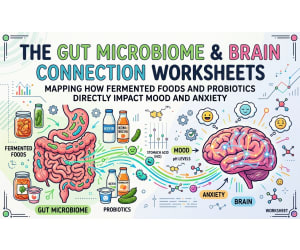
The Gut Microbiome & Brain Connection Worksheets
P.E. & Health, Health, Mental Health, Mindfulness, Physical Education, Sports, Yoga, Science, Physics, Chemistry, Grade 6, 7, 8, 9, 10, 11, 12, Worksheets & Printables, Workbooks, Worksheets, Word Searches, Teacher Tools, Lesson Plans, Quizzes and Tests, Quizzes, Tests, Assessments
Unlock the Science of Mood! A Comprehensive Gut-Brain Connection Unit for Health & Biology Are your students struggling with anxiety, stress, or low moods? Are you looking for a way to connect biology and nutrition to real-world mental health and Social-Emotional Learning (SEL)? This comprehensive, no-prep digital unit, "The Gut-Brain Connection: How Fermented Foods Impact Mood and Anxiety," is the resource you need. It provides a fascinating, scientifically-backed exploration of the gut microbiome and its direct link to our brains. Empower your students with the knowledge to understand and "bio-hack" their own mental well-being through nutrition! This 46-page resource is perfect for health, biology, or life science classes and is designed to be engaging, rigorous, and easy to implement. Students will move from understanding the theory to applying it to their own lives. ► What's Included in This 46-Page Unit? Phase 1: Core Content & Theory (Student Textbook): In-depth yet easy-to-understand chapters covering: The Gut-Brain Axis & The "Second Brain" The Vagus Nerve & Neurotransmitters (Serotonin, GABA) The Science of Probiotics, Fermentation, and Short-Chain Fatty Acids (SCFAs) Specific Mood-Boosting Foods: Kefir, Kimchi, Sauerkraut, and Miso Real-world case studies on managing anxiety and mood. Phase 2: Student Workbook (10 Worksheets): A complete workbook to test comprehension and critical thinking. Activities include: Vocabulary mapping and fill-in-the-blanks True/False/Nuance analysis Scenario analysis and case study questions Personal reflection and data collection A capstone project: "Synthesizing the Science: Your Gut-Brain Action Plan." Phase 3: Visuals & Teacher Resources (The Ultimate Time-Saver!): 3 High-Quality Visual Diagrams: Perfect for projectors or as printable posters (The Vagus Nerve Highway, Data Literacy Chart, Fermented Foods Mind Map). Comprehensive Answer Key: Detailed answers for every single question in the student workbook. Teacher Implementation Guide: A day-by-day pacing guide for a 3-day micro-unit, including objectives, instructional strategies, and discussion prompts. This isn't just a lesson; it's a powerful tool that gives students agency over their health. It demystifies anxiety and provides actionable, science-based steps for a healthier mind. Download today to bring this game-changing topic to your classroom! Keywords: Gut-Brain Axis, Gut Health, Mental Health, Anxiety, Nutrition, Health Curriculum, Biology, Middle School Health, High School Health, Probiotics, Fermented Foods, Social-Emotional Learning (SEL), Worksheets, Lesson Plan, No-Prep, Printable, Digital, Science, Serotonin, GABA, Vagus Nerve, Microbiome. Why Parents/Schools Love It: Empowers Students with Actionable Knowledge: It moves beyond theory, teaching students practical, dietary strategies they can use to manage their own mood and anxiety. Bridges Science with Social-Emotional Learning (SEL): This unit perfectly integrates rigorous biology with the critical topic of mental wellness, showing students the direct connection between what they eat and how they feel. Scientifically Accurate & Rigorous: The content is based on modern nutritional psychiatry, providing credible and trustworthy information that demystifies complex biological processes. Comprehensive & No-Prep Resource: With a student reader, 10 worksheets, visual aids, and a full answer key, this unit saves teachers valuable prep time and is ready to print or use digitally immediately. Addresses a Timely and Critical Topic: In a world where student anxiety is on the rise, this resource tackles the issue head-on from a fresh, biological perspective, removing stigma and promoting proactive health. Target Audience : Based on the content's language, complexity, and explicit mention on page 2 ("Grade 6 Health scholars"), primary target is: Grade 6 Health and Science Teachers. However, the material can easily be adapted for a broader range. should also target: Grades 7-9 Health, Life Science, and Biology Teachers. High School Psychology or Home Economics/Nutrition Teachers. Homeschooling Parents teaching middle or early high school science and health. Copyright/Terms of Use: This Book was copyrighted by Syed Hammad Rizvi. This resource is for personal and single classroom use only. You may not alter, redistribute, or sell any part of this resource. In other words, you may not put it on the Internet where it could be publicly found and downloaded. If you want to share this resource with colleagues, please purchase additional licenses from Teachsimple. Thank you for respecting these terms of use. This product is happily brought to you by Syed Hammad Rizvi
Author Creative Book Store
Rating
Tags GutBrainAxis, GutBrainConnection, GutMicrobiome, Microbiome, Probiotics, MentalHealth, MentalWellness, AnxietySupport, AnxietyRelief, StudentMentalHealth
The Rock Cycle Word Search and Scramble Activity
Science, Earth and Environmental Sciences, Earth Sciences, Grade 6, 7, 8, 9, 10, 11, Word Searches, Worksheets, Worksheets & Printables
Your students will love this engaging science review activity. Everyone loves word searches and scrambles and they make for a great review activity that is fun and competitive. This interactive game reinforces key scientific concepts and theories, ensuring curriculum relevance and accuracy. The game package includes 25 common Rock Cycle terms and concepts. The first part of this activity is a word search using the common terms while the second part uses the same terms in a word scramble and define where your students need to unscramble the word and define it. Simply print and go. This is a no-prep activity and can be used to introduce terms, review, or as additional work for those who finish early. Tailor the experience to the level of your students. You can use one or both parts to help your students learn key concept terms. Some example terms include: ROCK CYCLE IGNEOUS SEDIMENTARY METAMORPHIC MAGMA LAVA EROSION WEATHERING
Author Teach With Fergy
Tags Word Search, Word Scramble, Ecosystems, Ecology, Rock Cycle

Spot It! – Laboratory Equipment 3 Fun & Engaging Game for Science Lab
STEM, Science, Chemistry, Physics, Life Sciences, Special Education Needs (SEN), Special Resources, Research, Biology, Homeschool Templates, Grade 6, 7, 8, 9, 10, Activities, Games, Worksheets & Printables, Task Cards, Quizzes and Tests, Teacher Tools, Quizzes, Word Problems, Word Searches, Worksheets
Spot It! Laboratory Equipment 3 A Fun & Engaging Game for Science Classrooms 🔬 Make Learning Lab Equipment Fun and Interactive! Teaching students about laboratory equipment doesn’t have to be dull or overwhelming. With Spot It! – Laboratory Equipment, you can turn learning into a fun and engaging experience! This fast-paced matching game is perfect for chemistry, physics, and biology teachers who want to reinforce lab tool recognition in a way that students will love. 🎲 Why This Game Works for Science Teachers ✅ Boosts Visual Memory – Matching images of lab equipment helps students quickly recognize and remember key tools used in science labs. ✅ Encourages Active Participation – Gets students involved instead of passively memorizing lists. ✅ Improves Classroom Engagement – The fast-paced nature of the game keeps students motivated and focused. ✅ Perfect for Any Science Class – Whether you're teaching chemistry, physics, or biology, this game makes learning lab equipment easy and fun. ✅ Promotes Social Interaction – Encourages teamwork, communication, and collaborative learning. 🧪 What’s Included? 🃏 93 Total Cards – You’ll receive three different versions of the game, each with 31 cards: ✔ Round cards – Traditional Spot It! design. ✔ Square cards – Easy to cut and prepare. ✔ Hexagonal cards – Unique design for an extra challenge. 📖 Game Instructions: 1️⃣ Print the cards. 2️⃣ Laminate them for durability (optional). 3️⃣ Cut out the cards in your preferred shape: round, square, or hexagonal. 🎯 How to Play 🃏 Each player receives one card. 🔬 Turn over a card from the stack in the middle. 👀 Find a matching image between your card and the revealed card as quickly as possible. 🏆 If you find a match first, you win the revealed card. 🎉 The player with the most cards at the end wins! This game turns science learning into a competitive, fast-paced, and enjoyable classroom activity that will keep students engaged while reinforcing important lab vocabulary. 📌 Why Teachers Love It ✔ Saves Prep Time – Ready-to-print, simple setup, and no extra materials required. ✔ Great for Small Groups & Whole Class – Use it in science centers, team challenges, or as a warm-up activity. ✔ Adaptable for Different Learning Levels – Suitable for middle school, high school, and even introductory university-level science classes. 🔬 Make Science Learning More Engaging! If you’re looking for a fun, effective, and interactive way to help students learn and remember laboratory equipment, this Spot It! game is the perfect addition to your science classroom. 🚀 Download now and bring hands-on science learning into your classroom today! 📍 Best wishes, Heike from Lernfitness Did You Know? I teach with a certified therapy dog, and together we focus on creating a positive and inspiring learning environment. 🐶✨
Author Lernfitness
Tags Game, Spot It, Educational Card Games, Picture Match, Chemistry, Lab, Biology, Laboratory Equipment, Lab Tools, Physics
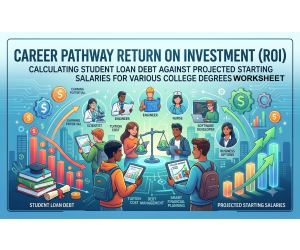
Career Pathway Return on Investment (ROI)
Math, Statistics, Order Of Operations, Money, Measurements, Resources for Teachers, Classroom Management, Community Building, Special Resources, Life Skills, Homeschool Curriculum, Homeschool Templates, Grade 8, 9, 10, 11, 12, Worksheets & Printables, Workbooks, Worksheets, Word Searches, Teacher Tools, Assessments, Lesson Plans, Quizzes and Tests, Quizzes, Tests
Is your student truly prepared for the biggest financial decision of their life? Don't let them fall into the "passion trap" or get mesmerized by prestigious university brochures without understanding the numbers. This comprehensive, no-prep digital curriculum is the most important lesson your high schooler will receive on college and career planning. This 40-page PDF guide and workbook transforms students into the "Chief Financial Officer" of their own future. By applying real-world math and economic principles, students will move from being passive consumers of education to active architects of their financial independence. This resource is a complete mini-unit, broken down into three essential phases: Part 1: The Theoretical Framework: An 11-page "textbook" section that clearly explains complex financial topics in an easy-to-understand format. Topics include: Return on Investment (ROI) for college degrees. The mechanics of student loans (Subsidized vs. Unsubsidized). The "silent killer" of wealth: Interest Capitalization. Gross Income vs. Net (Take-Home) Income. The crucial "Rule of First-Year Salary." Calculating the Debt-to-Income (DTI) ratio. Strategic alternatives like the 2+2 transfer model, trade schools, and scholarships. Part 2: The Student Workbook: Ten detailed worksheets that build on each other to move from theory to practical application. Students will calculate actual costs, analyze debt scenarios, budget monthly payments, and compare the financial outcomes of different career paths (e.g., STEM vs. Arts). Part 3: Visuals & Teacher Resources: Includes three powerful visual aids (bar chart, ROI matrix, and flowchart) for classroom discussion, plus a full Teacher Answer Key for all worksheets, making this a completely no-prep resource for you! Who is this for? This is a must-have resource for teachers of: Personal Finance Economics College and Career Readiness (AVID, etc.) Math (real-world applications) Life Skills High School Counselors and Advisors Homeschooling parents preparing their teens for college. Equip your students with the critical thinking and financial literacy skills they need to make smart, informed decisions that will prevent a lifetime of debt and set them on a path to true financial freedom. Download today and empower your students for a secure future! Keywords: Financial Literacy, Personal Finance, Student Loan Debt, College ROI, Return on Investment, College and Career Readiness, High School Math, Economics, Budgeting, Debt-to-Income Ratio, AVID, Life Skills, Workbook, Project Based Learning, No Prep, Teacher Answer Key, Grades 9, 10, 11, 12. Why Parents/Schools Love It : Empowers Students with Real-World Math: It moves beyond abstract theory and uses concrete calculations that directly apply to a student's immediate future, making learning engaging and relevant. Prevents Catastrophic Financial Mistakes: This single resource can arm a student with the knowledge to avoid tens, or even hundreds, of thousands of dollars in unmanageable debt, providing an immeasurable return on investment for the family. Comprehensive and No-Prep: It’s a complete, self-contained unit. With a textbook, 10 worksheets, visuals, and a full answer key, a teacher or parent can implement it immediately without any additional planning. Builds Critical Thinking & Ownership: It teaches students to think like a "CFO," analyzing data, weighing risks, and making strategic decisions, fostering a sense of responsibility for their own financial well-being. Balances Passion with Practicality: The guide doesn't discourage students from following their dreams; instead, it gives them the tools to finance those dreams intelligently, ensuring their passion doesn't become a "financial prison." Target Audience : Based on the content, vocabulary, and concepts discussed (e.g., FAFSA, college selection, majors), target: Grades: 9th through 12th Grade students. 9th/10th Graders: Excellent for introducing these concepts early, so they can plan their high school courses and activities (like scholarship searching) strategically. 11th/12th Graders: Absolutely critical, as they are actively making these decisions. This resource provides an immediate, practical tool for their real-life choices. Courses: Personal Finance, Economics, College & Career Planning, AVID, Advisory/Homeroom periods, and any Life Skills class. Copyright/Terms of Use: This Book was copyrighted by Syed Hammad Rizvi. This resource is for personal and single classroom use only. You may not alter, redistribute, or sell any part of this resource. In other words, you may not put it on the Internet where it could be publicly found and downloaded. If you want to share this resource with colleagues, please purchase additional licenses from Teachsimple. Thank you for respecting these terms of use. This product is happily brought to you by Syed Hammad Rizvi
Author Creative Book Store
Rating
Tags FinancialLiteracy, PersonalFinance, StudentLoans, StudentDebt, CollegeROI, MoneyManagement, FinancialEducation, Budgeting, DebtFree, DebtFreeJourney

Famous Scientists Word Search and Scramble Activity
Science, Basic Science, Grade 6, 7, 8, 9, 10, 11, Word Searches, Worksheets, Worksheets & Printables
Your students will love this engaging science review activity. Everyone loves word searches and scrambles and they make for a great review activity that is fun and competitive. This interactive game reinforces key scientific concepts and theories, ensuring curriculum relevance and accuracy. The game package includes 25 common Famous Scientists terms and concepts. The first part of this activity is a word search using the common terms while the second part uses the same terms in a word scramble and define where your students need to unscramble the word and define it. Simply print and go. This is a no-prep activity and can be used to introduce terms, review, or as additional work for those who finish early. Tailor the experience to the level of your students. You can use one or both parts to help your students learn key concept terms. Some example terms include: ISAAC NEWTON ALBERT EINSTEIN CHARLES DARWIN STEPHEN HAWKING
Author Teach With Fergy
Tags Word Search, Word Scramble, Famous Scientists, Albert Einstein, Newton, Charles Darwin, Stephen Hawking, DMITRI MENDELEEV, GREGOR MENDEL, ROBERT HOOKE

Introduction to AI Agents – Simple Task Automation Worksheets
Science, Technology, Computer Science, Engineering, STEM, Resources for Teachers, Classroom Management, Community Building, Research, ELA, Homeschool Curriculum, Homeschool Templates, Grade 6, 7, 8, 9, 10, Worksheets & Printables, Writing Prompts, Worksheets, Word Searches, Dot To Dots, Workbooks, Teacher Tools, Lesson Plans, Quizzes and Tests, Tests
"AI Agents: An Introduction to Simple Automated Task Worksheets for Middle-Grade Students" consists of a total of 34 pages in one downloadable PDF file. In this workbook, students will learn about digital agents and task automation, and will gain insight into the basics of A.I. This workbook is ideally suited for STEM, computer science and technology education classes with no coding required. The agent-oriented design framework will be introduced to students as they learn how to break complex tasks down into components (sensors, logic processors, actuators). In doing so, students will also gain a greater understanding of how to decompose tasks, create algorithms, utilize loops, use branching paths and interact in multi-agent environments by completing ten exciting student worksheets that have a variety of scenarios (e.g., digital backpack organizer, community garden irrigation aid, library return kiosk, drone delivery, wildlife rescue, etc.). In addition to the ten worksheets, teachers will be able to use various templates, conceptual diagrams (automation cycle, feasibility filter, logic trees), comprehensive answer keys, and visual organization charts/projects for presentation and/or printing purposes. No prior coding skills will be required to participate in this activity; therefore, it is an excellent means to develop critical thinking, problem-solving, and technology literacy in this A.I. age. Reasons Schools & Families are Crazed for It : •Incredible hands-on activities and experiences with real-world examples create connections to complex ideas about AI. •No-preparation necessary for educators- All materials ready to go in a few minutes. •Future readiness through foundational skills e.g. computational thinking, logical reasoning & AI literacy. •Support for all students and challenging activities for advanced learners through differentiated formats. •Unbeatable value for 1 PDF filled with meaningful STEM experiences, the extent of which can provide anywhere from weeks to years of STEM aligned content and reflect the 21st century standards. Audience : Target Audience Grade Level This resource is formatted for grades of 5 to 8 specifically and is written/designed with middle school student ages using appropriate language, characteristics, and structure as developed by the cognitive scaffolding framework for middle school students. It is designed to be effective for: Grade 5 and 6 (introduction of automation concepts) Grade 7 and 8 (additional logic/concepts/logical branches/multitudes of agents) classrooms of various levels of ability, students identified as gifted,; students homeschooled; students participating in after school or summer STEM oriented programs. Copyright/Terms of Use: This Book represents a copyright owned by Syed Hammad Rizvi and is provided to you for personal use and for use only in one classroom. You are NOT PERMITTED to modify, redistribute, or sell any part of this resource (i.e. you are NOT PERMITTED to post it onto the internet where it will be publicly available to be found and downloaded). If you would like to share this resource with other educators, please purchase an additional license from Teachsimple. Thank you! This product is happily provided by Syed Hammad Rizvi
Author Creative Book Store
Rating
Tags AIAgents, TaskAutomation, DigitalAgents, AIForKids, IntroductionToAI, AIWorksheets, Ages10to14, 10to14YearsOld, MiddleSchoolAges, Grades5to8

Media Literacy & Advertising Influence Analysis Worksheets
Science, Technology, Computer Science, Engineering, Research, Resources for Teachers, Classroom Management, Community Building, Special Resources, Social Emotional Learning (SEL), Grade 7, 8, 9, 10, 11, 12, Worksheets & Printables, Workbooks, Worksheets, Word Searches, Teacher Tools, Assessments, Lesson Plans, Quizzes and Tests, Quizzes, Tests
Are your students overwhelmed by the endless stream of digital information, unsure how to separate true facts from falsehoods and other types of media manipulation? With the rise of influencers, hyper-targeted algorithms, and an attention economy, media literacy as it was once traditionally defined is insufficient in the world of today. Your students will benefit from our Ultimate Media Literacy & Advertising Analysis Unit by gaining the critical thinking skills they'll need to make it in today's world. This thorough "turnkey" media literacy curriculum offers students an understanding of the psychological underpinnings of modern persuasion, going far beyond just an ability to identify "fake news." It uses proven theoretical concepts and real-world examples to give students tools for breaking down the actual media they consume each day. THIS PAGE CONTAINS OVER 50 PAGES OF VALUE! PHASE 1 CONTENT & THEORY: 4 Chapters full of valuable information about the major themes of the 21st century demonstrating the foundational knowledge needed to be an informed citizen on each of these themes, written in academic language but accessible to all. 1. The Attention Economy - (infinite scrolling, micro moment) 2. Psychological Exploitation - (Real vs Ideal self, FOMO, Parasitical relationships) 3. Semiotics: The Language Behind Language - (signifiers and signified, "greenwashing") 4. Algorithmic Targeting - (psychographics, echo chambers, microtargeting) PHASE 2 STUDENT WORKBOOK (10 RIGOROUS WORKSHEETS): Each worksheet has a modern and relevant case study for students to analyze using the following questions with a final creative application activity throughout each unit with regard to each of the case studies. - How do I deconstruct and identify possible target audiences? - How can I understand emotional and visual manipulation? - What is the role of algorithms and filter bubbles? - How do I identify logical fallacies in rhetoric? - What is native advertising and how does it work? - What is the economic value of social media influencers and how do I identify parasocial exploitation? - What is data harvesting and how does it contribute to surveillance capitalism? - What are dark patterns in user experience or user interface? - How do I manage a brand crisis? CAPSTONE PROJECT: Develop your own counter-narrative campaign! PHASE 3: Finish Teacher Materials – All the support materials you will need to teach this unit successfully! To provide visual frameworks for your students, you will receive three highly effective printable anchor charts or diagrams (Hyper-targeted advertising, The Disinformation Triangle and The SIFT Method) for students to use as visual scaffolds while they build their understanding. If you need a complete set of example answers for all ten of the worksheets, you will find a highly organized answer key that provides you with detailed exemplar responses to each of the ten worksheets. This resource will save you countless hours preparing for your classes. You will receive a comprehensive teacher implementation guide that provides a pedagogical overview along with a complete teacher 5-day pacing and lesson plan so that you can easily implement this complete unit successfully! While this isn't just a bundle of worksheets, it is a number of vital resources that will support students in developing digital citizenship, critical consumption and intellectual sovereignty. It is suitable for use in English, Media Studies, Social Studies and Business classes. Download this resource today so you can empower your students to be active decoders instead of passive consumers! Key terms: Media Literacy, Critical Thinking, Advertising, Propaganda, Fake News, Disinformation, Digital Citizenship, High School English, Social Studies, Rhetoric, Persuasion, Logical Fallacies, Worksheets, Printables, Lesson Plans, Unit Plans, Google Classroom. Parents and Schools Appreciate it Because: Real World Preparation - This unit looks at the digital world students live in today, provides students with critical thinking skills to evaluate the influencers, ads aimed at them, and social media platforms already used daily by students. Develops Deep Thinking Skills – This unit goes beyond the standard checklist used to identify "fake news" and teaches students about the psychological and economic constructs that allow manipulation of modern media. Relevant and Engaging Content – Lessons are told through modern examples such as the meal delivery subscription model, greenwashing by fast-fashion companies, and student-to-YouTuber relationships to make otherwise complex content relatable and interesting. Comprehensive and Teacher Friendly – This is a "turnkey" unit, including theory, 10 worksheets, graphic organizers, and an answer key, along with a 5-day lesson plan to allow educators to save dozens of hours of prep time. Target Student Audience : Based on the vocabulary, concepts and themes within the PDF document, it is targeted toward the following audiences: High School Students (Grades 9-12). The material is most relevant for high school students due to the fact that they are primarily marketed to by way of advertising and media tactics discussed. Complex vocabulary, including "semiotics," "psychographics" and "algorithmic panopticon"; may be challenging for some students but are age-appropriate. Early College/University Students (100 Level). This resource would be an excellent resource for introductory courses in communications, sociology or media studies. Copyright/Terms of Use: This Book is a copyrighted possession of Dr. Syed Hammad Rizvi. This resource can only be used for personal use and in a single class room only. No parts of this resource may be altered, redistributed, or sold. In other words, this resource may not be placed on the internet and publicly accessible or downloadable. We encourage you to share this resource with your colleagues; however, you must purchase additional licenses from 'Teachsimple. Thank you for understanding and following our Copyright Policy/Terms of Use. This product is proudly provided to you by Dr. Syed Hammad Rizvi
Author Creative Book Store
Rating
Tags MediaLiteracy, CriticalThinking, DigitalLiteracy, Advertising, Propaganda, Marketing, 21stCenturySkills, DigitalCitizenship, Disinformation, FakeNews

Organic Chemistry Word Search and Scramble Activity
Science, Chemistry, Grade 10, 11, 12, Word Searches, Worksheets, Worksheets & Printables
Your students will love this engaging science review activity. Everyone loves word searches and scrambles and they make for a great review activity that is fun and competitive. This interactive game reinforces key scientific concepts and theories, ensuring curriculum relevance and accuracy. The game package includes 25 common Organic Chemistry terms and concepts. The first part of this activity is a word search using the common terms while the second part uses the same terms in a word scramble and define where your students need to unscramble the word and define it. Simply print and go. This is a no-prep activity and can be used to introduce terms, review, or as additional work for those who finish early. Tailor the experience to the level of your students. You can use one or both parts to help your students learn key concept terms. Some example terms include: CARBON HYDROGEN OXYGEN NITROGEN ALKANE ALKENE
Author Teach With Fergy
Tags Organic Chemistry, Word Search, Word Scramble, Chemistry

Earth's Composition & Tectonic Plates Word Search & Scramble Activity
Science, Earth and Environmental Sciences, Earth Sciences, Grade 6, 7, 8, 9, 10, 11, Word Searches, Worksheets, Worksheets & Printables
Your students will love this engaging science review activity. Everyone loves word searches and scrambles and they make for a great review activity that is fun and competitive. This interactive game reinforces key scientific concepts and theories, ensuring curriculum relevance and accuracy. The game package includes 25 common Earth's Composition and Tectonic Plates terms and concepts. The first part of this activity is a word search using the common terms while the second part uses the same terms in a word scramble and define where your students need to unscramble the word and define it. Simply print and go. This is a no-prep activity and can be used to introduce terms, review, or as additional work for those who finish early. Tailor the experience to the level of your students. You can use one or both parts to help your students learn key concept terms. Some example terms include: CRUST MANTLE CORE LITHOSPHERE
Author Teach With Fergy
Tags Word Search, Word Scramble, Earth's Composition, Tectonic Plates, Mantle, Earth Crust

Stars, Galaxies, and the Universe Word Search and Scramble Activity
Science, Earth and Environmental Sciences, Space, Grade 6, 7, 8, 9, 10, 11, Word Searches, Worksheets, Worksheets & Printables
Your students will love this engaging science review activity. Everyone loves word searches and scrambles and they make for a great review activity that is fun and competitive. This interactive game reinforces key scientific concepts and theories, ensuring curriculum relevance and accuracy. The game package includes 25 common Stars, Galaxies, and the Universe terms and concepts. The first part of this activity is a word search using the common terms while the second part uses the same terms in a word scramble and define where your students need to unscramble the word and define it. Simply print and go. This is a no-prep activity and can be used to introduce terms, review, or as additional work for those who finish early. Tailor the experience to the level of your students. You can use one or both parts to help your students learn key concept terms. Some example terms include: STAR GALAXY UNIVERSE SOLAR SYSTEM PLANET BLACK HOLE SUPERNOVA RED GIANT
Author Teach With Fergy
Tags Word Search, Word Scramble, Astronomy, Stars, Galaxies, Universe, Space

Easter Chemistry Matching Game – Learn Chemical Elements
STEM, Science, Chemistry, Physics, Life Sciences, Special Education Needs (SEN), Special Resources, Research, Biology, Homeschool Templates, Grade 6, 7, 8, 9, 10, Activities, Games, Worksheets & Printables, Task Cards, Quizzes and Tests, Teacher Tools, Quizzes, Word Problems, Word Searches, Worksheets
Spot It! Easter Chemistry Matching Game – A Fun & Interactive Way to Learn the Chemical Elements A Fun & Engaging Game for Science Classrooms Every teacher knows that memorizing the periodic table can feel overwhelming for students. But what if learning element symbols and atomic numbers was as simple as playing a game? This Easter-themed Chemistry Matching Game is a fun, interactive way to reinforce chemical elements while keeping students engaged. It’s fast-paced, easy to set up, and perfect for group activities, review sessions, or even just a lighthearted challenge before spring break. Instead of drilling element names from a chart, students actively recognize, match, and recall symbols through play. The result? They learn without even realizing it! 🌟 Why Students Love This Game ✔ It’s a game, not a test! – No pressure, just fun learning. ✔ Fast and engaging – Perfect for small groups, pairs, or classroom challenges. ✔ Boosts memory skills – Helps students recognize elements faster. ✔ Easter-themed twist – A seasonal way to bring chemistry to life! 📌 What’s Inside? 📜 93 Printable Game Cards with: ✔ 31 chemical elements ✔ Three shape options – Round, hexagonal, and square for easy cutting. ✔ A festive Easter design – Adds a bit of springtime fun to science class! 🎨 No element names on the cards – This encourages true recall instead of memorization from a reference sheet. 🎲 How It Works 1️⃣ Print and cut the game cards. (Laminating them helps for long-term use!) 2️⃣ Give each player a stack of shuffled cards. 3️⃣ Flip a card over and look for a match – The first player to spot one wins that round! 4️⃣ The game continues until all cards have been matched. Whoever has the most cards at the end wins! 🏆 Classroom Tip: Let students color-code elements before playing to reinforce periodic table trends! 🐣 Why Teachers Love It ✔ "My students didn’t even realize they were reviewing chemistry—they were just excited to play!" ✔ "A great activity for before a quiz or as a station in my science rotation!" ✔ "Simple setup, lots of learning, and tons of engagement!" 🔬 Make Chemistry More Playful This Easter! Instead of struggling with flashcards, let students learn through movement, pattern recognition, and competition. This game is an easy way to make chemistry more approachable, interactive, and fun—while keeping the focus on learning! 🐰 Print it, play it, and bring science to life this Easter! 📍 Best, Heike from Lernfitness Did You Know? I teach with a certified therapy dog, and together we focus on creating a positive and inspiring learning environment. 🐶✨
Author Lernfitness
Tags Game, Spot It, Educational Card Games, Picture Match, Chemistry, Physics, Chemical Elements, STEM Easter Activity, Easter, Gamified Learning Chemistry

AI Tools for Research – Fact-Checking & Bias Detection Worksheets
Science, Technology, Computer Science, Engineering, Special Resources, Social Emotional Learning (SEL), Social Skills, Life Skills, STEM, Research, Grade 6, 7, 8, 9, 10, 11, 12, Worksheets & Printables, Workbooks, Worksheets, Word Searches, Writing Prompts, Teacher Tools, Lesson Plans, Assessments, Diagrams, Presentations
This 41-page PDF is a fully prepared to print middle school Digital Literacy Curriculum called "Advanced Digital Tools for Research: Fact-Checking and Detecting Bias Worksheets" designed for students in grades 6-8 to be able to use the V.E.R.I.F.Y. Framework (Validate, Extract, Read Lateral, Interrogate Bias, Find Primary Evidence, Yield Conclusion) to critically evaluate content generated by AI, identify hallucinatory or fabricated information, detect algorithmic bias, and utilize lateral reading skills. This resource is ideal for the AI era and includes: - Four theoretical chapters with practical real-world examples (e.g., Titanic, Great Wall of China, Space Race, Paleo-Diet). - Ten hands-on student worksheets (e.g., Anatomy of a Digital Claim, Spotting Plausible Falsities, Lateral Reading Protocol, Unmasking Structural Bias, The Phantom Citation Mystery, Chronological Confusion, etc.). - Three full-color visual frameworks/diagrams (Fact-Checking Workflow, Algorithmic Bias Triad, Source Credibility Spectrum). - A complete answer key with rubrics and high proficiency examples. - A complete Teacher Implementation Guide including pacing (4-6 class periods), differentiation for ELLs/developing readers and gifted students, formative assessment examples, and examples of exit tickets. - A ready-to-teach PDF requiring no preparation that increases research skills, media literacy, and critical thinking through an alignment to both the CCSS, ISTE, and Digital Citizenship Standards, making it appropriate for use in English Language Arts, Social Studies, Science, and Technology classes. Why Schools/Parents Find It To Be Effective: Develops Real World Skills that Kids Need to Survive in an AI World. Kids will learn how to identify when they are being deceived by hallucinations, bias, and fake citations before they copy and paste into their papers or projects. No Preparation or Planning Time Required - Teachers get full theory, worksheets, visuals, answers and pacing guide when using this product. Parents appreciate the independent critical thinking experience provided to their children. Fun Way to Increase Student Engagement - Kids enjoy using the detective-style worksheets (Tree Octopus Hoax, Phantom Biologist, Brooklyn Bridge Hoax, etc.) to develop critical thinking skills through the use of skepticism as a game. Differentiated, Inclusive, and Fully Accessible - Students are able to access the materials because of the built in supports provided for ELL/Developing Readers, and extension challenges for Gifted Students. Ensures Academic Integrity Now and in the Future - Aligns well with the local school districts expanding policies regarding the appropriate use of AI, as well as standards for digital citizenship. Intended Audience of Book (As per complete PDF analysis): This resource is specifically created for students in Grades 6 to 8 (Middle School). There are examples throughout the resource, as can be seen in the seven (7) and eight (8) examples referenced. Answer keys and teacher guides both have "Grade 6 to 8 Student Workbook" clearly labeled on them. Best Fit: ELA, Social Studies/History, Research projects in Science, Digital Literacy/Media Literacy, or Technology courses Excellent for Homeschoolers, Gifted Programs, or Educators Teaching AI Ethics and Responsible Research. Copyright & Terms of Use This Book is copyrighted by Syed Hammad Rizvi. This resource is solely for personal and individual classroom use. You may not modify, redistribute or sell any part of this resource (including putting it online for others to back or download). In order to share this resource with your coworkers please buy more licenses from Teachsimple. Thank you for following these terms of use. -------------------------------------------------------------------* This product was created by Syed Hammad Rizvi to be enjoyed!
Author Creative Book Store
Rating
Tags AIFactChecking, BiasDetection, DigitalLiteracy, MiddleSchoolWorksheets, AIFactCheck, VERIFyFramework, CriticalThinking, MediaLiteracy, AIforTeachers, DigitalLiteracyWorksheets

Global Climate Policy Debates & Solution Brainstorm Worksheets
Science, Earth and Environmental Sciences, Life Sciences, Earth Sciences, Environmental Science, Geology, Space, Nature & Plants, Biology, STEM, Homeschool Curriculum, Homeschool Templates, Grade 8, 9, 10, 11, 12, Worksheets & Printables, Worksheets, Workbooks, Word Searches, Teacher Tools, Assessments, Lesson Plans, Quizzes and Tests, Quizzes, Tests
Provide your advanced high school students with this 42-page climate policy curriculum that focuses on advanced dialectical analysis rather than simplified activism. This curriculum will encourage active learning for your students by transforming passive learning into a deep intellectual engagement through multi-perspective debate, policy creation, and ethical reasoning. Students will explore: The transition from the Kyoto Protocol to the Paris Agreement and the principle of Common But Differentiated Responsibilities (CBDR) Carbon pricing mechanisms (Carbon Tax vs. Cap and Trade), as well as the Social Cost of Carbon The ethics of geoengineering (Stratospheric Aerosol Injection [SAI], moral hazard, risks associated with unilateral use of SAI) Environmental justice, climate debt, and the Cobalt Paradox in developing countries Youth climate lawsuits, climate refugees and international law, methane agricultural policies, financing urban adaptation, and accountability for greenwashing Includes 10 high-level student worksheets with conceptual fill-in-the-blank (using a unique 7-underscore system), real-world case studies and hypothetical case studies, critical debate prompts, and challenging policy creation assignments for students. Teacher answer keys, implementation guides, visual diagrams (Climate Policy Trilemma, Stakeholder Matrix, and Carbon Pricing Mind Map), and differentiation strategies are also included. Ideal for AP Environmental Science, AP Government, AP Economics, IB Global Politics, Honors Humanities, and Model UN/debate programs. Encourages real critical thinking, systems analysis, and nuanced understanding of the trade-offs between enhancing developing countries. The Key Reasons Why Parents and Schools Appreciate It: Facilitates unbiased critical thinking instead of dogmatic, ideologically-based, practical-thinking-by-proxy students making arguments for and against competing choices (e.g., Growth vs. Fossil-Fuel Abolition; Independent Sovereign Nation vs. World Government; Technology as Hope or as a Curse). Extensive preparation for taking Advanced Placement tests; writing college level essays, debating other humans, as well as the development of well-thought-out arguments using established policies, and ethical reasoning based on sound ethical reasoning standards. A balanced view of the world; an honest consideration of the challenges facing developing nations, "Just Transition", climate liabilities, and the risk of neo-colonial influence in creating green supply chains. Teacher support that is broad in scope and purpose; includes teacher-oriented teacher guides, "look-for" answers for the teachers, pacing guides and strategies for differentiating instruction, visual aids to illustrate concepts, and techniques for managing classroom conversations. An exceedingly entertaining way to teach about Climate Change, as well as Science, by creating opportunities for students to compete with each other on an intellectual level, as opposed to being preached at. Primary Audience & Classes: 9-12 (Secondary School) Advanced Students Advanced Placement Environmental Science Advanced Placement U.S. Government/Comparative Government Advanced Placement Macroeconomics/Microeconomics (on Carbon Pricing) IB Diploma Programme: Global Politics, Environmental Systems/Societies (ESS), and Economics Advanced Placement/honors world/history/contemporary issues Model United Nations, Debate and Mock Trial Teams Future Advanced 10-graders: Gifted/Track 11/12 grades -- Advanced Placement courses. Copyright/Use Policy: This book, written by "Syed Hammad Rizvi," is one-of-a-kind. You cannot change, give away or sell this product so long as you are using it as personal and for one classroom only. Therefore, you may NOT post any portion of this book/presentation on the internet for public access and download. Additional copies of this work may be purchased if you want to share with your colleagues, so please consider purchasing additional license(s) through Teachsimple. Your cooperation is greatly appreciated! A very special "thank you" from "Syed Hammad Rizvi".
Author Creative Book Store
Rating
Tags ClimatePolicy, APEnvironmentalScience, ClimateJustice, ClimateChangeEducation, EnvironmentalScience, Geoengineering, ClimatePolicyWorksheets, APEnvSci, JustTransition, CarbonPricing

Zero-Waste Lifestyle Tracking & Habit Builder Journals
Science, Resources for Teachers, Life Sciences, Earth and Environmental Sciences, Earth Sciences, Environmental Science, Geology, Nature & Plants, STEM, Biology, Grade 6, 7, 8, 9, 10, 11, 12, Teacher Tools, Worksheets & Printables, Workbooks, Worksheets, Word Searches, Assessments, Lesson Plans, Quizzes and Tests, Quizzes, Tests
Turn your classroom into an environmental science lab with the help of this awesome 41-page Zero Waste Lifestyle Tracking and Habit Builder Journal! This is a project-based learning resource for grades 4–8 that is aligned to the standards! Looking for a real world environmentally focused way to teach environmental science to your students that isn't just a bunch of recycling posters? A complete curriculum journal combining current neuroscience research, ecology theory and hands-on data collection will give your students everything they need to consider themselves true environmental scientists - and it begins with measuring their own lives! This resource is not just one big stack of worksheets but rather, it is a fully scaffolded 3-phase academic journal developed with university seminar style rigor and middle school classroom style accessibility. Your students won’t just learn about the environment; they’ll measure it, analyze it and make changes to it! CONTENTS (41 Pages, Print & Digital Ready): Phase 1 — Core Content & Theory (4 chapters): 1. The Anatomy of Waste explains what happens throughout the lifespan of waste items, including Lifecycle Assessment (LCA), the impact of microplastics in our world today, which items go in the landfill, which items can be incinerated, and how long it takes for a plastic fork to travel 450 years into our future 2. The Neuroscience of Habit Building discusses how our brains form habits based on the basal ganglia of the brain, how we can rebuild/rewire our habits scientifically through neuroplasticity, and the three parts of the habit loop (cue-routine-reward) 3. The Zero-Waste Hierarchy introduces the four elements of a zero-waste lifestyle: Refuse, Reduce, Reuse, Rot (Composting) and Recycle. This chapter includes a real-world example of how one school significantly reduced their waste by over 90% using these four proven methods 4. Data-Driven Stewardship teaches your students to think like a marine biologist and meteorologist by showing them how to track and analyze their own local environmental data. After each chapter is a fill-in-the-blank review of the chapter, called the Scholar's Review. Phase 2: 10Worksheet Workbook for Students (Research Lab Style) Personal Waste Audit 24-Hour (Data Collection Protocols: Empirical) Material Lifecycle Analysis of Material (From Raw Extraction To Disposal) Biochemistry of Composting (Green And Brown Materials, Aerobic And Anaerobic Decomposition) Single Use Plastic Substitution Matrix (Cost/Benefit Analysis) Water and Energy Footprint Calculation (Embedded Energy And Water Load Calculation; Shower Each Year; Cost Of Water To Make Cotton Shirt) Redesign Challenge For Circular Economy (Planned Volatility, Upcycling, Extended Producer Responsibility) Food Waste Economics (FIFO Pantry System, Estimate Of $780 Of Food Waste Per Year, What Is A Food Standard For A Non-Food Waste Item?) Fast Fashion Footprint (Cost To Wear, Use Of Micro-Plastics, Philosophy Of Wardrobe) Supermarket Packaging Detective (Identifying Greenwashing, Multi-Layered Packages, Bulk Purchasing) Zero-Waste Habit Builder (Keystone Priming, 30-Day Tracking Plan, Write Manifesto For A Zero Waste Life) PHASE 3—Teacher Resources and Visuals: Three professionally designed SVG diagrams (Zero Waste Hierarchy, Linear vs. Circular Economy, Sustainability Habit Loop) Complete Answer Key with example answers and teacher rubric notes 4 week pacing guide with weekly objectives, activities, teacher roles and homework 100-point assessments rubric across four categories of data collection, behavioural design, critical thinking and communication Five extension activities (Trash Jar Challenge, Community Waste Mapping, Letter Writing Campaign to Corporations, Do-It-Yourself Repairs Workshop, Composting Science Experiment; if possible please use a separate document per activity) Strategies for differentiating instruction for Grades 4-5, Grade 8/Gifted, IEP/504 and ELL students CONNECTING TO CURRICULUM: This journal ties into Next Generation Science Standards (NGSS), Common Core English Language Arts (informational text analysis, evidence based writing) and Common Core Mathematics (percentages, projections, data analysis). This journal combines many subjects — environmental science, behavioral psychology, economics and persuasive writing — into one connected whole. USAGE IDEAS: Great as a 4-week stand-alone unit or as part of an after-school environmental club, summer enrichment program or reinforcement through integration into existing science, health or social studies curricula. Assign user digitally (fillable PDF) or in print. DIGITAL DOWNLOAD — PRINT & GO! REASONS PARENTS/SCHOOLS LOVE THE RESOURCE: Merging Science, Psychology, and Real-World Mathematics – Instead of merely reading about the environment, kids actually conduct real waste audits, calculate their water footprints, and use their own personal data to perform real-world food waste economics analysis – helping them to take abstract concepts and move towards making those concepts their own, and thus, real. Tremendous Support For Teachers From Day One – Each of the resources, including a complete 4-Week Pacing Guide, example responses in the Answer Key, a 100-point Assessment Rubric, and a variety of differentiation strategies to accommodate ALL learners (IEP/504, ELL, Gifted) provides teachers with no-prep stress! Building Lasting Habits, Not Just Raising Awareness – This journal is based on neuroscience principles, specifically the Habit Loop framework, which teaches kids HOW behavior changes within the brain — therefore they can establish long-term environmental habits to implement after the conclusion of the unit. No Eco-Anxiety – Only Eco-Empowerment – Constructivist pedagogy does not endorse guilt-based teaching practices to educate/expose students to environmental issues. Instead, students are encouraged to view themselves as environmental scientists, thereby creating a sense of worth/empowerment as opposed to being seen as passive victims of "climate doom"; hence, all resources provided in this unit have been designed with both emotional safety and motivation in mind. Cross-Curricular and Standards-Aligned Value – When you purchase this journal as a single resource, you are actually replacing multiple separate resources. This one journal covers multiple areas of study related to environmental science, data analysis, persuasive writing, behavioral psychology, economics, and systems thinking — therefore you are maximizing the instructional value and curriculum alignment of numerous subject areas! TARGET GRADES/CLASSES: On evaluating for the content type's level of complexity, the level of language used, the level of math skill needed; and how to teach the content using scaffolding: Primary Target 6th, 7th, and 8th grades (Middle School, our primary audience) Science classes; Environmental Science/ Earth Science Health and Wellness Classes Social Studies/Civics (Circular economy, EPR Policy) ELA Classes (Persuasive writing, Informational text) Secondary Target 5th Grade (Upper Elementary, with teacher scaffolded materials to be used; will require the use of Phase 3 differentiation strategies). 4th Grade (Will require major support in accordance with Phase 3 differentiation, as mentioned in Section 2) 9th Grade (High School, Environmental Science as a remedial unit or an introductory unit) Special Programs Gifted/Honors programs (Students in 8th grade, extension Activities) IEP/504 Accommodations (explicitly provide support through IEP/504) ELL Programs (provide bilingual glossary strategies) Environmental clubs (5th through 9th grade) STEM/STEAM programs Best Audience Targets: Middle School Science teachers (6th to 8th grade) Environmental Science Teachers Parents of Students 10 - 14 taking homeschool classes School Librarians purchasing Sustainability books for their library collection After School Program Coordinators Eco-Conscious Parents with Interest in Supplement Learning Your use of this Resource Agreement: Copyright (or Terms of Use) Copyright is held by Syed Hammad Rizvi. You may use this resource for your personal and classroom use only, but may not alter, sell or redistribute any component of this resource, nor place any part of this resource on a publicly available website. You can only share this resource with your coworkers by purchasing additional licenses from Teachsimple. Thank you for complying with all copyright guidelines and restrictions. Syed Hammad Rizvi is proud to provide you with this resource.
Author Creative Book Store
Rating
Tags ZeroWasteEducation, EnvironmentalScience, SustainabilityEducation, ZeroWasteLifestyle, EcoEducation, GreenEducation, ClimateEducation, EnvironmentalLiteracy, SustainabilityLessons, ZeroWasteCurriculum

Digital Citizenship & Cybersecurity Threat Simulation Pack
Science, Technology, Computer Science, Engineering, Research, Resources for Teachers, Classroom Management, Community Building, Special Resources, Social Emotional Learning (SEL), Homeschool Curriculum, Homeschool Templates, Grade 9, 10, 11, 12, Worksheets & Printables, Writing Prompts, Worksheets, Word Searches, Teacher Tools, Assessments, Lesson Plans, Quizzes and Tests, Quizzes, Tests
Develop your students’ practical skills in digital security via this complete Digital Citizenship and Cybersecurity Curriculum. This second-to-none Cybersecurity Threat Simulation Pack allows teachers to provide their students with a hands-on learning experience that far exceeds simple “strong password” teachings. Students learn about the psychology of social engineering, spear phishing, cryptography (encryption, decryption, hashing, and the avalanche effect), vulnerability to packet sniffer and evil twin man-in-the-middle attacks, OSINT and metadata risks, the permanence of their digital footprint, ransomware mitigation, synthetic media (deepfakes), and managing credential stuffing attacks. Includes: 4 detailed theory chapters including real-world examples (Operation Phantom Credentials, Midnight Hash Collision, Café Doppelgänger Breach, Overexposed Athlete) 10 high engagement student worksheets including: Social Engineering Autopsy, OSINT Investigation, Cryptographic Frameworks, Ransomware Playbook, Ethics of Hacktivism, Synthetic Media Verification, etc. 7 Knowledge Verification and Assessment Nodes (3 underscored blanks) Complete teacher materials and instructional aids including concept maps (Cybersecurity Threat Taxonomy), etc. Ideal for use as 1-1 or in project-based learning models. Available immediately as PDF downloads. No prep needed! Great for high school digital citizenship; cybersecurity electives; computer science; information technology; and media literacy classes. Keywords: digital citizenship curriculum for high schools, cybersecurity student worksheets, cybersecurity simulation, social engineering lesson plan, OSINT activities, how to teach ransomware, password security curriculum, digital footprint lesson, deepfake verification lessons, ethical hacking for high schools, TpT cybersecurity bundle. Why Schools and Parents Appreciate It: Transforms passive “internet safety” policies into active, high-risk simulation scenarios, which students retain long after the event. No prep, print-ready worksheets and answer blanks supplied equal instant classroom student engagement and assessment. All modern threats are covered (phishing, ransomware, deepfakes, open-source intel [OSINT], and credential stuffing), so that students know how to properly identify real-world attacks. Developing ethical digital citizens and teaching college and career readiness (a few universities are requiring all students become aware of cybersecurity). Saves teachers resources by providing over 40 pages of teacher materials (including an entire curriculum with teacher visuals and answer keys). Intended Audience/Classroom Setting: This resource has been developed specifically for children aged 14-18 years old (i.e., students in grades 9 to 12). The case studies involve high school seniors who are applying for scholarships/financial aid, student-athletes involved in high school football, track coaches (in their respective teams), school district divisions (i.e., regional) and students heading to universities. Given the complexity of the lesson topics (asymmetrical encryption; SHA-256 avalanche effect; MITM/evil twin attacks; OSINT metadata exploitation; ransomware IR playbooks; deep fake epistemological security), it is not suitable for children in grades 6-8 due to their maturity level (14-18) but is ideal for the following: Grades 9-12 Digital Citizenship/Digital Literacy Cybersecurity / Information Security Electives Computer science / ICT classes Media literacy/journalism (synthetic media/OSINT sections) CTE (Career and Technical Education) Cybersecurity Pathways Copyright / Terms of Use: Syed Hammad Rizvi has placed copyright on this book. This resource can be used for private (personal / classroom) use only. You may not change, copy, or sell any portion of this resource. Additionally, you will not put this on the internet for free public access (so users have to pay to download). Please purchase additional licenses through Teachsimple to share this with coworkers. Thank you for complying with these terms of use. This product has been produced with much joy by Syed Hammad Rizvi.
Author Creative Book Store
Rating
Tags DigitalCitizenship, CybersecurityCurriculum, CyberSecurityHighSchool, DigitalCitizenshipCurriculum, CybersecurityForStudents, HighSchoolCybersecurity, DigitalLiteracyCurriculum, CyberThreatSimulation, SocialEngineeringLesson, SpearPhishingWorksheet

Natural Disasters Word Search and Scramble Review Activity
Science, Earth and Environmental Sciences, Earth Sciences, Grade 7, 8, 9, 10, Word Searches, Worksheets, Worksheets & Printables
Your students will love this engaging science review activity. Everyone loves word searches and scrambles and they make for a great review activity that is fun and competitive. This interactive game reinforces key scientific concepts and theories, ensuring curriculum relevance and accuracy. The game package includes 25 common Natural Disasters terms and concepts. The first part of this activity is a word search using the common terms while the second part uses the same terms in a word scramble and define where your students need to unscramble the word and define it. Simply print and go. This is a no-prep activity and can be used to introduce terms, review, or as additional work for those who finish early. Tailor the experience to the level of your students. You can use one or both parts to help your students learn key concept terms. Some example terms include: EARTHQUAKE VOLCANO TSUNAMI HURRICANE TORNADO FLOOD
Author Teach With Fergy
Tags Natural Disasters, Earthquakes, Volcanoes, Tsunamis, Word Search, Word Scramble, Word Search And Scramble

Adaptive Sensory-Friendly Fitness Routines
Science, Life Sciences, Human Body, P.E. & Health, Health, Physical Education, Sports, Yoga, Mental Health, Mindfulness, Homeschool Curriculum, Homeschool Templates, Grade 9, 10, 11, 12, Teacher Tools, Quizzes and Tests, Quizzes, Tests, Worksheets & Printables, Assessments, Workbooks, Worksheets, Word Searches, Lesson Plans
Transform your approach to fitness and somatic care for adults with profound physical and neurological barriers. This comprehensive, 40-page digital curriculum, "Adaptive Sensory-Friendly Fitness Routines," is a groundbreaking resource designed for special education teachers, transition specialists, occupational therapists (OT), physical therapists (PT), and direct support professionals. Frustrated with traditional fitness models that are inaccessible or dysregulating? This evidence-based program is built on the Low-Arousal Adaptive Somatic Framework (LAASF) , which shifts the focus from impossible standards to dignity, comfort, and neurological safety. It redefines "fitness" for individuals with conditions such as severe cerebral palsy, traumatic brain injury (TBI), advanced multiple sclerosis, cortical visual impairment (CVI), and profound neurodevelopmental differences. This is more than just a set of exercises; it's a complete pedagogical system. WHAT'S INCLUDED: Part 1: In-Depth Clinical Guide (Pages 1-12): A professional deep dive into the neurobiology of sensory-friendly movement. Understand the science behind sensory gating, proprioceptive deficits, CVI adaptations, and low-stimulation design. Features two detailed case studies. Part 2: The Data-Driven Workbook (Pages 13-28): Ten meticulously designed, printable worksheets to guide your practice and document progress. These logs are the core of the program and include: Environmental Sensory Baseline (Pre-Workout Assessment) Somatic Readiness & Pain Scale Range of Motion (ROM) Micro-Movements Log Breath Control and Pacing Tracker Isometric Engagement & Release Log Assisted Mobility & Proprioceptive Input Logs Post-Exertion Decompression & Transition Protocols Weekly Neurological Fatigue Mapping Part 3: Visuals & Teacher Resources (Pages 29-40): Everything you need for successful implementation. Clear visual diagrams explaining the sensory ecosystem. A "Neurological Barrier Adaptation Matrix" for specific student profiles. A comprehensive Answer Key and Assessment for facilitator training. A sample "Exemplar Key" showing how to fill out the logs for a hypothetical case. A step-by-step Teacher Implementation Guide. This curriculum champions an age-appropriate, non-infantilizing approach, using high-contrast, minimalist visuals to reduce cognitive load and promote autonomy. Empower your students and clients to engage with their bodies in a safe, consensual, and meaningful way. Perfect for: Special Education Transition Programs (18+) Occupational Therapy & Physical Therapy Sessions Adult Day Programs & Supported Living Facilities Adapted Physical Education (APE) Caregiver and Paraprofessional Training Download today and unlock a world of intentional, accessible movement for the individuals you support. Keywords: Adaptive PE, Special Education, Life Skills, Adult Day Program, Transition Program, Occupational Therapy, Physical Therapy, Cerebral Palsy, TBI, CVI, Non-Verbal, Sensory-Friendly, Low Stimulation, Visual Supports, Workout Log, Data Tracking, IEP Goals, Somatic, Neurodiversity. Why Parents/Schools Love It: Dignity-Centered & Age-Appropriate: It rejects the infantilizing cartoons and primary colors common in special education, treating adults with the respect they deserve through mature, minimalist design. Inclusively Designed for the Most Profound Needs: This isn't a one-size-fits-all program. It's one of the few resources specifically engineered for individuals with the most significant physical, neurological, and sensory barriers, providing a path to engagement where none existed before. Data-Driven and Goal-Oriented: The 10-part workbook provides a clear, professional way to track subtle but critical progress—from breathing patterns to neurological fatigue. This is invaluable for IEPs, therapy goals, and demonstrating program efficacy. Empowers Staff & Ensures Safety: The comprehensive guide and implementation keys act as a powerful training tool, equipping staff with the knowledge to create a neurologically safe environment, prevent sensory overload, and facilitate movement consensually and effectively. Target Audience : This PDF is highly specialized. target the professionals and caregivers who will be implementing the program, not the end-users themselves. Primary Target Audience: Special Education Teachers (specifically those working in high school transition programs, ages 18-22). Occupational Therapists (OTs) and Physical Therapists (PTs) who work with adults with severe disabilities. Adapted Physical Education (APE) Teachers . Directors and Lead Staff at adult day programs, group homes, and supported living facilities. Case Managers and Transition Specialists for adults with disabilities. Parents and Guardians who are actively involved in directing the care of their adult children with profound needs. The content is written at a very high clinical level, so it reflect that professionalism. This is a tool for trained professionals to enhance their practice. Copyright/Terms of Use: This Book was copyrighted by Syed Hammad Rizvi. This resource is for personal and single classroom use only. You may not alter, redistribute, or sell any part of this resource. In other words, you may not put it on the Internet where it could be publicly found and downloaded. If you want to share this resource with colleagues, please purchase additional licenses from Teachsimple. Thank you for respecting these terms of use. This product is happily brought to you by Syed Hammad Rizvi
Author Creative Book Store
Rating
Tags AdaptiveFitness, SensoryFriendly, LowStimulation, SomaticCare, VisualSupports, SensoryRegulation, ProprioceptiveInput, AdaptedWorkout, SomaticAwareness, NeurologicalSupport

Cognitive Restructuring for Test Anxiety
Life Skills, Special Resources, Social Emotional Learning (SEL), Social Skills, Special Education Needs (SEN), Speech Therapy, STEM, Resources for Teachers, Classroom Management, Community Building, Grade 6, 7, 8, 9, 10, 11, 12, Worksheets & Printables, Workbooks, Worksheets, Word Searches, Teacher Tools, Assessments, Lesson Plans, Quizzes and Tests, Quizzes, Tests
Do your pupils suffer from anxiety before exams, worry about their academic ability and feel they are going to fail? Have you seen brilliant students, who should do well on national exams such as the SATs, Advanced Placement finals or chapter tests, perform poorly due to the pressure of the exam? The source of the issues described above isn’t because the student is not knowledgeable; rather, it is due to a lack of mental control. The extensive Cognitive Restructuring Guide & Workbook (28 pages) is the premier resource for educators, school counsellors, psychotherapists and tutors. This evidence-based resource incorporates the principles of Cognitive Behavioural Therapy (CBT), but goes much deeper than merely telling students to ‘relax’ before an exam by providing them with the skills they need to eliminate test anxiety by looking at the root causes. Your students will learn to become scientists of their own minds and to change their catastrophic thoughts into calm and rational confidence. WHAT IS INCLUDED IN THIS 28-PAGE RESOURCE: PART 1: The Educator’s Foundational Guide (10 Pages) A comprehensive understanding of test anxiety through the psychology behind test anxiety and also the "The Anatomy of Academic Panic" model. Foundational understandings and explanations of the following CBT concepts: Tripartite Model of Anxiety; Catastrophizing; Cognitive Distortions (All-or-Nothing, Fortune Telling, etc.); and Cognitive Defusion. In-depth and relatable case studies that provide real-life context to the theory so that you can explain to your students in a relatable manner. PART 2: The Student Workbook (10 Actionable Worksheets) A step-by-step process through which a student can begin to actively restructure their anxious thoughts. Each worksheet is intended to build on the previous worksheet to create long-lasting & profound changes. Worksheet 1: The Anatomy of an Anxious Thought Worksheet 2: Spotting the Catastrophe Worksheet 3: The Empirical Evidence Board Worksheet 4: The ''And Then What?'' Protocol (Decatastrophizing) Worksheet 5: The Double Standard Technique Worksheet 6: Moving from What If to Even If Worksheet 7: Somatic Awareness and Cognitive Links Worksheet 8: Looking at Your Past Successes Worksheet 9: The Productive vs Unproductive Worry: Action vs Anxiety Worksheet 10: The "Cognitive Blueprint for Pre-Exam Thoughts" PART 3: Teaching Resources/Visuals and Answer Key (8 Pages) Pedagogy based visuals: There are three high-quality Anchor Charts/Visual Aids (The Cognitive Triangle; The Five-Step Restructuring Sequence; Taxonomy of Distortions) which can be used as classroom displays or given out as individually provided handouts. Answer key: This answer key provides a description of how an answer should be provided to each question and includes the "Exemplar Look-Fors" that you will need to evaluate a student's understanding of the material. THESE ARE IDEAL FOR: Counselors who work with small groups or use one-on-one session Teachers in High School and Middle School (specifically those who teach AP/IB/class with high testing requirements) Those involved in delivering Social-Emotional Learning (SEL) curriculum Individuals who provide Executive Function (EF) coaching/tutoring services Therapists who work with adolescents Parents who want to provide structure to help their anxious teen Finally, every student should have every resource available to them to not only pass their tests and exams, but also overcome anxiety and other challenges that hold them back from success. Download this incredible resource today! Test Anxiety, Cognitive Behavioral Therapy (CBT), Worksheets, High School, Middle School, SEL, Social Emotional Learning, School Counselor, Study Skills, AP Exams, SAT Preparation, Final Exams, Growth Mindset, Executive Functioning, Printable/Digital Resource, Anxiety, Catastrophizing. Why Parents / Schools Appreciate It : Evidence-Based & Effective - Backed by the proven Cognitive Behavioral Therapy, this is not just fluffy advice. This systematic and scientific approach to anxiety relief provides result-driven actions for those who take part in the program. Provides Actionable, Skills for a Lifetime – Students become contributors to their own mental health and have the tools to be active participants in their recovery. Not only do they learn how to regain control, but they develop useable critical thinking and emotional regulation tools that they will continue to benefit from throughout their lives. Comprehensive & Turnkey – The all-inclusive packet saves educators and counselors valuable time in preparation. It includes the theoretical background behind the theory, student worksheets, visual aids, and a detailed answer key that explains the 'why' behind each activity. Creates True Resilience & Confidence – By teaching students to identify, challenge and change the way they think, this program helps them create true self-worth and building resiliency as they come to understand that failure is not an option, but an opportunity to develop a growth mindset. Perfect for Organizations and Individuals – The versatility in the program can be used for individual or group counseling, as a whole class SEL lesson, or independently by the students themselves. Targeting the Target Audience: After analyzing the content, structure, language, and examples used in the PDF (AP History & SAT & Algebra.) List the following target audiences: Primary Student Audience: 8th to 12th Grade Students. This explicit reference provides information for students between grades eight through twelve. This information can be utilized to assist those students, especially high-achieving students (eighth to twelfth grader), who are experiencing stress/pressure/stress associated with taking standardized tests/AP exams/college applications. In addition, there are also many eighth graders that are beginning to experience anxiety regarding final exams and/or high school placement tests that could benefit from this resource. Primary Professional Audience: School Counselors and Psychologists: This is the primary audience. School-based counselors/psychologists will primarily be utilizing this resource for individual and/or small-group counseling sessions focused on academic anxiety. High School Teachers: Will especially benefit from utilizing this resource when they are providing instruction to students enrolled in high school AP/IB/honors-level courses where student performance will be evaluated based on standardized tests. Tutors & Executive Functioning Coaches: These professionals will work with students who are experiencing difficulties related to academic performance. They will also utilize this resource as a foundational element of their toolkits. Therapists: Private practitioners providing services to adolescents will primarily be focused on utilizing this resource to support adolescents struggling with anxiety/depression/distress charged by the pressures of academic performance. Copyright Information and Terms of Service: This Book has been copyrighted by the Author Syed Hammad Rizvi. This resource is for private and personal use and not intended for use by multiple persons in group settings. There is no permission to make changes to, copy, print, distribute or sell any portion of this resource. That is, you cannot upload it to the internet in a public format (e.g., through a website or file-sharing service). If you would like to share this resource with your colleagues, please buy additional licenses through Teachsimple. Thank you for your understanding and compliance with the terms of service. Syed Hammad Rizvi is proud to offer this resource to you through Teachsimple.
Author Creative Book Store
Rating
Tags SchoolCounselor, HighSchoolCounselor, MiddleSchoolCounselor, SchoolCounseling, CounselorResources, TeachersOfInstagram, HighSchoolTeacher, MiddleSchoolTeacher, TeacherResources, Educator
Data Literacy & Statistics Interpretation Worksheets
Math, Addition and Subtraction, Addition, Subtraction, Algebra, Decimals, Early Math, Basic Operations, Fractions, Money, Homeschool Curriculum, Homeschool Templates, Grade 9, 10, 11, 12, Worksheets & Printables, Workbooks, Worksheets, Word Searches, Teacher Tools, Assessments, Lesson Plans, Quizzes and Tests, Quizzes, Tests
Would you like to help your students change from passive number crunchers into well-reasoned and critical thinkers? Move beyond rote memorization of the formulae and do it with this comprehensive curriculum on Data Literacy and Statistics for the 21st century designed to develop true analytical abilities. In an age of information overload, misinformation and distorted graphs, being statistically literate is no longer just a luxury; it is now an important life skill. This resource, designed as an all-in-one digital resource for high school and beginning college courses will give you everything needed to assist you in taking your students on a journey beginning with core theory and continuing on through to real-life application. This curriculum is not just another packet of math problems; it is a model for thoughtful analysis. Through engaging and relevant examples (from e-sports to medical research) and very rigorous examples, students will go beyond "what" to "why" by learning to ask the right questions about data, being aware of bias, breaking down faulty or misleading visuals and understanding the key differences between “correlation” and “causation.” Overall, this unit will help to develop and solidify the most abstract ideas into something tangible and recognizable. WHAT'S IN THE PACKAGE (A 45 PAGE PDF Document): The Basic Content/Information/Theory through the First Phase of the Course consists of: A 14-page "textbook" style document outlining the theoretical basis for the terms used to describe data. The Anatomic Scale of Data: Qualitative, Quantitative, Discrete, Continuous) includes Levels of Measurement The Descriptive Norm: Mean, Median, Mode, Variance, Standard Deviation, Interquartile Range Data visualisation and misrepresentation (Example of Anscombes Quartrant Analysing the Measurement by Each Year) Uses of Truncated Axes, The Bubble Fallacy, Probability Correlation (and Causation) Spurious Correlations Confounding Variables Phase 2: Student Workbook: Contains 10 interactive/interactive-question workbooks, 20 pages total, allows for students to apply theory Includes: Categorical vs Quantitative Data Contextualising Mean/Median/Mode Variance/Spread/Dispersion Histograms/Boxplots Correlation vs. Causation Probability/Expected Value Sampling Methodology/Bias Normal Curve (68-95-99.7 Rule)/Z Scores Margins of Error/Confidence Interval Ethics of Metrics/Misleading Statistics Visuals and Resources for the Teacher Phase 3: - Three high quality conceptual images (SVG) [of the PPDAC cycle, shapes of distributions, confounding variables]. Ideal for displaying in the classroom or giving to students as handouts. - A seven (7) page teacher answer key that not only provides the answers, but also includes pedagogical rationales for each answer to facilitate effective classroom discussions and increase comprehension of all students. This product is applicable for use in conjunction with a full unit of study for a statistics course; supplement for an Algebra 2 or Pre-Calculus class; an AP statistics review; or a homeschool curriculum. Support your students’ development of statistical literacy as a defence against data manipulation! With this product, you can help to increase the statistical literacy of your students, contributing to a data savvy world! Order now to begin creating a data savvy generation! Key Words: Data Literacy, Statistics Worksheets, AP Statistics, High School Math, Mean Median Mode, Correlation Causation, Normal Distribution, Z-Scores, Data Visualization, Critical Thinking, Real World Data, Statistics Project, Answer Key Included, Digital Resource, Printable PDF, Descriptive Statistics and Sampling Bias. Parents/Schools appreciate this product for: Real-World Critical Thinking: The curriculum helps students become good consumers of information. Students learn how to recognize deceptive story lines in reporting, flawed research, or deceptive advertising, which is critical to success in the 21st century. Everything in One Product: All of the material has been provided in one package, including theory, student worksheets, visual aids, and a teacher answer key. The result is significant time savings for teaching (by providing everything you need), while still allowing student use of all materials during class time. Making the Connection between Math and Real Life: This product uses relevant, current examples (i.e., E-Sports, crime rates, and medical research) to answer the age-old question of students, "When will I ever use this?" Promoting Deep Levels of Understanding: The curriculum pushes students to think beyond simple math calculations and instead challenges them to interpret, analyze, and justify their work. By focusing on the "why," students have a deeper understanding of the concepts, which is longer lasting. Intended Audience as Related to Statistical Concepts: Statistical Concepts such as (Z Score, Confidence Interval, Simpson's Paradox), Target Grades: Grades 10-12 - Target Grades (AP Statistics, Pre Calc, Advanced Algebra II with a Statistics Unit), would also be an excellent choice for standalone Honors Statistics Course Intro College Students - Target College Students for a STAT 101 or another introductory Statistic Courses for non-Math Majors in the social science, Business or Health Science fields Advanced Home School Students - Parent Home Schooling their High School Children would find this curriculum complete & thorough. Copyright / Terms of Use for Content : The copyrighted licensing for this book is owned by Syed Hammad Rizvi, for singular and non-commercial use only. No alterations or sales of this item or use of any part of the content on the internet is allowed. If it is necessary, then you can purchase multiple licenses from TpT to provide to your members and colleagues who are working with you as an employee, but you cannot place anything on the internet and allow it to become publicly accessible for downloading and/or use. If you would like to share this resource with other teachers, please go to Teachsimple to purchase additional licenses. Thank you for your respect of the copyright and for supporting the above terms of use. This product and resources are provided to you by Syed Hammad Rizvi.
Author Creative Book Store
Rating
Tags Statistics, DataLiteracy, APStatistics, Stats, HighSchoolMath, DataAnalysis, StatisticalAnalysis, DataScienceForStudents, Math, MeanMedianMode