



3,942 products added recently
Page 6 - Middle School Word Searches

 Show filters


AI Literacy & Safe ChatGPT Use
Science, Technology, Computer Science, Engineering, Resources for Teachers, Community Building, Classroom Management, Special Resources, Special Education Needs (SEN), STEM, Grade 6, 7, 8, 9, 10, 11, 12, Worksheets & Printables, Workbooks, Worksheets, Word Searches, Writing Prompts, Teacher Tools, Quizzes and Tests, Quizzes, Tests, Lesson Plans
The Ultimate AI & ChatGPT Literacy Unit: A Complete No-Prep Resource for Middle School Are you looking for a comprehensive, no-prep solution to teach AI literacy and digital citizenship? As tools like ChatGPT become a part of our students' lives, educators and parents are facing a new frontier. This complete 36-page unit is the bridge you need, transforming anxiety about AI into an opportunity for critical thinking, academic integrity, and online safety. This isn't just a "how-to" guide; it's a "how-to-think" curriculum. Designed for Grades 5-8 , this resource tackles the complex issues of algorithmic literacy head-on, aligning school requirements for academic rigor with parental demands for digital safety. It empowers students to become critical architects of their digital world, not just passive consumers. What's Included in This 36-Page Turnkey Unit? PART 1: In-Depth Guide (For Teachers & Parents): Four detailed chapters covering the core concepts: The Mechanics of Algorithmic Language (How AI really works) Academic Integrity & Critical Thinking (Brainstorming vs. Cheating) Privacy, Data, and Digital Safety (Protecting Personal Information) Formulating Effective Prompts (Making AI a useful tool) PART 2: Student Workbook (Printable & Digital): 10 engaging, thought-provoking worksheets that challenge students to apply their knowledge. Topics include: Fact or Fiction: The Art of Verification Protecting Your Digital Footprint (PII Safety) The Brainstorming Boundary (Academic Honesty Scenarios) Spotting Algorithmic Bias Emotional Boundaries: Chatbots Are Not People Crafting the Perfect Prompt PART 3: Teacher Resources & Visuals: Everything you need to implement the unit with confidence. Pedagogical Visuals: Three powerful, printable diagrams (Venn, Flowchart, T-Chart) to anchor student understanding of key concepts like Cognitive Scaffolding vs. Outsourcing. Comprehensive Answer Key: Detailed answers and rationale for all 10 worksheets. Teacher Implementation Guide: Actionable steps for proactive parent communication and classroom strategies for grades 5-8, helping you manage this new paradigm shift effectively. Equip your students with the essential 21st-century skills they need to navigate the future. This resource saves you hours of planning and provides a robust, thoughtful framework for one of the most important topics in modern education. Keywords: AI Literacy, ChatGPT in the Classroom, Digital Citizenship, Media Literacy, Middle School, Grades 5-8, Academic Integrity, Critical Thinking, Online Safety, Parent Guide, No-Prep, Printable Worksheets, Digital Activities, Prompt Engineering, 21st Century Skills. Why Parents & Schools Love It: Bridges the Home-School Gap: This curriculum directly addresses the core concerns of both educators (academic integrity, critical thinking) and parents (online safety, data privacy) with its "Dual-Ecosystem" model, creating a unified and consistent message for students. Promotes Critical Thinking, Not Just Use: Instead of just teaching students how to use ChatGPT, it teaches them to question it, verify its outputs, and understand its limitations. It builds essential "human-centric critical analysis" skills for an automated world. Built-in Safety & Ethics Framework: The unit is packed with concrete protocols for protecting personal information (PII), establishing emotional boundaries with technology, and navigating ethical dilemmas, giving parents and teachers peace of mind. Comprehensive & Ready-to-Use: It is a complete, "turnkey" solution. With in-depth guides, 10 student worksheets, printable visual aids, a full answer key, and an implementation guide, it saves educators immense time and effort in lesson planning. Target Student Audience : Based on a complete analysis of the vocabulary, concepts (e.g., cognitive friction, PII, algorithmic bias), and case studies, target: Primary Target: Middle School Students (Grades 5-8) . The document explicitly mentions this range multiple times. The content complexity is perfectly suited for this developmental stage where students are transitioning from concrete to abstract thought. Secondary Target: Early High School (Grade 9) . This unit would serve as an excellent foundational resource for 9th graders who have not yet had formal instruction on AI literacy. Copyright/Terms of Use: This Book was copyrighted by Syed Hammad Rizvi. This resource is for personal and single classroom use only. You may not alter, redistribute, or sell any part of this resource. In other words, you may not put it on the Internet where it could be publicly found and downloaded. If you want to share this resource with colleagues, please purchase additional licenses from Teachsimple. Thank you for respecting these terms of use. This product is happily brought to you by Syed Hammad Rizvi
Author Creative Book Store
Rating
Tags MediaLiteracy, DigitalLiteracy, AcademicIntegrity, CriticalThinking, OnlineSafety, PromptEngineering, AIforStudents, FactChecking, DataPrivacy, BlendedLearning

Force: Word Search - FLASH-MAC
Science, Physics, Common Core, Grade 5, 6, 7, 8, Word Searches, Worksheets, Worksheets & Printables
Force: Word Search - FLASH-MAC A unique game-oriented learning resource, Force: Word Search – FLASH-MAC caters to Grades 5 to 8, pushing the traditional boundaries of educational tools by combining interactive and enjoyable elements with fundamental learning methods. This software-based game harnesses students’ interest in word puzzles, ensuring the deepening understanding of force-related vocabulary words through meaningful play. The software includes a hidden puzzle containing 25 important terms related to the subject of Force. Its inclusion in your science curriculum allows you challenge students mentally, expand their grasp on basic Physics concepts and arouse interest in physical phenomena . The multifaceted nature of Force:Word Search - FLASH-MAC is what sets it apart. It can be: Incorporated during collective group instruction for fostering inclusive problem-solving measures. Assigned for at-home practice or given as extra work for students needing further challenges. A useful tool during small groups activities encouraging teamwork and communication skills among learners as they discover vocabulary related to Forces. Beyond Typical Learning This wonderful resource transcends traditional rote learning. It fosters critical thinking abilities, comprehension skills and attempts at different levels within Bloom’s Taxonomy guaranteeing that your lessons have both depth and width. The standout feature is its harmonious alignment with Common Core State Standards-. This ensures a consistently high-quality education worthy of nationally recognized approval across various classrooms sold separately. With its flash-based Macinclusive format offering uncomplicated amalgamation into classroom technologies making using Force: Word Search – FLASH MAC worry-free experience for both educators and learners. Irrespective of class instruction or homework assignments, this interactive game provides an appealing approach to enhance student understanding confidently and effectively. Final Notes The real value of Force: Word Search- FLASH MAC lies not merely in it being a teaching apparatus but its influence in shaping self-assured scholars equipped with a sturdy scientific vocabulary.
Author Classroom Complete Press
Tags Software (Mac), Wordsearch Mac, Word Search Flash Games

Evolution and Adaptations Word Search and Scramble Activity
Science, Earth and Environmental Sciences, Earth Sciences, Grade 6, 7, 8, 9, 10, 11, Word Searches, Worksheets, Worksheets & Printables
Your students will love this engaging science review activity. Everyone loves word searches and scrambles and they make for a great review activity that is fun and competitive. This interactive game reinforces key scientific concepts and theories, ensuring curriculum relevance and accuracy. The game package includes 25 common Evolution and Adaptations terms and concepts. The first part of this activity is a word search using the common terms while the second part uses the same terms in a word scramble and define where your students need to unscramble the word and define it. Simply print and go. This is a no-prep activity and can be used to introduce terms, review, or as additional work for those who finish early. Tailor the experience to the level of your students. You can use one or both parts to help your students learn key concept terms. Some example terms include: EVOLUTION ADAPTATION NATURAL SELECTION MUTATION SPECIES FOSSIL VARIATION SURVIVAL
Author Teach With Fergy
Tags Biology, Word Search, Word Scramble, Biomes, Ecosystems, Ecology
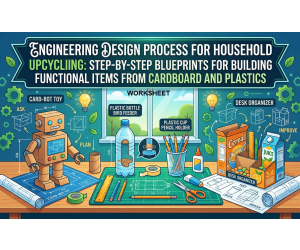
Engineering Design Process for Household Upcycling
Science, Basic Science, Inventors, Theories, Earth and Environmental Sciences, Earth Sciences, Environmental Science, Geology, Space, STEM, Homeschool Curriculum, Grade 3, 4, 5, 6, 7, 8, Worksheets & Printables, Workbooks, Worksheets, Word Searches, Teacher Tools, Assessments, Lesson Plans, Quizzes and Tests, Quizzes, Tests
Transform your students from consumers into creators with this complete, no-prep STEM curriculum! Are you looking for an engaging, hands-on project that teaches real-world engineering skills without breaking the budget? Dive into the "Engineering Design Process for Household Upcycling," a comprehensive, project-based learning (PBL) unit designed to turn everyday trash like cardboard boxes and plastic bottles into functional, load-bearing items. This isn't just another recycling craft. This rigorous curriculum guides 4th, 5th, and 6th-grade students through the authentic Engineering Design Process (EDP) . They will learn the material science of polymers and cardboard, draft orthographic blueprints, and apply principles of physics to build amazing items like a passive phone amplifier, a modular storage unit, a self-watering planter, and even a kinetic wind turbine! What's Included in This 35-Page All-in-One PDF? Part 1: In-Depth Instructional Text (Teacher's Guide): A detailed guide explaining the core concepts of material science, structural engineering, and each step of the EDP (Ask, Imagine, Plan, Create, Test, Improve) in the context of upcycling. Part 2: Printable Student Workbook (10 Worksheets): Ten carefully scaffolded worksheets that reinforce learning. Activities cover everything from blueprint basics and advanced joinery to data collection, troubleshooting, and a final capstone design challenge. Part 3: Teacher Resources & Visuals: Classroom Anchor Charts: Professional diagrams of the Engineering Design Process, a Material Science Matrix, and the Anatomy of a Blueprint. Comprehensive Answer Key: Complete answers for every knowledge check and worksheet question, saving you valuable prep time. Project Reflection Rubrics: Guidance for assessing student understanding and encouraging a growth mindset during the testing and iteration phases. This unit is perfect for STEM/STEAM labs, Earth Day activities, sustainability lessons, gifted and talented programs, or any teacher looking to integrate meaningful, hands-on engineering challenges into their classroom. Keywords: STEM, STEAM, Engineering Design Process, Project-Based Learning (PBL), Upcycling, Recycling Project, Earth Day, Sustainability, 4th Grade Science, 5th Grade Science, 6th Grade STEM, Middle School Engineering, Hands-On Learning, Critical Thinking, Cardboard Engineering, Plastic Bottle Projects, Printable Workbook, No-Prep, Homeschool Curriculum, After-School Club. Why Parents/Schools Love It: Turns Trash into Treasure (Zero-Cost Materials): This curriculum brilliantly uses common household waste like cardboard and plastic bottles, making it an incredibly affordable and accessible hands-on experience for any school or family. Teaches Authentic 21st-Century Skills: It goes far beyond simple crafts, teaching the real, iterative Engineering Design Process. Students learn critical thinking, problem-solving, spatial reasoning, and resilience in the face of failure. Comprehensive & "Print-and-Go": This is a complete, all-in-one unit. With an instructional guide, student worksheets, visual aids, and a full answer key, teachers can implement a high-quality engineering project with minimal prep time. Fosters Environmental Consciousness: The curriculum is built on a foundation of sustainability. It empowers students to see waste as a resource, teaching them practical ways to have a positive impact on their environment. Highly Engaging for All Learners: The hands-on building process and the creation of genuinely functional items (like a phone stand or a self-watering planter) capture students' imagination and provide a tangible sense of accomplishment. Target Audience : Based on the content's complexity, language, and stated goals, target: Grade Levels: 4th, 5th, and 6th Grade . The content is perfectly scaffolded for this upper-elementary to early-middle school range. Educator Types: Classroom Teachers (Grades 4-6) STEM/STEAM Lab Teachers Science Teachers Homeschooling Parents After-School Program Coordinators Gifted and Talented (GATE) Program Instructors Copyright/Terms of Use: This Book was copyrighted by Syed Hammad Rizvi. This resource is for personal and single classroom use only. You may not alter, redistribute, or sell any part of this resource. In other words, you may not put it on the Internet where it could be publicly found and downloaded. If you want to share this resource with colleagues, please purchase additional licenses from Teachsimple. Thank you for respecting these terms of use. This product is happily brought to you by Syed Hammad Rizvi
Author Creative Book Store
Rating
Tags STEM, STEAM, Engineering, EngineeringForKids, Upcycling, RecyclingProject, ProjectBasedLearning, HandsOnLearning, MaterialScience, EnvironmentalEducation
Data Literacy & Statistics Interpretation Worksheets
Math, Addition and Subtraction, Addition, Subtraction, Algebra, Decimals, Early Math, Basic Operations, Fractions, Money, Homeschool Curriculum, Homeschool Templates, Grade 9, 10, 11, 12, Worksheets & Printables, Workbooks, Worksheets, Word Searches, Teacher Tools, Assessments, Lesson Plans, Quizzes and Tests, Quizzes, Tests
Would you like to help your students change from passive number crunchers into well-reasoned and critical thinkers? Move beyond rote memorization of the formulae and do it with this comprehensive curriculum on Data Literacy and Statistics for the 21st century designed to develop true analytical abilities. In an age of information overload, misinformation and distorted graphs, being statistically literate is no longer just a luxury; it is now an important life skill. This resource, designed as an all-in-one digital resource for high school and beginning college courses will give you everything needed to assist you in taking your students on a journey beginning with core theory and continuing on through to real-life application. This curriculum is not just another packet of math problems; it is a model for thoughtful analysis. Through engaging and relevant examples (from e-sports to medical research) and very rigorous examples, students will go beyond "what" to "why" by learning to ask the right questions about data, being aware of bias, breaking down faulty or misleading visuals and understanding the key differences between “correlation” and “causation.” Overall, this unit will help to develop and solidify the most abstract ideas into something tangible and recognizable. WHAT'S IN THE PACKAGE (A 45 PAGE PDF Document): The Basic Content/Information/Theory through the First Phase of the Course consists of: A 14-page "textbook" style document outlining the theoretical basis for the terms used to describe data. The Anatomic Scale of Data: Qualitative, Quantitative, Discrete, Continuous) includes Levels of Measurement The Descriptive Norm: Mean, Median, Mode, Variance, Standard Deviation, Interquartile Range Data visualisation and misrepresentation (Example of Anscombes Quartrant Analysing the Measurement by Each Year) Uses of Truncated Axes, The Bubble Fallacy, Probability Correlation (and Causation) Spurious Correlations Confounding Variables Phase 2: Student Workbook: Contains 10 interactive/interactive-question workbooks, 20 pages total, allows for students to apply theory Includes: Categorical vs Quantitative Data Contextualising Mean/Median/Mode Variance/Spread/Dispersion Histograms/Boxplots Correlation vs. Causation Probability/Expected Value Sampling Methodology/Bias Normal Curve (68-95-99.7 Rule)/Z Scores Margins of Error/Confidence Interval Ethics of Metrics/Misleading Statistics Visuals and Resources for the Teacher Phase 3: - Three high quality conceptual images (SVG) [of the PPDAC cycle, shapes of distributions, confounding variables]. Ideal for displaying in the classroom or giving to students as handouts. - A seven (7) page teacher answer key that not only provides the answers, but also includes pedagogical rationales for each answer to facilitate effective classroom discussions and increase comprehension of all students. This product is applicable for use in conjunction with a full unit of study for a statistics course; supplement for an Algebra 2 or Pre-Calculus class; an AP statistics review; or a homeschool curriculum. Support your students’ development of statistical literacy as a defence against data manipulation! With this product, you can help to increase the statistical literacy of your students, contributing to a data savvy world! Order now to begin creating a data savvy generation! Key Words: Data Literacy, Statistics Worksheets, AP Statistics, High School Math, Mean Median Mode, Correlation Causation, Normal Distribution, Z-Scores, Data Visualization, Critical Thinking, Real World Data, Statistics Project, Answer Key Included, Digital Resource, Printable PDF, Descriptive Statistics and Sampling Bias. Parents/Schools appreciate this product for: Real-World Critical Thinking: The curriculum helps students become good consumers of information. Students learn how to recognize deceptive story lines in reporting, flawed research, or deceptive advertising, which is critical to success in the 21st century. Everything in One Product: All of the material has been provided in one package, including theory, student worksheets, visual aids, and a teacher answer key. The result is significant time savings for teaching (by providing everything you need), while still allowing student use of all materials during class time. Making the Connection between Math and Real Life: This product uses relevant, current examples (i.e., E-Sports, crime rates, and medical research) to answer the age-old question of students, "When will I ever use this?" Promoting Deep Levels of Understanding: The curriculum pushes students to think beyond simple math calculations and instead challenges them to interpret, analyze, and justify their work. By focusing on the "why," students have a deeper understanding of the concepts, which is longer lasting. Intended Audience as Related to Statistical Concepts: Statistical Concepts such as (Z Score, Confidence Interval, Simpson's Paradox), Target Grades: Grades 10-12 - Target Grades (AP Statistics, Pre Calc, Advanced Algebra II with a Statistics Unit), would also be an excellent choice for standalone Honors Statistics Course Intro College Students - Target College Students for a STAT 101 or another introductory Statistic Courses for non-Math Majors in the social science, Business or Health Science fields Advanced Home School Students - Parent Home Schooling their High School Children would find this curriculum complete & thorough. Copyright / Terms of Use for Content : The copyrighted licensing for this book is owned by Syed Hammad Rizvi, for singular and non-commercial use only. No alterations or sales of this item or use of any part of the content on the internet is allowed. If it is necessary, then you can purchase multiple licenses from TpT to provide to your members and colleagues who are working with you as an employee, but you cannot place anything on the internet and allow it to become publicly accessible for downloading and/or use. If you would like to share this resource with other teachers, please go to Teachsimple to purchase additional licenses. Thank you for your respect of the copyright and for supporting the above terms of use. This product and resources are provided to you by Syed Hammad Rizvi.
Author Creative Book Store
Rating
Tags Statistics, DataLiteracy, APStatistics, Stats, HighSchoolMath, DataAnalysis, StatisticalAnalysis, DataScienceForStudents, Math, MeanMedianMode
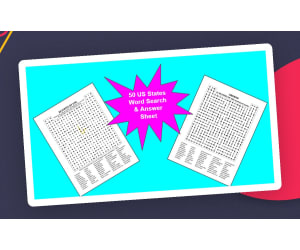
50 States Word Search & Answer Sheet
Social Studies, Geography, Grade 5, Activities, Worksheets & Printables, Worksheets, Word Searches
In this fun 50 United States Word Search, students will try and find the states in this word search. This is not your typical word search, however! The words can bend, twist, go up and down, horizontal, etc. As a school counselor, I enjoy giving my students tools to help them learn vocabulary for the different subjects that they are learning about. This helps them become familiar with the words and practice for a test. This word search is best suited for upper elementary students (4th or 5th), middle school (6th, 7th, 8th) and high school students in 9th, 10, 11th, and 12th. Word searches are great for early finishers as well as bell ringers, breaks, study tools, etc. For more word searches and SEL products, please feel free to visit my SEL store here: https://teachsimple.com/contributor/jennifer-moyer-taylor You may also find these SEL lessons, presentations and activities fun and engaging and a great way to integrate SEL into your classes: https://teachsimple.com/product/the-impact-of-thats-so-gay-lesson (In this lesson, students will learn the harmful impact of saying "That's so gay." This is an engaging lesson for middle school as well as high school.) https://teachsimple.com/product/stress-management-powerpoint-sel-lesson-no-prep (In this SEL lesson, students will learn about stress and stress management techniques. This is so important in our society and with our scheduled students.) https://teachsimple.com/product/four-communication-styles-an-sel-hyperdoc (This SEL hyperdoc discusses 4 main communication styles. Students will take their own personal survey to find out which communication style or styles best matches their own.) https://teachsimple.com/product/escape-tv-land-boom-cards-about-media-literacy-and-equity (This is an SEL Boom Card Deck about media literacy, editing in magazines and other engaging topics for teens.) https://teachsimple.com/product/fall-and-winter-holiday-and-seasonal-word-searches (7 More word searches for students to have fun with! There is a Christmas, Fall, Winter, Halloween, Valentine's Day, Labor Day, Back to School word searches. These are great for brain breaks, early finishers, reset areas, calm down areas, etc. Stay tuned because I will be posting Spring ones soon!)
Author Jennifer Moyer Taylor
Tags United States Word Search, Worksheets, Geography, Social Studies, Activity, Middle School, High School, Upper Elementary School, 50 States Word Search

Interpreting Deceptive News Graphs
Social Studies, Sociology, Economics, Science, Technology, Computer Science, Engineering, Resources for Teachers, Classroom Management, Community Building, Grade 6, 7, 8, 9, 10, 11, 12, Worksheets & Printables, Workbooks, Worksheets, Writing Prompts, Word Searches, Teacher Tools, Quizzes and Tests, Quizzes, Tests, Lesson Plans
In an age of constant media exposure and "fake news," are your students equipped to tell the difference between data and deception? This comprehensive, no-prep curriculum packet, "Interpreting Deceptive News Graphs: The Architecture of Visual Misinformation," empowers high school and early college students to become critical, data-literate consumers of information. Move beyond basic graph creation and dive deep into the world of visual rhetoric and statistical manipulation. This resource provides everything you need to teach students how to deconstruct, analyze, and question the data visualizations they encounter daily in the news and on social media. What's Included in this 42-Page PDF Resource? Part 1: In-Depth Introduction & Theory (10 Pages): A detailed guide for educators and advanced students covering the psychology of visual authority and the mechanics of deception. It breaks down complex topics into understandable concepts. Part 2: Student Workbook (18 Pages): Features 10 scaffolded worksheets, including a final Capstone Assessment. Each worksheet presents a realistic scenario of a misleading graph and uses targeted questions to guide students through the process of deconstruction and critical analysis. Part 3: Teacher Resources & Visuals (14 Pages): High-Resolution Visual Aids: Clear, concise diagrams comparing misleading vs. accurate graphs and a "Data Literacy Decision Tree" perfect for classroom projection or student handouts. Complete Answer Key: A full answer key for every question in the student workbook and knowledge verification sections, with detailed explanations to facilitate rich classroom discussions. Key Concepts Covered: Truncated Y-Axes & The Illusion of Crisis 3D Pie Charts & Perspective Distortion The ">100% Fallacy" in Pie Charts Inverted Y-Axes and Narrative Reversal Spurious Correlations with Dual Y-Axes Cherry-Picking Data & Manipulating Timeframes (X-Axis) Improper Data Grouping Logarithmic vs. Linear Scales Perfect for: Media Literacy Units High School English (Rhetorical Analysis) Social Studies, Government, & Civics Classes Statistics & Math (Real-World Applications) Journalism & Debate Clubs Homeschooling Curricula Give your students the 21st-century skills they need to navigate a data-saturated world. This resource turns them from passive consumers into sharp, critical thinkers. Download today and arm your students with the power of data literacy! Why Parents/Schools Love It: Builds Essential Critical Thinking Skills: Goes beyond simple math to teach students how to think critically about the world around them, a crucial skill for academics and life. Promotes Real-World Digital Citizenship: Directly addresses the challenge of online misinformation by giving students practical tools to analyze the news, social media posts, and advertisements they see every day. Comprehensive & Teacher-Friendly: This is a "plug-and-play" resource. The detailed explanations, worksheets, and complete answer keys save teachers valuable prep time. Highly Relevant & Engaging: Connects abstract statistical concepts to timely, real-world examples from politics, business, and media, making learning more meaningful and engaging for teenagers. Cross-Curricular Application: Its value isn't limited to one subject. It seamlessly integrates into Math, English, Social Studies, and Journalism curricula, making it a versatile and high-value resource for any school. Target Student Audience : Based on the vocabulary ("cognitive heuristics," "epistemology," "unimpeachable"), the complexity of the statistical concepts, and the real-world political and economic examples, target: Primary Target: High School Students (Grades 9-12) . This is a perfect fit for a variety of courses at this level. Secondary Target: Advanced Middle School (Grades 7-8) , specifically for gifted/talented programs or advanced math/social studies classes. Tertiary Target: Introductory College/University Courses (e.g., Communications 101, Intro to Journalism, First-Year Seminars) as a foundational unit on data literacy. Copyright/Terms of Use: This Book was copyrighted by Syed Hammad Rizvi. This resource is for personal and single classroom use only. You may not alter, redistribute, or sell any part of this resource. In other words, you may not put it on the Internet where it could be publicly found and downloaded. If you want to share this resource with colleagues, please purchase additional licenses from Teachsimple. Thank you for respecting these terms of use. This product is happily brought to you by Syed Hammad Rizvi
Author Creative Book Store
Rating
Tags MediaLiteracy, CriticalThinking, DataLiteracy, DigitalLiteracy, InformationLiteracy, 21stCenturySkills, Statistics, Rhetoric, DeceptiveGraphs, MisleadingData

Cyberbullying Upstander Protocols
Social Studies, Sociology, Special Resources, Life Skills, Social Emotional Learning (SEL), Social Skills, Special Education Needs (SEN), Speech Therapy, STEM, Psychology, Grade 5, 6, 7, 8, 9, 10, 11, Worksheets & Printables, Workbooks, Worksheets, Word Searches, Teacher Tools, Lesson Plans, Quizzes and Tests, Quizzes, Tests, Assessments
Give Your Students The Tools To Be Upstanders Against Cyberbullying: The Comprehensive Upstander Protocol & Digital Citizenship Course Do You Find Yourself Repeatedly Telling Your Students To "Just Be Nice" Online, But Online Bullying Keeps Happening? Do Your Students Freeze Up When They See Someone Being Mean On A Group Chat, A Commenting Section, Or A Game Because They Don’t Know What To Do? Instead Of Continuing To Give Vague Directions, It’s Time To Give Them A Tactical Playbook That Will Help Them Stop Harassment In Their Everyday Digital Interactions. This Encompassing Cyberbullying Upstander Protocol Will Provide A Complete Ready-To-Use Curriculum For Middle And Early High School Students. It Will Transition Passive By-Standers To Confident & Active "Up-Standers" By Giving Them Scripts, Psychological Awareness, And Action Plans That Will Enable Them To Stop Online Harassment In A Safe And Efficient Manner While They’re Experiencing It. This Resource Is Grounded In Sociology, Adolescent Psychology, And Uses The A.I.S.R. (Assess, Intervene, Support, Report) Framework To Provide Students With Concrete Next Steps In Navigating The Complex Digital Landscapes Of TikTok, Discord, Instagram, Etc. – This entire package is 42 pages which can be broken down as follows: Part 1: The Core Protocol Guide (10 pages) will provide you with the psychology behind the digital bystander, de-escalation techniques, and 4 vetted action plans complete with scripts to memorize. Part 2: The Student Workbook (13 pages) includes worksheets that will help students analyze the scenario, assess threats, create a script, collect evidence, and write their own personal Upstander Action Plan. Part 3: Teacher Materials & Visual Aids (19 pages) • Teaching Visual Aids: High-quality diagrams that can be projected in classrooms or used in the classroom to assist students in visualizing their learning experiences (IE: The Intervention Quadrant, The S.T.E.P. Flowchart & The Threat Escalation Pyramid), • Teacher Instructions on How To Implement The Curriculum: Outline of the curriculum with pacing, creating psychological safety for students, and how to overcome the "snitch" stigma. • Formative Assessment Rubric for Grading Students' Action Plan: Provides teachers with an easy and reliable method for grading students based on the action plan's tactical viability and empathy. • Comprehensive Answer Key: Gives teachers the master answers to all worksheets. This package is far more than just another anti-bullying lesson; it is a life-skill tool kit for responsible and resilient digital citizenship. Give your students the ability not only to be aware of the digital world but to actively contribute to making it a better and safer place. Ideal For: Health Classes, Advisory Periods, SEL Blocks, Digital Citizenship Units and School Counselors Why Schools/Parents Love It: More than Just "Be Kind": This curriculum includes specific, action-oriented scripts and protocols to create clear expectations of "what to say and do" instead of vague statements. Student-Driven Empowerment: This program teaches de-escalation and assessment skills for students to intervene in a way that reduces risk to themselves and effectively supports the victim (or target). Relevant & Timely: The curriculum uses real-life examples from platforms like TikTok, Discord and Snapchat to make today's teenagers more likely to relate to and engage with the content. Comprehensive & Easy Prep for Teachers: This one-stop shop includes a teacher guide, student workbooks, visual aids, and a complete answer key to help save teachers' time on lesson prep. Builds Critical Life Skills: Provides students with digital citizenship, social-emotional intelligence, and critical thinking skills they can use throughout their lives. Designed for the following content categories (what your target audience will be primarily using these social media apps for), please refer to: 1. Target Audience - Based on age, developmental level, language, type of social media app (TikTok, Discord, Snapchat), then use those to define who your target audience will be. Primary Audience - 7-9 Grades - Ages 12-15 - This is clearly stated as TARGETED in the content and aligns perfectly with their social & developmental stage. Secondary Audience - 6th Graders - This can be introduced as a unit; 10th Graders – It can be used as a reinforcer or review. 2. Target Audience - Edu/FV Curriculum - School Counselors, Health Teachers, Tech/Digital Citizenship Teachers and any Homeroom/Advisory Teacher who curates SEL Curriculum have the responsibility for providing accurate information through their respective content areas. In the event of a dispute over this book, please remember to investigate copyright/laws. This book may not be used as a source of content in your own work. You will not redistribute or modify this book (in any way, shape or form) without the express written permission from Syed Hammad Rizvi - please contact him via his website should you need help with obtaining proper permissions. You can purchase additional licenses if you wish to share this book with your colleagues via Teachsimple. Thank you for adhering to these terms of use. This book is created with love by Syed Hammad Rizvi.
Author Creative Book Store
Rating
Tags Antibullying, Cyberbullying, Digitalcitizenship, SocialEmotional Learning, Socialemotionallearning, Teachersofinstagram, Teacherlife, Schoolcounselor, Onlinesafety, Bullyingprevention

Laboratory Equipment Domino 2 Science Game for Chemistry Physics & Bio
STEM, Science, Chemistry, Physics, Life Sciences, Special Education Needs (SEN), Special Resources, Research, Biology, Homeschool Templates, Grade 6, 7, 8, 9, 10, 11, Activities, Games, Worksheets & Printables, Task Cards, Quizzes and Tests, Teacher Tools, Quizzes, Word Problems, Word Searches, Worksheets
Laboratory Equipment Domino 2 A Fun & Engaging Science Game for Chemistry, Physics & Biology Classrooms 🔬 Make Science Learning Fun with Hands-On Play! Help your students master laboratory equipment vocabulary in a way that’s interactive, engaging, and memorable! With Laboratory Equipment Domino 2, students match images and terms of lab tools, reinforcing key scientific vocabulary while having fun. Whether you teach chemistry, physics, or biology, this game is a perfect addition to your lesson plans. 🎯 Why Teachers Love This Game ✅ Turns Vocabulary into Active Learning – Science terms become easier to remember through hands-on engagement. ✅ Boosts Visual Recognition – Helps students quickly identify and recall lab equipment. ✅ Encourages Collaboration – Supports teamwork and communication through pair or group play. ✅ Flexible & Easy to Use – Ideal for science centers, review lessons, or warm-up activities. ✅ Perfect for Any Science Class – Use it in chemistry, physics, and biology lessons to reinforce key lab tools. 🧪 What’s Included? 🃏 39 Domino Cards – Each featuring an image and term for common laboratory equipment, such as: ✔ Beakers ✔ Test Tubes ✔ Pipettes ✔ Flasks ✔ Centrifuges ✔ Burners …and more essential science tools! 📖 Pairs Perfectly with My Knowledge Card Set 2 – Laboratory Equipment Use this game alongside Knowledge Card Set 2 for extended learning opportunities and even deeper reinforcement of lab terminology. 📌 How to Play 1️⃣ Print & Cut the cards (laminate for durability if desired). 2️⃣ Distribute the domino cards among players. 3️⃣ Match the lab equipment image with its corresponding term to play. 4️⃣ The first player to place all their domino cards wins! 💡 Pro Tip: Make the game even more engaging by playing on the classroom floor or in the hallway—this adds movement and excitement to your lesson! 🌟 Why This Game is a Must-Have for Science Teachers ✔ Saves Prep Time – Just print, cut, and play! ✔ Great for All Science Subjects – Perfect for chemistry, physics, and biology classes. ✔ Supports Different Learning Styles – Helps visual, kinesthetic, and social learners. ✔ Engaging for All Levels – Works well for middle school, high school, and even college-level introductory science courses. 🔬 Make Science Lessons Interactive & Fun! Whether you're introducing lab equipment for the first time or reinforcing vocabulary in a play-based learning environment, this Laboratory Equipment Domino Game is the perfect tool for your classroom. 🚀 Download now and bring hands-on science learning into your classroom today! 📍 Best wishes, Heike from Lernfitness Did You Know? I teach with a certified therapy dog, and together we create a positive and inspiring learning environment. 🐶✨
Author Lernfitness
Tags Game, Educational Card Games, Chemistry, Lab, Biology, Laboratory Equipment, Lab Tools, Physics, STEM Science Matching Game, Domino
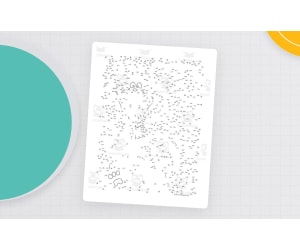
Panda Extreme Difficulty Dot-to-Dot / Connect the Dots PDF
Creative Arts, Math, Middle School, Homeschool Resources, High School, Elementary, Worksheets & Printables, Worksheets, Word Searches
Connect 620 dots to complete the Pandas Extreme Difficulty Dot-to-Dot! The completed scene depicts two pandas eating bamboo. Dot-to-dots such as this one are a relaxing activity that can both educate and entertain kids. They can be given to students in a wide range of ages, from early elementary school, to middle school and even high school. They’re also handy for homeschooling. These challenging puzzles can help improve fine motor skills, and also help kids develop patience and focus. Finally, they’re fun to color too! Let the kids grab some crayons or colored pencils and put a personal touch on their dot-to-dot. This dot-to-dot printable created by Tim van de Vall and is copyright Tim’s Printables LLC. Terms of use: May be printed/downloaded for personal and educational purposes only. The connect the dots is activity on page 1, and the answer key is on page 2. The page dimensions are: 8.5”x11”. PDF format.
Author Tim's Printables
Rating
Tags Panda Bear, Worksheet, Bear, Printable, Activity, Puzzle, Dot To Dot, Connecting The Dots, Connect The Dots, Brain Teaser

Famous Scientists Word Search and Scramble Activity
Science, Basic Science, Grade 6, 7, 8, 9, 10, 11, Word Searches, Worksheets, Worksheets & Printables
Your students will love this engaging science review activity. Everyone loves word searches and scrambles and they make for a great review activity that is fun and competitive. This interactive game reinforces key scientific concepts and theories, ensuring curriculum relevance and accuracy. The game package includes 25 common Famous Scientists terms and concepts. The first part of this activity is a word search using the common terms while the second part uses the same terms in a word scramble and define where your students need to unscramble the word and define it. Simply print and go. This is a no-prep activity and can be used to introduce terms, review, or as additional work for those who finish early. Tailor the experience to the level of your students. You can use one or both parts to help your students learn key concept terms. Some example terms include: ISAAC NEWTON ALBERT EINSTEIN CHARLES DARWIN STEPHEN HAWKING
Author Teach With Fergy
Tags Word Search, Word Scramble, Famous Scientists, Albert Einstein, Newton, Charles Darwin, Stephen Hawking, DMITRI MENDELEEV, GREGOR MENDEL, ROBERT HOOKE

Word Search: Searching for King Lear Characters
ELA, Reading, Reading Comprehension, Literature, Grade 8, 9, 10, 11, 12, Word Searches, Worksheets, Worksheets & Printables
Word Search: Searching for King Lear Characters A remarkably engaging teaching resource, ideally suited for educators, to introduce students to the intricate world of Shakespeare's King Lear. This word-search puzzle exposes learners to the key characters in the play and sets a stage for further exploration. The remaining letters, once all names are found within the word search grid, magically come together to form a remarkable quote from Shakespeare himself! This extra challenge can engage even those typically reluctant readers. Versatile and Adaptable: This simple yet interactive tool strikes the balance between fun and learning. It can be used in various teaching scenarios – whole group sessions or small group activities, or even as an interesting homework assignment. Specially attuned to Grades 8-12 Language Arts classes with focuses on literature and reading comprehension. Makes learning interactive without adding pressure on students given no need of extensive pre-understanding about Shakespeare’s plays. The document format is PDF ensuring problem-free access across different devices - tablets, computers or printouts depending upon your flexible needs in diverse educational settings. Note that along with this resource, other complementary instructional methods should also be used considering its light-hearted nature . This smartly designed educational instrument makes initial phases captivating while studying complex literary textures from one of world’s widely studied dramatist William Shakespeare!
Author Jay Waggoner
Tags Word Search, King Lear, Shakespeare, Characters, Literature

Beginner AI Chatbot Safety & Prompt Practice Worksheets
Resources for Teachers, Classroom Management, Community Building, Technology, Science, Computer Science, Engineering, Research, Special Resources, Social Emotional Learning (SEL), Preschool, Grade 1, 2, 3, 4, 5, 6, Teacher Tools, Lesson Plans, Presentations, Assessments, Worksheets & Printables, Flashcards, Worksheets, Word Searches, Writing Prompts, Workbooks
This professionally designed 36-page AI Chatbot Safety and Prompt Practice Workbook provides educators and parents with the comprehensive guidance needed to help their 6–9 year-old students develop literacy skills while learning how to safely work with AI chatbots as powerful tools rather than friends, maintain safe digital boundaries, protect their personal identifiable information (PII), create clear and effective prompts using the “Three-Part Recipe”, practice digital kindness, verify the accuracy of AI-generated content, and develop strong literacy skills through the use of iterative questioning. This resource can be used in any learning environment including traditional classrooms, homeschooling, after-school programs, or family time on electronics. Key features include: - Aligned with the Piaget and Vygotsky constructivist theory and early literacy standards - Ten printable worksheets (e.g. fill-in-the-blank, matching, true/false, scenario) - Teacher/parent guide with theory, case studies, and strategies for implementation - Visual aids (e.g. mind maps, flowcharts), and the "Digital Safety Ecosystem" infographic - Complete answer key for easy assessment - No-prep, print-and-go format (PDF) - Ideal for introducing safe use of ChatGPT/AI tools, prompt engineering, and digital citizenship prior to students' access to full AI tools. Why Parents and Schools Are Interested To Use It : -Creates a lifetime of Real World safety habits around Digital use by teaching children to never share names, addresses, schools or emotions with AI preventing privacy issues before they happen. -Allows for Literacy development through AI use. Making writing Prompts fun iterative writing exercises will enhance vocabulary, specificity, sentence structure and critical thinking. -Cost effective for busy parents and teachers who can print everything out with a simple to follow directions, pictures and answer key - great for morning work, tech centers S.E.L. lessons or home school tech units. -Removes worries about AI in the classroom by providing a structured researched based blueprint for educators and families to use to introduce chat-bots without the fear of misuse or becoming overly reliant upon. -Fun and easy for children to learn about safety through stories, fun Prompts and activities, "Digital Detective" activity, so they will actually look forward to learning and following safe and responsible use of digital technology. Target Audience / Students Grades : Kindergarten & 4th/5th Grades are not targeted (English). The curriculum is developed with 1st through 3rd grade (ages 6-9) only - early elementary children who are in the concrete operational cognitive development stage; therefore, the curriculum utilizes concrete metaphors (e.g.; recipe, blueprint, vault, shield), large print for worksheets, and has scenarios appropriate for a given age, such as bats/frogs/knights/dinosaurs. This is not appropriate for kindergarten or 4th grade and beyond as the language and activity levels are too elementary for 4th and older students, and also too advanced for pre-k. Copyright/Terms and Use : The content of these pages is under copyright by Syed Hammad Rizvi, and it is for your personal use or classroom use only (meaning only one person will use it) You may not change or share any portion of these pages with anyone else or post them online for others to find and download. If you would like to share this resource with someone else or would like to share it with your colleagues, please purchase an additional license from Teachsimple. Your compliance with this Copyright/Terms of Use will greatly help us in continuing to provide content/resources. Syed Hammad Rizvi would like to express his thanks for purchasing these products.
Author Creative Book Store
Rating
Tags Ages6to9, Grades1to3, AISafetyForKids, ChatGPTForKids, AIForElementary, PromptEngineeringForKids, KidsAged6to9, AIForAges6to9, EarlyElementaryAI, DigitalLiteracyWorksheets
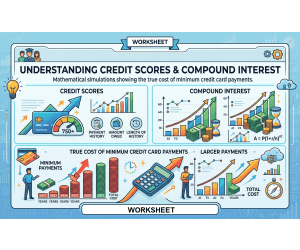
Understanding Credit Scores & Compound Interest
Research, Math, Money, Statistics, STEM, Classroom Management, Resources for Teachers, Community Building, Order Of Operations, Number Lines, Grade 6, 7, 8, 9, 10, 11, 12, Worksheets & Printables, Workbooks, Worksheets, Word Searches, Teacher Tools, Assessments, Lesson Plans, Quizzes and Tests, Quizzes, Tests
Are your students prepared to tackle the intricate financial challenges that will face them in the future? Don't stop at checkbook balancing; equip them with skills that would prepare them for financial success. This complete financial literacy curriculum - "Understanding Credit Scores & Compound Interest: The Invisible Architecture of Modern Wealth" - is an engaging and ready-to-use module aimed at turning high school students into active financial participants. More than just a vocabulary lesson, this module delves into two of the most powerful driving forces of economic mobility - the FICO score and compound interest. Students will be presented with rich data, real-life examples, and challenging tasks during this learning experience. What This 42-Page Comprehensive Guide Contains: Part 1: Basic Principles (11 Pages): Detailed authorial chapters that convert complicated ideas into simple and interesting teachings. Chapter 1: The Credit Score Structure: Five fundamental aspects of FICO score, credit usage, and the actual effect of the credit score. Chapter 2: The Concept of Compound Interest: Formula for growth, the 72 rules, and the major difference between annual percentage rate and annual percentage yield. Chapter 3: The Link Between Credit and Interest: Examples of the impressive monetary losses connected with low credit score. Chapter 4: Practical Wealth Building and Debt Reduction: Effective tools such as utilizing the grace period, "Authorized User" loophole, and avoiding the minimum payment استراتيجية. Part 2: Students’ Manual (19 Pages): 10 worksheets intended for learning and application of the information. Great material for individual work, team discussions, or assignments. Includes all types of calculations, tasks for analysis of the examples, and prompts for critical thinking on various subjects such as going into the debt (avalanche vs. snowball) and making credit from scratch, the real cost of low payments, and the concluding assignment where the students develop their ten-year financial plan. Part 3: Instructor Materials (12 Pages): Everything you require for the successful execution of this unit and time savings in preparing. 3 Visual Representations created by Professionals: Excellent graphics that show the FICO scoring model, the compound interest exponential curve, and the credit and debt cycle. 5-Day Implementation Guide for Teachers: A complete teaching manual with pacing, goals and objectives, topics for discussions, and educational methods. Extensive Answer Key: A complete answer key which has answers to all 10 worksheets, values and sample answers for analytical queries. Why Are Students and Educators Fond of This Curriculum? Equips with Marketing Skills needed in Real Life: This course goes beyond theory providing such knowledge of finance that will help the youth not to end up in debts and be able to make good use of all financial opportunities. Excellent and Interesting Academic Experience: The course understands the importance of financial education as an academic field. The serious approach, case studies, and difficult tasks make students think rather than memorize word for word. Provides a Ready-to-Use Solution: It is an easily accessible program to deal with. The 5-day teacher's manual to the course is accompanied by the visual aids and answer key enabling teachers to save lots of time. Gives Students a Strong Life Start: It is not just an exam, but a step to a successful future life giving students understanding of how to earn money, manage income and build up a good credit score. Target Audience: According to the complex vocabulary, mathematical concepts (compound interest formula), and real-life examples (college students, first cars, retirement planning), the main audience is: Primary Audience: High School Students (Grades 11-12). Subjects this lesson will be well suited for: Personal Finance, Economics, Life Skills, Consumer Math, Business, and any teacher like to include practical real-life knowledge to his classes. Secondary Audience: Freshmen or Homeschooling co-ops learning practical life skills. This content has been copyrighted by Syed Hammad Rizvi. This content can only be used for personal use and single classroom purposes. This content should not be modified, duplicated, or sold. To clarify further, this content can never be posted on the internet for public access. In case you would like to share this content with your colleagues, kindly purchase more licenses from Teachsimple.
Author Creative Book Store
Rating
Tags FinancialLiteracy, PersonalFinance, CompoundInterest, CreditScore, FICOscore, WealthBuilding, FinancialEducation, Investing101, DebtFreeJourney, MoneyManagement
Growth Vs. Fixed Mindset Reframing
Life Skills, Special Resources, Social Emotional Learning (SEL), Social Skills, Special Education Needs (SEN), Speech Therapy, Resources for Teachers, Classroom Management, Community Building, STEM, Grade 2, 3, 4, 5, 6, 7, 8, Worksheets, Worksheets & Printables, Workbooks, Word Searches, Teacher Tools, Lesson Plans, Quizzes and Tests, Quizzes, Tests, Assessments
Instead of offering vague advice about “positive thinking,” give your students real tools to solve their issues with frustration, decision paralysis, and negative self-talk! The 36-page, neuro-developmental curriculum, “Growth Vs. Fixed Mindset Reframing: Action-Oriented Problem-Solving,” is specifically designed for 2nd through 5th graders, at a time when many kids experience the hurdles outlined above. This resource doesn't simply tell children to "keep trying"; it gives them the skills to understand how their cognitive reframing systems work so they can start to use them. Students will be exposed to real-life situations they encounter in school today. As a result, they will learn how to identify and change their "Stuck Voices" and create or develop a plan of action to tackle their individual problem. What is included in this resource: - Educator's Methodology Guide: A comprehensive understanding of the neuroscience behind self-talk and how to teach cognitive restructuring. - 8 Additional Student Worksheets: 8 highly relatable worksheets that target common youth problems like "Homework Heroes," "Recess Resolutions," "Creative Catastrophes," "Friendship Fixes," and "Chore Challenges." - Classroom Visuals and Anchor Charts: 3 classroom visuals, “The Metacognitive Reframing Cycle,” “The Cognitive Fork in the Road,” and “The Action-Strategy Matrix,” to visually reinforce the lessons taught in this curriculum. - Step-by-Step Implementation Guide: A three-phase implementation plan for parents and teachers. - Detailed Answer Keys: Subjective answer keys with examples of strategies for assessing student understanding and for generating discussion. Suitable for educators in classrooms, guidance counselors, home schooling parents all interested in developing their child’s ability to use resilience/foster self-advocacy/foster emotional self-regulation over the course of his/her life! The following are the keywords associated with this product: growth mindset, social emotional learning (SEL), cognitive behavior therapy for children, self-talk, elementary worksheets, classroom management tips, school counseling resources, character education supplies. Why Parents / Schools Love It : This program focuses on Giving Kids Specific Examples of How to Solve Problems instead of vague and meaningless quotes like "believe in yourself." In addition, the program is Based on Mechanism of the Brain; It teaches kids through simple examples how to deal with psychological issues (such as changing how you feel about something or making yourself not care about something). The worksheets used in this program are identical to those used in the children's daily life such as when you mess up your drawing, get into an argument on the playground, have no chores left to do, do not understand how to solve a math problem, etc... The ultimate goal of this program is to create self-sufficient children by Teaching Them to Become Adults. The program also has the Highest Degree of Ease-of-Use: Everything needed to start right away (theory, worksheets, visuals, etc.) is included in the package when received. Intended Audience (Classes/Students to Target): Looking at the direct text from the PDF file (i.e., Pages 1, 2, 5, 7, 8, &12) and applying the developmental psychology presented in the document the following classes/students will be targeted. Class/Grade: 2nd Grade, 3rd Grade, 4th Grade, 5th Grade Age: 7 to 11 years old Will also appeal to homeschooling families, Special Education teachers and School Counselors that work with students in the elementary school age. Copyright/Terms of Use: This Book belongs to Syed Hammad Rizvi. You are only allowed to use this material for your personal use and to utilize it in only one classroom. You are not allowed to edit, distribute or sell this book, meaning you may not upload this book anywhere on the internet for public access or download. If you wish to share this book with others, you must buy more licenses through Teachsimple. Thank you for understanding the terms of use for this item. This product was created by Syed Hammad Rizvi
Author Creative Book Store
Rating
Tags GrowthMindset, FixedMindset, SocialEmotionalLearning, SEL, SELactivities, MindsetMatters , EmotionalRegulation, GrowthMindsetForKids, ResilienceBuilding, Metacognition
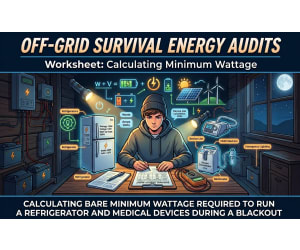
Off-Grid Survival Energy Audits
Math, Addition and Subtraction, Addition, Subtraction, Algebra, Early Math, Geometry, Basic Operations, Place Value, Measurements, Homeschool Curriculum, Homeschool Templates, Grade 8, 9, 10, 11, 12, Teacher Tools, Lesson Plans, Quizzes and Tests, Quizzes, Tests, Assessments, Worksheets & Printables, Workbooks, Worksheets, Word Searches
Transform abstract physics and math concepts into life-saving skills with this comprehensive, real-world STEM project. In "Off-Grid Survival Energy Audits," students are challenged to solve a critical, high-stakes problem: How do you power essential medical devices and refrigeration during a prolonged blackout? This is not just another worksheet packet; it's a 40-page, zero-prep curriculum that answers the age-old question, "When will I ever use this?" Students will step into the role of an energy auditor, applying critical thinking and mathematical precision to navigate realistic survival scenarios. They will learn the physics of power, calculate energy needs for life-sustaining equipment like CPAP machines and insulin refrigerators, and make tough decisions about load-shedding and resource management. This problem-based learning (PBL) resource is perfect for engaging high school students in Physics, Applied Mathematics, STEM, and Career and Technical Education (CTE) courses. It also serves as an exceptional resource for homeschooling co-ops and adult learners interested in emergency preparedness. What's Included in this 40-Page PDF: Part 1: In-Depth Theoretical Guide: A 10-page introduction covering the core physics concepts: Voltage, Amperage, Wattage (Watt's Law), Surge vs. Running Watts, Duty Cycles, Inverter Physics (Pure Sine Wave), and more. Part 2: 10 Progressive Student Worksheets: A complete student workbook with over 75 unique problems. Worksheets cover: Appliance Nameplate Reading Refrigerator Compressor Cycles Medical Device Power Profiles Calculating Surge Wattage Battery Math (Amp-Hours & Voltage) Creating a Daily Energy Budget Factoring Inverter Inefficiency Load Shedding & Triage Scenarios Impact of Temperature Extremes Capstone Project: A Comprehensive 72-Hour Blackout Audit Part 3: Teacher Resources & Visuals: High-contrast, printable instructional diagrams (Flowchart, Triage Matrix). A complete, fully detailed Teacher Answer Key with calculations shown. Equip your students with the confidence and knowledge to apply classroom learning to the real world. This curriculum doesn't just teach physics; it builds resilient, resourceful, and critical thinkers. Keywords: STEM, Physics, Real World Math, Problem-Based Learning, PBL, Emergency Preparedness, Survival, Blackout, Off-Grid, Energy Audit, Electricity, Ohm's Law, Watt's Law, Worksheet, CTE, Homeschool, High School, Critical Thinking, Applied Math, CPAP, Medical Device, Solar Power, Battery Bank.AP, Medical Device, Solar Power, Battery Bank. Why Parents/Schools Love It: Answers "When Will I Use This?": Directly connects abstract physics and math principles (Watt's Law, algebra) to a tangible, high-stakes, real-world scenario, dramatically increasing student engagement. Promotes Critical Thinking: Moves beyond simple calculations to force students to analyze, prioritize, and make strategic decisions (triage, load-shedding) based on their data. Zero-Prep, Comprehensive Curriculum: It is a complete, ready-to-use package. Teachers receive the theory, student worksheets, visual aids, and a full answer key, saving hours of preparation time. Integrates STEM and Real-Life Skills: Perfectly blends Science, Technology, Engineering, and Math into a single, cohesive project that also teaches valuable emergency preparedness skills. Differentiated for Scaffolding: The 10 worksheets are progressive, starting with basic definitions and building to a complex, multi-day audit, allowing teachers to guide students of varying abilities. Target Student Audience : Based on the complexity of the concepts (algebraic calculations, multi-step problem solving, abstract physics principles), target: Primary Target: High School Students (Grades 9-12) in courses like: Physics or Applied Physics STEM / STEAM Electives Career and Technical Education (CTE) focusing on electronics or engineering. Advanced or Honors-level Mathematics (as an application project). Secondary Target: Homeschooling: Particularly for parents and co-ops focusing on practical life skills and advanced science. Adult Education: For individuals and groups interested in emergency preparedness, off-grid living, or the technical aspects of RV/boat power systems. Copyright/Terms of Use: This Book was copyrighted by Syed Hammad Rizvi. This resource is for personal and single classroom use only. You may not alter, redistribute, or sell any part of this resource. In other words, you may not put it on the Internet where it could be publicly found and downloaded. If you want to share this resource with colleagues, please purchase additional licenses from Teachsimple. Thank you for respecting these terms of use. This product is happily brought to you by Syed Hammad Rizvi
Author Creative Book Store
Rating
Tags STEM, STEAM, Physics, Math, Science, Education, HighSchool, EdTech, Learning, CriticalThinking

Working Memory & Sequential Recall Exercises
Life Skills, Special Resources, Social Emotional Learning (SEL), Social Skills, Special Education Needs (SEN), STEM, Resources for Teachers, Classroom Management, Community Building, Life Studies, Homeschool Curriculum, Grade 2, 3, 4, 5, 6, 7, Worksheets & Printables, Workbooks, Worksheets, Word Searches, Teacher Tools, Lesson Plans, Quizzes and Tests, Quizzes, Tests, Presentations
The Evidence-Based Working Memory & Sequential Recall Curriculum Will Help Unlock Your Students' Ultimate Learning Potential! As an Educator, Clinician, or Special Education Teacher do you have students struggling to complete multi-step directions, reading comprehension or complex math problems? Do you see them grasp a concept at one moment, and then lose it the next? More than likely, the root cause of this lack of learning is not due to the student not putting forth effort, but rather, it's simply a bottleneck in their working memory. This comprehensive 41-page digital curriculum is much more than a set of worksheets - it's an evidence-based intervention program specifically developed using the science of neuroplasticity and within Alan Baddeley's highly regarded cognitive theory to target, strengthen and developed the most important part of the cognitive engine of learning, which is working memory and sequential recall - so that teachers are able to go beyond rote memorization while at the same time, enabling the student to create robust, long-lasting executive function skills. Designed to meet the needs of 2nd, 3rd, and 4th grade Student as well as for support of older students who are in RTI/MTSS or Special Education, this curriculum is going to help support students bridging the gap from seeing the information to actually processing the information. HOW TO USE THIS 41-PAGE DOCUMENT This is a comprehensive 3-step program that is ready for you to implement right away: Step 1 - Core Content and Theory (A Guide for Educators) — An in-depth look at the cognitive science behind the exercises. Through clear definitions and supporting case studies, you’ll be able to accurately explain Phonological Loop, Visuospatial Sketchpad, Central Executive, and Episodic Buffer to yourself and to others so that you, as an educator, can become an expert in understanding what each of these components does. Step 2 - Student Workbook — Ten progressive, fun worksheets for students to accomplish as if they were on “missions” (i.e., Zoo Keeper’s Roster, Detective’s Missing Clue, Architect’s Blueprint, etc.). These worksheets each target unique aspects of working memory by having students perform: - Forward/Backward Sequential Recall - Procedural Recall/Recognizing Steps - Semantic Clustering/Categorizing - Dual-Task Process/Inhibiting Distractors - Pattern Recognition/Chronological Sequencing Visual Aid and Teacher Resources (Part 3): The essential support for successful teaching. Cognitive Architecture Visuals; Diagrams to support cognitive processing and visual representation of working memory. Teacher Implementation Guide; Framework for cognitive dose control of Load with 7-10 minute intervals. Differentiation; Explicitly designed order of operations enabling the use of scaffolding in strategies used for increasing to gifted levels. Comprehensive Answer Key; A tool for quick and effective evaluation of student achievement. You will be able to change your responses of, "I forgot," to, "I've got this!" once you have utilized your resources from above. Key Words: Working Memory, Executive Functions, Sequential Memory, Special Education, Speech Language Pathologist/ Speech Therapy, Response To Intervention, Multi-Tiered System Of Supports, Cognitive Skills, Following Multi-Step Directions, Reading Comprehension, Math Word Problems, Learning Disabilities, ADHD Support, 2nd Grade, 3rd Grade, 4th Grade, Digital Resource, Paper Forms, Cognitive Load. The reasons parents/schools value it: Targets Root Causes: This program helps children build the underlying cognitive skills themselves rather than just treating their symptoms (e.g., bad grades, lost assignments). These skills (working memory) allow students to do all of their academic work. Based on Scientific Evidence & No Prep Required: The exercises included in this program are not simple "busy work." They form part of a well-structured curriculum based on scientific principles of cognition. They are provided to the teacher in easy-to-print/implement formats, thus allowing the teachers to save preparation time. Differentiation Built-In: The teacher's guide includes specific strategies for the teacher to assist struggling learners and to challenge gifted learners, thus allowing all children to make significant (meaningful) progress. Increased Independence in Class: Students completing the exercises will demonstrate increased ability to follow multi-step instructions, complete complex tasks, and work independently with minimal redirection. Improved Achievement Across All Academic Areas: Students who have a strong working memory can better comprehend what they have read (because they can track characters and plot), can solve math problems more accurately (because they can hold the numbers and steps they are holding), and can write more clearly and accurately because they have better organization. Target Audience Analysis: On the basis of the content, the nature of the language, and the explicit references within the PDF: The primary audience are second to fourth graders (approximately ages 7-10). The document explicitly states this developmental window as its focus. Secondary audience: The resource is just as appropriate for older students (5th grade and up) with identified learning disabilities, ADHD, or who are in a support program through Special Education, Resource Rooms, Speech Therapy, RTI, or MTSS. These basic foundational skills are often the major barriers to learners. Primary audience: for professionals, and not the kids. Of course, other groups are: General Education Teachers (Grades 2-4) Special Education Teachers School Psychologists Speech-Language Pathologists (SLPs) Educational Diagnosticians Homeschooling Parents who are familiar with brain development. Copyright /Terms of Use: Copyrighted by Syed Hammad Rizvi. This resource is for individual use and classroom only. No part of this resource may be modified, sold, or shared in any other manner, including posting it on the Internet where anyone might download it. If you wish to provide this resource to other teachers, you must purchase additional licenses through Teachsimple. Thank you for your cooperation in this matter and for following the terms of use. This resource is proudly provided to you by Syed Hammad Rizvi.
Author Creative Book Store
Rating
Tags WorkingMemory, ExecutiveFunction, ExecutiveFunctioning, ExecutiveFunctionSkills, CognitiveSkills, BrainTraining, Neurodiversity, SequentialRecall, SequencingSkills, FollowingDirections

Video Editing Storyboard & B-Roll Worksheets
Resources for Teachers, Classroom Management, Community Building, Technology, Science, Computer Science, Engineering, Special Resources, Special Education Needs (SEN), Social Emotional Learning (SEL), Grade 6, 7, 8, 9, 10, 11, 12, Worksheets & Printables, Workbooks, Worksheets, Word Searches, Teacher Tools, Lesson Plans, Quizzes and Tests, Quizzes, Tests, Assessments
Transform Your Students from "Point-and-Shoot" Amateurs to "Architects of Cinema" with this Comprehensive Video Editing Pre-Production Unit! Are your students' video projects plagued by shaky footage, jarring cuts, and a lack of a clear story? Do they jump straight to filming without a plan, leaving them with hours of unusable footage and a messy, confusing final product? It's time to teach them the most crucial part of filmmaking: pre-production. This complete, no-prep Video Editing & Filmmaking Unit is a 42-page curriculum designed to teach middle and high school students the art and science of planning a video before the camera ever rolls. Rooted in the pedagogy of pre-visualization, this resource shifts the cognitive load from the stressful editing room to the structured, creative space of the storyboard. Students will learn the professional workflow that powers every great film, documentary, and YouTube video. What’s Included in this 2-Week Unit: Part 1: Instructional Text (10 Pages): Four in-depth chapters covering the core concepts of professional video editing theory, including: The Architecture of the Edit (Storyboards & the 180-Degree Rule) Mastering the Jump-Cut and Temporal Compression Transitional Theory (Match Cuts, Whip-Pans) Supplementary Footage (B-Roll) as Narrative Scaffolding Part 2: Student Workbook (18 Pages): Ten engaging, scaffolded worksheets that turn theory into practice. Students will plan, brainstorm, and problem-solve sequences for jump-cuts, transitions, B-roll, continuity, and more. Part 3: Teacher Resources & Visuals (14 Pages): Everything you need to teach with confidence, even with no film background! Visual Anchor Charts: Clear diagrams explaining Jump-Cut Mitigation, the Narrative Transition Matrix, and Pre-Visualizing the Edit Timeline. Perfect for projecting or printing. Comprehensive Teacher Answer Key: Detailed answers and sample responses for all 10 worksheets. 2-Week Implementation & Pacing Guide: A day-by-day plan (10 days) to effortlessly guide your class through the entire unit, from introducing concepts to a final, summative project blueprint. By the end of this unit, your students will not just create better videos; they will be more intentional storytellers, critical thinkers, and effective communicators in a digital world. Perfect for Media Arts, Digital Storytelling, Journalism, English Language Arts (ELA) project-based learning, Film Studies, and any class that involves video creation! Keywords: Video Editing, Filmmaking Unit, Storyboard Worksheet, B-Roll Planning, Jump Cuts, Media Arts Curriculum, Digital Storytelling, Project-Based Learning, Middle School Media, High School Film, Pre-Production, Visual Organizers, No-Prep Lesson, CTE, Technology, ELA. Why Parents/Schools Love It: Develops Critical Thinking, Not Just Tech Skills: This unit teaches students essential 21st-century skills like planning, problem-solving, sequencing, and foresight. It moves beyond just using an app and forces them to think like architects and authors. Builds Real-World, Professional Habits: It bridges the gap between casual social media video (TikToks) and the deliberate, structured workflow used in professional media careers, giving students a tangible advantage. Increases Engagement Through Relevance: It takes a subject students are already passionate about—creating videos—and injects academic rigor, making learning both fun and deeply meaningful. Comprehensive & Teacher-Friendly: It’s a complete, "print-and-go" curriculum. The included pacing guide, visual aids, and detailed answer key empower any teacher, regardless of their film experience, to deliver a high-quality, expert-level unit with confidence. Target Student Audience : Based on the language ("eighth-grade media scholars"), concepts, and structure, target: Primary Target: Grades 7-10 . This is the sweet spot. It's advanced enough for gifted 7th graders, perfect for 8th and 9th-grade media or tech classes, and a fantastic foundational unit for 10th-grade introductory film or journalism courses. Secondary Target: Grades 11-12 . This can serve as a powerful remediation or review unit for older students who lack foundational pre-production skills. It's also excellent for any ELA or Social Studies teacher doing a video project who needs a structured way to teach the technical planning aspect. Copyright/Terms of Use: This Book was copyrighted by Syed Hammad Rizvi. This resource is for personal and single classroom use only. You may not alter, redistribute, or sell any part of this resource. In other words, you may not put it on the Internet where it could be publicly found and downloaded. If you want to share this resource with colleagues, please purchase additional licenses from Teachsimple. Thank you for respecting these terms of use. This product is happily brought to you by Syed Hammad Rizvi
Author Creative Book Store
Rating
Tags VideoEditing, Filmmaking, DigitalStorytelling, MediaArts, ProjectBasedLearning, PBL, TeacherResources, LessonPlans, Storyboard, VideoProduction
Mindfulness for Exam Stress – Focused Attention Worksheets
Life Skills, Special Resources, Social Emotional Learning (SEL), Social Skills, Special Education Needs (SEN), Speech Therapy, STEM, Resources for Teachers, Classroom Management, Community Building, Grade 6, 7, 8, 9, 10, 11, 12, Worksheets & Printables, Workbooks, Worksheets, Word Searches, Teacher Tools, Assessments, Lesson Plans, Presentations, Quizzes and Tests, Tests
A complete 40-page workbook to promote the use of mindfulness and learn how to manage exam stress using neuroscience-based methods. This workbook includes clear theoretical concepts (e.g., "Amygdala Hijacking", "Working Memory Bottleneck", "Default Mode Network versus Task Positive Network") paired with a total of 10 student worksheets, 3 visually appealing colored models for use throughout the course, an answer key that shows all answers for the worksheets and a teacher guide to implementation. In addition to theory, there are practical tools to help the student manage their stress level and perform well on assessments. Practical tools include: Cognitive Defusion (to eliminate the "failure script" you tell yourself), using Somatic Mapping and micro-interventions (e.g., Physiological Sigh, 5-4-3-2-1 Grounding, Box Breathing), using the POP (Pause, Observe, Proceed) method to eliminate "blanks" on assessments, utilizing pre-test mental rehearsal and post-test decompression exercises. This workbook is perfect for use in the classroom, individual counseling sessions, study skills programs, or home schooling. It is available for immediate digital download, and can be printed from your computer or used in your digital course materials with no preparation needed. These strategies have been researched and proven to effectively lower levels of test anxiety and provide access to your working memory when under pressure to perform. Reasons Parents and Schools Love this Product: Science-based methods that help students calm themselves when they take exams through teaching them how to control their brains instead of just telling them to calm themselves down. No preparation required on the part of teachers with regard to having materials like worksheets, visuals, answer keys, and an implementation guide to use immediately in their classrooms or with students who need support. Helps develop true resilience by teaching students ways to cope with anxiety over a lifetime rather than relying on temporary motivation techniques. All micro-interventions available through this product can be done without being seen or heard, therefore making it more conducive to use during exam time. Very easy for both parents and counselors to understand how to use the micro-interventions in a way that they will get maximum benefit from doing so; great for SEL programs, study skills classes, or using at home. Intended Readers : The target audience for this resource is students who belong to the ages of 12-16 (Grades 7-10). The research case studies were conducted with 7th grade (ADHD/test anxiety), 8th grade, 9th grade and 10th grade (AP Biology) students. The resource sections of the Teacher Implementation Guide focus on the students themselves as they relate to their neurodevelopmental stage (middle and early high school). This resource is perfect for middle school (Grades 7-8) and early high school (Grades 9-10) students, who are preparing for any number of major exams, standardized exams and high stakes assessments (i.e., any subject). Not intended for elementary students (too difficult) or late high school/college students (the language and examples were written specifically for the adolescent population). Copyright / Terms of Use : This book is copyrighted to Syed Hammad Rizvi. It should only be used by you or as a single classroom reference resource. You cannot edit, share, or sell anything contained in this book, so please do not upload it to the internet and make it available for download to anyone else. If you would like to share this book with co-workers, please purchase another copy of this book through Teachsimple and respect the above terms of use. Thanks for using and supporting this product from Syed Hammad Rizvi!
Author Creative Book Store
Rating
Tags Mindfulness, TestAnxiety, ExamStress, StressRelief, AnxietyRelief, MentalHealth, SelfCare, SEL, SocialEmotionalLearning, MindfulnessForStudents

Spot It! – Laboratory Equipment 3 Fun & Engaging Game for Science Lab
STEM, Science, Chemistry, Physics, Life Sciences, Special Education Needs (SEN), Special Resources, Research, Biology, Homeschool Templates, Grade 6, 7, 8, 9, 10, Activities, Games, Worksheets & Printables, Task Cards, Quizzes and Tests, Teacher Tools, Quizzes, Word Problems, Word Searches, Worksheets
Spot It! Laboratory Equipment 3 A Fun & Engaging Game for Science Classrooms 🔬 Make Learning Lab Equipment Fun and Interactive! Teaching students about laboratory equipment doesn’t have to be dull or overwhelming. With Spot It! – Laboratory Equipment, you can turn learning into a fun and engaging experience! This fast-paced matching game is perfect for chemistry, physics, and biology teachers who want to reinforce lab tool recognition in a way that students will love. 🎲 Why This Game Works for Science Teachers ✅ Boosts Visual Memory – Matching images of lab equipment helps students quickly recognize and remember key tools used in science labs. ✅ Encourages Active Participation – Gets students involved instead of passively memorizing lists. ✅ Improves Classroom Engagement – The fast-paced nature of the game keeps students motivated and focused. ✅ Perfect for Any Science Class – Whether you're teaching chemistry, physics, or biology, this game makes learning lab equipment easy and fun. ✅ Promotes Social Interaction – Encourages teamwork, communication, and collaborative learning. 🧪 What’s Included? 🃏 93 Total Cards – You’ll receive three different versions of the game, each with 31 cards: ✔ Round cards – Traditional Spot It! design. ✔ Square cards – Easy to cut and prepare. ✔ Hexagonal cards – Unique design for an extra challenge. 📖 Game Instructions: 1️⃣ Print the cards. 2️⃣ Laminate them for durability (optional). 3️⃣ Cut out the cards in your preferred shape: round, square, or hexagonal. 🎯 How to Play 🃏 Each player receives one card. 🔬 Turn over a card from the stack in the middle. 👀 Find a matching image between your card and the revealed card as quickly as possible. 🏆 If you find a match first, you win the revealed card. 🎉 The player with the most cards at the end wins! This game turns science learning into a competitive, fast-paced, and enjoyable classroom activity that will keep students engaged while reinforcing important lab vocabulary. 📌 Why Teachers Love It ✔ Saves Prep Time – Ready-to-print, simple setup, and no extra materials required. ✔ Great for Small Groups & Whole Class – Use it in science centers, team challenges, or as a warm-up activity. ✔ Adaptable for Different Learning Levels – Suitable for middle school, high school, and even introductory university-level science classes. 🔬 Make Science Learning More Engaging! If you’re looking for a fun, effective, and interactive way to help students learn and remember laboratory equipment, this Spot It! game is the perfect addition to your science classroom. 🚀 Download now and bring hands-on science learning into your classroom today! 📍 Best wishes, Heike from Lernfitness Did You Know? I teach with a certified therapy dog, and together we focus on creating a positive and inspiring learning environment. 🐶✨
Author Lernfitness
Tags Game, Spot It, Educational Card Games, Picture Match, Chemistry, Lab, Biology, Laboratory Equipment, Lab Tools, Physics

Introduction to AI Agents – Simple Task Automation Worksheets
Science, Technology, Computer Science, Engineering, STEM, Resources for Teachers, Classroom Management, Community Building, Research, ELA, Homeschool Curriculum, Homeschool Templates, Grade 6, 7, 8, 9, 10, Worksheets & Printables, Writing Prompts, Worksheets, Word Searches, Dot To Dots, Workbooks, Teacher Tools, Lesson Plans, Quizzes and Tests, Tests
"AI Agents: An Introduction to Simple Automated Task Worksheets for Middle-Grade Students" consists of a total of 34 pages in one downloadable PDF file. In this workbook, students will learn about digital agents and task automation, and will gain insight into the basics of A.I. This workbook is ideally suited for STEM, computer science and technology education classes with no coding required. The agent-oriented design framework will be introduced to students as they learn how to break complex tasks down into components (sensors, logic processors, actuators). In doing so, students will also gain a greater understanding of how to decompose tasks, create algorithms, utilize loops, use branching paths and interact in multi-agent environments by completing ten exciting student worksheets that have a variety of scenarios (e.g., digital backpack organizer, community garden irrigation aid, library return kiosk, drone delivery, wildlife rescue, etc.). In addition to the ten worksheets, teachers will be able to use various templates, conceptual diagrams (automation cycle, feasibility filter, logic trees), comprehensive answer keys, and visual organization charts/projects for presentation and/or printing purposes. No prior coding skills will be required to participate in this activity; therefore, it is an excellent means to develop critical thinking, problem-solving, and technology literacy in this A.I. age. Reasons Schools & Families are Crazed for It : •Incredible hands-on activities and experiences with real-world examples create connections to complex ideas about AI. •No-preparation necessary for educators- All materials ready to go in a few minutes. •Future readiness through foundational skills e.g. computational thinking, logical reasoning & AI literacy. •Support for all students and challenging activities for advanced learners through differentiated formats. •Unbeatable value for 1 PDF filled with meaningful STEM experiences, the extent of which can provide anywhere from weeks to years of STEM aligned content and reflect the 21st century standards. Audience : Target Audience Grade Level This resource is formatted for grades of 5 to 8 specifically and is written/designed with middle school student ages using appropriate language, characteristics, and structure as developed by the cognitive scaffolding framework for middle school students. It is designed to be effective for: Grade 5 and 6 (introduction of automation concepts) Grade 7 and 8 (additional logic/concepts/logical branches/multitudes of agents) classrooms of various levels of ability, students identified as gifted,; students homeschooled; students participating in after school or summer STEM oriented programs. Copyright/Terms of Use: This Book represents a copyright owned by Syed Hammad Rizvi and is provided to you for personal use and for use only in one classroom. You are NOT PERMITTED to modify, redistribute, or sell any part of this resource (i.e. you are NOT PERMITTED to post it onto the internet where it will be publicly available to be found and downloaded). If you would like to share this resource with other educators, please purchase an additional license from Teachsimple. Thank you! This product is happily provided by Syed Hammad Rizvi
Author Creative Book Store
Rating
Tags AIAgents, TaskAutomation, DigitalAgents, AIForKids, IntroductionToAI, AIWorksheets, Ages10to14, 10to14YearsOld, MiddleSchoolAges, Grades5to8

Word search puzzles about Asia
Social Studies, Geography, Grade 3, 4, 5, 6, 7, Word Searches, Worksheets, Worksheets & Printables
This printable pdf has 6 word search puzzles about Asia and their answers. Topics: Countries in Asia. This word search has all the countries of Asia: Afghanistan, Armenia, Azerbaijan, Bahrain, Bangladesh, Bhutan, Brunei, Cambodia, China, Cyprus, Georgia, India, Indonesia, Iran, Iraq, Israel, Japan, Jordan, Kazakhstan, Kuwait, Kyrgyzstan, Laos, Lebanon, Malaysia, Maldives, Mongolia, Myanmar, Nepal, North Korea, Oman, Pakistan, Palestine, Philippines, Qatar, Russia, Saudi Arabia, Singapore, South Korea, Sri Lanka, Syria, Taiwan, Tajikistan, Thailand, Timor-Leste, Turkey, Turkmenistan, United Arab Emirates, Uzbekistan, Vietnam, Yemen. Asian Capitals This word search has the capital cities of Asian countries. Other Big Cities There are 47 large cities of Asia that are not capitals. Most of them are in China such as Shanghai and Shenzhen, some in India like Delhi and Mumbai. From Pakistan there are Lahore and Karachi and still some other places like Istanbul. Rivers and Lakes There are 31 rivers and lakes in this word search. There are names of the water systems and in brackets the country/countries they are located in. Some examples are: Yangtze River (China), Euphrates River (Iraq, Syria, Turkey) and Lake Urmia (Iran). Mountain Ranges and Himalaya Peaks There are both mountain ranges and peaks in this word search like Himalaya, Taurus Mountains, Hindu Kush and Caucasus Mountains. Some Heritage Sites These heritage sites are from UNESCO's World Heritage List. There are 41 sites. I have picked sites with reasonably short names to fit the puzzle. Some examples are Taj Mahal, The Great Wall, Mount Fuji, Persepolis, Komodo National Park and Sumatra. Crosswords are decorated with Asian themed watercolor pictures. All answers are included. How to use: Words can be vertically, horizontally or diagonally. If there is a spacebar or ‘ in the name, it is omitted in the word search.
Author TheBrightestKid
Tags Word Search, Asia, Rivers, Mountains, Capitals, UNESCO Heritage Sites, Himalaya, Big Cities
Life Lessons Reflection Journal Professional Edition
Life Studies, Business, Career, Coaching, Leadership, Special Resources, Life Skills, Social Emotional Learning (SEL), Social Skills, Special Education Needs (SEN), Grade 6, 7, 8, 9, 10, 11, 12, Worksheets & Printables, Workbooks, Worksheets, Crosswords Puzzles, Dot To Dots, Word Searches, Teacher Tools, Assessments, Lesson Plans, Charts
Introducing the Life Lessons Reflection Journal - Professional Edition: A complete 40-page digital PDF workbook/journal focused on providing adults (adaptable for high school/college-age individuals) by providing a breakdown of each module and instructional design for personal success, building emotional intelligence; and developing high-performance habits. The journal is structured around twelve (12) modules, mainly constructed by providing structured lessons, evidence-based practices (based on positive psychology and cognitive-behavioral practice), daily journaling prompts, and worksheets that will be provided. The worksheets will consist of the following: SMART Goals Wheel, Daily Gratitude Logs, 30-Day Grid for Habit Tracking, Why-Why Analysis for Destabilizing Blockages, Mood Tracker for Emotional Check-Ins, determining Key Milestones, Reflecting on Lessons Learned Through Difficulties, Core Values Alignment, Use of Mindfulness Tools (Box Breathing and 5-4-3-2-1 Grounding Techniques), Letter to Your Future Self, and an End-of-Year Review and Reflection Report. Beautiful infographics, fillable trackers and reflection exercises for journaling, gratitude, resilience, mindfulness, and habit building are included. This digital downloadable PDF can be printed or used on a tablet and reused from year to year. This is a comprehensive adult reflection journal. Included are journals, goal planners, gratitude logs, habit trackers, and mindfulness workbooks combined into one powerful book that can change your life. Reasons Why Parents/Schools Appreciate These Products: They provide evidence based SEL skills (emotional regulation, resilience, and growth mindset), which increase student academic success while decreasing student stress. They include pre-made lesson plans with corresponding worksheets, which can help educators save hours of preparation time when teaching advisory, psychology, or life skills courses/subjects. They encourage the practice of daily gratitude and mindfulness along with the tracking of positive daily behaviors. These components support improved attention, mental health and classroom behavior. The use of radar charts, habit grids and future self exercises will provide students with visual representations of success and will help students to remain accountable throughout the entire school year. Affordability and reusability in the digital PDF format make this product suitable for print or use in digital devices, and/or for use by an entire class at one time. Target Class and Students: While this course is labeled as "for: Adults looking to better themselves," it has many references to "academic progression," SMART goals for education/skills, life skills, social emotional learning (SEL) components and classroom-ready "Lesson Plan & Unit Plans." Here are just a few examples of where this material is ideally suited: High School (Grades 9-12): Character Education, Life Skills, Psychology, Advisory/Homeroom, Social/Emotional Learning and/or College & Career Readiness classes College/University: Freshman/First Year Success/Orientation Course, Personal Development Class or Career Readiness Course, and Introductory Psychology ELECTIVE Course Adult Education/Community College: Continuing Education, Workforce Readiness or Personal/Family Growth/GED program Homeschool Or Online Learning: Teen/Adult Self-Improvement, Parenting, Goal Setting Units Both teachers and parents find this unit a great way to effectively teach their students! Copyright and Terms of Use: Syed Hammad Rizvi holds the copyright to this book. This resource may only be used for personal use and for single classroom use. You are not authorized to change, share, or sell any part of this product. In other words, you cannot post this product on the internet so that it can be downloaded by anyone else. If you would like to use this resource with other teachers, please acquire additional licenses through Teachsimple. Thank you for complying with these terms of use. This product is proudly provided by Syed Hammad Rizvi
Author Creative Book Store
Rating
Tags SelfImprovement, PersonalGrowth, PersonalDevelopment, SelfGrowth, GrowthMindset, Journaling, GratitudeJournal, HabitTracker, Mindfulness, ReflectionJournal

Sponsored Post Negotiation Roleplay Scripts
Math, Measurements, Money, Multiplication and Division, Division, Multiplication, Order Of Operations, Resources for Teachers, Classroom Management, Community Building, Homeschool Curriculum, Grade 8, 9, 10, 11, 12, Worksheets & Printables, Workbooks, Worksheets, Word Searches, Writing Prompts, Teacher Tools, Lesson Plans, Quizzes and Tests, Quizzes, Tests
Are your students obsessed with YouTubers, TikTokers, and Instagram influencers? Turn their passion into a powerful, real-world learning experience with this comprehensive, project-based unit on the Creator Economy! This is not just another business worksheet. This is a complete, turnkey curriculum designed to bridge the gap between abstract math and the thriving digital marketplace. Students will move beyond being passive media consumers and learn the essential financial literacy and negotiation skills to become empowered digital creators. They will master the quantitative metrics that determine an influencer's value and learn to negotiate brand sponsorships with data-driven confidence. This rigorous, college-prep level resource is perfect for engaging students in Business, Marketing, Economics, Applied Math, and Media Literacy classes. ► WHAT'S INCLUDED IN THIS 48-PAGE UNIT: Phase 1: The Theory (12 Pages): A detailed introduction to the quantitative foundations of the creator economy, covering: Engagement Rate (ER): Follower-based vs. Reach-based calculations. Valuation Models: Cost Per Mille (CPM) and Cost Per Engagement (CPE). Premium Multipliers: Whitelisting, Exclusivity, and more. Negotiation Strategy: The psychology of Anchoring, ZOPA, and BATNA. Phase 2: The Student Workbook (20 Pages): 10 In-Depth Worksheets: Scaffolding from basic algebra of engagement to complex, multi-variable pricing matrices and ROI projections. Real-World Scenarios: Students practice calculating value, scripting rebuttals to lowball offers, and structuring tiered deal packages. Phase 3: Teacher & Visual Resources (16 Pages): High-Resolution Visuals: Three instructional diagrams perfect for classroom projection (Engagement-to-Pricing Pipeline, ER vs. Valuation Matrix, Negotiation Decision Tree). Comprehensive Answer Key: Detailed solutions for all 10 worksheets. Full Teacher Implementation Guide: Step-by-step instructions, pedagogical objectives, discussion prompts, and role-playing facilitation notes. Sample Assessment Rubric: An easy-to-use rubric for grading the final project-based activity on four key criteria. ► SKILLS DEVELOPED: Applied Mathematics: Calculating percentages, using formulas, and data analysis. Financial Literacy: Understanding valuation, ROI, and digital currency. Business Acumen: Learning the fundamentals of marketing, negotiation, and contract value. Critical Thinking & Media Literacy: Deconstructing the business of sponsored content. Professional Communication: Practicing data-backed argumentation and strategic concessions. Equip your students with the critical skills they need to thrive in the modern digital workforce. Download this project-based learning unit today and empower the next generation of digital entrepreneurs! Keywords: Influencer Marketing, Creator Economy, Brand Deals, Sponsored Posts, Negotiation, Roleplay, Real-World Math, Project-Based Learning (PBL), Financial Literacy, Media Literacy, CPM, Engagement Rate, High School, Business Curriculum, CTE, Entrepreneurship, Digital Marketing. Why Parents/Schools Love It : Connects to the Real World: It transforms students' interest in social media into a practical lesson on math, finance, and business, making learning highly relevant and engaging. Develops 21st-Century Skills: This unit goes beyond standard textbook problems to teach tangible, in-demand skills like data analysis, financial valuation, and professional negotiation. Promotes Critical Digital Literacy: It empowers students to understand the business mechanics behind the digital content they consume daily, turning them from passive viewers into critical thinkers. Comprehensive & Teacher-Friendly: As a complete, "turnkey" unit with theory, worksheets, answer keys, and a grading rubric, it saves teachers valuable preparation time while ensuring a high-quality, rigorous lesson. Target Student Classes : Based on the vocabulary ("college-preparatory," "empirical data," "behavioral economics"), the mathematical concepts, and the subject matter, target: High School Students (Grades 9-12) Early College / Community College Students Specifically, this resource is a perfect fit for the following courses: Business & Marketing (Primary Target) Economics Entrepreneurship (CTE Pathways) Applied Mathematics / Financial Algebra Media Literacy / Communications Gifted and Talented Programs Copyright/Terms of Use: This Book was copyrighted by Syed Hammad Rizvi. This resource is for personal and single classroom use only. You may not alter, redistribute, or sell any part of this resource. In other words, you may not put it on the Internet where it could be publicly found and downloaded. If you want to share this resource with colleagues, please purchase additional licenses from Teachsimple. Thank you for respecting these terms of use. This product is happily brought to you by Syed Hammad Rizvi
Author Creative Book Store
Rating
Tags CreatorEconomy, InfluencerMarketing, BrandDeals, SponsoredPost, SocialMediaMarketing, DigitalMarketing, InfluencerNegotiation, BrandSponsorships, InfluencerPricing, ContentCreator