



3,935 products added recently
Page 2 - Social Skills Word Searches

 Show filters

Flexible Thinking & Adapting to Unexpected Changes
Life Skills, Special Resources, Social Emotional Learning (SEL), Social Skills, Special Education Needs (SEN), Speech Therapy, STEM, Resources for Teachers, Classroom Management, Community Building, Homeschool Curriculum, Grade 3, 4, 5, 6, 7, 8, Worksheets & Printables, Workbooks, Worksheets, Word Searches, Coloring Pages, Teacher Tools, Quizzes and Tests, Quizzes, Tests
Are you sick of experiencing meltdowns because of minor schedule changes, cancelling recess, or having a substitute teacher? Do your students experience rigidity in their thinking and have issues handling unexpected events? This is the resource that you have been looking for. Help your students develop the essential life skill of cognitive flexibility with this 42-page evidence-based workbook and Teacher's Guide that will provide support for rigid thinkers in grades 3-6 to successfully deal with unexpected changes and disappointments within their schedules without experiencing a meltdown. This resource is based on the principles of Cognitive Behavioral Therapy (CBT) and provides help for helping students manage their behaviors; however, it is more than providing behaviour management as it is designed to provide support to help students understand their "prediction brain," change their "sticky thoughts," and develop a "Plan B" mindset helping students turn crisis situations into opportunities to demonstrate growth and resilience. What is inside (42 providing all pages): Part I: The Theory (for Parents & Educators): Simple, clear and easy to understand concepts of “why” an individual has a rigid way of thinking. Includes information about the neurobiology of an amygdala hijack, anatomy of disappointment, and the principles behind “Predictive Scenario Mapping.” Also, two examples with actual case studies. Part II: Student Workbook (10 Actionable Worksheets): Fun, appropriate-to-age level worksheets that have examples kids deal with on a daily basis. These worksheets cover: Identifying “Glitches” vs. Feelings; Measuring Problem Size vs. Reaction Size; Transforming “Sticky” Thought to “Stretchy” Thought; Creating “Plan B” Blueprints for canceled events; Being Patient; (i.e. waiting for something); The Substitute Teacher Protocol; Compromise and Problem Solving in Social Situations; Understanding what it means for the body to be in an “alarmless” state (interoception); Recovering after a meltdown (rebooting your computer). Part III: Visuals & Educator Resources: 3 Very Powerful Visual Anchors: “The Plan B Transition Flow Chart”, “The Disappointment Thermometer”, and “Rigid vs. Flexible Self TalK Mind Map” (i.e. can be put on the wall in the classroom as a poster or desk reference). Comprehensive Answer Key & Rubric: Contains detailed instructions for educators on how-to look-for, target answers, and prompts that guide students into providing better-than-expected responses. Educator Guide to Implementation: Step-by-Step process for educators on how to use this resource in a proactive way; how to providescaffolding for severe rigidness, and create co-regulating classroom environments. Teachers, counselors, psychologists, social workers and parents wanting to provide their children with real life solutions to assist them with ADHD, Autism (ASD), anxiety issues and difficulties with Executive Functioning will find this tool helpful in building the necessary mental elasticity that children need in these uncertain times. Keywords: Flexible Thought, Cognitive Flexibility, Emotional Regulation, Executive Functioning, Social-Emotional Learning (SEL), Coping Skills, Rigid Thought, Meltdowns, Cognitive Behavioural Therapy for Children, ADHD Support, Autism Support, Special Education Support, School Counsellor Support. Scenario Worksheets, Problem Solving Worksheets will be included for children in the grades 3, 4, 5, 6. Why Schools and Parents Love It: Evidence Based & Effective: Instead of just relying on behavior sheets, the program uses Cognitive Behavioral Therapy techniques to change how the brain responds to stress and disappointment. Complete & Turn-Key: Not just a worksheet set! Included are implementation guides, answer sheets and visual aids to provide parents and educators all they need to begin using the program. Life Skill Development: Covers common, highly stressful situations (substitute teacher, canceled plans, losing a game) to give children real life solutions to use in the real world. Empowerment: Teaches children about their own brains and feelings (interoception) so they can control their emotions and have a means to communicate their needs or requests instead of just demanding obedience. Less Meltdowns & Disruptive Behavior: Teaching coping skills in a calm environment helps to prevent meltdowns and disruptive behavior, leading to calmer households and classrooms. Student Target Group: Based on the content and complexity of the activities/activities in the document, students aged 3rd to 6th grade (approximately 8-12 years) are the priority audience for these resource/ar, as the ages are quoted many times throughout the document). Individuals with special needs: This resources was created specifically for the following populations: A. Autism Spectrum Disorder B. ADHD C. Anxiety Disorders D. Executive Functioning Deficits E. For all children with "rigid thoughts" who have difficulty managing their feelings. These materials are to be used as a Tier 2 or 3 intervention tool for school personnel who work with the students, as counselors and special education teachers, as well as an initial resource to parents supporting their child(ren). Copyright of this book : The copyright of this book is the property of Syed Hammad Rizvi. This book may only be used personally and in a single classroom. The user of this booklet may not make any changes to this book, sell it to others, or share it on the internet. There are no exceptions to these restrictions. If you would like to share this book with your coworkers, you must purchase separate licenses from Teachsimple. Thank you for your consideration of these terms of use.
Author Creative Book Store
Rating
Tags FlexibleThinking, EmotionalRegulation, SocialEmotionalLearning, SEL, CopingSkills, ExecutiveFunctioning, Resilience, MindfulnessForKids, RigidThinking, Meltdown
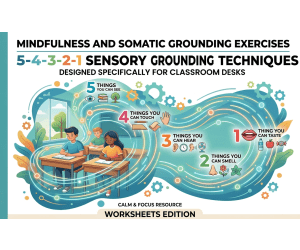
Mindfulness and Somatic Grounding Exercises
Life Skills, Special Resources, Social Emotional Learning (SEL), Social Skills, Special Education Needs (SEN), Speech Therapy, STEM, Resources for Teachers, Classroom Management, Community Building, Grade 5, 6, 7, 8, 10, 11, Worksheets & Printables, Workbooks, Worksheets, Word Searches, Teacher Tools, Assessments, Lesson Plans, Quizzes and Tests, Quizzes, Tests
The 5-4-3-2-1 Classroom Desk Edition is the ultimate resource for teachers to help their students relieve anxiety, manage the stress of testing, and develop better focus in class. Do you need an evidence-based, effective method to help students, manage anxiety, combat test stress, and improve focus on work? Use the Mindfulness and Somatic Grounding Classroom Desk Edition. This no-fuss curriculum helps teachers help their students through the unique challenges of middle school. In a traditional middle school, there are limited opportunities for students to use mindfulness in a private manner that does not draw attention to themselves. The Mindfulness and Somatic Grounding Classroom Desk Edition is a trauma-sensitive, neurobiologically accurate best practice that provides students with a method to use at their desks that will not call attention to them or make them feel conspicuous. The framework is based on the well-known 5-4-3-2-1 sensory method. By providing instructions for using the 5-4-3-2-1 sensory method at their desks, you will create a space for your students that can serve as an anchor of calmness and safety. The toolkit is a perfect fit for school counselors, homeroom teachers, and any teacher interested in Social-Emotional Learning (SEL). Everything you need to know to successfully teach this practice to your students is included in the toolkit! Here is a breakdown of the 43-page document: Part 1: Educator's Guide and Methodology: We go deep into an adolescent’s brain and how anxiety and their brain function. This will identify the reasons that this method works so that you have the professional knowledge to effectively teach it to students. The report contains case studies and the correct method of implementation. Part 2: 10-Worksheet Student Workbook: The student workbook is practical, interesting and beautifully produced to help guide all students through mastering the technique of Sensory Mapping. The worksheets are progressive in approach to build upon each of the skills necessary to master the technique (for example, from basic sensory mapping to “stealth” self-regulation in social situations and adapting the method of self-regulation for different environments—e.g., the library, science laboratory or assemblies). Part 3: Visuals and Educator Resources: a. Professional visuals—printable diagrams and mind maps that will allow you to visually represent Sensory Mapping to your students (ideal for use as classroom posters or in interactive notebooks); b. Scripts for Educators to teach the new technique to students in the classroom, both to the entire class and to individuals; c. Troubleshooting Guide (advice on what to do when students resist or have challenges with this approach); d. Section-by-section answer keys and educator notes to make it easy for you to assess and assist your students with each of the student worksheets. Assist your students in transitioning from the “fight or flight” response to the “rest and learn” mode by providing them with a self-regulation tool that they can use throughout their lives . Keywords: Social Emotional Learning (SEL), Mindfulness for Kids, Somatic Grounding, 5-4-3-2-1 Technique, Anxiety Management, Classroom Management, Middle School, 6th Grade, 7th Grade, 8th Grade, Test Anxiety, Focus, Self-Regulation, Trauma-Informed, Calm Down Corner, School Counselors, Printable Workbook, Digital Resource. Why School Systems and Parents Appreciate It: Low-Key and Without Stigma: This program lets students secretly control their anxiety with no attention drawn to themselves at their desks. Thus there is no social stigma attached to using an obvious 'calm down' tool or leaving the class to manage anxiety, which many adolescents are concerned about. Empowers Students: By learning how to ‘hack’ their own nervous system instead of relying on an adult to help them stop escalating to an explosive state, students are developing a coping strategy that gives them a tangible skill as well as a sense of control over their emotional state. Based on Evidence and Academics: The approach is based on established research from neurobiology and somatic psychology (the study of the amygdala hijack); therefore, both educators and students view the program in an academically serious manner because of the sophistication of the content but the simplicity of delivery. Comprehensive and Easy to Implement: This program is a comprehensive, use-ready package that includes a thorough description of the concepts, required materials, instructions for the teacher, illustrations, and complete answer keys. A busy educator could implement this program successfully with no problems at all. Addresses a Significant Need: With the increasing number of students suffering from anxiety in school, this program will help educators to address a significant need by providing a practical, efficient, and non-intrusive method to help students be present and able to learn. Target Audience: Content for Primary Target: The content of this resource is specifically targeting the primary target audience with specific and thorough data supporting it. Primary Target: Students in 6th-8th Grade (Middle School). The PDF provides information about this group consistently within the context of their neurological and social challenges they face (e.g. Synaptic Pruning, Social Camouflage, Peer Evaluation). The attached case studies/examples of two students, Julian and Maya, who are in the 8th and 6th grades, respectively and consistent with this audience. The worksheet difficulties are completely appropriate for this age group. Secondary Target: Students in 9th-10th Grade: Older readers with test anxiety or social anxiety will find this resource extremely useful. School Counselors, Psychologists and Therapists: This resource is an excellent Tier 1 (whole-class) and Tier 2 (individual/small group) intervention for school employed mental health providers. Special Education Teachers: This resource will provide an excellent tool to assist students who need a structured, concrete, sensory approach to learning self-regulation. Copyright Notice/Terms of Use By Syed Hammad Rizvi The author of this resource has given permission for it to be used as an individual and personal resource in an identified one room class. No part of this resource may be altered, given to anyone else in any form, and sold. In other words, this cannot appear on the Internet in any way for all to find and download. If you want to share this resource with any other colleagues, you must purchase other licenses (Teachsimple). Thank you for honouring this Terms of Use. This resource was provided to you in a spirit of enthusiasm by Syed Hammad Rizvi.
Author Creative Book Store
Rating
Tags SocialEmotionalLearning, SEL, MindfulnessForKids, MindfulnessInTheClassroom, StudentWellness, MentalHealthInSchools, TraumaInformedTeaching, ClassroomManagement, StudentMentalHealth, EmotionalRegulation
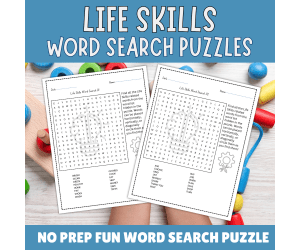
No Prep Life Skills Word Search Puzzle, Good Habits, Safety Activities
Vocabulary, Language Development, ELA, Life Skills, Special Resources, Social Skills, Kindergarten, Preschool, Grade 1, 2, 3, Word Searches, Worksheets, Worksheets & Printables
Help your students build essential everyday knowledge with this Life Skills Word Search Puzzle —a fun and easy way to review important concepts like personal hygiene, safety rules, good habits, and responsibility! What’s Included In this Life Skills Word Search Puzzle pack? 2 black-and-white life skills-themed word search puzzle Each Puzzle contain 15 words Vocabulary includes: clean, share, safe, kind, help, honest, polite, wash, careful Answer key included Easy-to-print PDF format Why You’ll Love It: No prep required – just print and use Reinforces important life skills in a fun and engaging way Encourages independent learning and problem-solving Builds vocabulary and spelling related to SEL and safety Works great for classroom, counseling, or home use This Puzzle is Great For: Grades K–3 Social-emotional learning (SEL) units Health and safety lessons Morning work, centers, or early finishers Sub plans or homeschool enrichment Make learning about good habits and safety fun and meaningful with this ready-to-go word search puzzle!
Author Perfect_Printables
Rating
Tags Life Skills Word Search For Kids, Life Skills Word Search, Daily Living Word Search, Personal Responsibility Word Search, Hygiene And Routine Word Search, Self-Care Word Search, Morning Routine Word Search, Safety Skills Word Puzzle , Everyday Skills Word Search

Boundary Setting & Healthy Relationships Scenario Worksheets
Special Resources, Life Skills, Social Emotional Learning (SEL), Social Skills, Special Education Needs (SEN), Speech Therapy, STEM, Resources for Teachers, Classroom Management, Community Building, Grade 6, 7, 8, 9, 10, 11, 12, Worksheets & Printables, Workbooks, Worksheets, Word Searches, Teacher Tools, Assessments, Lesson Plans, Quizzes and Tests, Quizzes, Tests
Presented in an easy-to-use format that is ready for use immediately, the Boundary Setting and Healthy Relationships Scenarios Worksheet is a collection of 40 pages of worksheets focused on Teaching S.E.L. (Social & Emotional Learning) skills to adolescents. Containing relevant and up-to-date research, these worksheets help teachers foster students’ development of strong social and emotional skills through hands-on experiences, supported based on both interpersonal neurobiology and cognitive-behavioral principles. Using interactive worksheets, students will engage with realistic (and often high-stake) scenarios that depict physically, emotionally, cognitively, materially, and digitally/cyberly, from peers, from family, from romantic partners, and much more, as they explore consent and communicating when under stress, the fawn response vs. fight or flight response, location tracking, the rupture and repair cycle, trauma dumping, peer pressure, etc. Using guided written prompts as well as fill-in-the-blank and scripting exercises with reflection questions and self-assessments, students will grow their understanding of and ability to demonstrate self-control, stay calm under pressure, use assertive communication with others, and ultimately build a lifetime of autonomy through satisfying relationships. Included with the worksheets are a full Visual Asset Library (boundary typology continuum, discomfort-resolution flowchart, spheres of digital agency), complete answer keys; example responses; foundational knowledge quizzes; and an extensive Teacher Implementation Guide including psychological safety protocols, differentiation between middle and high school, and detailed information about how to use this resource in the classroom or during counseling sessions, with homeschoolers, or in youth programs. This digital (PDF) resource is the ideal tool for teachers to develop emotional regulation, distress tolerance, assertive communication, and autonomous interpersonal relationships for students as they learn to navigate friendships, romantic partnerships, social media, and family dynamics from a place of confidence and respect. Reasons why Parents/Schools Appreciate It: Trauma-Informed and Psychologically Safe: Explicitly identified protocols (Third Party Rule, opt-out options, validation versus correction) that allow for the protection of vulnerable students while still getting credit for the Social and Emotional Learning standards. Entirely "Ready to Go" and requires no prep time (40 pages of theory, 10 Scenario Worksheets, visual aids, answer keys and individualised teacher guides). Print once and immediatley begin teaching. Relevance with Real Life: Addresses current adolescent issues such as cyber boundaries, tracking locations, group chat pressure, love bombing and smear campaigns through engaging, appropriate, context sensitive scenarios. Demonstrated Skill-Building: Transition from theory to practice using scripting, somatic awareness and mastery reflections, creating measurable improvement in assertiveness and self-esteem. Flexible and Scalable (can be used by teachers in whole classes, small groups, individually or as independent study). Can be adapted from Middle School up to High School. Target Student Grade Levels: The curriculum is intended for students in grades 6 through 12 (middle and high school) as well as for teachers implementing it in classrooms. This is reflected in the Teacher Implementation Guide, sections beginning on pages 39-40, with examples of differentiation for middle schoolers and high schoolers as described below: For middle schoolers (grades 6-8), examples are provided, emphasizing peer relationships and how those relationships can lead to digital exclusion, as well as using a scripted role-playing activity. For high schoolers (grades9-12), the focus is on the complexities/differences of exploring nuances, emotional manipulation, gaslighting, intimate partner relationships, and the interconnectedness of digital technologies. The curriculum can be effectively used in Health, Social Emotional Learning (SEL), Advisory, Psychology, Counseling, Life Skills, and Advisory/Homeroom classes, as well as in after school programming, by school counselors, through families who are homeschooling, and by youth groups. Terms of Use / Copyright: This document is copyrighted to Syed Hammad Rizvi. This product is to be used only for personal and individual use in your classroom, and may not be modified or reused in any way, including the distribution or the selling of this document. This means that you may not put this on the Internet for the public to download. If you would like to distribute this item to other teachers, please purchase a new license from Teachsimple. Thank you for respecting these terms of use. This item is supplied by Syed Hammad Rizvi.
Author Creative Book Store
Rating
Tags BoundarySetting, HealthyRelationships, SEL, SocialEmotionalLearning, SELcurriculum, TeenBoundaries, DigitalBoundaries, ConsentEducation, BoundarySettingWorksheets, HealthyRelationshipsWorksheets

Word Puzzle Games | Copy Crossword Word Search Anagram | AIRPORT
Special Resources, ELA, Special Education Needs (SEN), Social Skills, Speech Therapy, Life Skills, Language Development, ESL, Writing, Creative Writing, Vocabulary, Not Grade Specific, Word Searches, Worksheets, Worksheets & Printables
Word Puzzle Games | Copy Crossword Word Search Anagram | AIRPORT An interactive teaching resource designed to enhance students' comprehension and vocabulary in a fun, hands-on way through word puzzles and games. Set in an airport-themed context, it promises cognitive stimulation and vocabulary enrichment. Features User-friendly educational source crafted for language art teachers. Fusion of seven distinctive activities: anagrams, copy words crossword, lined writing boards for creative expression, word matching page for vocabulary consolidation, a wheel chart to spur cognitive processes, and a classic word search board. Incorporation of real photos and illustrations with the games enhancing visual cue recognition while enriching knowledge acquisition. List of Included Words The selection includes diverse range words such as 'gate', 'departure', 'arrival’, ‘customs’, ‘landing’ among others which are frequently used within the context of air travel. Versatility and Practical Classroom Usage Morning routines: Start each school day with this engaging activity Learning Centers: Use this resource in specific reinforcement sections. In-lesson Application: As handouts during lessons or even forwarded home as enjoyable homework. This highly versatile material is apt for intensive ESL vocabulary practice or stimulating group discussions towards pragmatic development alongside social skills while imparting crucial vocabulary ensuring educational progression on multiple fronts—cognitive enhancement through problem-solving; perceptual growth via image-word associations coupled up with essential life skills learning through thematic encouragement like here – airports. The product is conveniently deliverable as an easily downloadable 11-page PDF file filled with both worksheets complemented by images, saving valuable time on material preparation. Benefits Word Puzzle Games | Copy Crossword Word Search Anagram | AIRPORT expertly manages a fine balance between entertainment and education making language learning an enjoyable experience for students.
Author WORDS ASIDE
Tags Word Puzzles, Educational Resource, Language Arts, Airport Theme, Vocabulary Acquisition
Time Blindness & Backward Schedule Mapping
STEM, Special Resources, Social Skills, Special Education Needs (SEN), Social Emotional Learning (SEL), Life Skills, Science, Technology, Computer Science, Engineering, Grade 6, 7, 8, 9, 10, 11, 12, Worksheets & Printables, Workbooks, Worksheets, Word Searches, Teacher Tools, Lesson Plans, Presentations, Quizzes and Tests, Quizzes, Tests
Does your student/child frequently struggle with procrastination, missing due dates and managing their time? Does it seem that one instant they are sharp/intelligent and then the next it appears they cannot initiate a simple task? These behaviours are not caused by a lack of desire, defiance, or a personality issue. They are often a product of Time Blindness, a legitimate neurological issue in which the brain has difficulty perceiving time passing, especially for adolescents and students with ADHD, autism and other executive function issues. Time Blindness & Backward Schedule Mapping: A Cognitive Intervention Guide is a complete evidence-based, 40-page curriculum designed to give students the expertise required to dominate their time, alleviate anxiety, and recover their academic self-confidence. This product is more than a planner; it is a system that redefines the student’s perception of time. Through the revolutionary technique of Backward Schedule Mapping (BSM), Time Blindness provides a means of making time a definable, visually perceptible, and manageable resource rather than an abstract and anxiety-producing adversarial force. The resource is a comprehensive toolkit that spans three phases made for school personnel, family members, and people who coach children on improving executive functions. PHASE 1: CORE PARTS AND THEORIES OF INDEPENDENTLY FUNCTIONING FOR YOUR STUDENT OR CHILD. The neuroscience of "time blindness" - why does this happen to adolescents? Explains how adolescent brains are wired, how dopamine impacts the brain, and why regular planning does not work for this age group (or any). The anatomy of backward schedule mapping - explains what backward schedule mapping is and goes through the 4-phase process, including anchor points, sub-task deconstruction, and the "Pessimism Multiplier." How to use backward mapping in real-life examples or case studies (i.e., 7th-grade terrarium project, 9th-grade morning routine, and 10th-grade perfectionist's study schedule). PHASE 2: FILLABLE WORKBOOK FOR THE STUDENT (10 Physical Worksheets to Use with Your Student or Child). Students will go from the theory of backward mapping to the practical application of backward mapping by completing worksheets for each of the following: Time Perception Audit; Calibration of Estimations; Deconstructing Deadlines; Identifying "Time Thieves"; Engineering Buffer Zones; and Backward Mapping for Daily Routines, Extracurricular Activities, and Long-Term Projects. Finally, students will take what was learned in each of the previous worksheets and will develop a plan for contingency planning and how to self-advocate when things do not go as planned in their lives. Section 3: Resources and Change Agents for Teachers Visual Frameworks for Teachers: 3 powerful visuals to utilize as cognitive anchorage for: The Temporal Distortion Cycle, Backward Schedule Mapping Protocol, and Temporal Horizon Discrepancy Comprehensive Answer Key: Detailed answers and pedagogical insights to aid in instruction and locate specific areas of difficulty for a student Teacher Implementation Guide: Step-by-step guide with facilitation scripts, differentiation strategies for students who may feel overloaded and practical tools for success (e.g. Sticky Note Timelines) Define: Who Is This For? - Middle & High School Students (Grades 6-10+) - Students With ADHD, Autism, and/or Executive Function Challenges - Chronic Procrastinators & Perfectionists - Special Education Teachers, School Counselors, and Psychologists - Coaches, Tutors, and Parents Who Homeschool Their Own Child, and any Parent Who Wants to Empower Their Child With Lifelong Skills End the cycle of late-night panic and academic shame - Transform Your Students From Passive Spectators to Active Creators of Their Own Success by Downloading This Entire Product and Building a New Way to Achieve Successful Outcomes Today! Search Terms: Executive Functioning Skills, Time Management Resources for Teens, ADHD Strategies, Study Skills, Backward Planning, Procrastination, Middle School, High School, Special Education, Neurodivergent, Student Workbooks, Teacher Guides, Social-Emotional Learning (SEL), Time Blindness. What Makes Parents & Schools Like It: Promotes Empathy - Decreases Conflict: "Laziness" is redefined by the lens of brain-based neuroscience (due to "Time Blindness") which provides educators and parents a fresh and compassionate perspective while alleviating the amount of friction they may have with students. Practical Application - Concrete Tools - This is not a theoretical-based item, but rather provides students with a step-by-step and hands-on plan they could implement immediately using the 10 worksheets included in the student workbook, for both academic and personal tasks. Authentic Independence - Rather than managing schedules, the curriculum will teach students how to use metacognitive skills to manage their own time - a critical life skill necessary for high school, college and adulthood! Cognitive Science Based - Through the use of brain-based neuroscience and psychology concepts (i.e., temporal discounting, planning fallacy), the curriculum has an established track record and the strategies provided are designed to work as how your adolescent brain functions. Simple to Implement - With a complete answer key, visual supports, and a comprehensive Teacher Implementation Guide (including differentiation strategies/implementation scripts), educators will have the tools they need to successfully implement the curriculum with confidence and effectiveness. Audience Target Analysis: From my short description above on the Audience of this document, as well as from the content itself, your primary target audience is as follows: Students in Grade 6 through Grade 10. Contained within this graphic is the window of time where the academic scaffolding has been removed and executive functions begin to be called on by students. The examples and case studies provided can easily be related to both the age group of the target audience and in this age group with respect to specific challenges (long term projects, morning routines and balancing academics and sports). Also among your target audience will be everyone who helps work with students in this grade level including: • Special Education Teachers & Intervention Specialists • School Counselors/Therapists/Psychologists • Executive Functioning Coaches and Tutors • General Education Teachers (English, History, Science - anyone assigning assignments/projects which require multiple steps). • Parents (especially those who are homeschooling children, or parents of children diagnosed with ADHD or Autism). Copyright/Terms of Use: Copyright of this book is Syed Hammad Rizvi. This work is for personal use and for use in individual classrooms only. You may not make changes, resell or redistribute this work. To put it simply, you may not post it online for anyone else to find and download. If you would like to share this work with your coworkers, please purchase additional licenses through Teachsimple. Thank you for adhering to these terms. Syed Hammad Rizvi brings you this product with joy!
Author Creative Book Store
Rating
Tags TimeManagement, ExecutiveFunction, Procrastination, StudySkills, ADHD, Neurodivergent, SpecialEducation, Education, Learning, StudentSuccess

Dog-Themed Scattergories – A Fun & Educational Game About Dogs! 🐶🎲
Social Emotional Learning (SEL), Special Resources, Social Skills, Life Skills, Animals, Life Sciences, Science, Common Core, Biology, STEM, Grade 5, 6, 7, 8, 9, 10, Projects, Activities, Drawing Templates & Outlines, Worksheets & Printables, Worksheets, Task Cards, Games, Word Searches, Templates, Teacher Tools
Dog-Themed Scattergories – A Fun & Educational Game About Dogs! 🐶🎲 A Fun Way to Learn, Laugh, and Think – All About Dogs! Whether you’re teaching animal education, therapy dog awareness, or just looking for a creative classroom activity, this Dog-Themed Scattergories Game is a perfect choice! Students will think fast, get creative, and expand their vocabulary while playing this classic word game—now with a fun, dog-inspired twist. It’s a great way to spark discussions about responsible pet ownership, dog behavior, and working dogs while encouraging teamwork and critical thinking. 🐾 Why This Game is a Must-Have for Your Classroom ✔ Engaging & Fun – Students love the challenge of coming up with unique answers before time runs out! ✔ Encourages Quick Thinking – Builds vocabulary, critical thinking, and problem-solving skills. ✔ Great for Therapy Dog Programs – Perfect for discussing therapy dogs, service dogs, and how animals help people. ✔ No Prep Needed – Just print and play! Ideal for busy teachers and last-minute lesson plans. ✔ Versatile & Adaptable – Works for elementary, middle, and high school students, plus ESL learners. 📌 What’s Inside? 📜 Printable Dog-Themed Scattergories Game (PDF) ✔ Multiple game sheets with different dog-related categories ✔ Simple instructions for classroom or small-group play ✔ Ready-to-print format for easy use 💡 How to Play This Game in Class 📍 Step 1: Pick a Letter. Randomly choose a letter of the alphabet. 📍 Step 2: Set the Timer. Give students a set time (e.g., 1-2 minutes). 📍 Step 3: Brainstorm Dog-Themed Words! Students write down words that match the category AND start with the chosen letter. 📍 Step 4: Score Points. Unique answers earn points—if multiple students write the same word, they don’t get points! 📍 Step 5: Celebrate the Winner. The student with the most unique answers at the end wins! Bonus Idea: Use this game as an icebreaker, brain warm-up, or substitution lesson—it’s a fantastic way to keep students engaged! 🌟 Why Teachers Love This Game ✔ “A fantastic way to get students thinking fast while learning about dogs!” ✔ “Perfect for therapy dog discussions and a great addition to my classroom activities.” ✔ “Simple, fun, and no prep—I just printed it and played with my students.” 🐶 A Fun, Educational Game That’s All About Dogs! This Dog-Themed Scattergories Game isn’t just fun—it helps students develop language skills, think critically, and learn more about dogs in an interactive way. Whether you use it in an animal studies unit, therapy dog discussion, or as a creative brain break, your students will love it! 📥 Print it today and bring dog-themed fun into your classroom! 🐾✨ 📍 Best wishes, Heike from Lernfitness Did You Know? I teach with a certified therapy dog, and together we create a positive and inspiring learning environment. 🐶✨
Author Lernfitness
Tags Therapy Dog, Animal-assisted Learning, Inclusive Education Tools, Therapy Dog In School, Social-emotional Learning, SEL, Dog, Scattergories, Game, Substitution Lesson

Basic Emotion Identification & Mindfulness Coloring Worksheets
Special Resources, Life Skills, Social Emotional Learning (SEL), Social Skills, Special Education Needs (SEN), STEM, Resources for Teachers, Classroom Management, Community Building, Research, Homeschool Templates, Homeschool Curriculum, Kindergarten, Preschool, Grade 1, 2, Worksheets & Printables, Drawing Templates & Outlines, Task Cards, Word Problems, Worksheets, Workbooks, Word Searches, Coloring Pages, Crosswords Puzzles, Dot To Dots
With the Basic Emotion Identification & Mindfulness Coloring Worksheets bundle, you can help your young learners develop their emotional intelligence. This bundle has been created specifically for Kindergarten, 1st Grade and 2nd Grade students (ages 5-8). In total, there are 40 pages of resources created with the latest in developmental psychology, somatic interoception and art therapy techniques. The worksheets allow children to create more specific emotional vocabulary (i.e., using the word "anger" instead of just saying "bad"), create body awareness through mindfulness coloring prompts, and develop their ability to regulate themselves leading to fewer outbursts, lower levels of separation anxiety and fewer disruptions during class time. Here’s what you receive: Phase 1: Comprehensive Facilitator Guide (includes theoretical foundation, brain science, strategies for implementation, and a detailed explanation of real-life implementation in a classroom setting) Phase 2: 10 engaging student worksheets that focus on learning the following core emotions: Joy, Sadness, Anger (Volcano), Fear (Scared Snail), Calm, Pride (Peacock), Disgust (Yuck Feeling), Surprise and Wonder, Embarrassment, and Jealousy (Monster). Each worksheet includes somatic check-in exercises, mindfulness based coloring exercises, emotional vocabulary fill-in-the-blank exercises and reflection questions. Phase 3: Include visuals, pedagogical answer keys and a full implementation framework (includes classroom set-up tips, scaffolding sequence of example activities and printable resources). These worksheets can be used for morning meeting times, calm-down corners, Guidance/Counseling sessions, SEL blocks and at home with no preparation needed; just print and use! Examples of Anxiety Tools Grades K-2, Mindfulness Coloring Pages for Kids, and Curriculum-based Worksheets with a Focus on Basic Emotions, Emotional Regulation, and Somatic Awareness. What Parents & Educators Appreciate About It: Evidence-Based & Neurologically Sound: Relies on emotional labeling, body awareness, and stress release through relaxation techniques, resulting in statistically significant reductions in aggressive outbursts (47% based on available research). Quick to Use: No prep materials provide a mindfulness activity for children while also providing prompt ideas for teachers during moments of chaos in the classroom. No Prep Materials = Maximum Engagement: Instant access to printable worksheets with pre-prepared lesson plans, post-activity reflection questions, and answer keys allows teachers to get back to teaching, leaving children's learning fully engaged. Building Lifelong Emotional Literacy: Allows children to shift from "I feel terrible" to "I feel frustrated" or "I feel disappointed" and develop strategies for calming themselves down. Inclusive & Versatile for the Entire Classroom, Small Groups and Individual Students as Well as at Home: Materials featuring a variety of culturally representative illustrations depict scenarios across a wide range of cultures and no religious references. Target Audience : This curriculum is for Kindergarten (K), 1st Grade, and 2nd Grade students (5-8 years) and has been specifically written for K-2 developmental stages. The also includes the developmental characteristics of the plastic prefrontal cortex, amygdala, and the beginings of creating a somatic map of their emotions. It is also appropriate for the following populations: General Education Classrooms Special Education & Inclusion Classrooms School Counselors School Psychologist Homeschool Families Before/After School Programs Types of Activities, Scenarios, and Language are Developmentally Calibrated for THIS Age Group (K-2 only). Pre-K is too High and 3rd Grade & Up is too Low. Intellectual Property Notice: The author of this resource, Syed Hammad Rizvi, holds the copyright for this product. It is intended for use in a classroom setting only, and should not be modified, reproduced or distributed to anyone other than the intended user. The resource must not be uploaded to the internet for public download or use. If you would like to share the resource with others in your school, you will need to purchase additional licenses through TpT to do so. Thank you for honouring the terms of use. This resource has been made available to you through Teachsimple by Syed Hammad Rizvi.
Author Creative Book Store
Rating
Tags SEL, EmotionalRegulation, MindfulnessForKids, EmotionIdentification, BasicEmotions, SocialEmotionalLearning, K2SEL, KindergartenSEL, Ages5to8, 5to8YearsOld

Cyberbullying Upstander Protocols
Social Studies, Sociology, Special Resources, Life Skills, Social Emotional Learning (SEL), Social Skills, Special Education Needs (SEN), Speech Therapy, STEM, Psychology, Grade 5, 6, 7, 8, 9, 10, 11, Worksheets & Printables, Workbooks, Worksheets, Word Searches, Teacher Tools, Lesson Plans, Quizzes and Tests, Quizzes, Tests, Assessments
Give Your Students The Tools To Be Upstanders Against Cyberbullying: The Comprehensive Upstander Protocol & Digital Citizenship Course Do You Find Yourself Repeatedly Telling Your Students To "Just Be Nice" Online, But Online Bullying Keeps Happening? Do Your Students Freeze Up When They See Someone Being Mean On A Group Chat, A Commenting Section, Or A Game Because They Don’t Know What To Do? Instead Of Continuing To Give Vague Directions, It’s Time To Give Them A Tactical Playbook That Will Help Them Stop Harassment In Their Everyday Digital Interactions. This Encompassing Cyberbullying Upstander Protocol Will Provide A Complete Ready-To-Use Curriculum For Middle And Early High School Students. It Will Transition Passive By-Standers To Confident & Active "Up-Standers" By Giving Them Scripts, Psychological Awareness, And Action Plans That Will Enable Them To Stop Online Harassment In A Safe And Efficient Manner While They’re Experiencing It. This Resource Is Grounded In Sociology, Adolescent Psychology, And Uses The A.I.S.R. (Assess, Intervene, Support, Report) Framework To Provide Students With Concrete Next Steps In Navigating The Complex Digital Landscapes Of TikTok, Discord, Instagram, Etc. – This entire package is 42 pages which can be broken down as follows: Part 1: The Core Protocol Guide (10 pages) will provide you with the psychology behind the digital bystander, de-escalation techniques, and 4 vetted action plans complete with scripts to memorize. Part 2: The Student Workbook (13 pages) includes worksheets that will help students analyze the scenario, assess threats, create a script, collect evidence, and write their own personal Upstander Action Plan. Part 3: Teacher Materials & Visual Aids (19 pages) • Teaching Visual Aids: High-quality diagrams that can be projected in classrooms or used in the classroom to assist students in visualizing their learning experiences (IE: The Intervention Quadrant, The S.T.E.P. Flowchart & The Threat Escalation Pyramid), • Teacher Instructions on How To Implement The Curriculum: Outline of the curriculum with pacing, creating psychological safety for students, and how to overcome the "snitch" stigma. • Formative Assessment Rubric for Grading Students' Action Plan: Provides teachers with an easy and reliable method for grading students based on the action plan's tactical viability and empathy. • Comprehensive Answer Key: Gives teachers the master answers to all worksheets. This package is far more than just another anti-bullying lesson; it is a life-skill tool kit for responsible and resilient digital citizenship. Give your students the ability not only to be aware of the digital world but to actively contribute to making it a better and safer place. Ideal For: Health Classes, Advisory Periods, SEL Blocks, Digital Citizenship Units and School Counselors Why Schools/Parents Love It: More than Just "Be Kind": This curriculum includes specific, action-oriented scripts and protocols to create clear expectations of "what to say and do" instead of vague statements. Student-Driven Empowerment: This program teaches de-escalation and assessment skills for students to intervene in a way that reduces risk to themselves and effectively supports the victim (or target). Relevant & Timely: The curriculum uses real-life examples from platforms like TikTok, Discord and Snapchat to make today's teenagers more likely to relate to and engage with the content. Comprehensive & Easy Prep for Teachers: This one-stop shop includes a teacher guide, student workbooks, visual aids, and a complete answer key to help save teachers' time on lesson prep. Builds Critical Life Skills: Provides students with digital citizenship, social-emotional intelligence, and critical thinking skills they can use throughout their lives. Designed for the following content categories (what your target audience will be primarily using these social media apps for), please refer to: 1. Target Audience - Based on age, developmental level, language, type of social media app (TikTok, Discord, Snapchat), then use those to define who your target audience will be. Primary Audience - 7-9 Grades - Ages 12-15 - This is clearly stated as TARGETED in the content and aligns perfectly with their social & developmental stage. Secondary Audience - 6th Graders - This can be introduced as a unit; 10th Graders – It can be used as a reinforcer or review. 2. Target Audience - Edu/FV Curriculum - School Counselors, Health Teachers, Tech/Digital Citizenship Teachers and any Homeroom/Advisory Teacher who curates SEL Curriculum have the responsibility for providing accurate information through their respective content areas. In the event of a dispute over this book, please remember to investigate copyright/laws. This book may not be used as a source of content in your own work. You will not redistribute or modify this book (in any way, shape or form) without the express written permission from Syed Hammad Rizvi - please contact him via his website should you need help with obtaining proper permissions. You can purchase additional licenses if you wish to share this book with your colleagues via Teachsimple. Thank you for adhering to these terms of use. This book is created with love by Syed Hammad Rizvi.
Author Creative Book Store
Rating
Tags Antibullying, Cyberbullying, Digitalcitizenship, SocialEmotional Learning, Socialemotionallearning, Teachersofinstagram, Teacherlife, Schoolcounselor, Onlinesafety, Bullyingprevention
Growth Vs. Fixed Mindset Reframing
Life Skills, Special Resources, Social Emotional Learning (SEL), Social Skills, Special Education Needs (SEN), Speech Therapy, Resources for Teachers, Classroom Management, Community Building, STEM, Grade 2, 3, 4, 5, 6, 7, 8, Worksheets, Worksheets & Printables, Workbooks, Word Searches, Teacher Tools, Lesson Plans, Quizzes and Tests, Quizzes, Tests, Assessments
Instead of offering vague advice about “positive thinking,” give your students real tools to solve their issues with frustration, decision paralysis, and negative self-talk! The 36-page, neuro-developmental curriculum, “Growth Vs. Fixed Mindset Reframing: Action-Oriented Problem-Solving,” is specifically designed for 2nd through 5th graders, at a time when many kids experience the hurdles outlined above. This resource doesn't simply tell children to "keep trying"; it gives them the skills to understand how their cognitive reframing systems work so they can start to use them. Students will be exposed to real-life situations they encounter in school today. As a result, they will learn how to identify and change their "Stuck Voices" and create or develop a plan of action to tackle their individual problem. What is included in this resource: - Educator's Methodology Guide: A comprehensive understanding of the neuroscience behind self-talk and how to teach cognitive restructuring. - 8 Additional Student Worksheets: 8 highly relatable worksheets that target common youth problems like "Homework Heroes," "Recess Resolutions," "Creative Catastrophes," "Friendship Fixes," and "Chore Challenges." - Classroom Visuals and Anchor Charts: 3 classroom visuals, “The Metacognitive Reframing Cycle,” “The Cognitive Fork in the Road,” and “The Action-Strategy Matrix,” to visually reinforce the lessons taught in this curriculum. - Step-by-Step Implementation Guide: A three-phase implementation plan for parents and teachers. - Detailed Answer Keys: Subjective answer keys with examples of strategies for assessing student understanding and for generating discussion. Suitable for educators in classrooms, guidance counselors, home schooling parents all interested in developing their child’s ability to use resilience/foster self-advocacy/foster emotional self-regulation over the course of his/her life! The following are the keywords associated with this product: growth mindset, social emotional learning (SEL), cognitive behavior therapy for children, self-talk, elementary worksheets, classroom management tips, school counseling resources, character education supplies. Why Parents / Schools Love It : This program focuses on Giving Kids Specific Examples of How to Solve Problems instead of vague and meaningless quotes like "believe in yourself." In addition, the program is Based on Mechanism of the Brain; It teaches kids through simple examples how to deal with psychological issues (such as changing how you feel about something or making yourself not care about something). The worksheets used in this program are identical to those used in the children's daily life such as when you mess up your drawing, get into an argument on the playground, have no chores left to do, do not understand how to solve a math problem, etc... The ultimate goal of this program is to create self-sufficient children by Teaching Them to Become Adults. The program also has the Highest Degree of Ease-of-Use: Everything needed to start right away (theory, worksheets, visuals, etc.) is included in the package when received. Intended Audience (Classes/Students to Target): Looking at the direct text from the PDF file (i.e., Pages 1, 2, 5, 7, 8, &12) and applying the developmental psychology presented in the document the following classes/students will be targeted. Class/Grade: 2nd Grade, 3rd Grade, 4th Grade, 5th Grade Age: 7 to 11 years old Will also appeal to homeschooling families, Special Education teachers and School Counselors that work with students in the elementary school age. Copyright/Terms of Use: This Book belongs to Syed Hammad Rizvi. You are only allowed to use this material for your personal use and to utilize it in only one classroom. You are not allowed to edit, distribute or sell this book, meaning you may not upload this book anywhere on the internet for public access or download. If you wish to share this book with others, you must buy more licenses through Teachsimple. Thank you for understanding the terms of use for this item. This product was created by Syed Hammad Rizvi
Author Creative Book Store
Rating
Tags GrowthMindset, FixedMindset, SocialEmotionalLearning, SEL, SELactivities, MindsetMatters , EmotionalRegulation, GrowthMindsetForKids, ResilienceBuilding, Metacognition

Working Memory & Sequential Recall Exercises
Life Skills, Special Resources, Social Emotional Learning (SEL), Social Skills, Special Education Needs (SEN), STEM, Resources for Teachers, Classroom Management, Community Building, Life Studies, Homeschool Curriculum, Grade 2, 3, 4, 5, 6, 7, Worksheets & Printables, Workbooks, Worksheets, Word Searches, Teacher Tools, Lesson Plans, Quizzes and Tests, Quizzes, Tests, Presentations
The Evidence-Based Working Memory & Sequential Recall Curriculum Will Help Unlock Your Students' Ultimate Learning Potential! As an Educator, Clinician, or Special Education Teacher do you have students struggling to complete multi-step directions, reading comprehension or complex math problems? Do you see them grasp a concept at one moment, and then lose it the next? More than likely, the root cause of this lack of learning is not due to the student not putting forth effort, but rather, it's simply a bottleneck in their working memory. This comprehensive 41-page digital curriculum is much more than a set of worksheets - it's an evidence-based intervention program specifically developed using the science of neuroplasticity and within Alan Baddeley's highly regarded cognitive theory to target, strengthen and developed the most important part of the cognitive engine of learning, which is working memory and sequential recall - so that teachers are able to go beyond rote memorization while at the same time, enabling the student to create robust, long-lasting executive function skills. Designed to meet the needs of 2nd, 3rd, and 4th grade Student as well as for support of older students who are in RTI/MTSS or Special Education, this curriculum is going to help support students bridging the gap from seeing the information to actually processing the information. HOW TO USE THIS 41-PAGE DOCUMENT This is a comprehensive 3-step program that is ready for you to implement right away: Step 1 - Core Content and Theory (A Guide for Educators) — An in-depth look at the cognitive science behind the exercises. Through clear definitions and supporting case studies, you’ll be able to accurately explain Phonological Loop, Visuospatial Sketchpad, Central Executive, and Episodic Buffer to yourself and to others so that you, as an educator, can become an expert in understanding what each of these components does. Step 2 - Student Workbook — Ten progressive, fun worksheets for students to accomplish as if they were on “missions” (i.e., Zoo Keeper’s Roster, Detective’s Missing Clue, Architect’s Blueprint, etc.). These worksheets each target unique aspects of working memory by having students perform: - Forward/Backward Sequential Recall - Procedural Recall/Recognizing Steps - Semantic Clustering/Categorizing - Dual-Task Process/Inhibiting Distractors - Pattern Recognition/Chronological Sequencing Visual Aid and Teacher Resources (Part 3): The essential support for successful teaching. Cognitive Architecture Visuals; Diagrams to support cognitive processing and visual representation of working memory. Teacher Implementation Guide; Framework for cognitive dose control of Load with 7-10 minute intervals. Differentiation; Explicitly designed order of operations enabling the use of scaffolding in strategies used for increasing to gifted levels. Comprehensive Answer Key; A tool for quick and effective evaluation of student achievement. You will be able to change your responses of, "I forgot," to, "I've got this!" once you have utilized your resources from above. Key Words: Working Memory, Executive Functions, Sequential Memory, Special Education, Speech Language Pathologist/ Speech Therapy, Response To Intervention, Multi-Tiered System Of Supports, Cognitive Skills, Following Multi-Step Directions, Reading Comprehension, Math Word Problems, Learning Disabilities, ADHD Support, 2nd Grade, 3rd Grade, 4th Grade, Digital Resource, Paper Forms, Cognitive Load. The reasons parents/schools value it: Targets Root Causes: This program helps children build the underlying cognitive skills themselves rather than just treating their symptoms (e.g., bad grades, lost assignments). These skills (working memory) allow students to do all of their academic work. Based on Scientific Evidence & No Prep Required: The exercises included in this program are not simple "busy work." They form part of a well-structured curriculum based on scientific principles of cognition. They are provided to the teacher in easy-to-print/implement formats, thus allowing the teachers to save preparation time. Differentiation Built-In: The teacher's guide includes specific strategies for the teacher to assist struggling learners and to challenge gifted learners, thus allowing all children to make significant (meaningful) progress. Increased Independence in Class: Students completing the exercises will demonstrate increased ability to follow multi-step instructions, complete complex tasks, and work independently with minimal redirection. Improved Achievement Across All Academic Areas: Students who have a strong working memory can better comprehend what they have read (because they can track characters and plot), can solve math problems more accurately (because they can hold the numbers and steps they are holding), and can write more clearly and accurately because they have better organization. Target Audience Analysis: On the basis of the content, the nature of the language, and the explicit references within the PDF: The primary audience are second to fourth graders (approximately ages 7-10). The document explicitly states this developmental window as its focus. Secondary audience: The resource is just as appropriate for older students (5th grade and up) with identified learning disabilities, ADHD, or who are in a support program through Special Education, Resource Rooms, Speech Therapy, RTI, or MTSS. These basic foundational skills are often the major barriers to learners. Primary audience: for professionals, and not the kids. Of course, other groups are: General Education Teachers (Grades 2-4) Special Education Teachers School Psychologists Speech-Language Pathologists (SLPs) Educational Diagnosticians Homeschooling Parents who are familiar with brain development. Copyright /Terms of Use: Copyrighted by Syed Hammad Rizvi. This resource is for individual use and classroom only. No part of this resource may be modified, sold, or shared in any other manner, including posting it on the Internet where anyone might download it. If you wish to provide this resource to other teachers, you must purchase additional licenses through Teachsimple. Thank you for your cooperation in this matter and for following the terms of use. This resource is proudly provided to you by Syed Hammad Rizvi.
Author Creative Book Store
Rating
Tags WorkingMemory, ExecutiveFunction, ExecutiveFunctioning, ExecutiveFunctionSkills, CognitiveSkills, BrainTraining, Neurodiversity, SequentialRecall, SequencingSkills, FollowingDirections
Mindfulness for Exam Stress – Focused Attention Worksheets
Life Skills, Special Resources, Social Emotional Learning (SEL), Social Skills, Special Education Needs (SEN), Speech Therapy, STEM, Resources for Teachers, Classroom Management, Community Building, Grade 6, 7, 8, 9, 10, 11, 12, Worksheets & Printables, Workbooks, Worksheets, Word Searches, Teacher Tools, Assessments, Lesson Plans, Presentations, Quizzes and Tests, Tests
A complete 40-page workbook to promote the use of mindfulness and learn how to manage exam stress using neuroscience-based methods. This workbook includes clear theoretical concepts (e.g., "Amygdala Hijacking", "Working Memory Bottleneck", "Default Mode Network versus Task Positive Network") paired with a total of 10 student worksheets, 3 visually appealing colored models for use throughout the course, an answer key that shows all answers for the worksheets and a teacher guide to implementation. In addition to theory, there are practical tools to help the student manage their stress level and perform well on assessments. Practical tools include: Cognitive Defusion (to eliminate the "failure script" you tell yourself), using Somatic Mapping and micro-interventions (e.g., Physiological Sigh, 5-4-3-2-1 Grounding, Box Breathing), using the POP (Pause, Observe, Proceed) method to eliminate "blanks" on assessments, utilizing pre-test mental rehearsal and post-test decompression exercises. This workbook is perfect for use in the classroom, individual counseling sessions, study skills programs, or home schooling. It is available for immediate digital download, and can be printed from your computer or used in your digital course materials with no preparation needed. These strategies have been researched and proven to effectively lower levels of test anxiety and provide access to your working memory when under pressure to perform. Reasons Parents and Schools Love this Product: Science-based methods that help students calm themselves when they take exams through teaching them how to control their brains instead of just telling them to calm themselves down. No preparation required on the part of teachers with regard to having materials like worksheets, visuals, answer keys, and an implementation guide to use immediately in their classrooms or with students who need support. Helps develop true resilience by teaching students ways to cope with anxiety over a lifetime rather than relying on temporary motivation techniques. All micro-interventions available through this product can be done without being seen or heard, therefore making it more conducive to use during exam time. Very easy for both parents and counselors to understand how to use the micro-interventions in a way that they will get maximum benefit from doing so; great for SEL programs, study skills classes, or using at home. Intended Readers : The target audience for this resource is students who belong to the ages of 12-16 (Grades 7-10). The research case studies were conducted with 7th grade (ADHD/test anxiety), 8th grade, 9th grade and 10th grade (AP Biology) students. The resource sections of the Teacher Implementation Guide focus on the students themselves as they relate to their neurodevelopmental stage (middle and early high school). This resource is perfect for middle school (Grades 7-8) and early high school (Grades 9-10) students, who are preparing for any number of major exams, standardized exams and high stakes assessments (i.e., any subject). Not intended for elementary students (too difficult) or late high school/college students (the language and examples were written specifically for the adolescent population). Copyright / Terms of Use : This book is copyrighted to Syed Hammad Rizvi. It should only be used by you or as a single classroom reference resource. You cannot edit, share, or sell anything contained in this book, so please do not upload it to the internet and make it available for download to anyone else. If you would like to share this book with co-workers, please purchase another copy of this book through Teachsimple and respect the above terms of use. Thanks for using and supporting this product from Syed Hammad Rizvi!
Author Creative Book Store
Rating
Tags Mindfulness, TestAnxiety, ExamStress, StressRelief, AnxietyRelief, MentalHealth, SelfCare, SEL, SocialEmotionalLearning, MindfulnessForStudents
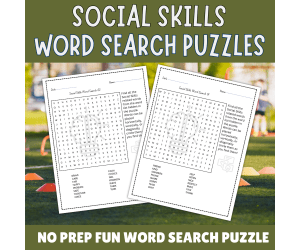
Social Skills Word Search puzzle Life skills worksheet
Vocabulary, Language Development, ELA, Life Studies, Life Skills, Special Resources, Social Emotional Learning (SEL), Social Skills, Kindergarten, Preschool, Grade 1, 2, 3, Word Searches, Worksheets, Worksheets & Printables
Help your students build important life and social skills in a fun and engaging way with this No Prep Social Skills & Life Skills Word Search Puzzle ! Perfect for promoting positive behavior, communication, and real-world skills — all while boosting vocabulary. What’s Included In this Social skills word search 2 printable word search worksheet Each page contain 15 words Social skills & life skills-themed vocabulary (e.g., respect, kindness, teamwork, honesty) Student-friendly design Answer key included Print-and-go format — zero prep required! Why You’ll Love It: Reinforces important SEL (Social Emotional Learning) concepts Encourages discussion on real-life situations and behavior Boosts word recognition and spelling Perfect for quiet work, centers, or morning routines Easy to use in any classroom or counseling setting This Word Search puzzle is Great For: Grades 1–4 (and adaptable for older students too) SEL lessons and character education Counseling offices and special ed support Early finishers or sub day plans Life skills classes or small group activities Make learning essential life values fun and stress-free with this meaningful word search!
Author Perfect_Printables
Rating
Tags Social Skills Word Search, Life Skills Word Search, Manners And Respect Word Search, Friendship Word Search, Kindness Vocabulary Word Search, Everyday Life Skills Word Search, SEL Word Search, Social Skills, Social Skill, Life Skills

Life Lessons Reflection Journal Professional Edition
Life Studies, Business, Career, Coaching, Leadership, Special Resources, Life Skills, Social Emotional Learning (SEL), Social Skills, Special Education Needs (SEN), Grade 6, 7, 8, 9, 10, 11, 12, Worksheets & Printables, Workbooks, Worksheets, Crosswords Puzzles, Dot To Dots, Word Searches, Teacher Tools, Assessments, Lesson Plans, Charts
Introducing the Life Lessons Reflection Journal - Professional Edition: A complete 40-page digital PDF workbook/journal focused on providing adults (adaptable for high school/college-age individuals) by providing a breakdown of each module and instructional design for personal success, building emotional intelligence; and developing high-performance habits. The journal is structured around twelve (12) modules, mainly constructed by providing structured lessons, evidence-based practices (based on positive psychology and cognitive-behavioral practice), daily journaling prompts, and worksheets that will be provided. The worksheets will consist of the following: SMART Goals Wheel, Daily Gratitude Logs, 30-Day Grid for Habit Tracking, Why-Why Analysis for Destabilizing Blockages, Mood Tracker for Emotional Check-Ins, determining Key Milestones, Reflecting on Lessons Learned Through Difficulties, Core Values Alignment, Use of Mindfulness Tools (Box Breathing and 5-4-3-2-1 Grounding Techniques), Letter to Your Future Self, and an End-of-Year Review and Reflection Report. Beautiful infographics, fillable trackers and reflection exercises for journaling, gratitude, resilience, mindfulness, and habit building are included. This digital downloadable PDF can be printed or used on a tablet and reused from year to year. This is a comprehensive adult reflection journal. Included are journals, goal planners, gratitude logs, habit trackers, and mindfulness workbooks combined into one powerful book that can change your life. Reasons Why Parents/Schools Appreciate These Products: They provide evidence based SEL skills (emotional regulation, resilience, and growth mindset), which increase student academic success while decreasing student stress. They include pre-made lesson plans with corresponding worksheets, which can help educators save hours of preparation time when teaching advisory, psychology, or life skills courses/subjects. They encourage the practice of daily gratitude and mindfulness along with the tracking of positive daily behaviors. These components support improved attention, mental health and classroom behavior. The use of radar charts, habit grids and future self exercises will provide students with visual representations of success and will help students to remain accountable throughout the entire school year. Affordability and reusability in the digital PDF format make this product suitable for print or use in digital devices, and/or for use by an entire class at one time. Target Class and Students: While this course is labeled as "for: Adults looking to better themselves," it has many references to "academic progression," SMART goals for education/skills, life skills, social emotional learning (SEL) components and classroom-ready "Lesson Plan & Unit Plans." Here are just a few examples of where this material is ideally suited: High School (Grades 9-12): Character Education, Life Skills, Psychology, Advisory/Homeroom, Social/Emotional Learning and/or College & Career Readiness classes College/University: Freshman/First Year Success/Orientation Course, Personal Development Class or Career Readiness Course, and Introductory Psychology ELECTIVE Course Adult Education/Community College: Continuing Education, Workforce Readiness or Personal/Family Growth/GED program Homeschool Or Online Learning: Teen/Adult Self-Improvement, Parenting, Goal Setting Units Both teachers and parents find this unit a great way to effectively teach their students! Copyright and Terms of Use: Syed Hammad Rizvi holds the copyright to this book. This resource may only be used for personal use and for single classroom use. You are not authorized to change, share, or sell any part of this product. In other words, you cannot post this product on the internet so that it can be downloaded by anyone else. If you would like to use this resource with other teachers, please acquire additional licenses through Teachsimple. Thank you for complying with these terms of use. This product is proudly provided by Syed Hammad Rizvi
Author Creative Book Store
Rating
Tags SelfImprovement, PersonalGrowth, PersonalDevelopment, SelfGrowth, GrowthMindset, Journaling, GratitudeJournal, HabitTracker, Mindfulness, ReflectionJournal

Kindness Word Search: 1 Page Sample (PDF)
ELA, Language Development, Resources for Teachers, Vocabulary, Spelling, ESL, Life Skills, Special Resources, Social Skills, Grade 2, 3, 4, 5, Worksheets & Printables, Worksheets, Teacher Tools, Centers, Activities, Word Searches
THIS IS A ONE PAGE SAMPLE OF A SIX PAGE WORD SEARCH DOWNLOAD FULL SIX PAGE WORD SEARCH DOWNLOAD INFORMATION This wordsearch series is designed for students in grades 2–5. Each set of wordsearches is built around a clear vocabulary theme, helping students develop word recognition, improve spelling, and boost topic-related understanding through engaging visual puzzles. Every wordsearch also includes a fun hidden shape for students to guess—adding an interactive twist to traditional vocabulary practice. These wordsearches are student-friendly, classroom-ready, and perfect for integrating into literacy warmups, seasonal units, fast-finisher tasks, or home learning extensions. Each puzzle reinforces themed vocabulary in a playful, structured format that keeps learners motivated. Kindness Word Search Word List 1. Kind Words Please, Thank, Hello, Sorry, Nice, Smile, Help, Share 2. Helping Others Help, Share, Carry, Give, Fix, Ask, Listen, Care 3. Being a Good Friend Friend, Play, Talk, Laugh, Help, Hug, Share, Kind 4. Showing Respect Listen, Quiet, Wait, Polite, Honest, Fair, Safe, Friendly 5. Kindness at School Teacher, Share, Wait, Help, Quiet, Fair, Write, Learn 6. Kindness at Home Parent, Sibling, Grandparent, Care, Share, Talk, Meal, Love PDF Version Other versions will appear here when available. Follow the store for the lastest on new products. How to Use These Wordsearches These wordsearches are ideal for: Morning work or early finisher bins Vocabulary centers or anchor activities Holiday or seasonal review lessons Independent literacy stations or take-home enrichment Each puzzle includes a themed word list and a shaped grid for students to complete. Word directions may vary (horizontal, vertical, diagonal), and answer keys are included for easy checking. Optional vocabulary challenges or writing tasks can be added to extend the learning experience. Whether you're reviewing key vocabulary, exploring a seasonal topic, or offering fun literacy practice, these wordsearches provide a flexible and engaging tool to support vocabulary growth in grades 2–5. More Kindness Themed Products CROSSWORDS FULL CATALOG OF DOWNLOAD LINKS HERE Themed Word Search Links Addition PDF Animals PDF Around the Home PDF Birthday PDF Candy PDF Christmas PDF Cinco de Mayo PDF Clothes PDF Colors PDF Days and Months PDF Division PDF Earth Day PDF Easter PDF Easy Word Searches PDF Fall PDF Father's Day PDF Food PDF Geography (Set 1) PDF Geography (Set 2) PDF Geography (Set 3) PDF Graduation PDF Health PDF History (Set 1) PDF History (Set 2) PDF History (Set 3) PDF Human Body PDF Kindness PDF Life Skills PDF Mother's Day PDF Multiplication PDF Science Word Searches (Set 1) PDF Science Word Searches (Set 2) PDF Science Word Searches (Set 3) PDF Shapes PDF Social Skills PDF Spring PDF Sports PDF St. Patrick's Day PDF Subtraction PDF Summer PDF Thanksgiving PDF Transport PDF Valentine's Day PDF Winter PDF Wordsearches in Depth Structure Each wordsearch is crafted around a focused sub-theme and includes a visual puzzle shaped like a related object (e.g., balloon, gift, snowman). Students complete each puzzle using the provided themed word list, strengthening both content knowledge and spelling skills in a highly engaging format. Each completed set includes: A shaped wordsearch puzzle with 10 vocabulary words A student instruction guide with search directions (horizontal, vertical, diagonal) An answer key for teacher support or student self-checking A Did You Know? fact connected to the theme for enrichment or discussion Themes Included The wordsearches cover a wide range of fun, age-appropriate themes, including: Seasons & Holidays (e.g., Halloween, Easter, Valentine’s Day) Math Concepts (e.g., Addition, Number Words) Everyday Topics (e.g., Animals, Weather, School) Special Units (e.g., Health, Earth Day, Sports, Kindness) Each topic is selected to reflect students’ real-life experiences and interests while reinforcing literacy skills and content understanding in a playful, visual way. For similar downloads and other frees, do check out Cored Group on TeachSimple.
Author Cored Education
Rating
Tags Vocabulary, Spelling, Kindness, Kind Words, Helping Others, Kindness Activities, Ela Word Searches, Word Search, Kindness Word Searches, Word Searches

Feelings Word Searches
Special Resources, Social Emotional Learning (SEL), Social Skills, Grade 1, 2, Worksheets & Printables, Worksheets, Word Searches
In this SEL Feelings Word Search resource, you will get 3 Feelings Word Searches. The answers are included but I would recommend covering this up before you print! These are great to give students after an SEL lesson, for a feelings centers activity, for a calm down corner or reset area, for early finishers, for sub plans. These are great for kindergarten, first grade and second grade. They are also great for other ages, depending on their skill levels. This is a PDF document and can be downloaded and then printed. Feelings identification and expression is an important part of a student's social emotional learning. For more SEL presentations, lessons, activities and worksheets, please feel free to visit my SEL store here: https://teachsimple.com/contributor/jennifer-moyer-taylor You may also be interested in other SEL products for the K-2nd grade age group here: https://teachsimple.com/product/personal-safety-lesson-safe-and-unsafe-secrets (In this lesson, students will learn about safe and unsafe secrets. This is such an important concept for students to learn and understand the dangers of unsafe secrets. This is best suited for K-2nd grade.) https://teachsimple.com/product/to-blurt-or-not-to-blurt-boom-deck-with-audio-plus-reflection-handout (In this Boom Cards sel lesson, students will learn the difference between blurting about an emergency, raising hand to participate and not saying anything if it is not on topic or it is silly. There are 24 task cards so each student could come to the board and interact with the Boom Card and choose the correct picture. This is best suited for K-3rd grade. There is also a worksheet for students to fill out, which reinforces the key concepts from the lesson.) https://teachsimple.com/product/4-sel-worksheets-match-the-feeling-face-parts (In this product, you will get 4 SEL worksheets where students can cut out the parts of the face and match it to the eyes, mouth, eyebrows and nose. This is a fun activity to do for a feelings centers activity or after an SEL lesson on identifying feelings and looking for the facial clues on someone's face to see what they are feeling.)
Author Jennifer Moyer Taylor
Tags Feelings Word Search, Social Skills Word Search, Social Emotional Learning, Sel Worksheet, Social Skills Worksheet, Feelings Worksheet, Kindergarten Feelings Word Search