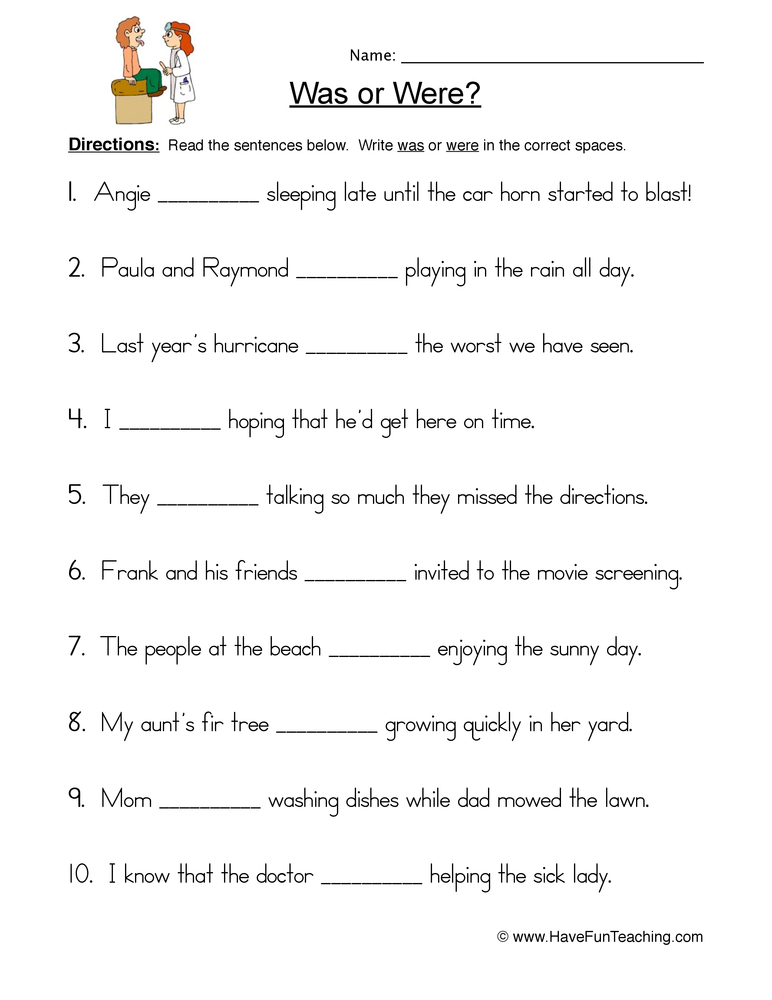
Was Were Fill in the Blank Worksheet
This Was Were Fill in the Blank Worksheet is a great way for students to practice conjugating the verb WAS. This worksheet includes four different WAS conjugations, so students can get plenty of practice.




22,661 resources
Explore sub-categories
17 sub-categories · 22,661 resources
This Was Were Fill in the Blank Worksheet is a great way for students to practice conjugating the verb WAS. This worksheet includes four different WAS conjugations, so students can get plenty of practice.

This worksheet is a great way for students to practice conjugating the verb "to be." It's perfect for helping students understand the different conjugations of the verb, and it's a great way to review for a test or quiz.
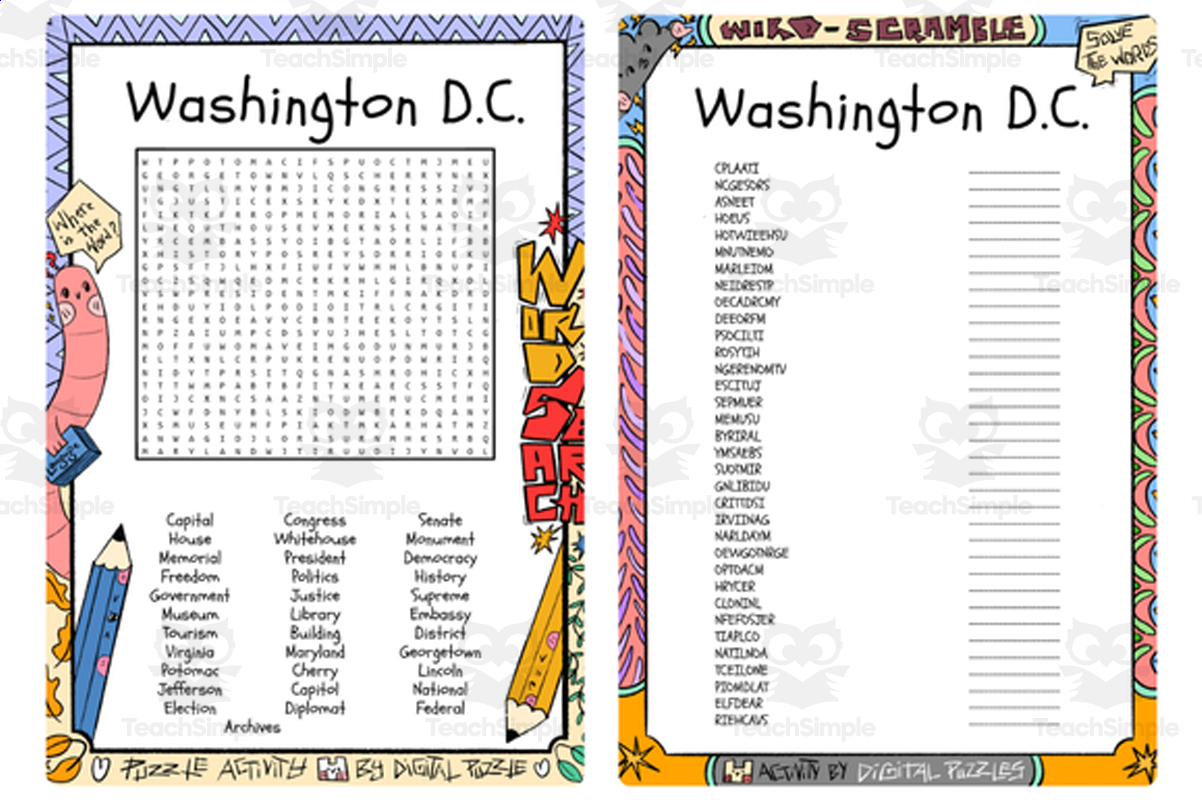
Word search & scramble puzzle worksheet activities for kids 2nd and 3rd grades to 4th and 5th grades, also solution for the puzzles is included ⭐ This document contains a word search and a word scramble activity.
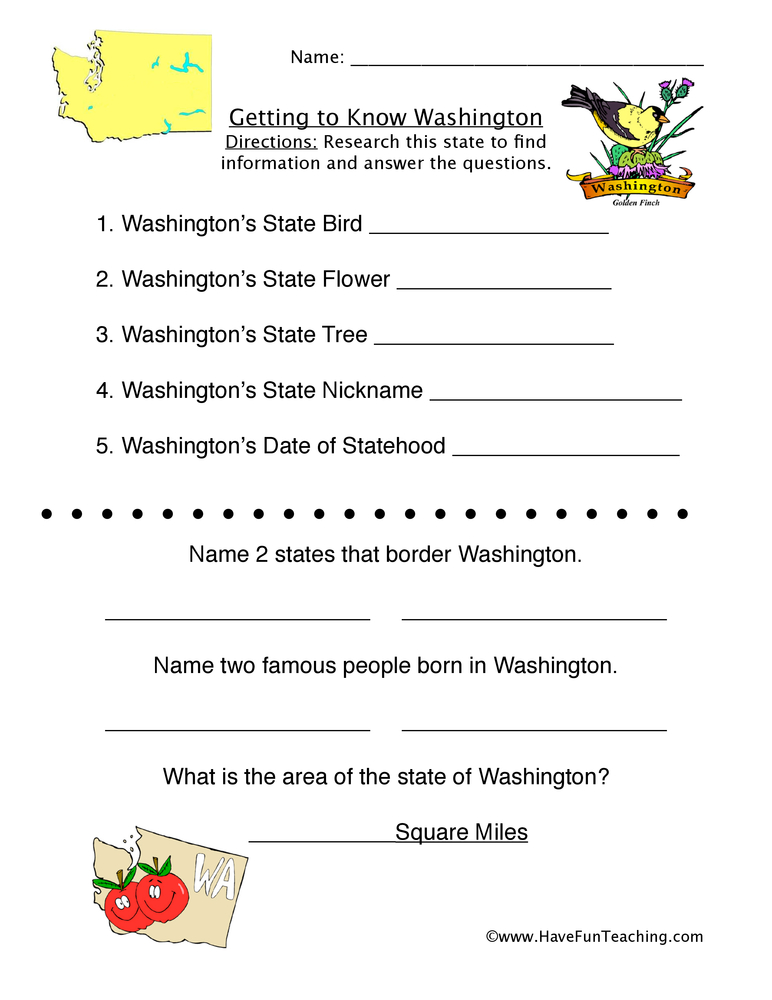
This Washington Worksheet is a great way for your students to organize and direct their research related to the state of Washington. This product is perfect for teachers who are looking for a way to help their students learn more about the…
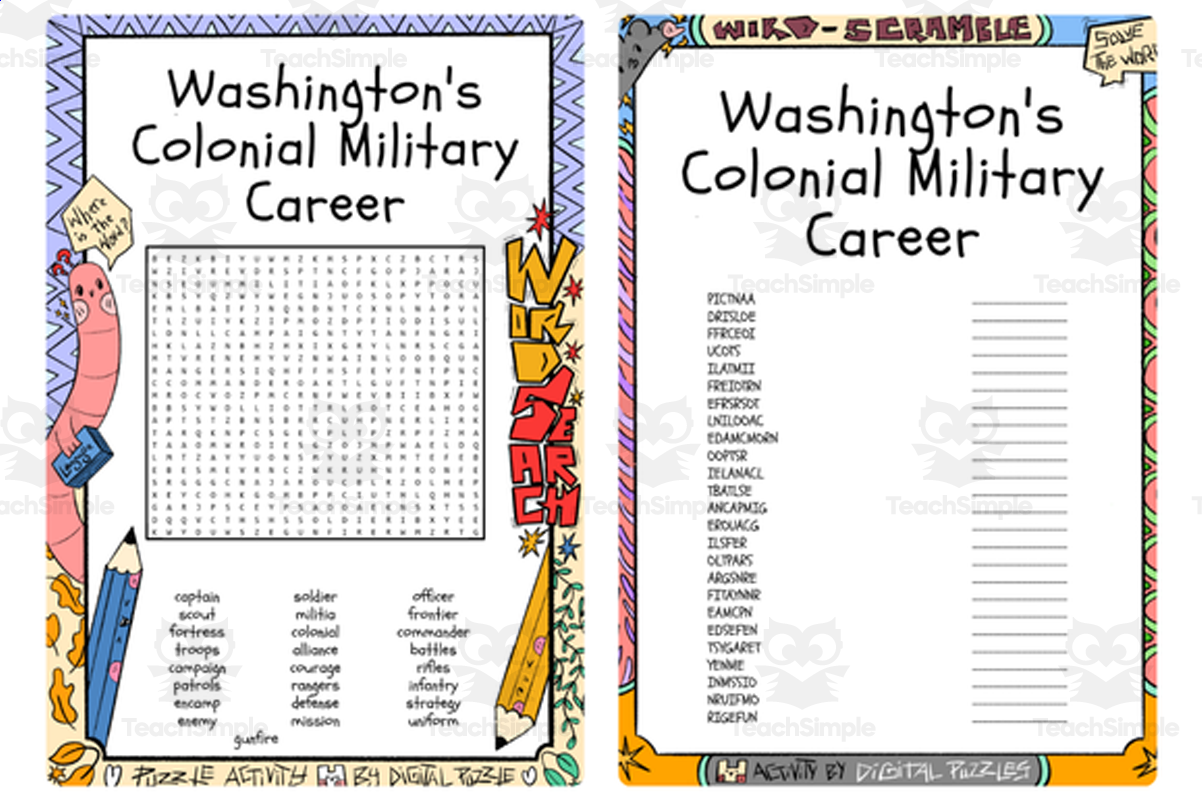
Word search & scramble puzzle worksheet activities for kids 2nd and 3rd grades to 4th and 5th grades, also solution for the puzzles is included ⭐ This document contains a word search and a word scramble activity.
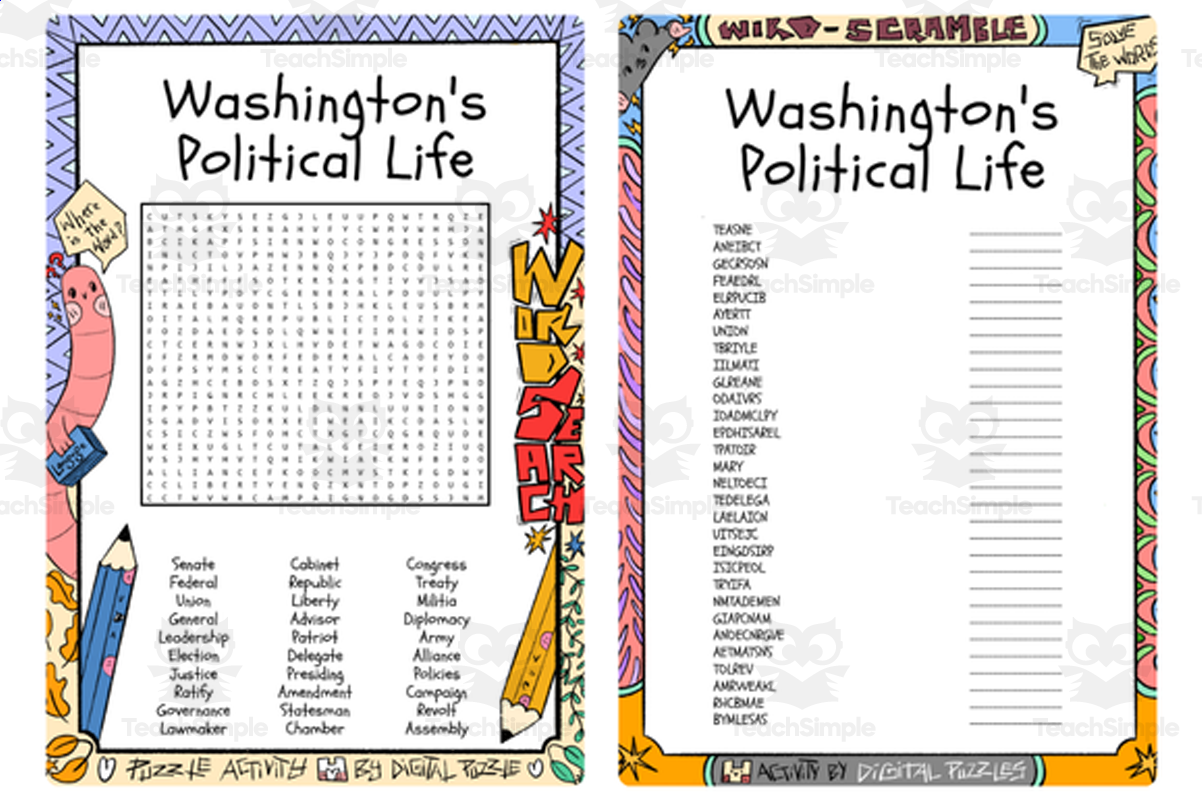
Word search & scramble puzzle worksheet activities for kids 2nd and 3rd grades to 4th and 5th grades, also solution for the puzzles is included ⭐ This document contains a word search and a word scramble activity.
A full workbook teaching waste-management concepts across 8 reading topics (What Is Waste?, Pre-Consumer Waste, Post-Consumer Waste, Packaging, Solid Waste Disposal, Toxic Waste, Pollution, Waste and the Ocean), with comprehension reading, hands-on activities, and assessment.
A single-topic 'chapter slice' workbook on Agricultural Waste, excerpted from the 'Waste Management: The Global View' series, providing a reading-comprehension passage plus hands-on activity, crossword, word search, and quiz on that one topic.
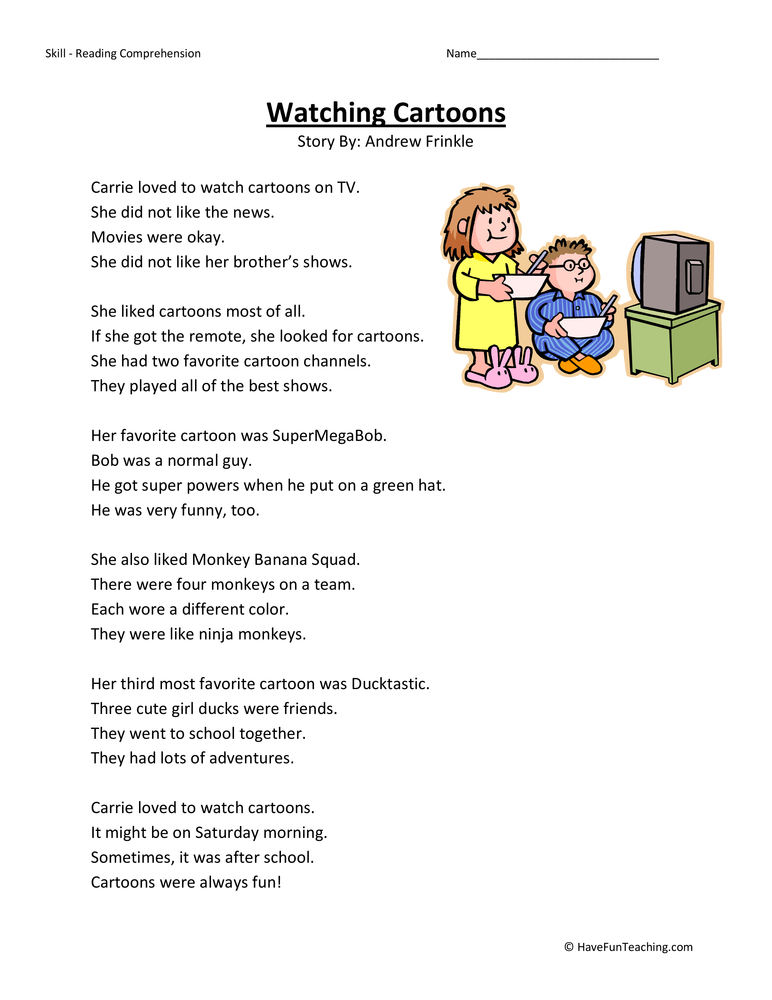
This Watching Cartoons Reading Comprehension Worksheet is a great way to help your students build their reading comprehension skills. The worksheet features a short passage about Carrie and her love for watching cartoons.
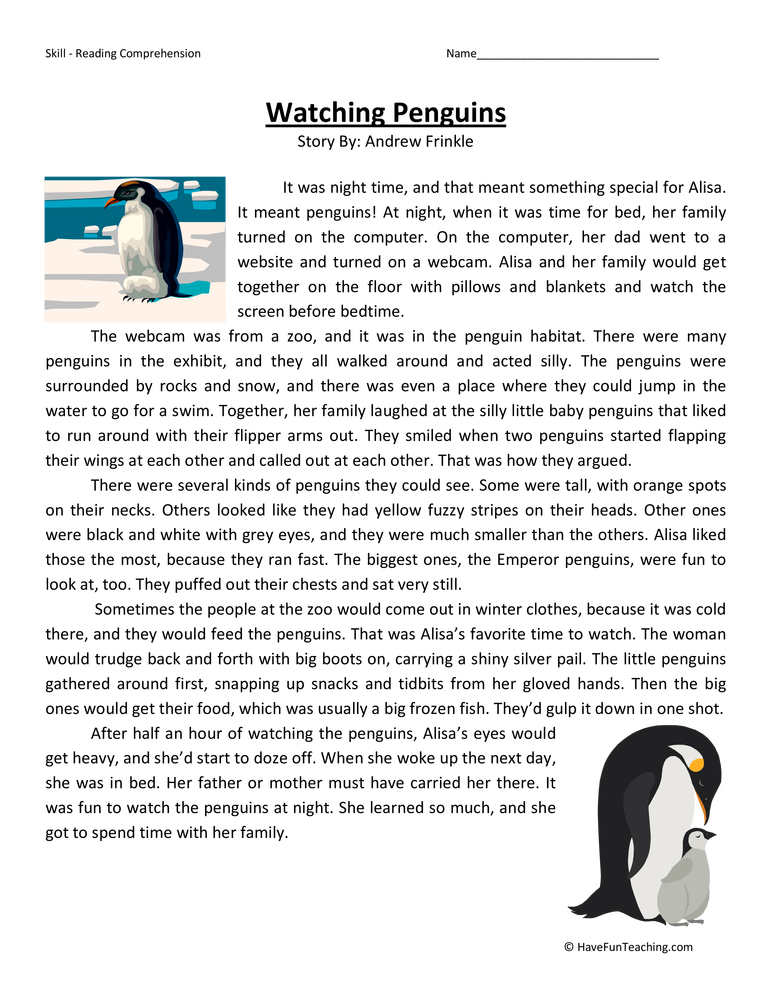
This Watching Penguins Reading Comprehension Worksheet is a great way for your students to build their reading comprehension skills. By reading about watching penguins on a webcam, they will be encouraged to think critically and ask…
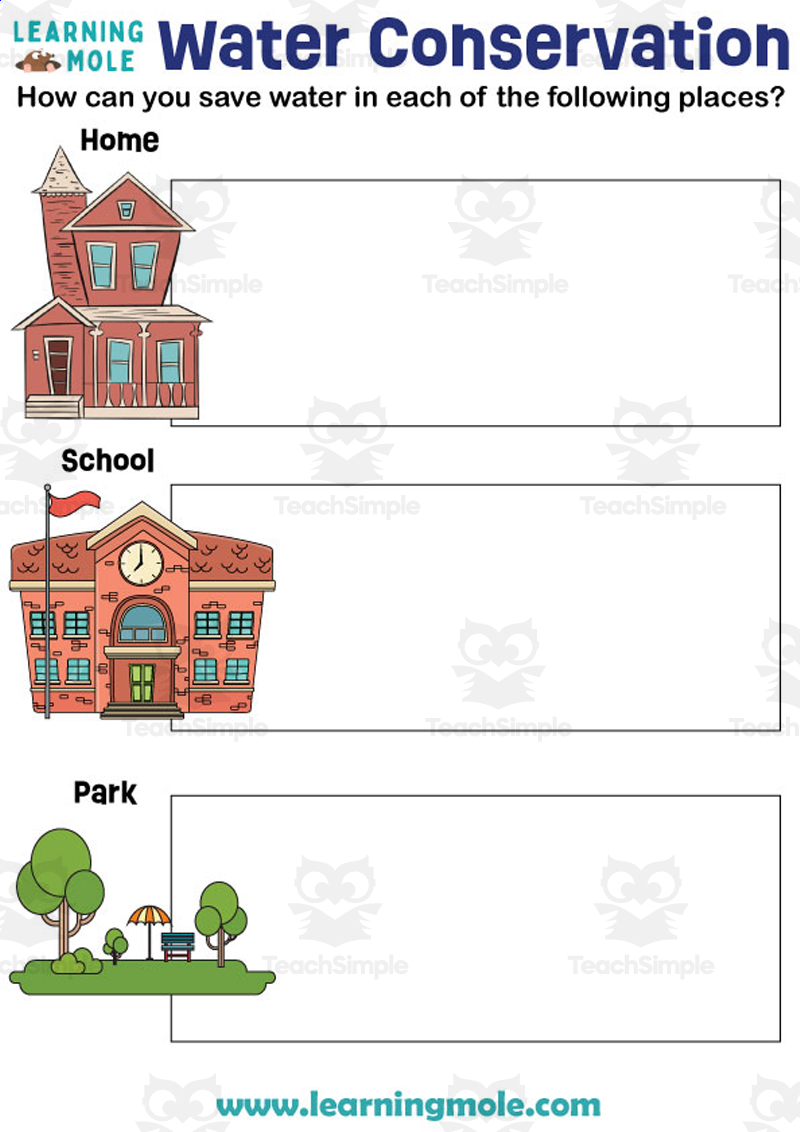
Activity Introduction An amazing activity designed for the students to learn more about STEM. Water Conservation Do you like STEM subjects? what is your favorite one? Have you ever tried to plant a seed? If yes, tell us more about it.

Consider practical ways to conserve water and protect clean-water supplies. Six prompts move between personal choices, home and school routines, community action, and future needs. Use the introduction to launch discussion, then have students develop an example that fits each setting rather than repeat the same response throughout.

This Water Cycle Experiment Worksheet is a great resource for students to use to conduct their own experiment on the water cycle. By doing this experiment, students will have a better understanding of how the water cycle works. This worksheet is a great tool for teachers to use in their classrooms.

This Water Cycle Worksheet is perfect for helping students label the water cycle diagram using arrows and key vocabulary words. This is a great resource for teachers who want to help their students better understand the water cycle.
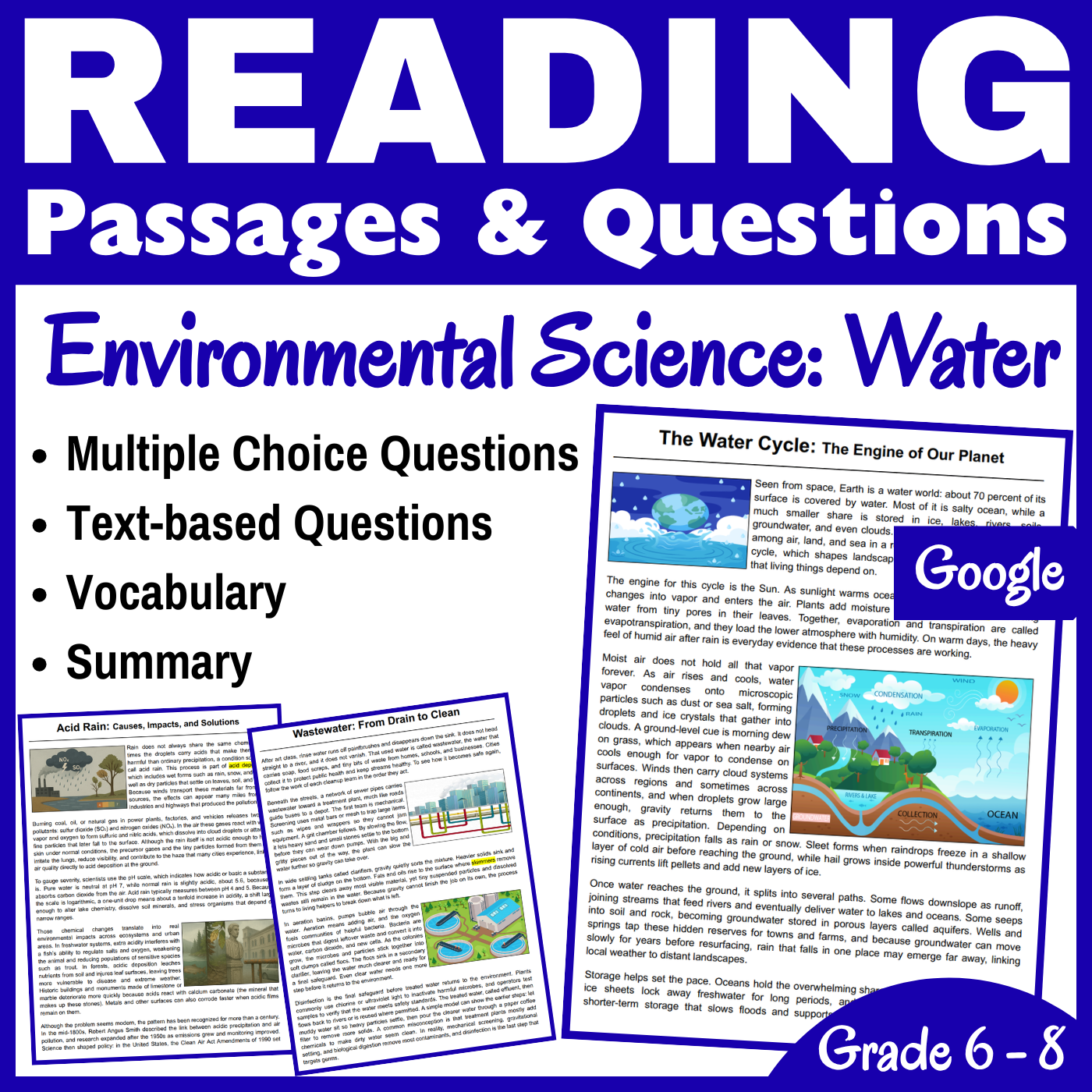
Water Cycle, Acid Rain, & Wastewater: Reading Comprehension Passages (Docs) This engaging collection of environmental science reading passages about Water Cycle, Acid Rain, & Wastewater is designed to bridge the gap between science and literacy through strengthening reading comprehension and sparking scientific curiosity in middle…
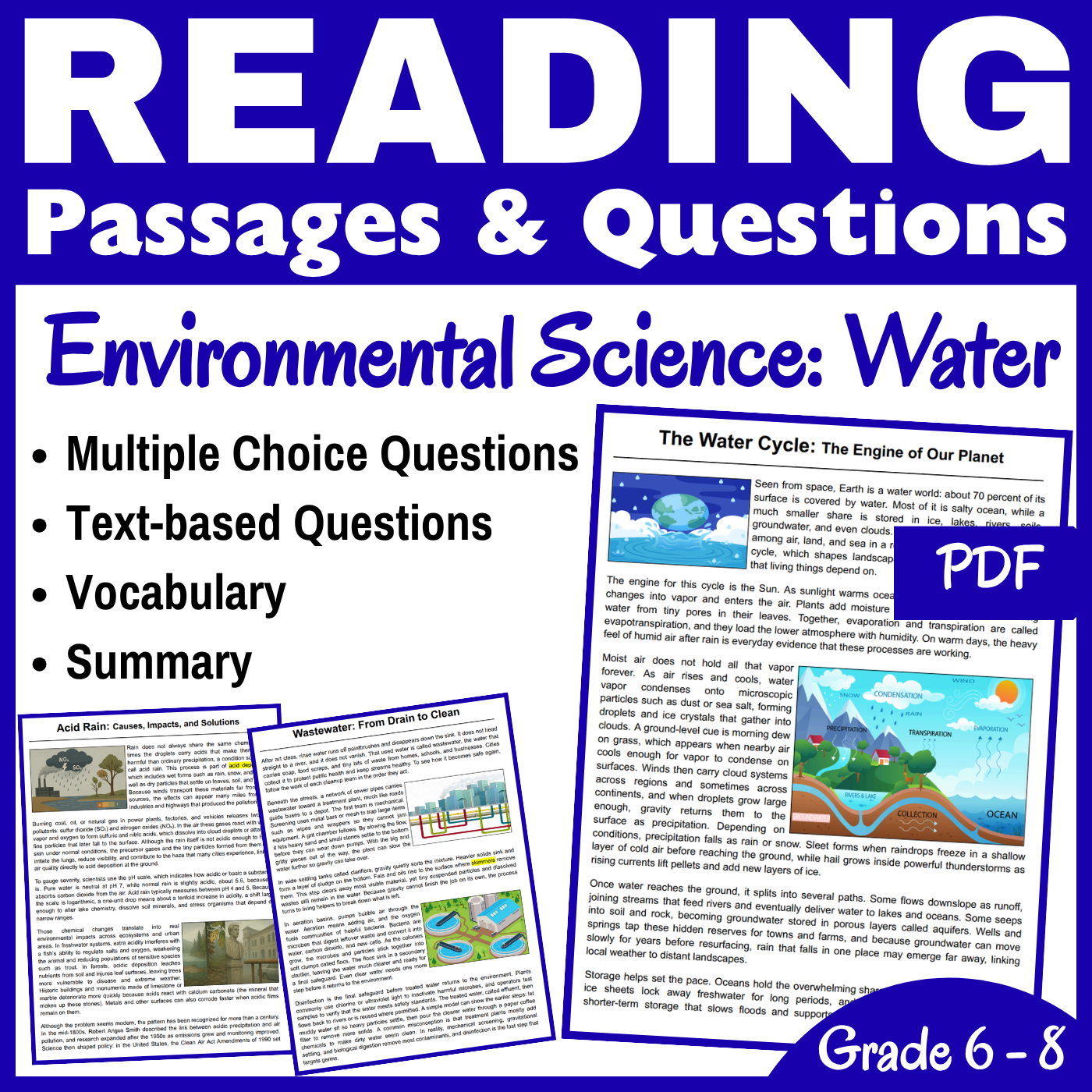
Connect environmental-water topics through readings about the water cycle, acid rain and wastewater treatment. Students answer comprehension questions, work with vocabulary and summarize processes or impacts using the text. Supplied answers support review; teachers can add a process diagram during reading to help learners trace the movement of water or pollutants through each system.
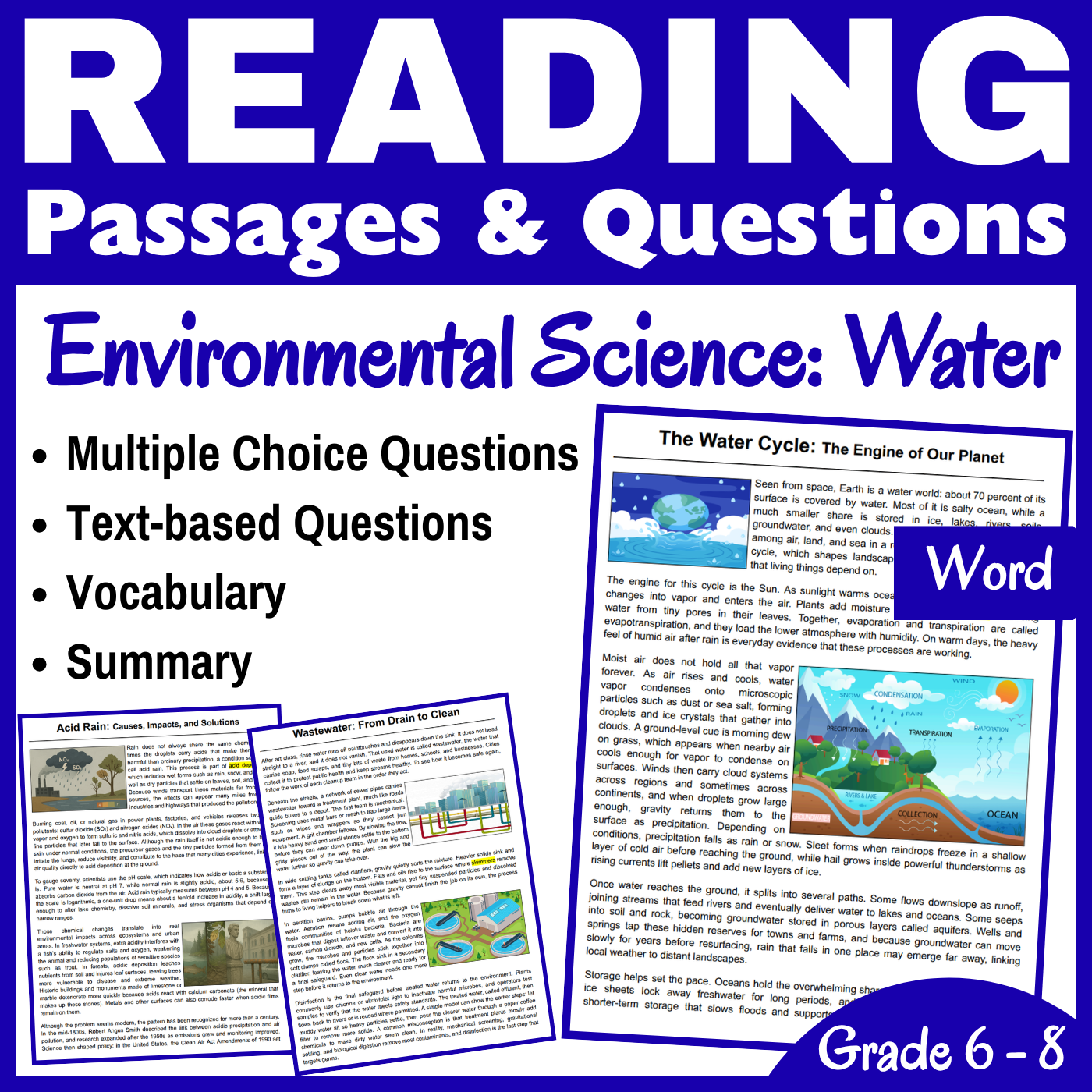
Water Cycle, Acid Rain, & Wastewater: Reading Comprehension Passages (Word) This very engaging collection of environmental science reading passages about Water Cycle, Acid Rain, & Wastewater is designed to bridge the gap between science…
 Free download
 This is a ONE PASSAGE SAMPLE. The following is the description of the FULL resource and the downloading links: Water Cycle, Acid Rain, & Wastewater: Reading Comprehension Passages (Docs) This very engaging collection of environmental…
 Free download
 This is a ONE PASSAGE SAMPLE. The following is the description of the FULL resource and the downloading links: Water Cycle, Acid Rain, & Wastewater: Reading Comprehension Passages (PDF) This very engaging collection of environmental…
 Free download
 This is a ONE PASSAGE SAMPLE. The following is the description of the FULL resource and the downloading links: Water Cycle, Acid Rain, & Wastewater: Reading Comprehension Passages (Word) This very engaging collection of environmental…
 Free download
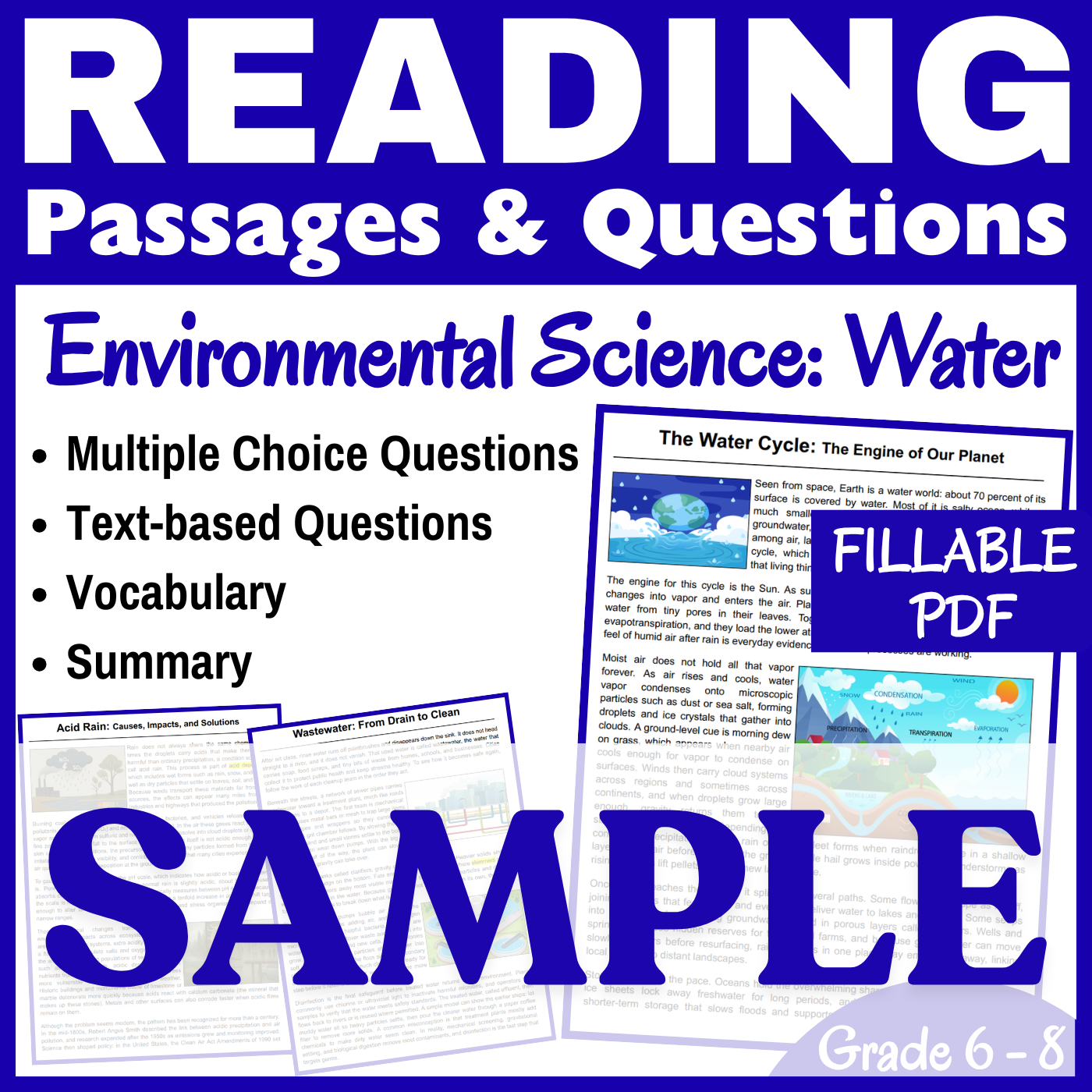
 This is a ONE PASSAGE SAMPLE. The following is the description of the FULL resource and the downloading links: Water Cycle, Acid Rain, and Wastewater: Reading Comprehension Passages and Questions (FILLABLE PDF) This very engaging and…

20-page interactive science journal for a Pre-K/Kindergarten/Grade 1 water unit, guiding students through 11 hands-on observation, prediction, and experiment activities about the properties of water and ice, using a know/wonder/learned journaling structure.

This Water Park Reading Comprehension Worksheet is perfect for helping your students build their reading comprehension skills. It's a great way for them to practice reading, while also learning about Jo and Tom's fun adventure to the water…

Discuss water pollution with a partner before recording ideas in writing. A short introduction leads into naming three possible causes and considering changes that could protect water. Use familiar examples to clarify the task, then ask students to connect each suggested change with a cause they identified. The page supports discussion and written explanation.