Stories & imagination
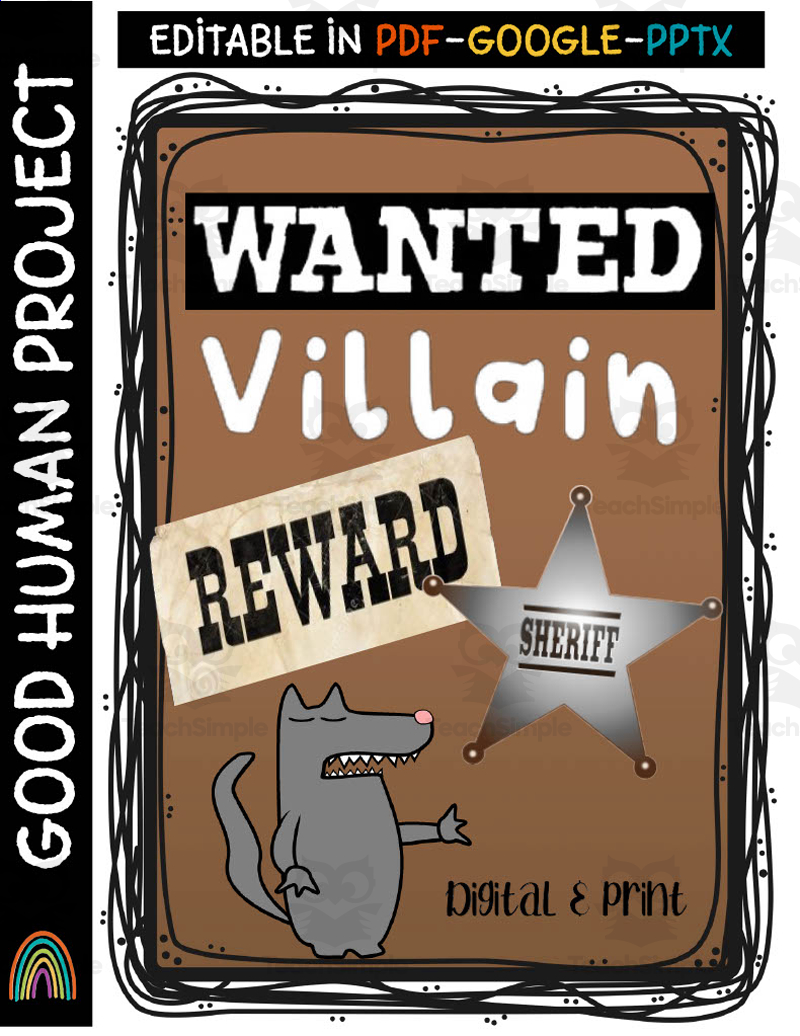
Three Little Pigs | Character Wanted Creative Writing
A creative-writing activity using a 'wanted poster' format to have students describe the villain (Big Bad Wolf) from Three Little Pigs.
Editable


Classroom resources
Browse by lesson focus
Choose the topic or kind of practice you need.
Showing 121–144 of 691 resources

 Show filters
A creative-writing activity using a 'wanted poster' format to have students describe the villain (Big Bad Wolf) from Three Little Pigs.

Provides a low-prep, reusable creative-writing framework using the 'Somebody Wants But So Then' (SWBST) story structure, themed around zoo animal character cards.
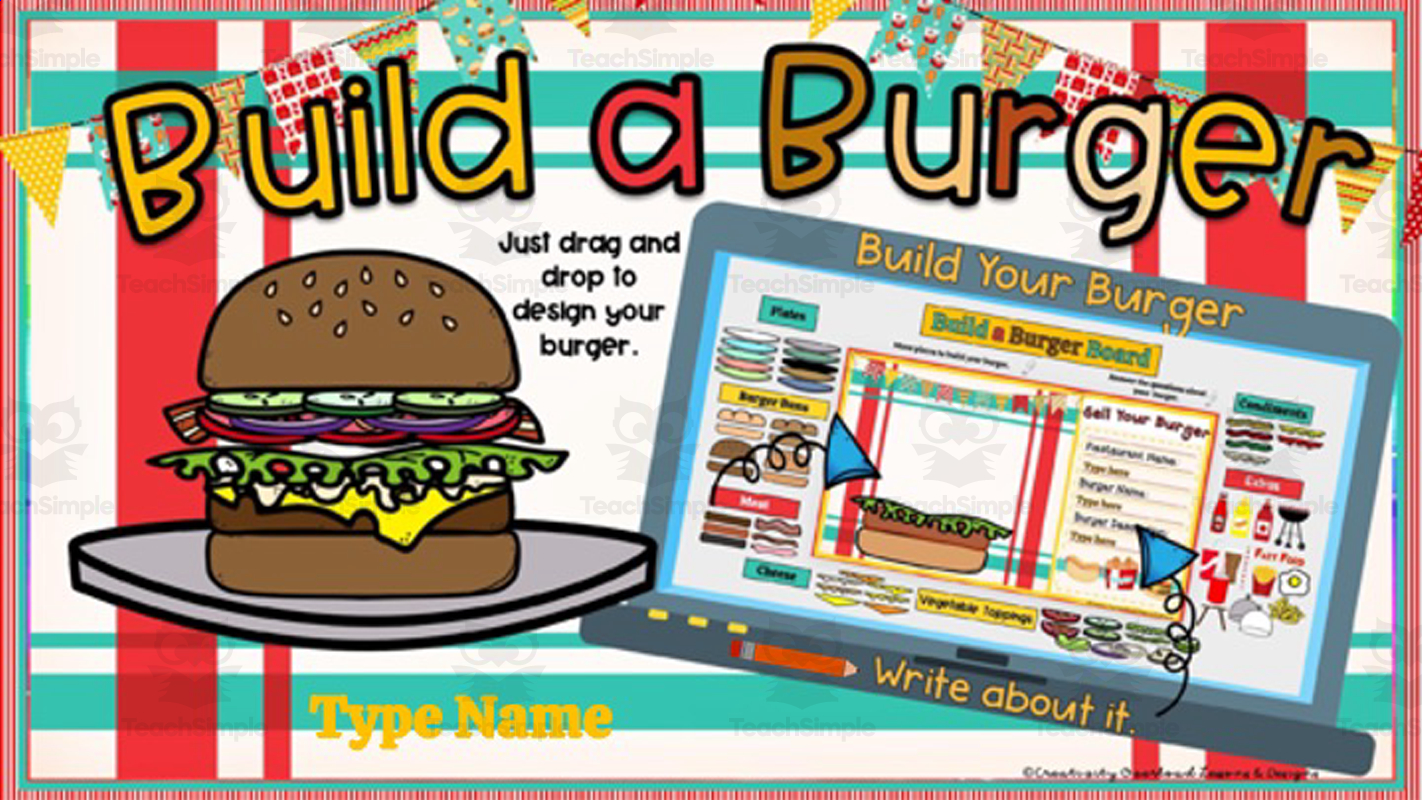
Digital art and creative writing activity where students design a burger and write a persuasive/descriptive advertisement-style paragraph about it.
A reproducible Milliken Publishing workbook of 26 themed creative-writing activities guiding grade 5-6 students through narrative, poetry, and persuasive/commercial writing forms.
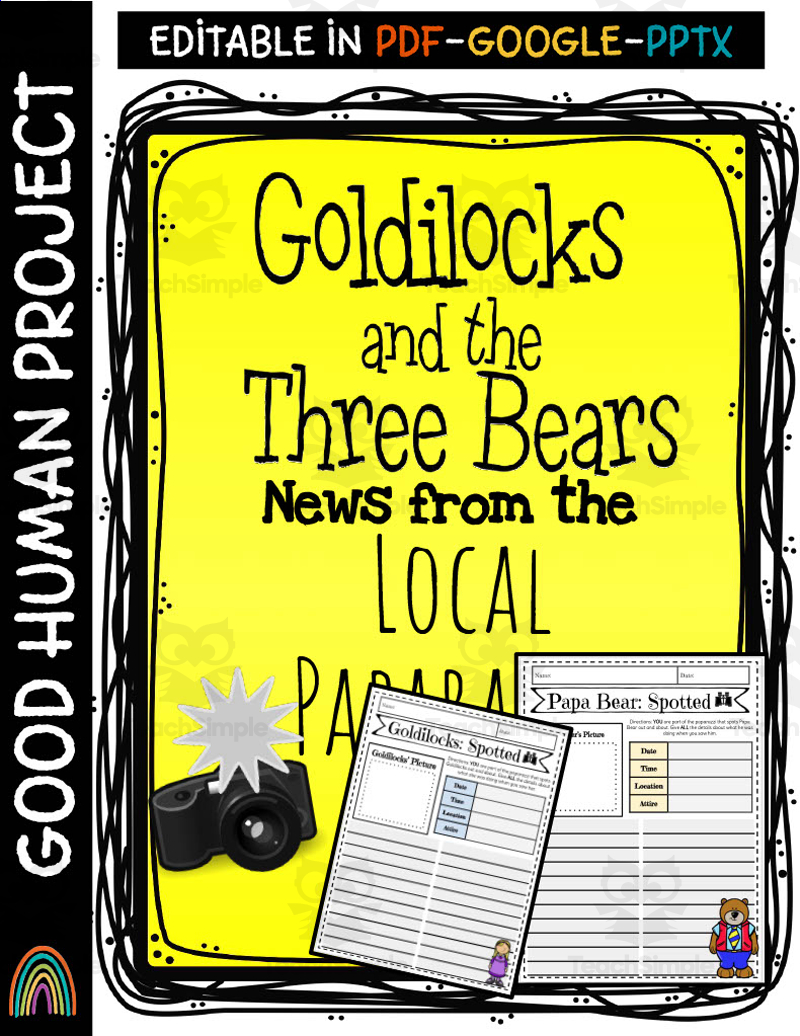
Creative-writing activity in which students role-play as paparazzi who 'spot' each Goldilocks character and report details about them.

A reproducible Milliken Publishing workbook of 26 themed creative-writing activities guiding grade 3-4 students through the writing process.
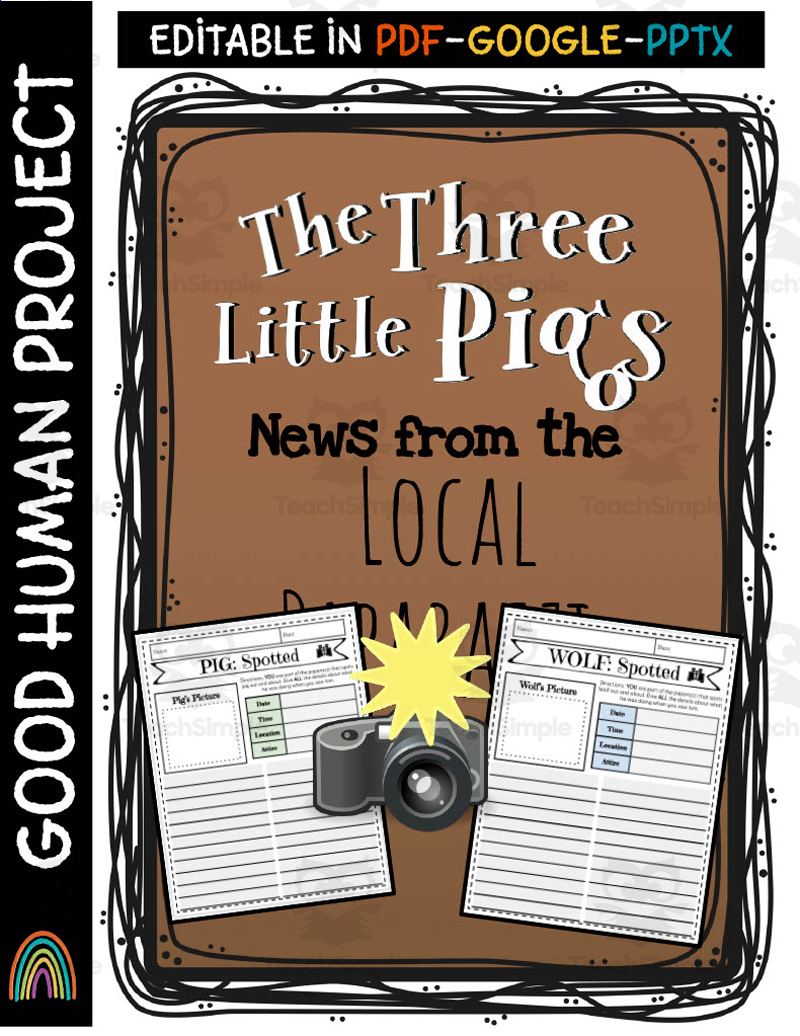
A creative writing activity in which students imagine themselves as paparazzi who spotted the Wolf and the Pig, and record descriptive details about the sighting.
A 114-page reproducible creative-writing book presenting an informal, personal-experience-based approach to teaching writing, with a large collection of open-ended writing topic activities.

A reproducible Milliken Publishing workbook of 26 themed creative-writing activities guiding grade 4-5 students through character development, descriptive writing, poetry, and imaginative writing techniques.
A creative writing activity that reframes the Hansel and Gretel story in a modern tabloid/paparazzi context to prompt imaginative narrative writing.

A reproducible Milliken Publishing workbook of themed creative-writing activities guiding grade 6-8 students through journal writing, poetry forms, characterization, and narrative/problem-solving writing.
A 112-page guide teaching poetic devices and forms (alliteration, hyperbole, metaphor, personification, concrete poetry, couplets, etc.) through explanation and writing activities, aligned to Common Core writing standards.

A creative-writing activity where students roll a die three times to select a character, setting, and problem, then plan and write their own story, optionally inspired by an included short story ('Three Free Wishes').

Prompt descriptive/creative writing inspired by If I Ran the Zoo.
A movie-study lesson plan/worksheet packet for the film Flora & Ulysses (2021), with 30 activities building reading comprehension, vocabulary, character analysis, theme analysis, data/graph interpretation, and creative writing skills.

A step-by-step storyboard planning guide, available as both printable and interactive Google Slides, that teaches students to plan a creative narrative by identifying its plot, setting, characters, conflict, and theme.

A creative writing/role-play activity where students act as paparazzi reporting on characters from Little Red Riding Hood.

A creative writing resource that models story-opening techniques with a jungle-themed mentor text, prompting students to write their own animal adventure story.
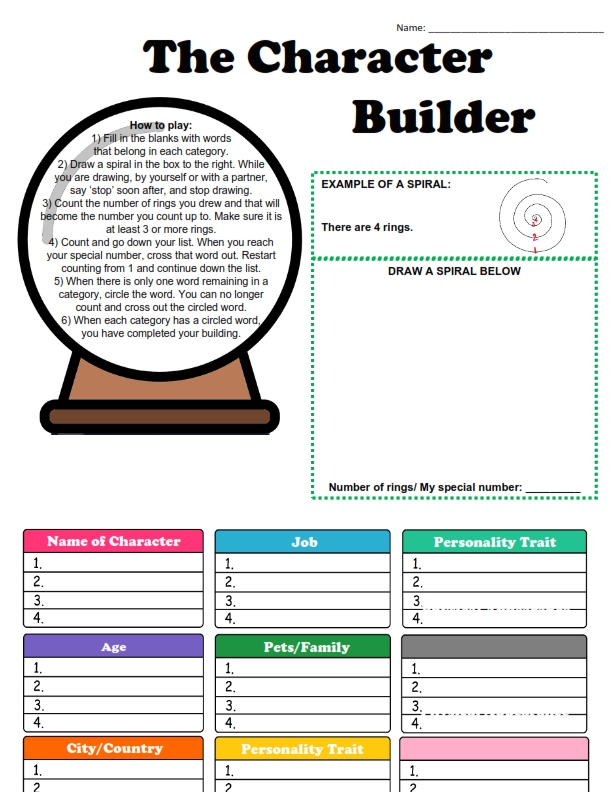
Give students a MASH-style (fold-and-predict/spiral counting) creative writing game to randomly generate character traits and story elements for use in creative writing.
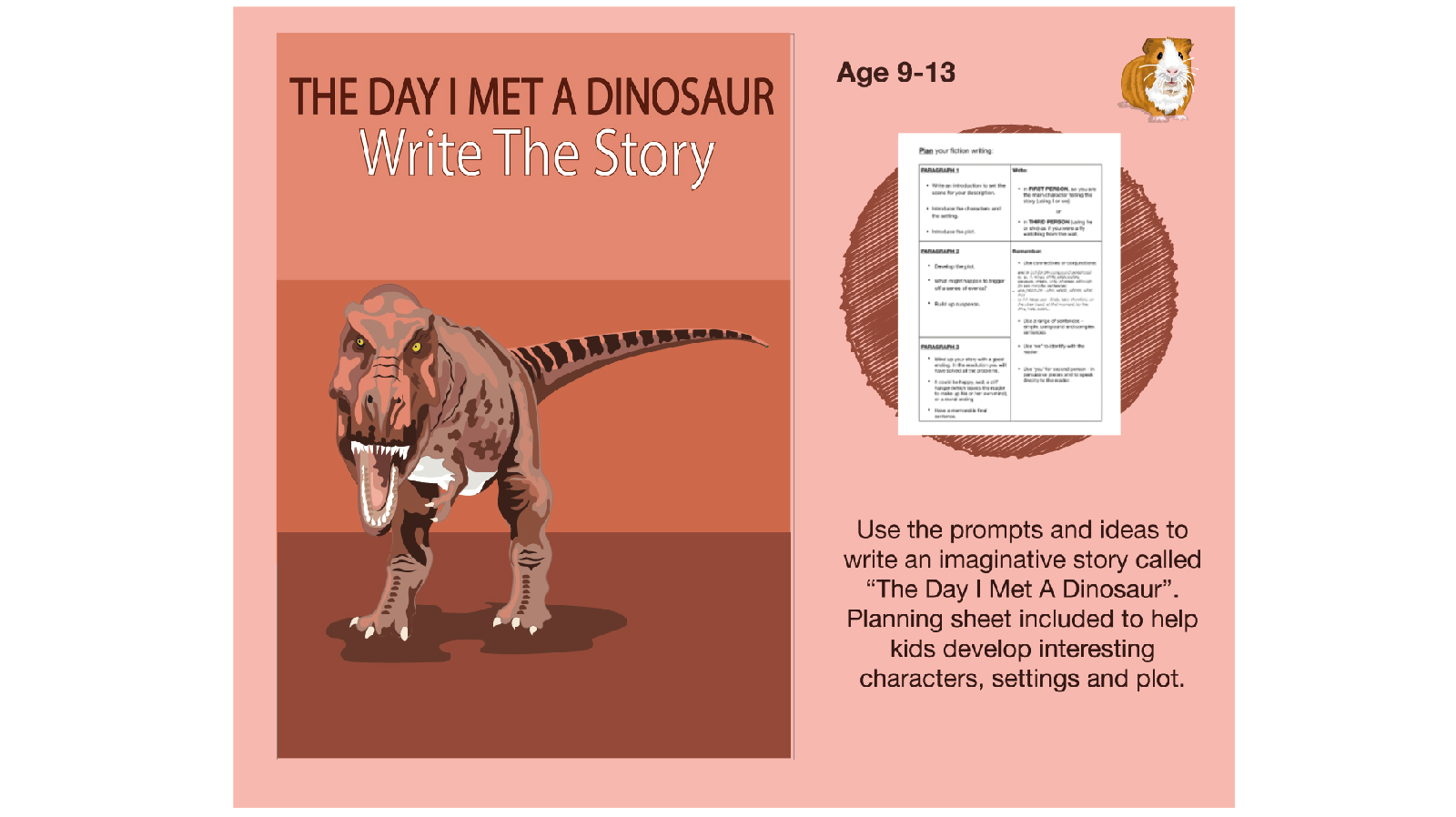
A creative-writing resource teaching narrative structure (introduction, middle, ending) through planning prompts, a fully written model story about meeting a dinosaur at a museum, and space for students to write their own version.
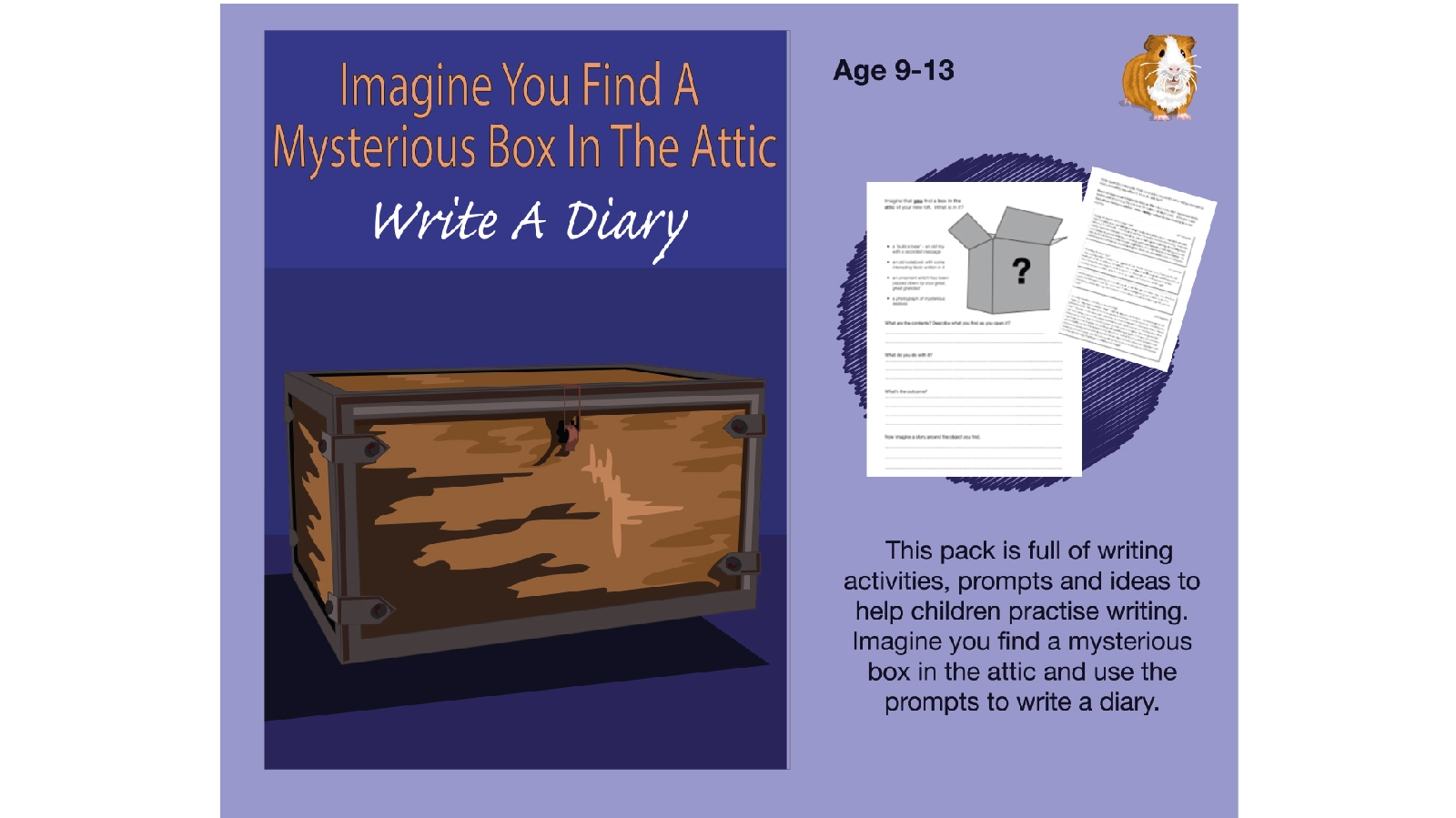
A creative writing worksheet that prompts students to imagine finding a mysterious box in an attic, then write a diary entry, using a provided sample diary (about a family's stressful moving day) as a model.
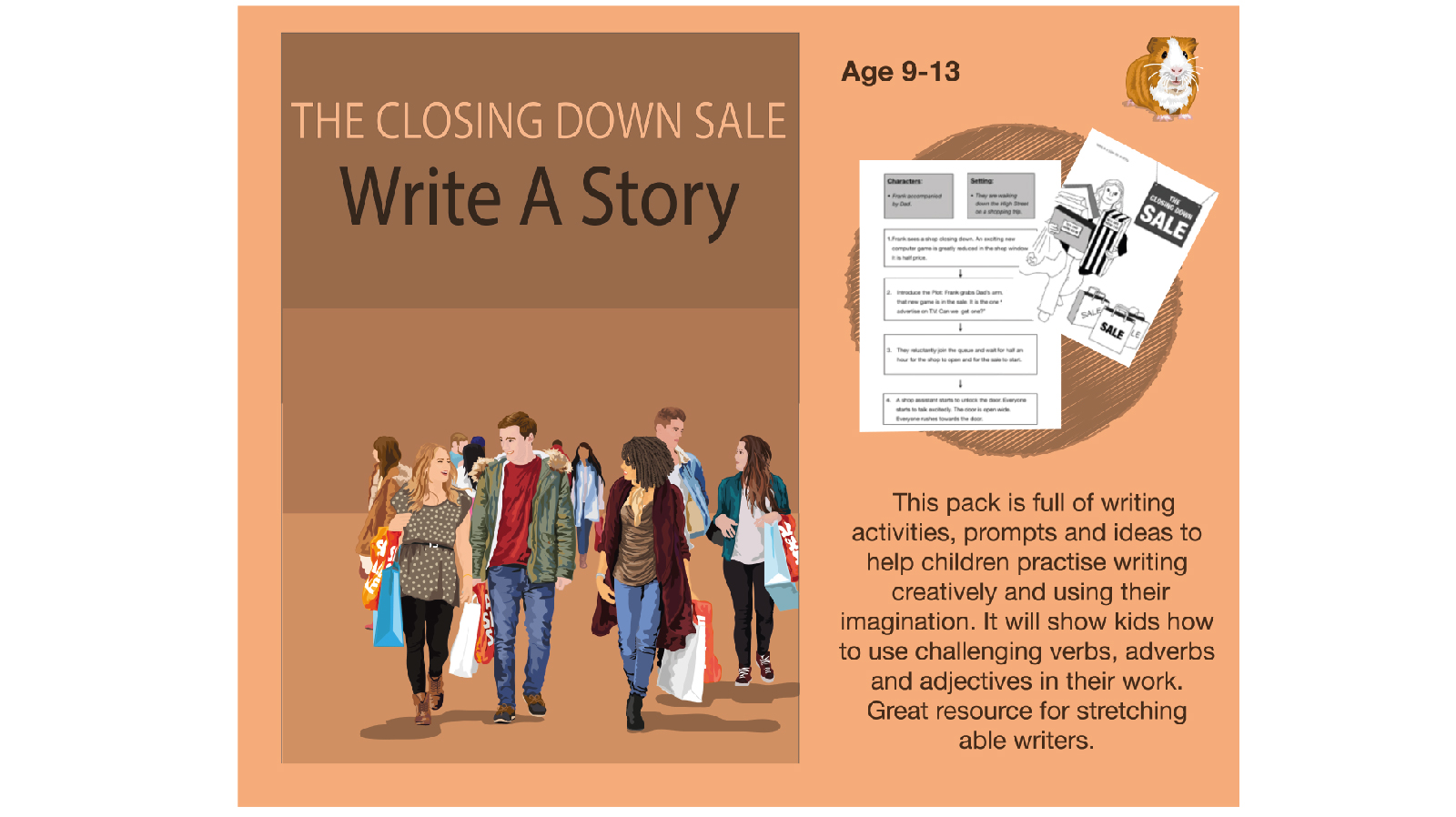
A creative-writing teaching resource that first reviews fiction-writing techniques (audience, genre, structure, dialogue, sentence variety) and then guides students through planning and writing an original story using a given character/setting/plot outline about a boy named Frank at a computer-game sale.
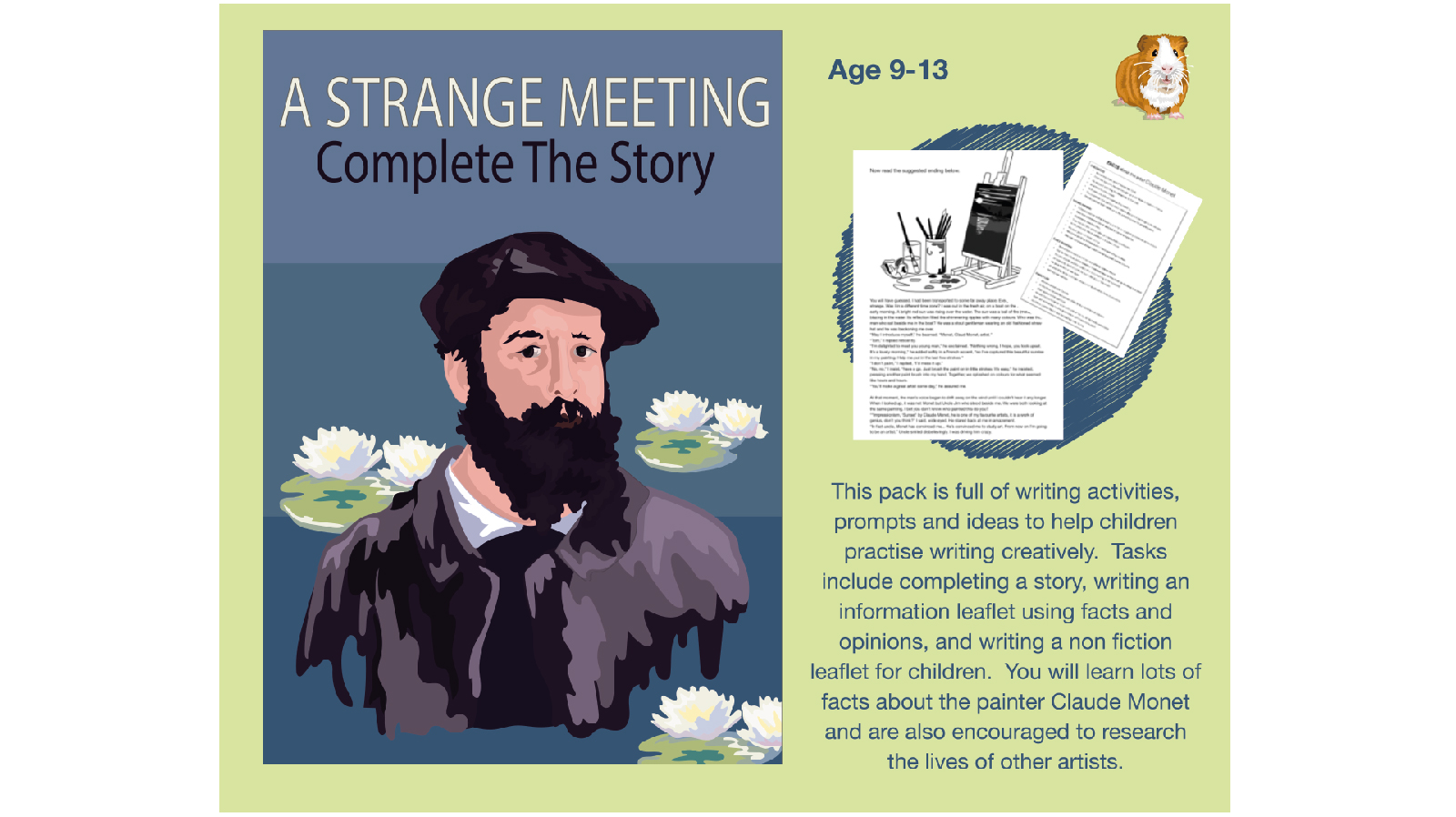
A creative-writing resource in which students read the opening of a story ('A Strange Meeting') about a boy transported into a Monet painting, write their own ending, compare it to a model ending, then use provided biographical facts about Claude Monet to write an information leaflet about the artist.
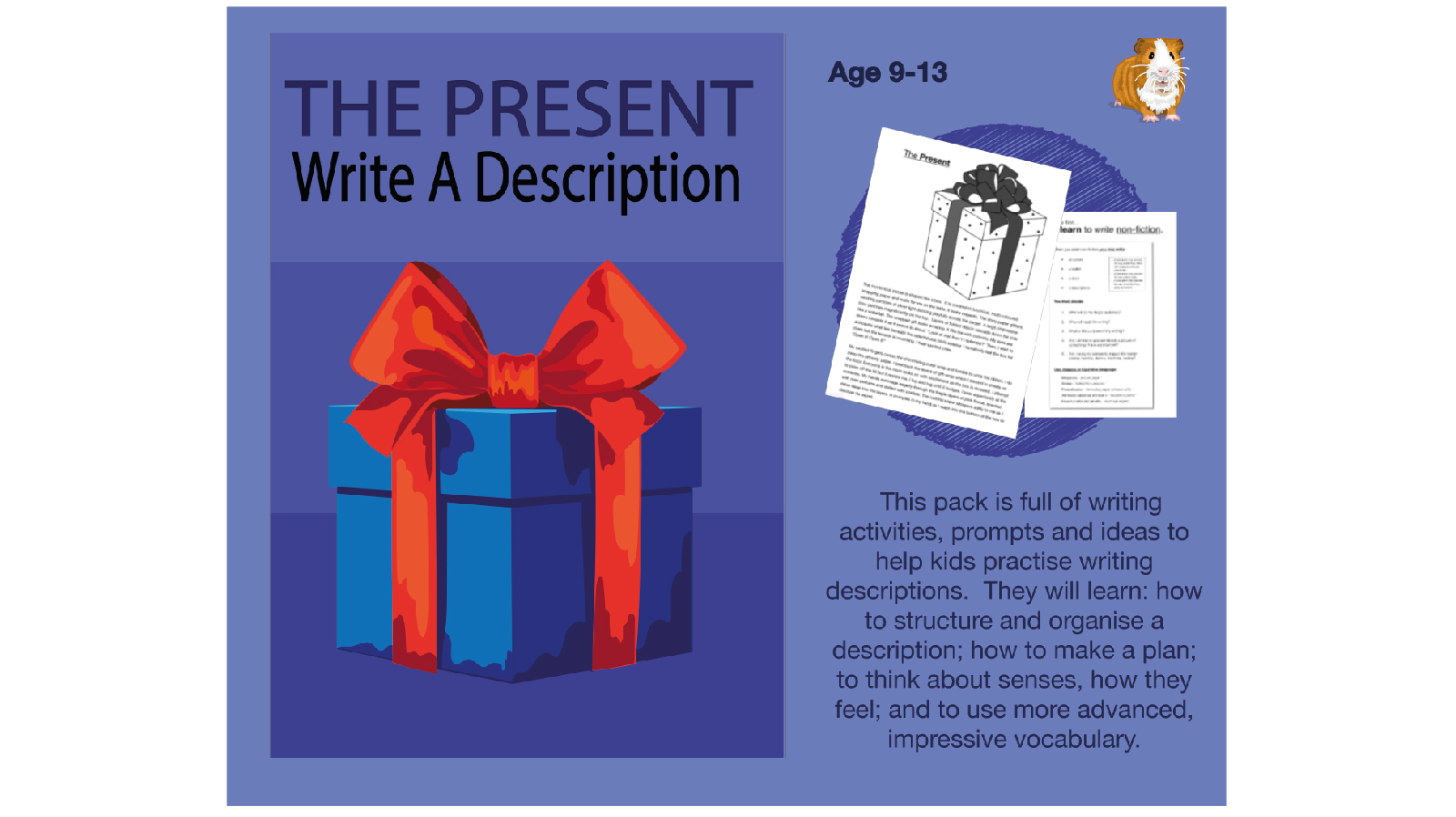
A creative-writing tutorial teaching students aged 9-13 to write a descriptive narrative about receiving and opening a present, using sensory detail and figurative language.