resources by type
resources by grade
resources by subject
other resources
Relevant
alt down
Any Time
alt down
filter by
alt down
All File Types
alt down
filter nav Show filters
Sort by: Relevant
CLEAR
resources by type
Activities
down arrow
Classroom Decor
down arrow
Teacher Tools
down arrow
Worksheets & Printables
up arrow
Drawing Templates & Outlines
Flashcards
Novel Studies
Parts of and Anatomy of
Task Cards
Word Problems
Writing Prompts
Worksheets
down arrow
Workbooks
resources by grade
Early Learning
down arrow
Pre-K
down arrow
Elementary
down arrow
Middle School
down arrow
High School
down arrow
Adult Education
Not Grade Specific
resources by subject
Creative Arts
down arrow
ELA
up arrow
Language Development
down arrow
Literature
down arrow
Reading
down arrow
Writing
down arrow
Holiday & Seasonal
down arrow
Life Studies
down arrow
Math
down arrow
P.E. & Health
down arrow
Social Studies
down arrow
Special Resources
down arrow
Science
down arrow
Foreign Languages
down arrow
Resources for Teachers
down arrow
other resources
Common Core
Homeschool Resources
down arrow
Montessori
Research
STEM
High School Science and Symbolism of Apples Reading Passage and Q & A

High School Science and Symbolism of Apples Reading Passage and Q & A
ELA, Reading, Reading Comprehension, Writing, Resources for Teachers, Research, Science, Biology, Life Sciences, High School, Homeschool Resources, Teacher Tools, Assessments, Lesson Plans, Literacy Readers, Worksheets & Printables, Writing Prompts

As a homeschool mom with a 9th grade daughter, I have learned that the best lessons come from resources that challenge students/homeschoolers both academically and personally. The Science and Symbolism of Apples Reading Passage, Q & A, and Note-Taking Sheets does exactly that. This unique resource explores the apple not just as a fruit, but as a symbol woven throughout history, literature, science, and culture. With rich reading material, 20 higher-level thinking questions with a guided answer key, and structured note-taking sheets, this set is designed to spark deep discussions and strengthen critical thinking. It is the kind of resource that invites your teen to look beyond the obvious and see how one simple fruit connects to science, history, mythology, and even technology. INCLUDED IN THIS RESOURCE: A detailed, multi-paragraph reading passage on the science and symbolism of apples 20 thought-provoking, higher-order questions A guided answer key with in-depth explanations 5 structured note-taking sheets for active reading TOPICS COVERED: The biology and genetics of apples The apple in mythology, literature, and religion The role of apples in ecology, trade, and global connections Nutrition, health, and ethical debates around biotechnology The Science and Symbolism of Apples Reading Passage, Q & A, and Note-Taking Sheets is more than just a one-time lesson. It is a springboard for critical conversations about science, history, and culture. If you are looking for something that goes beyond worksheets and helps your teen think in layered, meaningful ways, this resource will be a wonderful addition to your homeschool. If you and your students/homeschoolers enjoyed this resource, please leave a review. Thank you for your support! Tina – Big Easy Homeschooling Mom

Author Homeschool with Big Easy Homeschooling Mom

Rating

Tags Apple Lesson Plan, Symbolism Of Apples In Literature And Science Homeschool, Science And Literature Resource, , Apples Reading Passage, Apple Nutrition And Science, Homeschool Literature And Science Crossover Resource, Reading Comprehension With Symbolism Analysis Homeschool, , Teaching Symbolism Through Science In Homeschool, Homeschool Curriculum, Cultural And Scientific Symbolism Of Apples Homeschool

Electronics Reading Comprehension Passage - Cored Ed Encyclopedia

Electronics Reading Comprehension Passage - Cored Ed Encyclopedia
ELA, Reading Comprehension, Reading, Science, Technology, Pre-Reading, Language Development, Physics, Writing, Vocabulary, Grade 2, 3, 4, 5, Worksheets & Printables, Worksheets, Teacher Tools, Centers, Activities, Writing Prompts, Assessments, Quizzes and Tests, Quizzes, Lesson Plans

This electronics reading comprehension with lesson plan includes: Visualization (on the front cover) Start your lesson by taking a minute to think and share something about the topic. Read the script aloud (slowly), perhaps prepare some music or sound effects. Student close their eyes and let their imaginations wander. Students open their eyes, read the question aloud and give them a few minutes to complete. Ask a few students to share or keep answers until the end to compare with what they learn in the passage. Quick pause—thousands of Cored Education products are included with your TeachSimple membership. Download links and encyclopedia index available here. Pre-Reading Trivia Students will write down one thing they already know about the subject and then read five more facts and discuss. These facts are fun, and the students will enjoy learning about the subject before reading more. Give 1 minute for students to write what they already know (no pressure—best guess is fine). Read the five facts together. After each fact, do ask a student for their opinion, was it surprising? Set a purpose by asking students to highlight/underline one fact they want to learn more about during the reading. Reading Passage The text is a high-interest reading passage with set paragraphs, roughly three to four paragraphs long. It contains a variety of themes about the topic, anywhere from history to technology. The passage is between 250 and 350 words in length. First, ask students to look at the headings and see what they’ll learn about today. What do they know about the topic/heading? First read options: Teacher read-aloud (best for support). Partner reading (paragraph by paragraph). While reading, students underline important details, and vocabulary words they think may come up in the questions section. Mixed Questions The first question page contains four multiple-choice questions, each with a choice of four answers, and three written response questions that require a sentence or two from the student. Students complete the mcqs first independently, then review quickly as a class. For the 3 written responses, try to get students giving the answer with some form of evidence: “I think ___ because the text says ___.” If students get stuck, send them back to check the passage. Vocabulary Questions Practice seven key words from the text in this section across two activities. First section is scrambled words where students will unscramble three words given a clue for each. The second section is a word to meaning matching activity. Before starting, have some students read out words they underlined in the passage. Ask students to say the word and read aloud the sentence(s) around each word. Ask students to do scrambled words and the matching exercise in pairs then go through answers as a class. For the scrambled spelling task, get four pairs to come up to the board and write the words for extra practice with the other student reading out the clue. For the matching task, prompt students to give full sentences: “I matched ___ with ___ because ___.” Creative Writing In this question, the student will be required to write a five to eight sentence paragraph on a question related to the topic. Before starting, ask students write down 3 key ideas they are going to include in their piece. Ask students for ideas to share around the class to help those struggling. Pro writing expectations: 5–8 sentences At least 2 facts or details from the passage At least 2 vocabulary words from the previous page Students read their paragraphs while classmates listen for facts and vocabulary words. Extension Activities This page is optional for fast finishers or to take home. There are several activities, each one requiring a different skill. Do some, do none, do all, completely optional - but you will feel reassured knowing every possibility is planned for. Includes summary writting question and additional facts. Answer Key There are answers for the multiple-choice questions, written response questions have sample answers, vocabulary answers and if there is a summary question then a sample summary will be provided as well. Lesson Plan Included Customized lesson plan for this lesson is included. Lesson Snapshot Title: Electronics Genre: Nonfiction (Informational Text) Subject: Science (Technology/Physical Science) / Reading (Informational Text) Primary Topic: How electronics evolved to carry signals Estimated Guided Reading Level (A–Z): Q What This Lesson Teaches Best Defines electrons as tiny charged particles and explains that electronics guides them to carry a message (a “signal”), not just power devices. Traces a clear timeline of inventions : early radio parts → vacuum tubes → transistor (1947) → integrated circuits on silicon chips. Explains how devices can amplify signals (making a small signal stronger), using the vacuum tube and transistor examples. Shows how engineering changes over time led to smaller, more powerful technology , with chips holding millions (even billions) of transistors. Learning Goals Students will describe how electrons moving through wires can carry a message. Students will explain how vacuum tubes helped make radio signals stronger. Students will identify how the transistor differed from vacuum tubes (material used, size, and power use). Students will describe what integrated circuits are and why they allow devices to stay small. Students will summarize how electronics changed from early inventions to modern chips. Key Vocabulary From the Text electrons — tiny charged particles that move through wires. signal — a message carried through a device. vacuum — space with most air removed. transistor — a smaller part that can switch and amplify signals. semiconductor — a material used instead of a vacuum for a transistor. FULL CATALOG OF DOWNLOAD LINKS AND ENCYCLOPEDIA INDEX HERE

Author Cored Education

Rating

Tags Vocabulary, Reading Comprehension, Reading Passages, Lesson Plans, Ela Lesson Plans, Reading Comprehension Lesson Plans, Pre-reading, Science Lesson Plans, Technology, Physics

Narrative Writing Interactive Notebook: Exposition, Plot Elements

Narrative Writing Interactive Notebook: Exposition, Plot Elements
Common Core, ELA, Writing, Creative Writing, Homeschool Curriculum, Homeschool Templates, Grade 4, 5, 6, 7, 8, Worksheets & Printables, Worksheets, Writing Prompts

Writing a narrative that flows, engages, and actually makes sense can be a challenge for students. But with this Narrative Writing Interactive Notebook, they'll have everything they need to build a strong, structured, and creative story from start to finish—without the overwhelm! This fun and interactive resource walks students through the essential elements of storytelling using engaging templates, scaffolded activities, and creative prompts. Whether your students are budding authors or reluctant writers, this notebook will guide them step by step to writing narratives that captivate and impress—perfect for writing lessons, literacy centers, and state test prep. What’s Inside? 📖 Exemplar Narrative: "The Storm" – A laugh-out-loud model story that helps students break down narrative structure, character development, and plot elements. They’ll map out the key story elements for a deeper understanding. 📝 24 Multiple-Choice Comprehension Questions – Thought-provoking questions designed to help students analyze narrative structure, conflict, and resolution in a fun, engaging way. 📍 Story Map & Interactive Notebook Templates – No more "Where do I start?" moments! These step-by-step organizers walk students through: ✔ Exposition – Setting the stage for a great story ✔ Inciting Incident – The moment that changes everything ✔ Conflict – Every great story needs some drama! ✔ Rising Action – Pebble, Rock, Boulder method for gradual tension ✔ Climax – The big turning point! ✔ Falling Action & Resolution – Tying up loose ends for a satisfying ending 📌 Narrative Structure Guide – A quick-reference sheet to keep students on track while they write. ✍️ 19 Creative Narrative Writing Prompts – A collection of engaging, quirky, and fun prompts designed to fire up imaginations and get students excited about writing. 🔍 Cloze Writing Activity – Struggling writers? No problem! This scaffolded writing task breaks down narrative writing into manageable steps, guiding students through the process one piece at a time. 📊 Teacher Marking Rubrics (x2) & Student Self-Assessment Rubric – Grading made easy with clear criteria for structure, creativity, and engagement. Plus, a student self-assessment tool to encourage ownership of their writing. 🖊 Publishing Sheets – Lined sheets to give those final drafts a polished, professional look. 📸 Photos & Teacher’s Key – Includes photos of completed templates, assembly instructions, and detailed answers to comprehension questions for easy teacher implementation. Why You’ll Love This Resource ✨ Engages Every Student – Whether your students love writing or struggle to get started, the interactive format and scaffolded support make storytelling accessible to everyone. ✨ Takes the Guesswork Out of Teaching – With ready-to-go templates, organizers, and rubrics, you’ll have everything you need to guide your students from brainstorming to final draft—stress-free! ✨ Perfect for Writing Test Prep – Teach narrative writing that checks all the boxes—sizzling starts, structured conflict, clear resolution—while building confidence and fluency under timed conditions. Who’s It For? 📌 Upper elementary and middle school teachers looking to make narrative writing engaging, structured, and test-ready. 📌 Perfect for literacy centers, writing lessons, or full-class instruction. 📌 Great for state writing test prep, timed writing practice, or boosting storytelling skills in a fun, structured way! Your Students Will Learn How To: ✔ Analyze a narrative by answering 24 multiple-choice questions ✔ Map out a story’s structure using a Story Map ✔ Write sizzling starts that hook readers instantly ✔ Develop a well-structured story using the 7 key plot elements ✔ Practice timed writing to build fluency and confidence ✔ Edit and refine their work using the interactive notebook templates before publishing their final draft 📥 Download today and help your students craft stories that captivate, engage, and impress!

Author Teach2Tell

Tags Narrative Writing, Plot Elements, Element Of A Plot, Resolution Ending Of A Narrative, Narrative Test Prep, Writing Test Prep, State Writing Test Prep, Narrative Beginnings, Narrative Openers

Social Studies Reading Passages: Civic Action and Social Change (PDF)

Social Studies Reading Passages: Civic Action and Social Change (PDF)
ELA, Reading, Reading Comprehension, Strategies, Resources for Teachers, Social Studies, Sociology, Grade 6, 7, 8, 9, Writing Prompts, Worksheets & Printables, Centers, Activities, Teacher Tools, Assessments, Quizzes and Tests, Quizzes, Tests

Social Studies Reading Comprehension Passages and Questions: Civic Action and Social Change (PDF) This resource introduces a collection of Social Studies reading comprehension passages with questions about Civic Action and Social Change. The passages are carefully designed to bridge the gap between social studies and literacy through strengthening reading comprehension and sparking knowledge curiosity in middle school students. Each passage blends English Language Arts skills with accurate social studies content . Ideal for interdisciplinary learning in ELA and Social Studies. Suitable for Grade 9 review, too! What Is Included in this Collection? There are three informational passages (with full answer keys): The Butterfly Effect: Small Moments, Big Consequences From Piggy Bank to Profit: How Banks Make Money Work Flipping the Switch: A Student Campaign for Change For Each Passage, students will have multiple tasks to complete as follow: 5 multiple-choice questions targeting main idea, key details, inference, vocabulary in context, and use of evidence 5 vocabulary matching items with clear, student-friendly definitions 5 text-based questions that require citing specific lines or facts 1 summary prompt that asks students to condense central ideas accurately Available Formats for this Resource Fillable PDF Word Docs Google Docs FULL CATALOG OF DOWNLOADING LINKS HERE For more Social Studies Reading Passages, check the following Links: Ancient Civilizations PDF Fillable PDF Word Docs Google Docs Early Empires and Trade Networks PDF Fillable PDF Word Docs Google Docs The Founding of the United States PDF Fillable PDF Word Docs Google Docs Language, Culture, and Meaning PDF Fillable PDF Word Docs Google Docs Psychology and Society PDF Fillable PDF Word Docs Google Docs Global Festivals and Traditions PDF Fillable PDF Word Docs Google Docs Extreme Environments and People PDF Fillable PDF Word Docs Google Docs Food, Culture, and Preservation PDF Fillable PDF Word Docs Google Docs Global Food Customs PDF Fillable PDF Word Docs Google Docs Media, Communication, and Popular Culture PDF Fillable PDF Word Docs Google Docs Human Impact on the Environment PDF Fillable PDF Word Docs Google Docs Civic Action and Social Change PDF Fillable PDF Word Docs Google Docs Fashion, Society, and Power PDF Fillable PDF Word Docs Google Docs People, Places, and Unusual Histories PDF Fillable PDF Word Docs Google Docs Product Details Length: 15 pages total Grades: 6–8, also suitable for Grade 9 review Use cases: close reading, stations, homework, intervention, test prep, and sub plans Why Teachers Choose This Set Authentic social studies content paired with rigorous literacy practice Consistent task structure across all passages for easier planning and smoother student routines Clear, age-appropriate writing that builds confidence without oversimplifying Use this set to reinforce ELA skills in social studies, to add literacy to your lessons, and to support independent work. The passages strengthen main idea, evidence use, vocabulary in context, inference, cause and effect, and summary writing. With ready-to-use assessments and complete answer keys, you can provide focused practice that is simple to run and fast to review.

Author Middle & High School - CORED Education

Rating

Tags Middle School, Reading Comprehension, Reading Strategies, ELA, Centers, Reading Passage, Assessments, Vocabulary, Social Studies, Civic Action And Social Change

Benjamin Franklin: Social Studies Reading Comprehension Passage (Word)

Benjamin Franklin: Social Studies Reading Comprehension Passage (Word)
ELA, Reading, Reading Comprehension, Strategies, Resources for Teachers, Social Studies, History, History: USA, Grade 6, 7, 8, 9, Writing Prompts, Worksheets & Printables, Centers, Activities, Teacher Tools, Assessments, Quizzes and Tests, Quizzes, Tests

Benjamin Franklin: Social Studies Reading Comprehension Passage (Word) This resource introduces a unique Social Studies reading comprehension passage with questions about Benjamin Franklin and his Ideas. The passage is carefully designed to bridge the gap between social studies and literacy through strengthening reading comprehension and sparking knowledge curiosity in middle school students. Each passage blends English Language Arts skills with accurate social studies content . Ideal for interdisciplinary learning in ELA and Social Studies. Suitable for Grade 9 review, too! Student Tasks throughout the passage: 5 multiple-choice questions targeting the following skills: main idea, key details, inference, vocabulary in context, and use of evidence 5 vocabulary matching items with clear, student-friendly definitions 5 text-based questions that require citing specific lines or facts 1 summary prompt that asks students to condense central ideas accurately Full answer key for every section Available Formats for this Resource: PDF Fillable PDF Google Docs FULL CATALOG OF DOWNLOADING LINKS HERE Social Studies Reading Comprehension Collection Links: 1. Ancient Civilizations PDF Fillable PDF Word Docs Google Docs 2. Early Empires and Trade Networks PDF Fillable PDF Word Docs Google Docs 3. The Founding of the United States PDF Fillable PDF Word Docs Google Docs 4. Language, Culture, and Meaning PDF Fillable PDF Word Docs Google Docs 5. Psychology and Society PDF Fillable PDF Word Docs Google Docs 6. Global Festivals and Traditions PDF Fillable PDF Word Docs Google Docs 7. Extreme Environments and People PDF Fillable PDF Word Docs Google Docs 8. Food, Culture, and Preservation PDF Fillable PDF Word Docs Google Docs 9. Global Food Customs PDF Fillable PDF Word Docs Google Docs 10. Media, Communication, and Popular Culture PDF Fillable PDF Word Docs Google Docs 11. Human Impact on the Environment PDF Fillable PDF Word Docs Google Docs 12. Civic Action and Social Change PDF Fillable PDF Word Docs Google Docs 13. Fashion, Society, and Power PDF Fillable PDF Word Docs Google Docs 14. People, Places, and Unusual Histories PDF Fillable PDF Word Docs Google Docs Product Details: Length: 4 pages Grades: 6–8, also suitable for Grade 9 review Use cases: close reading, stations, homework, intervention, test prep, and sub plans Why Teachers Choose This Passage: Authentic social studies content paired with rigorous literacy practice Consistent task structure for easier planning and smoother student routines Clear, age-appropriate writing that builds confidence without oversimplifying Use this passage to reinforce ELA skills in social studies, to add literacy to your lessons, and to support independent work. The passage strengthens main idea, evidence use, vocabulary in context, inference, cause and effect, and summary writing. With ready-to-use assessments and complete answer keys, you can provide focused practice that is simple to run and fast to review.

Author Middle & High School - CORED Education

Rating

Tags Middle School, Reading Comprehension, Reading Strategies, ELA, Centers, Reading Passage, Assessments, Vocabulary, Social Studies, US HISTORY

Hot Air Balloons Reading Comprehension Passage - Cored Ed Encyclopedia

Hot Air Balloons Reading Comprehension Passage - Cored Ed Encyclopedia
ELA, Reading Comprehension, Reading, Pre-Reading, Language Development, History, Social Studies, Science, Physics, Technology, Grade 2, 3, 4, 5, Worksheets & Printables, Worksheets, Teacher Tools, Centers, Activities, Writing Prompts, Assessments, Quizzes and Tests, Quizzes, Lesson Plans

This hot air balloons reading comprehension with lesson plan includes: Visualization (on the front cover) Start your lesson by taking a minute to think and share something about the topic. Read the script aloud (slowly), perhaps prepare some music or sound effects. Student close their eyes and let their imaginations wander. Students open their eyes, read the question aloud and give them a few minutes to complete. Ask a few students to share or keep answers until the end to compare with what they learn in the passage. Quick pause—thousands of Cored Education products are included with your TeachSimple membership. Download links and encyclopedia index available here. Pre-Reading Trivia Students will write down one thing they already know about the subject and then read five more facts and discuss. These facts are fun, and the students will enjoy learning about the subject before reading more. Give 1 minute for students to write what they already know (no pressure—best guess is fine). Read the five facts together. After each fact, do ask a student for their opinion, was it surprising? Set a purpose by asking students to highlight/underline one fact they want to learn more about during the reading. Reading Passage The text is a high-interest reading passage with set paragraphs, roughly three to four paragraphs long. It contains a variety of themes about the topic, anywhere from history to technology. The passage is between 250 and 350 words in length. First, ask students to look at the headings and see what they’ll learn about today. What do they know about the topic/heading? First read options: Teacher read-aloud (best for support). Partner reading (paragraph by paragraph). While reading, students underline important details, and vocabulary words they think may come up in the questions section. Mixed Questions The first question page contains four multiple-choice questions, each with a choice of four answers, and three written response questions that require a sentence or two from the student. Students complete the mcqs first independently, then review quickly as a class. For the 3 written responses, try to get students giving the answer with some form of evidence: “I think ___ because the text says ___.” If students get stuck, send them back to check the passage. Vocabulary Questions Practice seven key words from the text in this section across two activities. First section is scrambled words where students will unscramble three words given a clue for each. The second section is a word to meaning matching activity. Before starting, have some students read out words they underlined in the passage. Ask students to say the word and read aloud the sentence(s) around each word. Ask students to do scrambled words and the matching exercise in pairs then go through answers as a class. For the scrambled spelling task, get four pairs to come up to the board and write the words for extra practice with the other student reading out the clue. For the matching task, prompt students to give full sentences: “I matched ___ with ___ because ___.” Creative Writing In this question, the student will be required to write a five to eight sentence paragraph on a question related to the topic. Before starting, ask students write down 3 key ideas they are going to include in their piece. Ask students for ideas to share around the class to help those struggling. Pro writing expectations: 5–8 sentences At least 2 facts or details from the passage At least 2 vocabulary words from the previous page Students read their paragraphs while classmates listen for facts and vocabulary words. Extension Activities This page is optional for fast finishers or to take home. There are several activities, each one requiring a different skill. Do some, do none, do all, completely optional - but you will feel reassured knowing every possibility is planned for. Includes summary writting question and additional facts. Answer Key There are answers for the multiple-choice questions, written response questions have sample answers, vocabulary answers and if there is a summary question then a sample summary will be provided as well. Lesson Plan Included Customized lesson plan for this lesson is included. Lesson Snapshot Title: Hot Air Balloons Genre: Nonfiction (informational text) Subject: Science (flight/forces) Primary Topic: How hot air balloons rise and early ballooning history Estimated Guided Reading Level (A–Z): Q What This Lesson Teaches Best Explains the key science idea that warm air rises and connects it to how a hot air balloon works. Builds historical understanding through a short timeline (1780s France experiments; June/September/November 1783 flights; return in the late 1950s–1960). Introduces main balloon parts and functions (envelope, basket, propane burner, valve) and how they affect rising/sinking. Clarifies how balloons travel (they can’t steer like airplanes; changing height helps catch winds moving different ways). Shows how improved materials/design (nylon fabric and powerful propane burners) helped ballooning become a sport and celebration again. Learning Goals Students will explain why warm air helps a hot air balloon rise using details from the passage. Students will identify the Montgolfier brothers and describe what the crowd in Annonay saw on June 4, 1783. Students will describe what happened at the Palace of Versailles on September 19, 1783. Students will describe the jobs of the envelope, propane burner, and valve in a modern balloon. Students will explain how a balloon can travel in different directions by changing height. Students will explain how Ed Yost helped ballooning return in the late 1950s and what happened in 1960. Key Vocabulary From the Text experiments — tests to find out if something works. envelope — big fabric balloon bag that fills with heated air. propane — fuel used to make the burner’s flame. valve — opening that lets hot air out. redesign — change how something is made to improve it. FULL CATALOG OF DOWNLOAD LINKS AND ENCYCLOPEDIA INDEX HERE

Author Cored Education

Rating

Tags Vocabulary, Reading Comprehension, Reading Passages, Lesson Plans, Ela Lesson Plans, Reading Comprehension Lesson Plans, Pre-reading, Science Lesson Plans, Physics, Technology

Life Science Reading Passage: The Dinosaur Tyrannosaurus rex (Docs)

Life Science Reading Passage: The Dinosaur Tyrannosaurus rex (Docs)
Science, ELA, Reading, Reading Comprehension, Strategies, Resources for Teachers, Life Sciences, Animals, Biology, Grade 6, 7, 8, 9, Writing Prompts, Worksheets & Printables, Centers, Activities, Teacher Tools, Assessments, Quizzes and Tests, Quizzes, Tests

Life Science Reading Comprehension Passage and Questions: The Dinosaur Tyrannosaurus rex (Docs) This very engaging science reading passage about Tyrannosaurus rex and how scientists use fossils to understand how it lived. It explains what fossils are, where and when T. rex lived, and what fossil evidence reveals about its size, teeth, skull, movement, speed, diet, hunting, and scavenging. It also shows how modern tools, such as CT scans, imaging, computer simulations, and coprolites , help paleontologists build a clearer picture of T. rex as a powerful predator from the late Cretaceous period. This passage is designed to bridge the gap between science and literacy through strengthening reading comprehension and sparking scientific curiosity in middle school students. The passage blends English Language Arts skills with accurate science content that supports NGSS classroom practice. Ideal for interdisciplinary learning in ELA and Science. Suitable for Grade 9 review, too! Student Tasks for The Passage: 5 multiple-choice questions targeting main idea, key details, inference, vocabulary in context, and use of evidence 5 vocabulary matching items with clear, student-friendly definitions 5 text-based questions that require citing specific lines or facts 1 summary prompt that asks students to condense central ideas accurately Full answer key for every section Available Formats for this Resource PDF Fillable PDF Word Docs FULL CATALOG OF DOWNLOADING LINKS HERE Product Details Length: 5 pages total Grades: 6–8, also suitable for Grade 9 review Use cases: close reading, stations, homework, intervention, test prep, and sub plans Standards support: reinforces informational-text skills and supports NGSS-style sense making through observation, modeling, and clear use of claim, evidence, and reasoning Why Teachers Choose This Set Authentic science content paired with rigorous literacy practice Consistent task structure across all passages for easier planning and smoother student routines Clear, age-appropriate writing that builds confidence without oversimplifying Other Science Reading Collections you May find in the store: 1. Astronomy & Space Science 2. Volcanoes, Rocks, & Mountains 3. Rock Cycle, Soil, & Sinkholes 4. Mars, Glaciers, & Antarctica 5. Water Cycle, Acid Rain, & Wastewater 6. Insects, Animals, & Ecosystems 7. Bioluminescence & Insects 8. Animal Skin, Cats, & T. Rex 9. Human Body and Senses 10. Health & Applied Bioscience 11. Waves, Light, & Imaging 12. Electricity & Energy 13. Motion & Materials 14. Chemistry and Materials Science Use this set to reinforce ELA skills in science, to add literacy to your lessons, and to support independent work. The passages strengthen main idea, evidence use, vocabulary in context, inference, cause and effect, and summary writing. With ready-to-use assessments and complete answer keys, you can provide focused practice that is simple to run and fast to review.

Author Middle & High School - CORED Education

Rating

Tags Middle School, Reading Comprehension, Reading Strategies, ELA, Centers, Reading Passage, Assessments, Vocabulary, Life Science, The Dinosaur Tyrannosaurus Rex

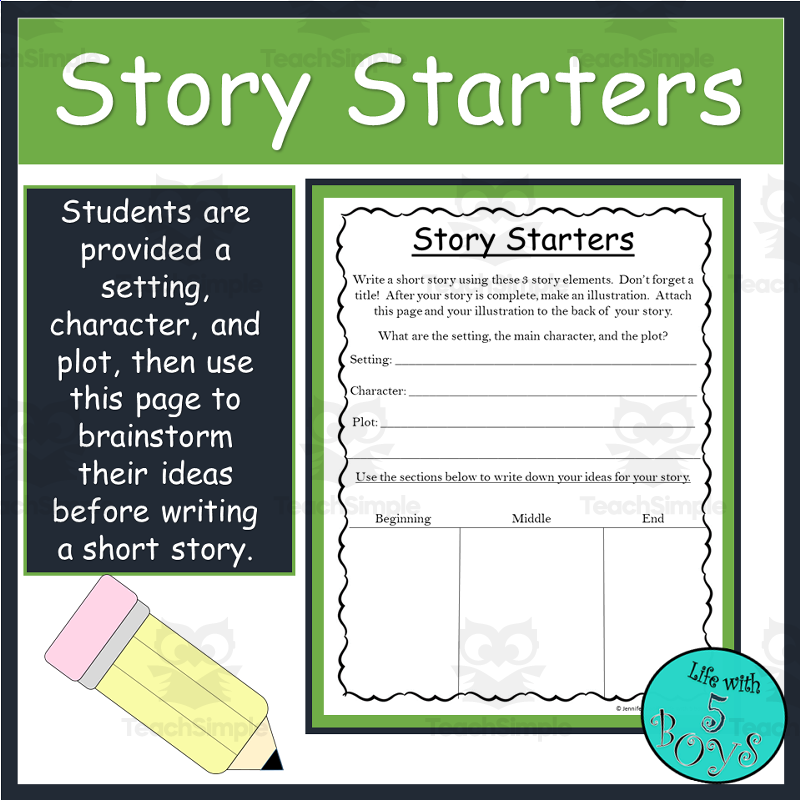
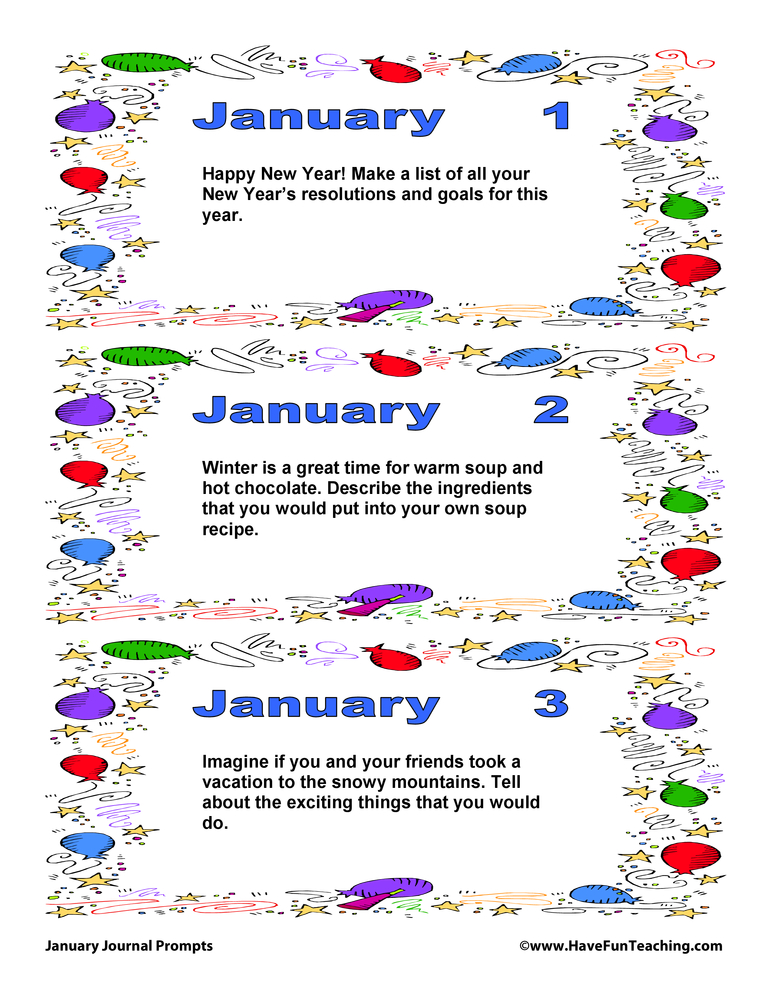
Journal Prompts for Daily Writing

Journal Prompts for Daily Writing
ELA, Writing, Grade 1, 2, Writing Prompts, Worksheets & Printables

So you are trying to set up your Writing Station so it can stand alone for awhile before you have to change the prompts. Does that sound like you? It was definitely me! So...I solved this problem by giving children a choice of a few prompts to write about and then changed them every so often. TheseDaily Journal Writing Activitiesare an easy way to encouragewriting everyday.There are so many choices and posters that can be hung in your station to support young writers.In my opinion, this resource is all you will need for journal writing! I am so excited to haveupdated and completed this Set of Journal Prompts to Encourage Writing. This set is best for first and second grade. These journal writing prompts contain a plethora of writing ideas!Although this set is an update, I have added many more pages and changed the format, butI have also kept the former resource in the packet and Compiled the 2 resources together just incase the older resource’s format was more appealing to you! Ever since I started teaching 30+ years ago and encouraged my first graders as well as my own children to write letters to grandparents, thank you notes to friends and love ones and grocery lists for me, I have believed that every scribble had an intense meaning and when I would encourage my students or children to “read” back what their scribbles, labels, words and sentences said, the kiddos knew the meaning of these symbols, scribbles and letters! I am a firm believer that “Kid Writing” is an important piece of emergent reading and writing and the more you read, the better you read and vice versa! What’s Included: ✎Over 200 writing prompts with starter ideas with room for a picture and writing. ✎Covers and prompts categorized into the following sections: ✎All about School….16 pages ✎All about ME ………37 pages ✎All about Feelings...14 pages ✎Special Days ………23 pages of prompts that span from Halloween to Father’s Day ✎Seasons and Weather…….22 pages ✎Other Fun Writing Ideas …….13 pages ✎Letters, Notes, Lists, Memos and a few more….30 pages National Holidays to Write about…54 pages taking writing through January to December ⭐Pages are NOT numbered so you can differentiate for your student needs. ⭐Covers are included for each of the sections above. ⭐Please note the section about Notes, Letters, Memos etc. may present a higher level of difficulty for younger students. ✎ An anchor Chart On How to Spell a Word. ✎ 5 small posters with words to help young writers. I can… I like…When I Grow Up I want to be…My Favorite thing to do…My Favorite Color… ✎ 64 original writing prompts from the older resource with starter ideas with room for a picture and writing ✎ One complete page with writing lines to run off 2-sided with prompts. This way if students want to write more they can. ✎ Cards with writing ideas, pictures and words to assist young writers. These I put in a basket or “Treasure Chest” to choose ideas. ✎ Ideas to last a LONG Time that are aligned with Common Core!! Ideas for Use: ✐Morning Work ✐Stations/Centers ✐Writing Workshop for special learners ✐To differentiate your writing files and support more reluctant writers in other ways. ✐To easily encourage Journal Writing. ✐For homework ✐Homeschool ✐For parents to support their children with write

Author Sunshine and Lollipops

Tags Journal Writing, Journaling, Creative Writing, Daily Writing, Writing Prompts

The Alps: Social Studies SAMPLE Reading Comprehension Passage (Docs)
Free Download

The Alps: Social Studies SAMPLE Reading Comprehension Passage (Docs)
ELA, Reading, Reading Comprehension, Strategies, Resources for Teachers, Social Studies, Geography, Sociology, Grade 6, 7, 8, 9, Writing Prompts, Worksheets & Printables, Centers, Activities, Teacher Tools, Assessments, Quizzes and Tests, Quizzes, Tests

This is a ONE PASSAGE SAMPLE. The following is the description of the FULL resource and the downloading links: Social Studies Reading Comprehension Passages and Questions: Extreme Environment and People (Docs) This resource introduces a collection of Social Studies reading comprehension passages with questions about Extreme Environment and People. The passages are carefully designed to bridge the gap between social studies and literacy through strengthening reading comprehension and sparking knowledge curiosity in middle school students. Each passage blends English Language Arts skills with accurate social studies content . Ideal for interdisciplinary learning in ELA and Social Studies. Suitable for Grade 9 review, too! What Is Included in this Collection? There are three informational passages (with full answer keys): Salar de Uyuni: Bolivia’s Shining Salt Flat Above the Alps: The Story of the Eiger’s North Face Sherpas: Guardians of the High Mountains For Each Passage, students will have multiple tasks to complete as follow: 5 multiple-choice questions targeting main idea, key details, inference, vocabulary in context, and use of evidence 5 vocabulary matching items with clear, student-friendly definitions 5 text-based questions that require citing specific lines or facts 1 summary prompt that asks students to condense central ideas accurately Available Formats for this Resource PDF Fillable PDF Word Docs FULL CATALOG OF DOWNLOADING LINKS HERE For more Social Studies Reading Passages, check the following Links: Ancient Civilizations PDF Fillable PDF Word Docs Google Docs Early Empires and Trade Networks PDF Fillable PDF Word Docs Google Docs The Founding of the United States PDF Fillable PDF Word Docs Google Docs Language, Culture, and Meaning PDF Fillable PDF Word Docs Google Docs Psychology and Society PDF Fillable PDF Word Docs Google Docs Global Festivals and Traditions PDF Fillable PDF Word Docs Google Docs Extreme Environments and People PDF Fillable PDF Word Docs Google Docs Food, Culture, and Preservation PDF Fillable PDF Word Docs Google Docs Global Food Customs PDF Fillable PDF Word Docs Google Docs Media, Communication, and Popular Culture PDF Fillable PDF Word Docs Google Docs Human Impact on the Environment PDF Fillable PDF Word Docs Google Docs Civic Action and Social Change PDF Fillable PDF Word Docs Google Docs Fashion, Society, and Power PDF Fillable PDF Word Docs Google Docs People, Places, and Unusual Histories PDF Fillable PDF Word Docs Google Docs Product Details Length: 14 pages total Grades: 6–8, also suitable for Grade 9 review Use cases: close reading, stations, homework, intervention, test prep, and sub plans Why Teachers Choose This Set Authentic social studies content paired with rigorous literacy practice Consistent task structure across all passages for easier planning and smoother student routines Clear, age-appropriate writing that builds confidence without oversimplifying Use this set to reinforce ELA skills in social studies, to add literacy to your lessons, and to support independent work. The passages strengthen main idea, evidence use, vocabulary in context, inference, cause and effect, and summary writing. With ready-to-use assessments and complete answer keys, you can provide focused practice that is simple to run and fast to review.

Author Middle & High School - CORED Education

Rating

Tags Middle School, Reading Comprehension, Reading Strategies, ELA, Centers, Reading Passage, Assessments, Vocabulary, Social Studies, Geography

Electricity & Energy: Physical Science Reading Comprehension (PDF)

Electricity & Energy: Physical Science Reading Comprehension (PDF)
Science, ELA, Reading, Reading Comprehension, Strategies, Resources for Teachers, Physics, Grade 6, 7, 8, 9, Writing Prompts, Worksheets & Printables, Centers, Activities, Teacher Tools, Assessments, Quizzes and Tests, Quizzes, Tests

Electricity and Energy: Physical Science Reading Comprehension Passages and Questions (PDF) This very engaging collection of physical science reading passages about electricity and energy is designed to bridge the gap between science and literacy through strengthening reading comprehension and sparking scientific curiosity in middle school students. Each passage blends English Language Arts skills with accurate science content that supports NGSS classroom practice. Ideal for interdisciplinary learning in ELA and Science. Suitable for Grade 9 review, too! What Is Included? There are (3) informational passages: The Lightning Rod: Turning Fear into Safety: Franklin’s work showed lightning is electricity, not magic, and a lightning rod gives that charge a safe metal path into the ground instead of through a building. Eel Power: A Holiday Surprise: Electric eels fire quick bursts of electricity, and in special displays, metal plates and wires capture those pulses to make nearby lights briefly flicker. Electricity: From Source to Socket: Power plants use motion from fuels, falling water, wind, or sunlight to spin generators, then send that electrical energy through wires so a flip of a switch brings devices to life. Student Tasks for Each Passage: 5 multiple-choice questions targeting main idea, key details, inference, vocabulary in context, and use of evidence 5 vocabulary matching items with clear, student-friendly definitions 5 text-based questions that require citing specific lines or facts 1 summary prompt that asks students to condense central ideas accurately Full answer key for every section Available Formats for this Resource Word Docs Google Docs FULL CATALOG OF DOWNLOADING LINKS HERE Other Science Reading Collections and Topics You May Find in the Store: 1. Astronomy & Space Science 2. Volcanoes, Rocks, & Mountains 3. Rock Cycle, Soil, & Sinkholes 4. Mars, Glaciers, & Antarctica 5. Water Cycle, Acid Rain, & Wastewater 6. Insects, Animals, & Ecosystems 7. Bioluminescence & Insects 8. Animal Skin, Cats, & T. Rex 9. Human Body and Senses 10. Health & Applied Bioscience 11. Waves, Light, & Imaging 12. Electricity & Energy 13. Motion & Materials 14. Chemistry and Materials Science 15. Electromagnetism 16. Acids and Bases 17. Gas Laws 18. Biotechnology 19. Periodic Trends 20. Protists and Fungi 21. Microevolution 22. Blood 23. Chemical Bonding 24. Magnets 25. Muscles 26. Nuclear Chemistry 27. Electromagnetic Devices 28. Epigenetics 29. The Law of Conservation of Mass 30. Atomic Models 31. Isotopes and Ions 32. Light 33. Human-Environment Interaction 34. Theory of Evolution 35. Photosynthesis 36. Origins of Life and Early Earth 37. Gene Expression and Regulation 38. Thermochemistry 39. Allergies 40. Coevolution 41. Birth to Adulthood 42. Cells 43. Entropy and Free Energy 44. The Human Brain 45. Mixtures and Solutions 46. Invertebrates 47. Zoo Animals 48. Biochemistry 49. Animal Behavior 50. Population Ecology ...and many more engaging science reading passages that cover intriguing and important topics designed to spark curiosity and support student learning. Product Details Length: 14 pages total Grades: 6–8, also suitable for Grade 9 review Use cases: close reading, stations, homework, intervention, test prep, and sub plans Standards support: reinforces informational-text skills and supports NGSS-style sense making through observation, modeling, and clear use of claim, evidence, and reasoning Why Teachers Choose This Set Authentic science content paired with rigorous literacy practice Consistent task structure across all passages for easier planning and smoother student routines Clear, age-appropriate writing that builds confidence without oversimplifying Use this set to reinforce ELA skills in science, to add literacy to your lessons, or to support independent work. The passages strengthen main idea, evidence use, vocabulary in context, inference, cause and effect, and summary writing. With ready-to-use assessments and complete answer keys, you can provide focused practice that is simple to run and fast to review.

Author Middle & High School - CORED Education

Rating

Tags Middle School, Reading Comprehension, Reading Strategies, ELA, Centers, Reading Passage, Assessments, Vocabulary, Physical Science, Physics

The Alps: Social Studies SAMPLE Reading Comprehension Passage (PDF)
Free Download

The Alps: Social Studies SAMPLE Reading Comprehension Passage (PDF)
ELA, Reading, Reading Comprehension, Strategies, Resources for Teachers, Social Studies, Geography, Sociology, Grade 6, 7, 8, 9, Writing Prompts, Worksheets & Printables, Centers, Activities, Teacher Tools, Assessments, Quizzes and Tests, Quizzes, Tests

This is a ONE PASSAGE SAMPLE. The following is the description of the FULL resource and the downloading links: Social Studies Reading Comprehension Passages and Questions: Extreme Environment and People (PDF) This resource introduces a collection of Social Studies reading comprehension passages with questions about Extreme Environment and People. The passages are carefully designed to bridge the gap between social studies and literacy through strengthening reading comprehension and sparking knowledge curiosity in middle school students. Each passage blends English Language Arts skills with accurate social studies content . Ideal for interdisciplinary learning in ELA and Social Studies. Suitable for Grade 9 review, too! What Is Included in this Collection? There are three informational passages (with full answer keys): Salar de Uyuni: Bolivia’s Shining Salt Flat Above the Alps: The Story of the Eiger’s North Face Sherpas: Guardians of the High Mountains For Each Passage, students will have multiple tasks to complete as follow: 5 multiple-choice questions targeting main idea, key details, inference, vocabulary in context, and use of evidence 5 vocabulary matching items with clear, student-friendly definitions 5 text-based questions that require citing specific lines or facts 1 summary prompt that asks students to condense central ideas accurately Available Formats for this Resource Fillable PDF Word Docs Google Docs FULL CATALOG OF DOWNLOADING LINKS HERE For more Social Studies Reading Passages, check the following Links: Ancient Civilizations PDF Fillable PDF Word Docs Google Docs Early Empires and Trade Networks PDF Fillable PDF Word Docs Google Docs The Founding of the United States PDF Fillable PDF Word Docs Google Docs Language, Culture, and Meaning PDF Fillable PDF Word Docs Google Docs Psychology and Society PDF Fillable PDF Word Docs Google Docs Global Festivals and Traditions PDF Fillable PDF Word Docs Google Docs Extreme Environments and People PDF Fillable PDF Word Docs Google Docs Food, Culture, and Preservation PDF Fillable PDF Word Docs Google Docs Global Food Customs PDF Fillable PDF Word Docs Google Docs Media, Communication, and Popular Culture PDF Fillable PDF Word Docs Google Docs Human Impact on the Environment PDF Fillable PDF Word Docs Google Docs Civic Action and Social Change PDF Fillable PDF Word Docs Google Docs Fashion, Society, and Power PDF Fillable PDF Word Docs Google Docs People, Places, and Unusual Histories PDF Fillable PDF Word Docs Google Docs Product Details Length: 14 pages total Grades: 6–8, also suitable for Grade 9 review Use cases: close reading, stations, homework, intervention, test prep, and sub plans Why Teachers Choose This Set Authentic social studies content paired with rigorous literacy practice Consistent task structure across all passages for easier planning and smoother student routines Clear, age-appropriate writing that builds confidence without oversimplifying Use this set to reinforce ELA skills in social studies, to add literacy to your lessons, and to support independent work. The passages strengthen main idea, evidence use, vocabulary in context, inference, cause and effect, and summary writing. With ready-to-use assessments and complete answer keys, you can provide focused practice that is simple to run and fast to review.

Author Middle & High School - CORED Education

Rating

Tags Middle School, Reading Comprehension, Reading Strategies, ELA, Centers, Reading Passage, Assessments, Vocabulary, Social Studies, Geography

Radios Reading Comprehension Passage - Cored Ed Encyclopedia

Radios Reading Comprehension Passage - Cored Ed Encyclopedia
ELA, Language Development, Reading Comprehension, Reading, Pre-Reading, History, Social Studies, Technology, Science, Physics, Grade 2, 3, 4, 5, Worksheets & Printables, Worksheets, Teacher Tools, Centers, Activities, Writing Prompts, Assessments, Quizzes and Tests, Quizzes, Lesson Plans

This radios reading comprehension includes: Visualization (on the front cover) Start your lesson by taking a minute to think and share something about the topic. Read the script aloud (slowly), perhaps prepare some music or sound effects. Student close their eyes and let their imaginations wander. Students open their eyes, read the question aloud and give them a few minutes to complete. Ask a few students to share or keep answers until the end to compare with what they learn in the passage. Quick pause—thousands of Cored Education products are included with your TeachSimple membership. Download links and encyclopedia index available here. Pre-Reading Trivia Students will write down one thing they already know about the subject and then read five more facts and discuss. These facts are fun, and the students will enjoy learning about the subject before reading more. Give 1 minute for students to write what they already know (no pressure—best guess is fine). Read the five facts together. After each fact, do ask a student for their opinion, was it surprising? Set a purpose by asking students to highlight/underline one fact they want to learn more about during the reading. Reading Passage The text is a high-interest reading passage with set paragraphs, roughly three to four paragraphs long. It contains a variety of themes about the topic, anywhere from history to technology. The passage is between 250 and 350 words in length. First, ask students to look at the headings and see what they’ll learn about today. What do they know about the topic/heading? First read options: Teacher read-aloud (best for support). Partner reading (paragraph by paragraph). While reading, students underline important details, and vocabulary words they think may come up in the questions section. Mixed Questions The first question page contains four multiple-choice questions, each with a choice of four answers, and three written response questions that require a sentence or two from the student. Students complete the mcqs first independently, then review quickly as a class. For the 3 written responses, try to get students giving the answer with some form of evidence: “I think ___ because the text says ___.” If students get stuck, send them back to check the passage. Vocabulary Questions Practice seven key words from the text in this section across two activities. First section is scrambled words where students will unscramble three words given a clue for each. The second section is a word to meaning matching activity. Before starting, have some students read out words they underlined in the passage. Ask students to say the word and read aloud the sentence(s) around each word. Ask students to do scrambled words and the matching exercise in pairs then go through answers as a class. For the scrambled spelling task, get four pairs to come up to the board and write the words for extra practice with the other student reading out the clue. For the matching task, prompt students to give full sentences: “I matched ___ with ___ because ___.” Creative Writing In this question, the student will be required to write a five to eight sentence paragraph on a question related to the topic. Before starting, ask students write down 3 key ideas they are going to include in their piece. Ask students for ideas to share around the class to help those struggling. Pro writing expectations: 5–8 sentences At least 2 facts or details from the passage At least 2 vocabulary words from the previous page Students read their paragraphs while classmates listen for facts and vocabulary words. Extension Activities This page is optional for fast finishers or to take home. There are several activities, each one requiring a different skill. Do some, do none, do all, completely optional - but you will feel reassured knowing every possibility is planned for. Includes summary writting question. Answer Key There are answers for the multiple-choice questions, written response questions have sample answers, vocabulary answers and if there is a summary question then a sample summary will be provided as well. Lesson Plan Included Customized lesson plan for this lesson is included. Lesson Snapshot Title: Radios Genre: Nonfiction (informational text) Subject: Science (Waves/Technology) / Social Studies (history of inventions) Primary Topic: How radio waves enabled communication over time Estimated Guided Reading Level (A–Z): R What This Lesson Teaches Best How scientists discovered and tested invisible waves (Maxwell’s prediction; Hertz’s spark machine and metal loop “reply”). What radio waves are described as (the longest waves in the electromagnetic family). How wireless communication developed from Morse-like code to sound and music (Marconi’s wireless telegraph; later broadcasting and family listening). How radios are used today for communication over long distances (emergency crews, airplanes and towers, spacecraft communication via NASA’s Deep Space Network). Understanding informational text structure with engaging section headings (“When Dots and Dashes Learned to Fly,” etc.). Learning Goals Students can explain how the text describes Maxwell’s and Hertz’s roles in understanding radio waves. Students can describe how Marconi’s wireless telegraph worked in the passage (wires, ground connection, detector clicking). Students can explain how radio changed from code to carrying voices and music, using details from the text. Students can identify at least two modern uses of radios named in the passage and why they matter. Students can use the section headings to state the main idea of each part of the passage. Key Vocabulary From the Text electromagnetic — related to electricity, magnetism, and waves. detector — a tool that clicks when a signal arrives. telegraph — a system for sending coded messages over distance. broadcasting — sending sounds to many listeners at once. antennas — parts that help send or receive radio signals. FULL CATALOG OF DOWNLOAD LINKS AND ENCYCLOPEDIA INDEX HERE

Author Cored Education

Rating

Tags Vocabulary, Reading Comprehension, Reading Passages, Reading, Creative Writing, Reading Strategies, Writing Prompts, Lesson Plans, Radios, Physics

Volcanoes, Rocks, & Mountains: SAMPLE Reading Passage (PDF)
Free Download

Volcanoes, Rocks, & Mountains: SAMPLE Reading Passage (PDF)
Science, Earth and Environmental Sciences, ELA, Reading, Reading Comprehension, Strategies, Resources for Teachers, Earth Sciences, Geology, Grade 6, 7, 8, 9, Writing Prompts, Worksheets & Printables, Centers, Activities, Teacher Tools, Assessments, Quizzes and Tests, Quizzes, Tests

This is a ONE PASSAGE SAMPLE. The following is the description of the FULL resource and the downloading links: Volcanoes, Rocks, & Mountains: Reading Comprehension Passages (PDF) This very engaging collection of earth science reading passages about Mountains, Volcanoes, and Igneous Rocks is designed to bridge the gap between science and literacy through strengthening reading comprehension and sparking scientific curiosity in middle school students. Each passage blends English Language Arts skills with accurate science content that supports NGSS classroom practice. Ideal for interdisciplinary learning in ELA and Science. Suitable for Grade 9 review, too! What Is Included? There are (3) informational passages: Mountains: From Plates to Peaks See how plate collisions fold rock, faults lift blocks, and volcanism builds peaks. Learn how rivers, glaciers, and gravity continue to reshape ranges over time. How Volcanoes Shape Our World Examine hazards such as ash, gases, lahars, and pyroclastic flows, along with benefits like fertile soils, mineral resources, geothermal energy, and new land. Learn how monitoring and planning reduce risk. Igneous Rocks: From Fire to Everyday Life Compare intrusive and extrusive rocks, link cooling rates to crystal size and texture, and connect granite, basalt, pumice, and obsidian to everyday uses in buildings, roads, tools, and art. Student Tasks for Each Passage: 5 multiple-choice questions targeting main idea, key details, inference, vocabulary in context, and use of evidence 5 vocabulary matching items with clear, student-friendly definitions 5 text-based questions that require citing specific lines or facts 1 summary prompt that asks students to condense central ideas accurately Full answer key for every section Available Formats for this Resource Word Docs Google Docs FULL CATALOG OF DOWNLOADING LINKS HERE Other Science Reading Collections and Topics You May Find in the Store: 1. Astronomy & Space Science 2. Volcanoes, Rocks, & Mountains 3. Rock Cycle, Soil, & Sinkholes 4. Mars, Glaciers, & Antarctica 5. Water Cycle, Acid Rain, & Wastewater 6. Insects, Animals, & Ecosystems 7. Bioluminescence & Insects 8. Animal Skin, Cats, & T. Rex 9. Human Body and Senses 10. Health & Applied Bioscience 11. Waves, Light, & Imaging 12. Electricity & Energy 13. Motion & Materials 14. Chemistry and Materials Science 15. Electromagnetism 16. Acids and Bases 17. Gas Laws 18. Biotechnology 19. Periodic Trends 20. Protists and Fungi 21. Microevolution 22. Blood 23. Chemical Bonding 24. Magnets 25. Muscles 26. Nuclear Chemistry 27. Electromagnetic Devices 28. Epigenetics 29. The Law of Conservation of Mass 30. Atomic Models 31. Isotopes and Ions 32. Light 33. Human-Environment Interaction 34. Theory of Evolution 35. Photosynthesis 36. Origins of Life and Early Earth 37. Gene Expression and Regulation 38. Thermochemistry 39. Allergies 40. Coevolution 41. Birth to Adulthood 42. Cells 43. Entropy and Free Energy 44. The Human Brain 45. Mixtures and Solutions 46. Invertebrates 47. Zoo Animals 48. Biochemistry 49. Animal Behavior 50. Population Ecology ...and many more engaging science reading passages that cover intriguing and important topics designed to spark curiosity and support student learning. Product Details Length: 13 pages total Grades: 6–8, also suitable for Grade 9 review Use cases: close reading, stations, homework, intervention, test prep, and sub plans Standards support: reinforces informational-text skills and supports NGSS-style sense making through observation, modeling, and clear use of claim, evidence, and reasoning Why Teachers Choose This Set Authentic science content paired with rigorous literacy practice Consistent task structure across all passages for easier planning and smoother student routines Clear, age-appropriate writing that builds confidence without oversimplifying Use this set to reinforce ELA skills in science, to add literacy to your lessons, or to support independent work. The passages strengthen main idea, evidence use, vocabulary in context, inference, cause and effect, and summary writing. With ready-to-use assessments and complete answer keys, you can provide focused practice that is simple to run and fast to review.

Author Middle & High School - CORED Education

Rating 5

Tags Middle School, Reading Comprehension, Reading Strategies, Reading Passages, ELA, Centers, Reading Passage, Assessments, Vocabulary, Earth Science

Social Studies Reading Passages: Language, Culture, Meaning (Google)

Social Studies Reading Passages: Language, Culture, Meaning (Google)
ELA, Reading, Reading Comprehension, Strategies, Resources for Teachers, Social Studies, Geography, Sociology, Grade 6, 7, 8, 9, Writing Prompts, Worksheets & Printables, Centers, Activities, Teacher Tools, Assessments, Quizzes and Tests, Quizzes, Tests

Social Studies Reading Comprehension Passages: Language, Culture, Meaning (Google) This resource introduces a collection of Social Studies reading comprehension passages about Language, Culture, and Meaning. The passages are carefully designed to bridge the gap between social studies and literacy through strengthening reading comprehension and sparking knowledge curiosity in middle school students. Each passage blends English Language Arts skills with accurate social studies content. Ideal for interdisciplinary learning in ELA and Social Studies. Suitable for Grade 9 review, too! What Is Included in this Collection? There are three informational passages (with full answer keys): Living Words: How Languages Change and Disappear The Language of Color in Chinese Culture Do Our Words Shape Our Minds For Each Passage, students will have multiple tasks to complete as follow: 5 multiple-choice questions targeting main idea, key details, inference, vocabulary in context, and use of evidence 5 vocabulary matching items with clear, student-friendly definitions 5 text-based questions that require citing specific lines or facts 1 summary prompt that asks students to condense central ideas accurately Available Formats for this Resource Fillable PDF Word Docs Google Docs FULL CATALOG OF DOWNLOADING LINKS HERE For more Social Studies Reading Passages, check the following Links: Ancient Civilizations PDF Fillable PDF Word Docs Google Docs Early Empires and Trade Networks PDF Fillable PDF Word Docs Google Docs The Founding of the United States PDF Fillable PDF Word Docs Google Docs Language, Culture, and Meaning PDF Fillable PDF Word Docs Google Docs Psychology and Society PDF Fillable PDF Word Docs Google Docs Global Festivals and Traditions PDF Fillable PDF Word Docs Google Docs Extreme Environments and People PDF Fillable PDF Word Docs Google Docs Food, Culture, and Preservation PDF Fillable PDF Word Docs Google Docs Global Food Customs PDF Fillable PDF Word Docs Google Docs Media, Communication, and Popular Culture PDF Fillable PDF Word Docs Google Docs Human Impact on the Environment PDF Fillable PDF Word Docs Google Docs Civic Action and Social Change PDF Fillable PDF Word Docs Google Docs Fashion, Society, and Power PDF Fillable PDF Word Docs Google Docs People, Places, and Unusual Histories PDF Fillable PDF Word Docs Google Docs Product Details Length: 13 pages total Grades: 6–8, also suitable for Grade 9 review Use cases: close reading, stations, homework, intervention, test prep, and sub plans Why Teachers Choose This Set Authentic social studies content paired with rigorous literacy practice Consistent task structure across all passages for easier planning and smoother student routines Clear, age-appropriate writing that builds confidence without oversimplifying Use this set to reinforce ELA skills in social studies, to add literacy to your lessons, and to support independent work. The passages strengthen main idea, evidence use, vocabulary in context, inference, cause and effect, and summary writing. With ready-to-use assessments and complete answer keys, you can provide focused practice that is simple to run and fast to review.

Author Middle & High School - CORED Education

Rating

Tags Middle School, Reading Comprehension, Reading Strategies, ELA, Centers, Reading Passage, Assessments, Vocabulary, Social Studies

Fog Free Reading Comprehension Passage
Free Download

Fog Free Reading Comprehension Passage
ELA, Reading Comprehension, Reading, Language Development, ESL, Strategies, Library, Resources for Teachers, Earth and Environmental Sciences, Science, Grade 2, 3, 4, 5, Worksheets & Printables, Worksheets, Teacher Tools, Centers, Activities, Writing Prompts, Assessments, Quizzes and Tests, Quizzes, Tests

Fog reading comprehension: This Product Includes Reading Passage Each lesson begins with a high-interest reading passage written in clear, student-friendly paragraphs. The passage is usually three to four paragraphs long and explores different parts of the topic, such as history, science, technology, people, places, or real-world connections. Most passages are between 250 and 350 words, making them long enough to build reading stamina but short enough to fit easily into a regular lesson. Before reading, ask students to look at the heading and make a quick prediction: What do they think the passage will be about? What do they already know about this topic? What words or ideas might appear in the text? First Read Options You can choose the reading format that best fits your class: Teacher read-aloud – Great for support, modeling fluency, and helping students access the text. Partner reading – Students read paragraph by paragraph with a partner. Independent reading – Best for students who are ready to work with more independence. While reading, students can underline important details and any vocabulary words they think might appear later in the questions. Mixed Questions The first question page includes four multiple-choice questions and three written response questions. The multiple-choice questions each include four answer choices. These are useful for checking basic understanding, key details, vocabulary, and reading skills. Students can complete the multiple-choice questions independently first, then quickly review the answers as a class. The written response questions require students to answer in one or two complete sentences. Encourage students to include evidence from the passage when possible. A helpful sentence frame is: “I think ___ because the text says ___.” If students get stuck, remind them to return to the passage and look for the part that helps answer the question. Creative Writing The creative writing task asks students to write a short paragraph of five to eight sentences based on a question connected to the topic. Before writing, have students jot down three key ideas they want to include. You can also ask a few students to share ideas with the class to support anyone who needs help getting started. Writing Expectations Students should aim to include: 5–8 complete sentences At least 2 facts or details from the passage At least 2 vocabulary words from the previous page After writing, students can read their paragraphs aloud while classmates listen for facts, details, and vocabulary words. Answer Key An answer key is included for the multiple-choice questions. Written response questions include sample answers to show what a strong response might look like. Vocabulary answers are also provided. If the lesson includes a summary question, a sample summary is included as well.

Author Cored Education

Rating

Tags Reading Comprehension, Reading Passages, Reading, Ela Mcqs, Creative Writing, Comprehension, Free, Free Reading, Science, Earth Science

Science Reading Passages: Volcanoes, Rocks, & Mountains (FILLABLE PDF)

Science Reading Passages: Volcanoes, Rocks, & Mountains (FILLABLE PDF)
Science, Earth and Environmental Sciences, ELA, Reading, Reading Comprehension, Strategies, Resources for Teachers, Earth Sciences, Geology, Grade 6, 7, 8, 9, Writing Prompts, Worksheets & Printables, Centers, Activities, Teacher Tools, Assessments, Quizzes and Tests, Quizzes, Tests

Volcanoes, Rocks, & Mountains: Reading Comprehension Passages (FILLABLE PDF) This very engaging and fillable collection of earth science reading passages about Mountains, Volcanoes, and Igneous Rocks is designed to bridge the gap between science and literacy through strengthening reading comprehension and sparking scientific curiosity in middle school students. Each passage blends English Language Arts skills with accurate science content that supports NGSS classroom practice. Ideal for interdisciplinary learning in ELA and Science. Suitable for Grade 9 review, too! These worksheets are designed as fillable PDFs , which means students can type their answers directly into the document on any computer or tablet . Each page includes highlighted text fields that show them exactly where to type! What Is Included? There are (3) informational passages: Mountains: From Plates to Peaks How Volcanoes Shape Our World Igneous Rocks: From Fire to Everyday Life Student Tasks for Each Passage: 5 multiple-choice questions targeting main idea, key details, inference, vocabulary in context, and use of evidence 5 vocabulary matching items with clear, student-friendly definitions 5 text-based questions that require citing specific lines or facts 1 summary prompt that asks students to condense central ideas accurately Full answer key for every section Available Formats for this Resource Word Docs Google Docs FULL CATALOG OF DOWNLOADING LINKS HERE Other Science Reading Collections and Topics You May Find in the Store: 1. Astronomy & Space Science 2. Volcanoes, Rocks, & Mountains 3. Rock Cycle, Soil, & Sinkholes 4. Mars, Glaciers, & Antarctica 5. Water Cycle, Acid Rain, & Wastewater 6. Insects, Animals, & Ecosystems 7. Bioluminescence & Insects 8. Animal Skin, Cats, & T. Rex 9. Human Body and Senses 10. Health & Applied Bioscience 11. Waves, Light, & Imaging 12. Electricity & Energy 13. Motion & Materials 14. Chemistry and Materials Science 15. Electromagnetism 16. Acids and Bases 17. Gas Laws 18. Biotechnology 19. Periodic Trends 20. Protists and Fungi 21. Microevolution 22. Blood 23. Chemical Bonding 24. Magnets 25. Muscles 26. Nuclear Chemistry 27. Electromagnetic Devices 28. Epigenetics 29. The Law of Conservation of Mass 30. Atomic Models 31. Isotopes and Ions 32. Light 33. Human-Environment Interaction 34. Theory of Evolution 35. Photosynthesis 36. Origins of Life and Early Earth 37. Gene Expression and Regulation 38. Thermochemistry 39. Allergies 40. Coevolution 41. Birth to Adulthood 42. Cells 43. Entropy and Free Energy 44. The Human Brain 45. Mixtures and Solutions 46. Invertebrates 47. Zoo Animals 48. Biochemistry 49. Animal Behavior 50. Population Ecology ...and many more engaging science reading passages that cover intriguing and important topics designed to spark curiosity and support student learning. How to Use These PDFs Click on the highlighted area to start typing your answer. Move to the next question by clicking in the next highlighted box. When you are finished, close the document and select SAVE so your answers stay recorded. If you want to keep a blank copy for later, choose Save As and give your completed version a new name. Product Details Length: 13 pages total Grades: 6–8, also suitable for Grade 9 review Use cases: close reading, stations, homework, intervention, test prep, and sub plans Standards support: reinforces informational-text skills and supports NGSS-style sense making through observation, modeling, and clear use of claim, evidence, and reasoning Why Teachers Choose This Set Authentic science content paired with rigorous literacy practice Consistent task structure across all passages for easier planning and smoother student routines Clear, age-appropriate writing that builds confidence without oversimplifying Use this set to reinforce ELA skills in science, to add literacy to your lessons, or to support independent work. The passages strengthen main idea, evidence use, vocabulary in context, inference, cause and effect, and summary writing. With ready-to-use assessments and complete answer keys, you can provide focused practice that is simple to run and fast to review.

Author Middle & High School - CORED Education

Rating

Tags Middle School, Reading Comprehension, Reading Strategies, Reading Passages, ELA, Centers, Reading Passage, Assessments, Vocabulary, Earth Science

Tanks Reading Comprehension Passage - Cored Ed Encyclopedia

Tanks Reading Comprehension Passage - Cored Ed Encyclopedia
ELA, Language Development, Reading Comprehension, Reading, Pre-Reading, Science, Technology, Engineering, History, Social Studies, Grade 2, 3, 4, 5, Worksheets & Printables, Worksheets, Teacher Tools, Centers, Activities, Writing Prompts, Assessments, Quizzes and Tests, Quizzes, Lesson Plans

This tanks reading comprehension includes: Visualization (on the front cover) Start your lesson by taking a minute to think and share something about the topic. Read the script aloud (slowly), perhaps prepare some music or sound effects. Student close their eyes and let their imaginations wander. Students open their eyes, read the question aloud and give them a few minutes to complete. Ask a few students to share or keep answers until the end to compare with what they learn in the passage. Quick pause—thousands of Cored Education products are included with your TeachSimple membership. Download links and encyclopedia index available here. Pre-Reading Trivia Students will write down one thing they already know about the subject and then read five more facts and discuss. These facts are fun, and the students will enjoy learning about the subject before reading more. Give 1 minute for students to write what they already know (no pressure—best guess is fine). Read the five facts together. After each fact, do ask a student for their opinion, was it surprising? Set a purpose by asking students to highlight/underline one fact they want to learn more about during the reading. Reading Passage The text is a high-interest reading passage with set paragraphs, roughly three to four paragraphs long. It contains a variety of themes about the topic, anywhere from history to technology. The passage is between 250 and 350 words in length. First, ask students to look at the headings and see what they’ll learn about today. What do they know about the topic/heading? First read options: Teacher read-aloud (best for support). Partner reading (paragraph by paragraph). While reading, students underline important details, and vocabulary words they think may come up in the questions section. Mixed Questions The first question page contains four multiple-choice questions, each with a choice of four answers, and three written response questions that require a sentence or two from the student. Students complete the mcqs first independently, then review quickly as a class. For the 3 written responses, try to get students giving the answer with some form of evidence: “I think ___ because the text says ___.” If students get stuck, send them back to check the passage. Vocabulary Questions Practice seven key words from the text in this section across two activities. First section is scrambled words where students will unscramble three words given a clue for each. The second section is a word to meaning matching activity. Before starting, have some students read out words they underlined in the passage. Ask students to say the word and read aloud the sentence(s) around each word. Ask students to do scrambled words and the matching exercise in pairs then go through answers as a class. For the scrambled spelling task, get four pairs to come up to the board and write the words for extra practice with the other student reading out the clue. For the matching task, prompt students to give full sentences: “I matched ___ with ___ because ___.” Creative Writing In this question, the student will be required to write a five to eight sentence paragraph on a question related to the topic. Before starting, ask students write down 3 key ideas they are going to include in their piece. Ask students for ideas to share around the class to help those struggling. Pro writing expectations: 5–8 sentences At least 2 facts or details from the passage At least 2 vocabulary words from the previous page Students read their paragraphs while classmates listen for facts and vocabulary words. Extension Activities This page is optional for fast finishers or to take home. There are several activities, each one requiring a different skill. Do some, do none, do all, completely optional - but you will feel reassured knowing every possibility is planned for. Includes summary writting question. Answer Key There are answers for the multiple-choice questions, written response questions have sample answers, vocabulary answers and if there is a summary question then a sample summary will be provided as well. Lesson Plan Included Customized lesson plan for this lesson is included. Lesson Snapshot Title: Tanks Genre: Nonfiction (informational text) Subject: Social Studies (History & Technology) Primary Topic: Why tanks were created and how they changed Estimated Guided Reading Level (A–Z): R What This Lesson Teaches Best Explains a real-world problem from World War I (trenches, barbed wire, muddy ground) and why a new machine was needed. Describes how tracks work by spreading a tank’s heavy weight so it doesn’t sink as easily and can cross rough land and trenches. Introduces key tank parts and purposes, including armor plates for protection and a rotating turret that helps the tank aim. Shows how designs changed over time (stronger engines, tougher armor, radios, better sights) and how tanks became part of teams with special jobs. Reinforces the idea that inventions are problem-solving —how to protect people inside a moving machine and travel over hard-to-cross land. Learning Goals Students will identify the main problems soldiers faced on the Western Front that led to tanks being developed. Students will explain how tracks helped early tanks move over muddy ground and cross trenches. Students will describe what a rotating turret does and why it was an important design change. Students will summarize how tanks changed from World War I to the end of World War II using key details from the text. Students will use text evidence to explain how new tools (like radios) helped crews work together. Key Vocabulary From the Text trenches — long ditches where soldiers sheltered during war. barbed — having sharp points that make crossing dangerous. tracks — looped bands that help vehicles grip the ground. turret — a rotating top part that carries the main weapon. armored — protected with strong metal on the outside. FULL CATALOG OF DOWNLOAD LINKS AND ENCYCLOPEDIA INDEX HERE

Author Cored Education

Rating

Tags Vocabulary, Reading Comprehension, Reading Passages, Lesson Plans, Ela Lesson Plans, Reading Comprehension Lesson Plans, Pre-reading, History, Social Studies, Social Studies Lesson Plans

Volcanoes, Rocks, & Mountains: Reading Comprehension Passages (PDF)

Volcanoes, Rocks, & Mountains: Reading Comprehension Passages (PDF)
Science, Earth and Environmental Sciences, ELA, Reading, Reading Comprehension, Strategies, Resources for Teachers, Earth Sciences, Geology, Grade 6, 7, 8, 9, Writing Prompts, Worksheets & Printables, Centers, Activities, Teacher Tools, Assessments, Quizzes and Tests, Quizzes, Tests

Volcanoes, Rocks, & Mountains: Reading Comprehension Passages (PDF) This engaging collection of earth science reading passages about Mountains, Volcanoes, and Igneous Rocks is designed to bridge the gap between science and literacy through strengthening reading comprehension and sparking scientific curiosity in middle school students. Each passage blends English Language Arts skills with accurate science content that supports NGSS classroom practice. Ideal for interdisciplinary learning in ELA and Science. Suitable for Grade 9 review, too! What Is Included? There are (3) informational passages: Mountains: From Plates to Peaks See how plate collisions fold rock, faults lift blocks, and volcanism builds peaks. Learn how rivers, glaciers, and gravity continue to reshape ranges over time. How Volcanoes Shape Our World Examine hazards such as ash, gases, lahars, and pyroclastic flows, along with benefits like fertile soils, mineral resources, geothermal energy, and new land. Learn how monitoring and planning reduce risk. Igneous Rocks: From Fire to Everyday Life Compare intrusive and extrusive rocks, link cooling rates to crystal size and texture, and connect granite, basalt, pumice, and obsidian to everyday uses in buildings, roads, tools, and art. Student Tasks for Each Passage: 5 multiple-choice questions targeting main idea, key details, inference, vocabulary in context, and use of evidence 5 vocabulary matching items with clear, student-friendly definitions 5 text-based questions that require citing specific lines or facts 1 summary prompt that asks students to condense central ideas accurately Full answer key for every section Available Formats for this Resource Word Docs Google Docs FULL CATALOG OF DOWNLOADING LINKS HERE Other Science Reading Collections and Topics You May Find in the Store: 1. Astronomy & Space Science 2. Volcanoes, Rocks, & Mountains 3. Rock Cycle, Soil, & Sinkholes 4. Mars, Glaciers, & Antarctica 5. Water Cycle, Acid Rain, & Wastewater 6. Insects, Animals, & Ecosystems 7. Bioluminescence & Insects 8. Animal Skin, Cats, & T. Rex 9. Human Body and Senses 10. Health & Applied Bioscience 11. Waves, Light, & Imaging 12. Electricity & Energy 13. Motion & Materials 14. Chemistry and Materials Science 15. Electromagnetism 16. Acids and Bases 17. Gas Laws 18. Biotechnology 19. Periodic Trends 20. Protists and Fungi 21. Microevolution 22. Blood 23. Chemical Bonding 24. Magnets 25. Muscles 26. Nuclear Chemistry 27. Electromagnetic Devices 28. Epigenetics 29. The Law of Conservation of Mass 30. Atomic Models 31. Isotopes and Ions 32. Light 33. Human-Environment Interaction 34. Theory of Evolution 35. Photosynthesis 36. Origins of Life and Early Earth 37. Gene Expression and Regulation 38. Thermochemistry 39. Allergies 40. Coevolution 41. Birth to Adulthood 42. Cells 43. Entropy and Free Energy 44. The Human Brain 45. Mixtures and Solutions 46. Invertebrates 47. Zoo Animals 48. Biochemistry 49. Animal Behavior 50. Population Ecology ...and many more engaging science reading passages that cover intriguing and important topics designed to spark curiosity and support student learning. Product Details Length: 13 pages total Grades: 6–8, also suitable for Grade 9 review Use cases: close reading, stations, homework, intervention, test prep, and sub plans Standards support: reinforces informational-text skills and supports NGSS-style sense making through observation, modeling, and clear use of claim, evidence, and reasoning Why Teachers Choose This Set Authentic science content paired with rigorous literacy practice Consistent task structure across all passages for easier planning and smoother student routines Clear, age-appropriate writing that builds confidence without oversimplifying Use this set to reinforce ELA skills in science, to add literacy to your lessons, or to support independent work. The passages strengthen main idea, evidence use, vocabulary in context, inference, cause and effect, and summary writing. With ready-to-use assessments and complete answer keys, you can provide focused practice that is simple to run and fast to review.

Author Middle & High School - CORED Education

Rating

Tags Middle School, Reading Comprehension, Reading Strategies, Reading Passages, ELA, Centers, Reading Passage, Assessments, Vocabulary, Earth Science

Oxygen Reading Comprehension Passage - Cored Ed Encyclopedia
Free Download

Oxygen Reading Comprehension Passage - Cored Ed Encyclopedia
ELA, Language Development, Resources for Teachers, Reading Comprehension, Reading, Pre-Reading, Writing, Science, Physics, Chemistry, Grade 2, 3, 4, 5, Worksheets & Printables, Worksheets, Teacher Tools, Centers, Activities, Writing Prompts, Assessments, Tests, Quizzes and Tests, Quizzes

This oxygen reading comprehension contains the following: Visualize on the Cover (Teacher Read Aloud Script) Start your lesson by taking a few moments to visualize the topic and share thoughts or feelings about it. Pre-Reading Trivia Students will write down one thing they already know about the subject and then read five more facts and discuss. These facts are fun, and the students will enjoy learning about the subject before reading more. Reading Passage The text is a high-interest reading passage with set paragraphs, roughly three to four paragraphs long. It contains a variety of themes about the topic, anywhere from history to technology. The passage is between 250 and 350 words in length. Mixed Questions The first question page contains four multiple-choice questions, each with a choice of four answers, and three written response questions that require a sentence or two from the student. Vocabulary Questions Practice seven key words from the text in this section across two activities. First section is scrambled words where students will unscramble three words given a clue for each. The second section is a word to meaning matching activity. Creative Writing In this question, the student will be required to write a five to eight sentence paragraph on a question related to the topic. Extension Activities This page is optional for fast finishers or to take home. There are several activities, each one requiring a different skill. Do some, do none, do all, completely optional - but you will feel reassured knowing every possibility is planned for. Includes summary writting question. Answer Key There are answers for the multiple-choice questions, written response questions have sample answers, vocabulary answers and if there is a summary question then a sample summary will be provided as well. FULL CATALOG OF DOWNLOAD LINKS AND ENCYCLOPEDIA INDEX HERE Lesson Snapshot Title: Oxygen Genre: Nonfiction (informational text) Subject: Science (Chemistry / Earth & Life Science) + Reading Informational Text Primary Topic: Discovery, role, and uses of oxygen Estimated Guided Reading Level (A–Z): S What This Lesson Teaches Best How scientists in the 1770s noticed a “new gas” through clues like a candle flaring brighter and a mouse staying active longer than in ordinary air. How Lavoisier’s careful weighing helped show that “air” is made of parts, leading to naming oxygen and explaining burning and rusting as oxidation . How oxygen is invisible yet makes up about 21% of Earth’s atmosphere , and how bodies use it while breathing out carbon dioxide . How photosynthesis helps balance gases: leaves take in carbon dioxide and water, make sugar, and send oxygen back into the air. Where oxygen is found and how people use it (as O and often O₂ , in air and also “locked into” water/sand/rocks, used in hospitals , factories , and rockets ). Learning Goals Students will describe what Joseph Priestley did and what clues suggested the gas was different from ordinary air. Students will explain why Lavoisier weighed jars, metals, and air before and after heating them. Students will explain what the passage says oxidation helps explain. Students will describe the exchange between humans and plants involving oxygen and carbon dioxide. Students will identify at least two places oxygen can be found or used, based on the text. Key Vocabulary From the Text dephlogisticated — Priestley’s name for oxygen under an old fire theory. mercuric — related to mercury; part of “mercuric oxide” in the text. oxidation — a process that explains burning and rusting. atmosphere — the blanket of gases around Earth. photosynthesis — plants make sugar and send oxygen back into the air. Cored Ed Encyclopedia Overview The Cored Ed Encyclopedia is a weekly series of lessons that you can pick up and use right away. These short readings fit into whatever time you have available. Each one includes a warm-up, a reading, and a set of questions, but it’s flexible — you can do just the reading, the full lesson, or skip the writing section if you need to. Each lesson focuses on a single topic so students don’t get lost. The writing is clear but never childish, making it perfect for grades two through five. Topics range from animals and science to history, inventions, and everyday things. No matter the level of the student, everyone should take away at least one new idea or fact from each lesson. The materials are easy to print, easy to explain, and require no setup. They work well for whole-class teaching, partner work, or independent study.

Author Cored Education

Rating

Tags Vocabulary, Spelling, Reading Comprehension, Reading Passages, Reading, Creative Writing, Reading Strategies, Writing Prompts, Oxygen, Physical Science

Jet Skis Reading Comprehension Passage - Cored Ed Encyclopedia

Jet Skis Reading Comprehension Passage - Cored Ed Encyclopedia
ELA, Language Development, Resources for Teachers, Reading Comprehension, Reading, Pre-Reading, Science, Technology, Sports, P.E. & Health, Grade 2, 3, 4, 5, Worksheets & Printables, Worksheets, Teacher Tools, Centers, Activities, Writing Prompts, Assessments, Tests, Quizzes and Tests, Quizzes

This jet skis reading comprehension contains the following: Visualize on the Cover Start your lesson by taking a few moments to visualize the topic and share thoughts or feelings about it. Pre-Reading Trivia Students will write down one thing they already know about the subject and then read five more facts and discuss. These facts are fun, and the students will enjoy learning about the subject before reading more. Reading Passage The text is a high-interest reading passage with set paragraphs, roughly three to four paragraphs long. It contains a variety of themes about the topic, anywhere from history to technology. The passage is between 250 and 350 words in length. Mixed Questions The first question page contains four multiple-choice questions, each with a choice of four answers, and three written response questions that require a sentence or two from the student. Vocabulary Questions Practice seven key words from the text in this section across two activities. First section is scrambled words where students will unscramble three words given a clue for each. The second section is a word to meaning matching activity. Creative Writing In this question, the student will be required to write a five to eight sentence paragraph on a question related to the topic. Extension Activities This page is optional for fast finishers or to take home. There are several activities, each one requiring a different skill. Do some, do none, do all, completely optional - but you will feel reassured knowing every possibility is planned for. Answer Key There are answers for the multiple-choice questions, written response questions have sample answers, vocabulary answers and if there is a summary question then a sample summary will be provided as well. FULL CATALOG OF DOWNLOAD LINKS AND ENCYCLOPEDIA INDEX HERE Lesson Snapshot Title: Jet Skis Genre: Nonfiction (Informational Text) Subject: Science & Technology / Reading (Informational Text) Primary Topic: How jet skis work, history, and safety Estimated Guided Reading Level (A–Z): Q What This Lesson Teaches Best Explains what jet skis are and how they ride on the water (small watercraft, sit or stand, skim the surface). Teaches cause-and-effect mechanics : a pump-jet pulls water in and shoots it out the back to push the craft forward. Shows how steering and speed work (turning the nozzle; hull rises and “planes” at higher speed). Builds background knowledge with a short history of the Jet Ski brand (Kawasaki, 1973, early stand-up models, later sit-down “runabout” styles, racing). Connects reading to real-world decision-making with safety guidance (life jacket, age recommendations, secure footing/grip, protective clothing, respect wildlife). Support-pages QA note: Most questions/vocabulary match the passage, but the “Example Summary” on the answers page mentions “Discoveries” and “Patents,” which are not stated in the reading passage . Learning Goals Explain what a jet ski is and how it moves across the water using details from the text. Describe how the pump-jet moves water through the craft and how that creates forward motion. Describe how a rider steers a jet ski and what happens as speed increases. Summarize key information about how jet skis changed over time, including the 1973 introduction and later style changes. Identify safety tips from the text and explain why rules matter for riders and wildlife. Key Vocabulary From the Text watercraft — a vehicle made to travel on water. runabout — a small ride-on motorboat style. impeller — a spinning part that pushes water through. nozzle — the part that aims the water jet. hull — the main body of a boat or craft. Cored Ed Encyclopedia Overview The Cored Ed Encyclopedia is a weekly series of lessons that you can pick up and use right away. These short readings fit into whatever time you have available. Each one includes a warm-up, a reading, and a set of questions, but it’s flexible — you can do just the reading, the full lesson, or skip the writing section if you need to. Each lesson focuses on a single topic so students don’t get lost. The writing is clear but never childish, making it perfect for grades two through five. Topics range from animals and science to history, inventions, and everyday things. No matter the level of the student, everyone should take away at least one new idea or fact from each lesson. The materials are easy to print, easy to explain, and require no setup. They work well for whole-class teaching, partner work, or independent study.

Author Cored Education

Rating

Tags Vocabulary, Spelling, Reading Comprehension, Reading Passages, Reading, Creative Writing, Reading Strategies, Writing Prompts, Jet Skis, Sports

The Rise of Hollywood: Social Studies Reading Passage (Word)

The Rise of Hollywood: Social Studies Reading Passage (Word)
ELA, Reading, Reading Comprehension, Strategies, Resources for Teachers, Social Studies, Sociology, Grade 6, 7, 8, 9, Writing Prompts, Worksheets & Printables, Centers, Activities, Teacher Tools, Assessments, Quizzes and Tests, Quizzes, Tests

The Rise of Hollywood: Social Studies Reading Comprehension Passage (Word) This resource introduces a unique Social Studies reading comprehension passage with questions about The Rise of Hollywood The passage is carefully designed to bridge the gap between social studies and literacy through strengthening reading comprehension and sparking knowledge curiosity in middle school students. Each passage blends English Language Arts skills with accurate social studies content . Ideal for interdisciplinary learning in ELA and Social Studies. Suitable for Grade 9 review, too! Student Tasks throughout the passage: 5 multiple-choice questions targeting the following skills: main idea, key details, inference, vocabulary in context, and use of evidence 5 vocabulary matching items with clear, student-friendly definitions 5 text-based questions that require citing specific lines or facts 1 summary prompt that asks students to condense central ideas accurately Full answer key for every section Available Formats for this Resource: PDF Fillable PDF Google Docs FULL CATALOG OF DOWNLOADING LINKS HERE Social Studies Reading Comprehension Collection Links: 1. Ancient Civilizations PDF Fillable PDF Word Docs Google Docs 2. Early Empires and Trade Networks PDF Fillable PDF Word Docs Google Docs 3. The Founding of the United States PDF Fillable PDF Word Docs Google Docs 4. Language, Culture, and Meaning PDF Fillable PDF Word Docs Google Docs 5. Psychology and Society PDF Fillable PDF Word Docs Google Docs 6. Global Festivals and Traditions PDF Fillable PDF Word Docs Google Docs 7. Extreme Environments and People PDF Fillable PDF Word Docs Google Docs 8. Food, Culture, and Preservation PDF Fillable PDF Word Docs Google Docs 9. Global Food Customs PDF Fillable PDF Word Docs Google Docs 10. Media, Communication, and Popular Culture PDF Fillable PDF Word Docs Google Docs 11. Human Impact on the Environment PDF Fillable PDF Word Docs Google Docs 12. Civic Action and Social Change PDF Fillable PDF Word Docs Google Docs 13. Fashion, Society, and Power PDF Fillable PDF Word Docs Google Docs 14. People, Places, and Unusual Histories PDF Fillable PDF Word Docs Google Docs Product Details: Length: 5 pages Grades: 6–8, also suitable for Grade 9 review Use cases: close reading, stations, homework, intervention, test prep, and sub plans Why Teachers Choose This Passage: Authentic social studies content paired with rigorous literacy practice Consistent task structure for easier planning and smoother student routines Clear, age-appropriate writing that builds confidence without oversimplifying Use this passage to reinforce ELA skills in social studies, to add literacy to your lessons, and to support independent work. The passage strengthens main idea, evidence use, vocabulary in context, inference, cause and effect, and summary writing. With ready-to-use assessments and complete answer keys, you can provide focused practice that is simple to run and fast to review.

Author Middle & High School - CORED Education

Rating

Tags Middle School, Reading Comprehension, Reading Strategies, ELA, Centers, Reading Passage, Assessments, Vocabulary, Social Studies, Sociology

Peter’s Travels Bible Story Foldable Mini Book Grade 1 2 3 ELA ELL

Peter’s Travels Bible Story Foldable Mini Book Grade 1 2 3 ELA ELL
ELA, Literature, Reading, Grade 3, 4, 5, Centers, Activities, Worksheets & Printables, Worksheets, Writing Prompts

Create a fun and meaningful day at school with your learners through this Peter’s Travels Foldable Mini Book Set! Designed for Grade 1, 2, 3 and 4 students, homeschoolers, and EFL / ESL learners, this enchanting story will surely captivate your budding readers. This Peter’s Travels Mini Book set contains the following: 1. Peter’s Travels Colored mini-book 2. Peter’s Travels Black and white mini-book with story tracing activities 3. Peter’s Travels Picture-fill mini-book for sequencing test or exercise 4. Peter’s Travels Black and white mini-book for story re-tell and writing exercise 5. Peter’s Travels Blank mini-book pages for story re-tell, writing and drawing exercises 6. Peter’s Travels Mini Books Sample lesson plan Also, this set is created in 3 paper sizes for you to choose for your classroom needs. The five different mini-books present more possibilities for learning and exploration that are perfect for your reading classes and reading centers. This activity can be used to supplement reading lessons, writing exercises, and a perfect assessment tool that can easily be a perfect addition to your students’ portfolio and open house events. Make learning about this Bible story more memorable and creative with this Peter’s Travels Foldable Mini Book Set!

Author It's Teacher L

Rating

Tags Reading, Mini Book, Sequencing, Writing, Reading Comprehension, ELA, ELL, Bible Stories, Sunday School

Generative AI Ethics, Deepfakes & Responsible Use Case Studies

Generative AI Ethics, Deepfakes & Responsible Use Case Studies
Science, Technology, Computer Science, Engineering, Research, Resources for Teachers, Classroom Management, STEM, ELA, Language Development, Grade 6, 7, 8, 9, 10, 11, 12, Worksheets & Printables, Workbooks, Worksheets, Word Searches, Writing Prompts, Teacher Tools, Lesson Plans, Presentations, Outlines, Quizzes and Tests

The complete high school curriculum is prepared and provides an interactive exploration of the topic of ethics in generative AI; deepfakes; responsible use of synthetic media; and provides a thorough introduction to how synthetic media works (to be used by all of our student participants in grades 9-12). The curriculum includes an academic overview of Synthetic Media architecture; multiple chapters for deepfake discussion/analysis; Copyright/Author status; algorithmic bias and epistemic security/provability protocols regarding the use of synthetic media. In addition, there are ten practical, complete, and interactive worksheets for active, individual student participation that have real examples, such as "the Synthesized Senator," "Med-Synthetica Diagnostic Bias," "Voice Cloning," "Influencer Avatars," etc. The students have to complete fill-in-the-blank terminology exercises, scenario analyses, and ethical synthesis prompts that promote critical thinking, media literacy, and digital citizenship skill acquisition. There is also the following in the resource book: (conceptual visual diagrams [mind maps, escalation matrices, process flows], a comprehensive answer key with notes for teachers and benchmarks for mastery) and a detailed teacher guide with pedagogical strategies, assessment tools (rubrics) and teaching protocols. This curriculum is also perfect for English/Language Arts, Social Studies, Computer Science, Digital Literacy, or elective Technology & Ethics classes. This resource is an instant digital download and requires no prep time. Give your students the information they need to be responsible in their use of AI and the topics related to ethics regarding the generative technology called "deepfake." Parents/Schools Appreciate It Because: Essential 21st century skills are being taught through critical thinking, verifying media sources & making ethical choices in dealing with misinformation & threats from deep-fakes and counterfeit media, thereby counteracting those very problems. Students remain engaged while staying motivated to learn by using real-world examples of ethical & responsible use of technology through use of case studies/workheets. The format requires zero preparation & can be easily implemented by teachers; includes lesson plans, case studies, worksheets, visuals, answer keys, teacher’s implementation guide (in pdf format). Responsible use of artificial intelligence & digital stewardship is promoted through use of technology in an aligned manner with modern school standards regarding digital citizenship/social-emotional learning. Materials are flexible in nature so can be used across multiple curriculum areas & for hybrid & remote learning situations. Based on a complete analysis of the submitted PDF, the target audience for ​this document are ​Students in grades 9-12 (age 14-18). This project is most suited for high school students enrolled in the following classes: - English/Language Arts or Media Literacy - Social Studies/Civics/Government - Computer Science/Digital Citizenship/Technology and Society - Ethics/Philosophy/STEM/STEAM The majority of the content​ is age appropriate for students and offers academically challenging material using fictional case studies that are relatable to a student's experience (there are no graphic illustrations or inappropriate material) on real-world current events such as misinformation, bias, copyright, and consent regarding​ the use of generative AI technology. "Terms & Copyright of Use": This resource has been copyrighted by Syed Hammad Rizvi. Personal use/Single-use in a classroom only. You may NOT change, share or sell this resource. i.e You may NOT post this on the Internet for others to search for/download. If you want to share this resource with other people in your school or district purchase additional copies through Teachsimple. Thank you for your cooperation. This product is provided to you by Syed Hammad Rizvi

Author Creative Book Store

Rating

Tags AIEthics, Deepfakes, GenerativeAI, SyntheticMedia, AI Ethics, DeepfakeAwareness, AIEthicsCurriculum, DeepfakesLessonPlans, GenerativeAIEthics, SyntheticMediaEthics

Reading Comprehension Nonfiction Set 5 - Sea Animals (PDF)

Reading Comprehension Nonfiction Set 5 - Sea Animals (PDF)
ELA, Reading, Reading Comprehension, Common Core, Creative Writing, Writing, ESL, Language Development, Spelling, Vocabulary, Grade 4, 5, Worksheets & Printables, Worksheets, Writing Prompts, Assessments, Teacher Tools, Tests, Quizzes and Tests, Centers, Activities

Reading Comprehension Passages Nonfiction Set 5 Overview No prep reading comprehension lessons, with enjoyable articles and topics. Each lesson has a blend of post-reading activities. Mixed questions to check overall understanding. Vocabulary activities, plus a writing section. Lessons also contain a bonus extension exercise at the end. Some you may like, some you may not, either way they are there if you wish to use them. Full answer keys are provided. Passages Include 1.Stingray: Close relatives to sharks, read more about this fascinating animal in this article. 2.That's Electric: How much electricity can an electric eel produce? Find outhere. 3.Whale Shark: The largest fish in the sea. Yes, the largest!! 4.Scared of Sharks: The all you need to know shark passage. If you're not too scared to read it! 5.Under the Sea: Porpoise or dolphin? What's the difference? 6.All About Jellyfish: More people are killed by jellyfish stings every year than from great white shark attacks. PDF Version This is the PDF uneditable version. This download is available in GOOGLE Docs, GOOGLE Forms, GOOGLE Slides. PDF, PPT, WORD. FULL CATALOG OF DOWNLOAD LINKS HERE Grade 4/5 Links Fiction Set 1 - Animals Google Docs Google Forms Google Slides PDF PPT Word Guided Reading Materials Fiction Set 2 - Family Google Docs Google Forms Google Slides PDF PPT Word Guided Reading Materials Fiction Set 3 - Friends Google Docs Google Forms Google Slides PDF PPT Word Guided Reading Materials Fiction Set 4 - School Google Docs Google Forms Google Slides PDF PPT Word Guided Reading Materials Fiction Set 5 - Sports Google Docs Google Forms Google Slides PDF PPT Word Guided Reading Materials Nonfiction Set 1 - Birds Google Docs Google Forms Google Slides PDF PPT Word Guided Reading Materials Nonfiction Set 2 - Insects Google Docs Google Forms Google Slides PDF PPT Word Guided Reading Materials Nonfiction Set 3 - Mammals Google Docs Google Forms Google Slides PDF PPT Word Guided Reading Materials Nonfiction Set 4 - Nature Google Docs Google Forms Google Slides PDF PPT Word Guided Reading Materials Nonfiction Set 5 - Sea Animals Google Docs Google Forms Google Slides PDF PPT Word Guided Reading Materials Reading Passages Overview Each passage is especially written for Grade 4-5 students, including key vocabulary required for this age group. Topics are varied and are accompanied by colorful graphics. Topics are meant to educate, yet entertain the modern student. These passages are perfect for the modern classroom. Whereas textbooks can become outdated in no time, any changes to technology or the world will result in updates to this product. Mixed Questions The mixed questions section of each lesson includes a variation of five comprehension, vocabulary and math questions. In addition, key reading strategies are frequently covered including cause & effect, summarizing, compare & contrast and making conclusions. Two or three of the questions will be MCQs and other questions will require a written response of some kind. Full answers and example responses appear at the end of the lesson. Spelling & Vocab Each reading passage contains a variety of words and phrases designed for Grade 4-5 students. Spelling and vocab activities provide the opportunity to build fluency with these words. As it can become quite mundane doing the same activities over and over, each lesson in a set will contain a different spelling and vocab activity . Activities include: spelling games, sentence match-ups, mixed-up text and decoding words from the lesson. Writing Prompts Writing prompts are designed to continue the theme or lessons learned in the story. Students are persuaded to write in a variety of ways and each prompt includes several cues to help. As with the spelling/vocab section, writing prompts will vary. This includes research pieces, reading responses, poetry and creative writing prompts. Full Answer Keys Full answer keys and sample responses are provided so no matter how busy you are, you know you're covered! Mixed question answers provide evidence from the text, math questions contain the relevant workings. Answers are designed for use by the teacher, but also suitable as a handout to the student. Just for Fun Each lesson will have a bonus extension exercise. This is something fun to extend the lesson with. You can find these at the end of each lesson, titled Just for Fun. Just for Funs are optional. Some you may like, some you may not. Either way, they are there to do with as you wish. For similar downloads and other frees, do check out Cored Group on TeachSimple.

Author Cored Education

Rating

Tags Elementary, Reading, Comprehension, Vocabulary, Common Core, Spelling, Writing, Passages, Reading Centers, Reading Comprehension Assessments