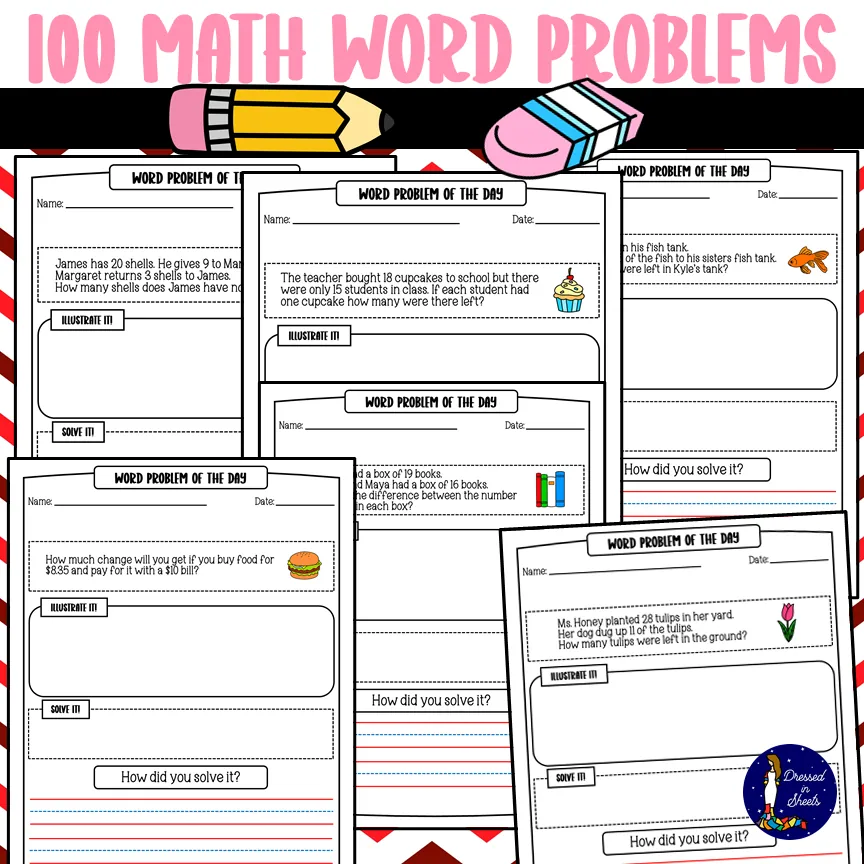
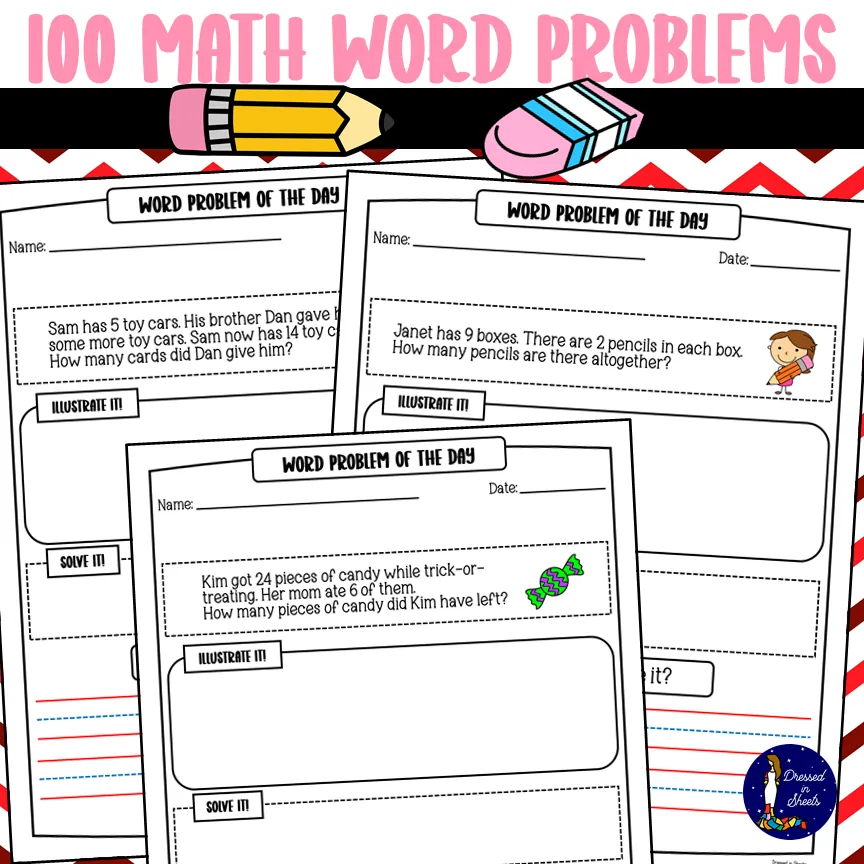
100 Math Word Problems for Second Graders
- Grades
- Grade 2
- Pages
- 102
- File type
- Preparation
- Print ready


- Subject
- Math
- Topic
- Addition word problems, Subtraction word problems
- Resource types
- Word Problems, Worksheets
- Preparation
- Print ready
- Standards
- 2.OA.A.1
Product description
From the author
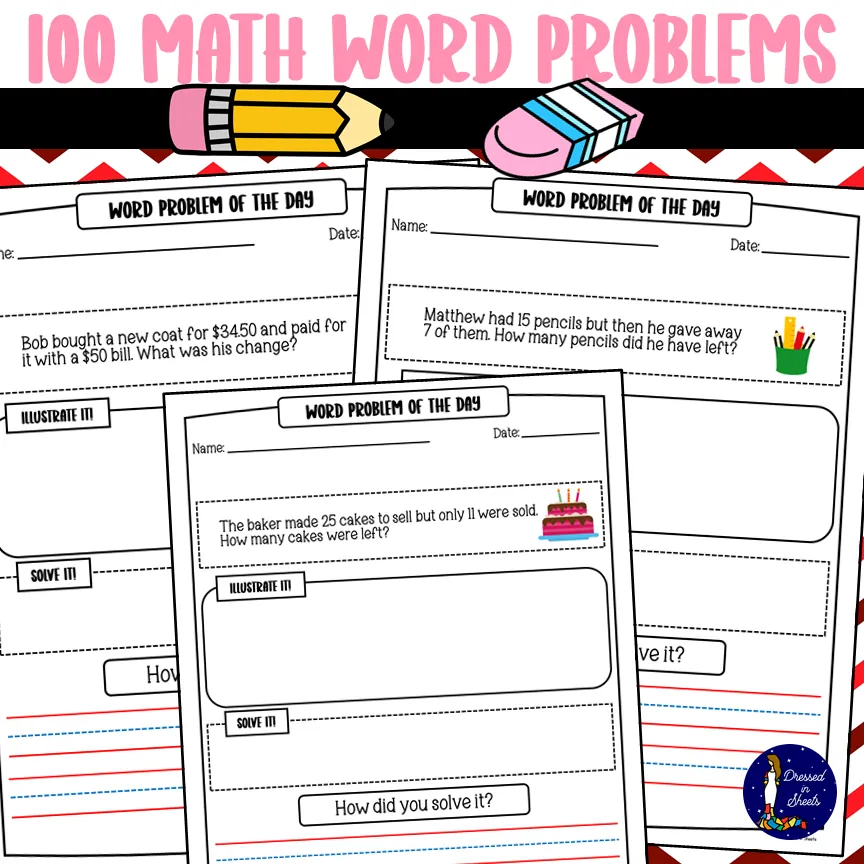
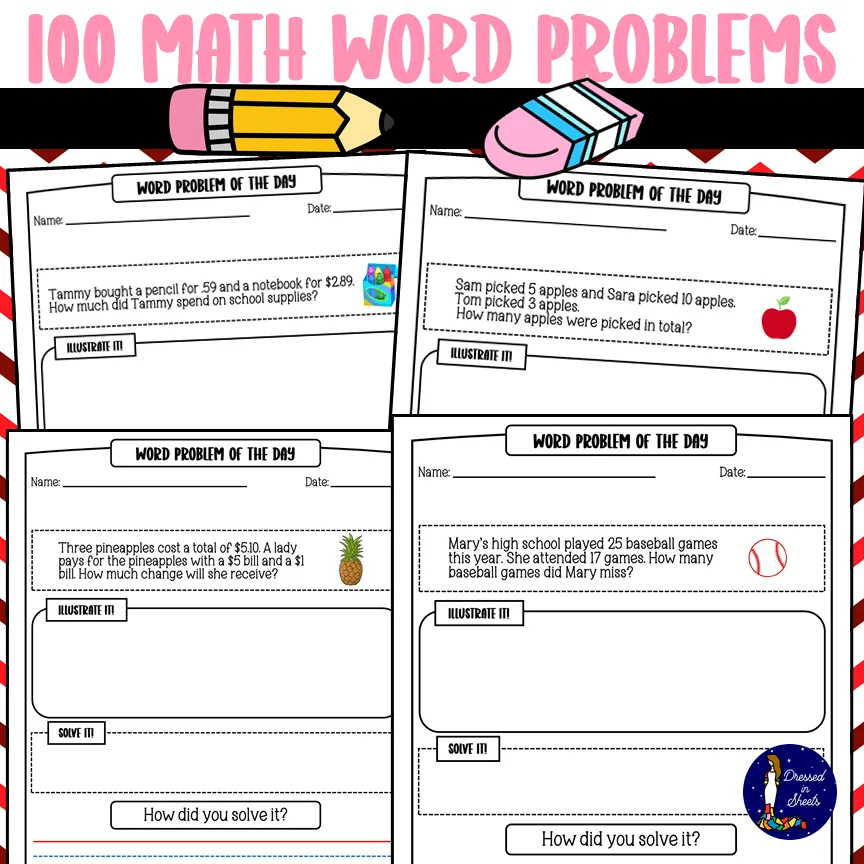
This set of 100 math word problems offers varied early-math practice; select problems that fit your second graders’ current skills. It includes addition, subtraction, early division, geometry, and time word problems. Because of the way each page is set up, the students will have the ability to illustrate their work, solve for the answer, and tell what steps they took to solve the problem.
Can be used as a morning warm-up, bell ringer, early finishers, quizzes, and one on one tutoring.
Thanks for viewing! :)
Related resources
More resources teachers may find useful
24 related resources were found using this product's title, contributor, categories and tags.


In the classroom
Teaching tips & learning objectives

Learning objectives
Solve one- and two-step addition and subtraction word problems within real-world contexts.
Apply repeated addition or multiplication reasoning to word problems involving repeated events.
Explain the strategy used to solve a word problem in writing.

Teaching tips
Choose a few problems at a time for focused practice.
Have learners explain their reasoning in the provided space.
For a shape riddle, distinguish conditions that identify one shape from conditions shared by several shapes.

Skills covered
Word-problem interpretation — learners identify quantities and decide which operations fit the scenario.
Arithmetic reasoning — learners use addition, subtraction or equal-group reasoning and explain their steps.
Money calculations — learners work with prices and change.

No reviews yet
Downloaded this resource? Tell other teachers how it went.
Curriculum
Standards, concepts & topics
Standards
 Standards
- 2.OA.A.1 — Use addition and subtraction within 100 to solve one- and two-step word problems involving situations of adding to, taking from, putting together, taking apart, and comparing, with unknowns in all positions, e.g., by using drawings and equations with a symbol for the unknown number to represent the problem. 1
Core concepts
 Core concepts
Addition and subtraction word problems
Money
Geometry
Problem-solving strategies
 Topics
More to explore
You may also like