2nd Grade Reading Comprehension Passages - Funny Stories
- Grades
- Grade 2, Elementary
- Pages
- 44
- File type
- Answer key
- Included


- Subject
- ELA, Reading, Reading Comprehension
- Topic
- reading, comprehension
- Resource types
- Worksheets & Printables, Worksheets
- Answer key
- Included
- Standards
- CCSS.RL.2.10 CCSS.RL.2.1 +1
About this resource
What's inside this resource
Product description
From the author
(the easiest level of our popular Funny Stories series)
Your 2nd Graders will love these funny stories ...and so will you!
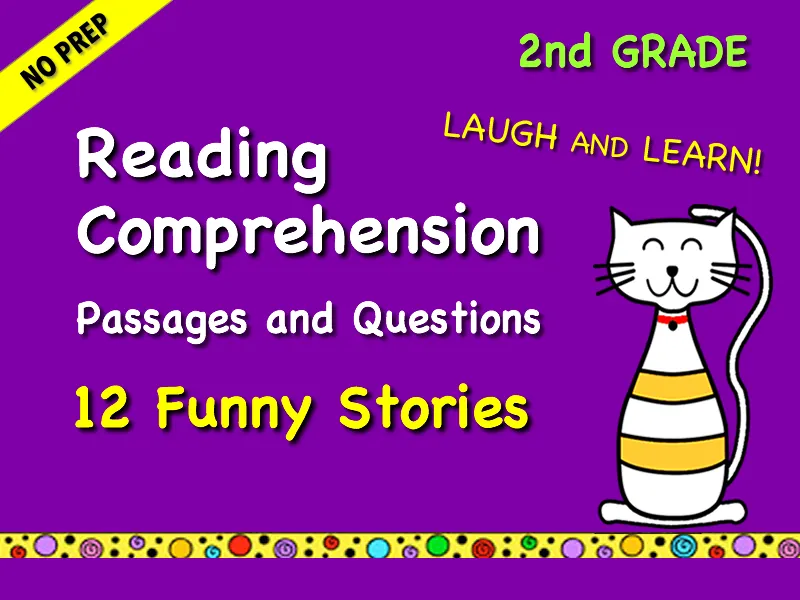
Many 2nd graders struggle with reading comprehension. These 12 original funny stories will engage kids (and adults too) while improving reading and building comprehension skills.
With rib-tickling reading passages and easy multiple choice comprehension questions, 2nd Grade Reading Comprehension Passages - Funny Stories combines fun with reading fundamentals. It is sure to motivate any reluctant reader. Your 2nd grader will be so entertained, they'll forget they're building the reading skills so crucial for academic success.
Features
12 Original Funny Stories targeted to a 2nd grade reading level
Multiple Choice Questions after each story to reinforce comprehension and close reading skills
Answer Keys
Digital Component (Google Docs and Forms) for one story
No-prep, 44 pages in easily printable PDF format
Although targeted to 2nd graders, this resource, because of its highly engaging content, is also beneficial for English language learners of all levels as well as older students struggling with reading.
This popular and unique resource has received positive feedback from teachers, who have described it as an excellent resource that significantly increases student engagement and reading comprehension skills. With its diverse utilization range from classrooms to home to virtual learning platforms, 2nd Grade Reading Comprehension Passages - Funny Stories is indeed a comprehensive tool to promote confident and proficient readers who are excited about reading.
The 12 Stories
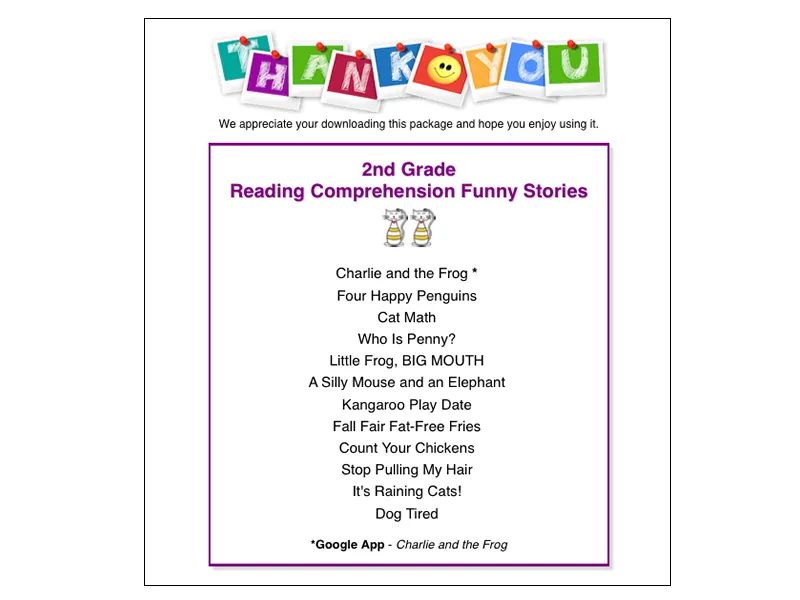
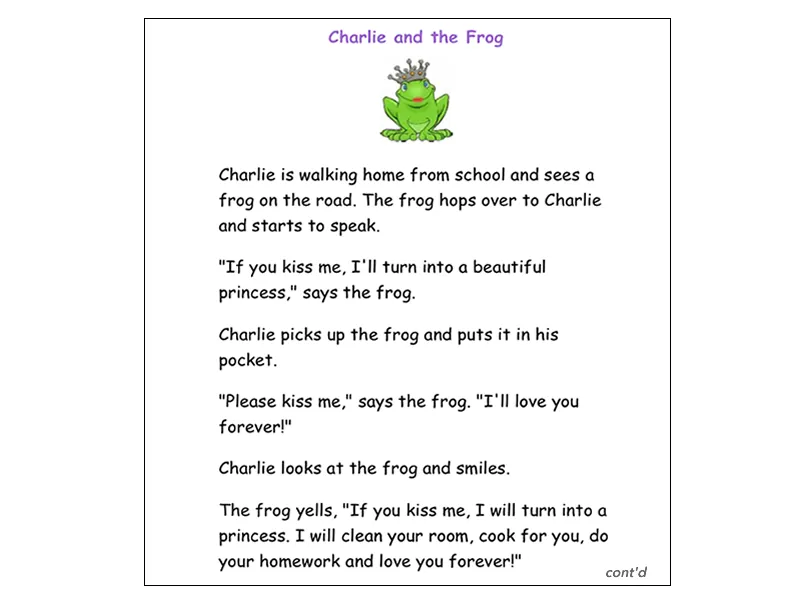
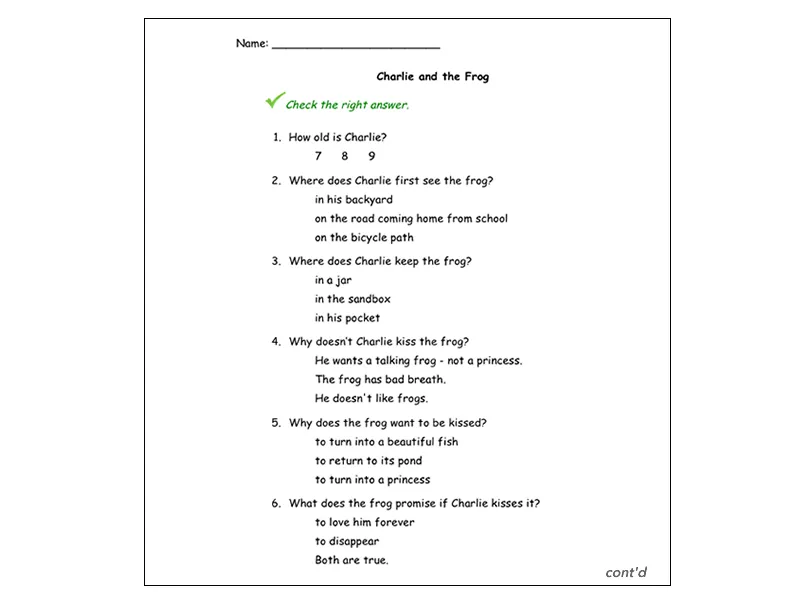
Charlie and the Frog * Digital Resource included
Four Happy Penguins
Cat Math
Who Is Penny?
Little Frog, BIG MOUTH
A Silly Mouse and an Elephant Kangaroo Play Date
Fall Fair Fat-Free Fries Count Your Chickens
Stop Pulling My Hair
It's Raining Cats!
Dog Tired
This collection of reading passages and comprehension questions addresses many of the 2nd Grade Common Core ELA Reading standards:
Rl2.1, rl.2.10, rf2.4, ccra.r.1
Looking for something a little more difficult? Try the 3rd Grade Collection of Funny Stories:
Related resources
More resources teachers may find useful
24 related resources were found using this product's title, contributor, categories and tags.


In the classroom
Teaching tips & learning objectives

Learning objectives
Answer literal-recall multiple-choice questions about setting, character, and events in a short story.
Answer inferential questions that require reading between the lines, such as explaining a character's real meaning or why a story is funny.
Identify story elements (character, setting, sequence of events) across twelve independent short stories.

Teaching tips
Assign one story per day as a short independent reading task, since each of the twelve sets is fully self-contained with its own answer key.
Discuss the punchline or twist of each story as a class before reviewing worksheet answers, since several questions ask students to explain why the story is funny.
Use the 'It doesn't say in the story' answer choices to teach the difference between stated and unstated information in a text.

Skills covered
Literal reading comprehension — students select the correct setting, character, or event detail from a short story.
Inference — students choose answers that require reading between the lines, such as what a character really means or why an ending is funny.
Distinguishing stated vs. unstated information — several questions offer 'It doesn't say in the story' as a correct answer choice, requiring students to recognize when a text does not provide a detail.
Good to know
Questions teachers ask about this resource
How do the stories build their humor?
Most build toward a punchline or twist, such as a talking frog who turns out to prefer staying a frog, or wordplay like the cook's answer that fries are 'fat-free' because there's no charge for the fat.
Why do some answer choices say 'It doesn't say in the story'?
Several questions test whether students can tell stated details from unstated ones — for example, the story never says where the elephant's home is, so 'It doesn't say in the story' is the correct answer.

No reviews yet
Downloaded this resource? Tell other teachers how it went.
Curriculum
Standards, concepts & topics
Standards
 Standards
- CCSS.RL.2.10 — By the end of the year, read and comprehend literature, including stories and poetry, in the grades 2–3 text complexity band proficiently, with scaffolding as needed at the high end of the range.
- CCSS.RL.2.1 — Ask and answer such questions as who, what, where, when, why, and how to demonstrate understanding of key details in a text.
- CCSS.RL.2.3 — Describe how characters in a story respond to major events and challenges.
Core concepts
 Core concepts
reading comprehension
inference
story elements
humor in narrative
 Topics
Explore more
Categories this resource belongs to
Explore related searches
More to explore
You may also like