3rd Grade Exclamatory and Imperative Sentences Worksheets



- Grades
- Grades 1–5, Elementary
- Pages
- 4
- File type
- Answer key
- Included


- Subject
- ELA
- Topic
- 3rd grade grammar, exclamatory sentences
- Resource types
- Activities
- Answer key
- Included
About this resource
What's inside this resource
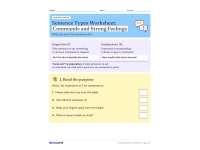
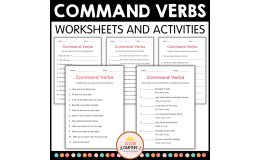
Third graders learn to sort sentences by the job they do in this worksheet on imperative and exclamatory sentences. A reference box on page 1 explains that an imperative tells someone to do something, while an exclamatory sentence shows strong feeling, and it points out that a command such as "Look out!" can end with an exclamation point and still be imperative.
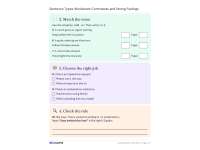
Students label four sentences, then read three situations, such as a coach giving an urgent warning, and add the right end mark and label. They check the imperative request and the exclamatory sentence from two pairs and decide whether a classmate is right that every sentence ending in ! is exclamatory. On page 3 they write their own sentences: a polite request for a ruler, a sentence about a huge rainbow, a "Do not" command and a complete exclamation about a comet.
- Grade 3: imperative and exclamatory sentences, purpose and end marks
- Four pages: three student pages with 14 items in five parts and a one-page answer key
- Print options: a full-color PDF and a print-friendly black and white PDF
Related resources
More resources teachers may find useful
24 related resources were found using this product's title, contributor, categories and tags.


In the classroom
Teaching tips & learning objectives

Learning objectives
Identify imperative and exclamatory sentences by their purpose.
Choose a period or exclamation point that fits how a sentence is said.
Explain why a command that ends in an exclamation point is still imperative.

Teaching tips
Review the page 1 reference box together, especially the "Look out!" example, before Part 1.
Use item 10 for discussion: students explain why "Stay behind the line!" is a command even though it ends with !.
For items 11, 12 and 14, accept any complete sentence that does the requested job; the key gives a model for each.

Skills covered
Sentence purpose: students decide whether a sentence tells someone to act or shows strong feeling.
End punctuation: students choose a period or exclamation point to match a calm direction, an urgent warning or amazement.
Grammar reasoning: one item asks students to test a classmate's rule about exclamation points and explain their answer.
Good to know
Questions teachers ask about this resource
What sentence types does this worksheet cover?
It covers imperative sentences, which tell someone to do something, and exclamatory sentences, which show strong feeling.
Can a command end with an exclamation point?
Yes. The worksheet teaches that a command can end with a period or an exclamation point, and item 10 asks students to explain why "Stay behind the line!" is still imperative.
Does it include answers?
Yes. Page 4 gives answers for every item, model sentences for the writing prompts and a note on what to accept.
How many pages is it?
Four pages: three student pages with 14 items and a one-page answer key, in full color and print-friendly black and white.

No reviews yet
Downloaded this resource? Tell other teachers how it went.
Resource details
Concepts & topics
Core concepts
 Core concepts
imperative sentences
exclamatory sentences
sentence types
end punctuation
commands
grade 3 grammar
Topics
 Topics
Explore more
Categories this resource belongs to
Explore related searches
More to explore
You may also like