Antonym Diamante Poem Example, Lesson Plan, Templates, Poetry Writing



- Grades
- Grades 3–6, Middle School, Elementary
- Pages
- 19
- File type
- Answer key
- Included


- Subject
- Writing, ELA, Creative Writing, Poetry, Literature, Vocabulary, Language Development
- Topic
- antonym diamante poem, diamante poem template
- Resource types
- Bulletin Boards, Classroom Decor, Worksheets & Printables, Worksheets
- Answer key
- Included
- Standards
- CCSS.L.4.5
About this resource
What's inside this resource
Are you looking for a clear and structured way to teach antonym diamante poems? This resource will guide students step-by-step through writing a diamante poem using antonyms. It will help students understand both the 7-line poem structure and how opposites connect within their writing.
With a combination of examples, interactive notebook templates, and guided support, your students will be able to move from brainstorming ideas to completing their own diamante poems with confidence.
Items Included
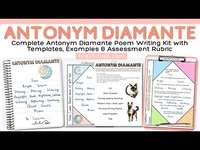
A lesson plan to introduce and model diamante poetry
Antonym diamante poem example for student reference (color and blackline)
Structured interactive writing notebook templates to scaffold poem writing
A clear breakdown of the 7-line diamante format (posters)
A simple assessment rubric for marking
Publishing sheet
Perfect for
This product may be used with students in grades 3-6, in your poetry and writing units, literacy rotations, small group or whole-class lessons and as an independent writing task
How You Can Use It
First, introduce the structure using the example poem provided, then model a poem together as a class, and finally guide students through the templates before moving into independent writing.
Skills Covered
The following skills are covered: Poetry writing, antonyms practice, using parts of speech, building vocabulary and sentence structure.
If you're looking for a resource that will give your students the structure they need as they write their diamante poems, this is a practical and easy-to-use poetry writing resource for your classroom.
Related resources
More resources teachers may find useful
24 related resources were found using this product's title, contributor, categories and tags.


In the classroom
Teaching tips & learning objectives

Learning objectives
Write a seven-line diamante poem that transitions from one noun to its antonym using adjectives and gerunds.
Brainstorm and select an antonym pair to structure a poem around.
Apply nouns, adjectives, and gerunds correctly within a fixed poetic line structure.

Teaching tips
Print the Cover Sheet and Response Sheet separately and photocopy single-sided so the Cover Sheet can be glued over the Response Sheet at the left tab.
Model the sample Cat/Dog poem as a class before releasing students to brainstorm their own antonym pairs.
Glue finished notebook templates onto cardstock to double as a poetry bulletin board display.

Skills covered
Antonym identification — students brainstorm and select a pair of opposite words to anchor their seven-line poem.
Parts-of-speech application — students supply nouns, adjectives, and -ing (gerund) words in the fixed lines of the diamante structure.
Structured poem composition — students follow a seven-line format that transitions from one subject to its antonym through a shared middle line.
Good to know
Questions teachers ask about this resource
Which version of the templates should a teacher print — British English or US spellings?
The pack contains two complete, identical sets of the lesson plan, templates, and checklist, one using British spellings and one using US spellings, so a teacher can pick the version that matches their classroom.
How does the poem move from the first word to its antonym?
The seven lines start with a noun, add two adjectives and three gerunds describing it, shift through a middle line pairing nouns from both subjects, then mirror back with gerunds and adjectives describing the antonym before ending on the antonym itself, as shown in the Cat/Dog sample.

No reviews yet
Downloaded this resource? Tell other teachers how it went.
Curriculum
Standards, concepts & topics
Standards
 Standards
- CCSS.L.4.5 — Demonstrate understanding of figurative language, word relationships, and nuances in word meanings. a. Explain the meaning of simple similes and metaphors (e.g., as pretty as a picture) in context. b. Recognize and explain the meaning of common idioms, adages, and proverbs. c. Demonstrate understanding of words by relating them to their opposites (antonyms) and to words with similar but not identical meanings (synonyms).
Core concepts
 Core concepts
Antonyms
Diamante poem structure
Parts of speech
Interactive notebook
 Topics
Explore more
Categories this resource belongs to
Explore related searches
More to explore
You may also like