AP Psychology Final Exam – 50-Question Test
- Grades
- Grades 10–12
- Pages
- 6
- File type
- Microsoft Word
- Editable
- Yes


- Subject
- Psychology
- Topic
- AP Psychology, Final exam
- Resource types
- Assessments, Tests
- Editable
- Yes
Product description
From the author
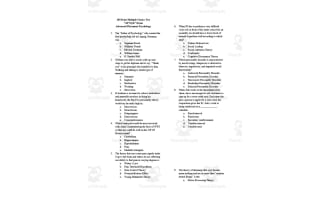
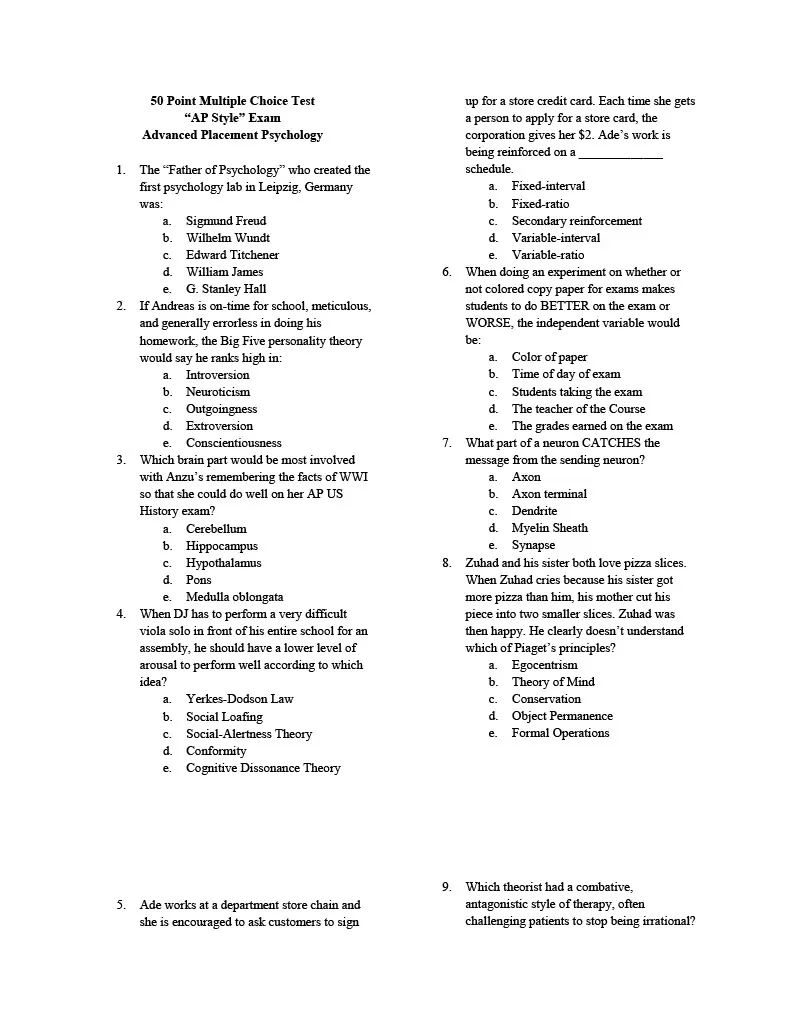
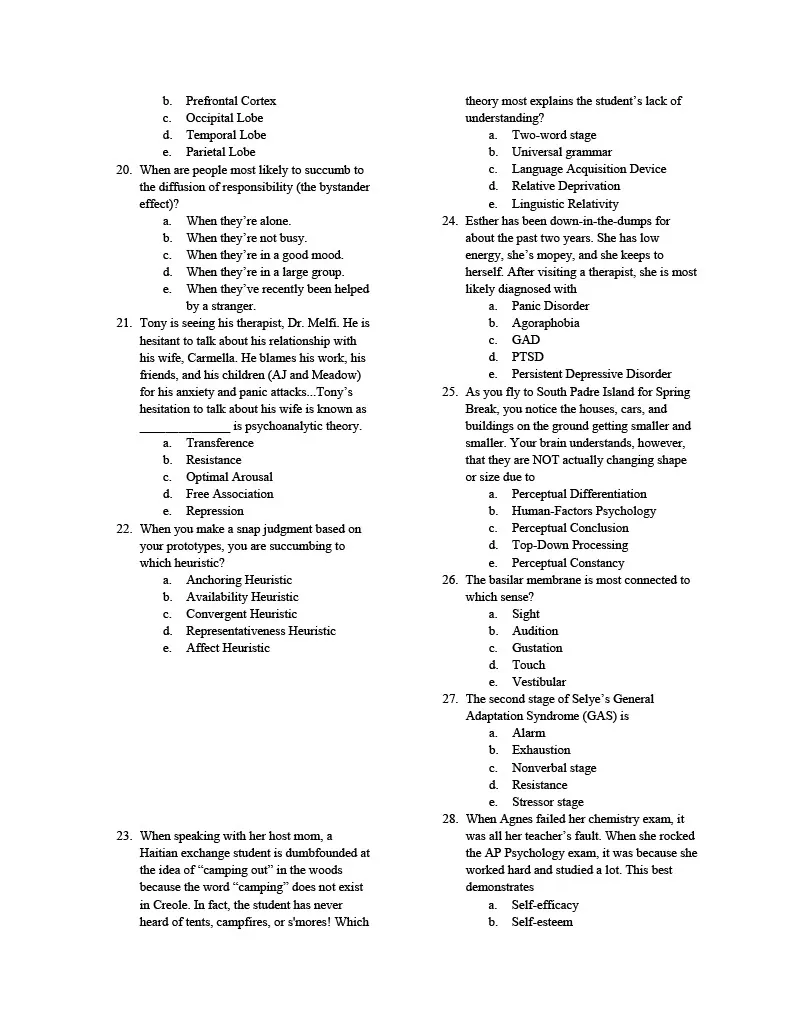
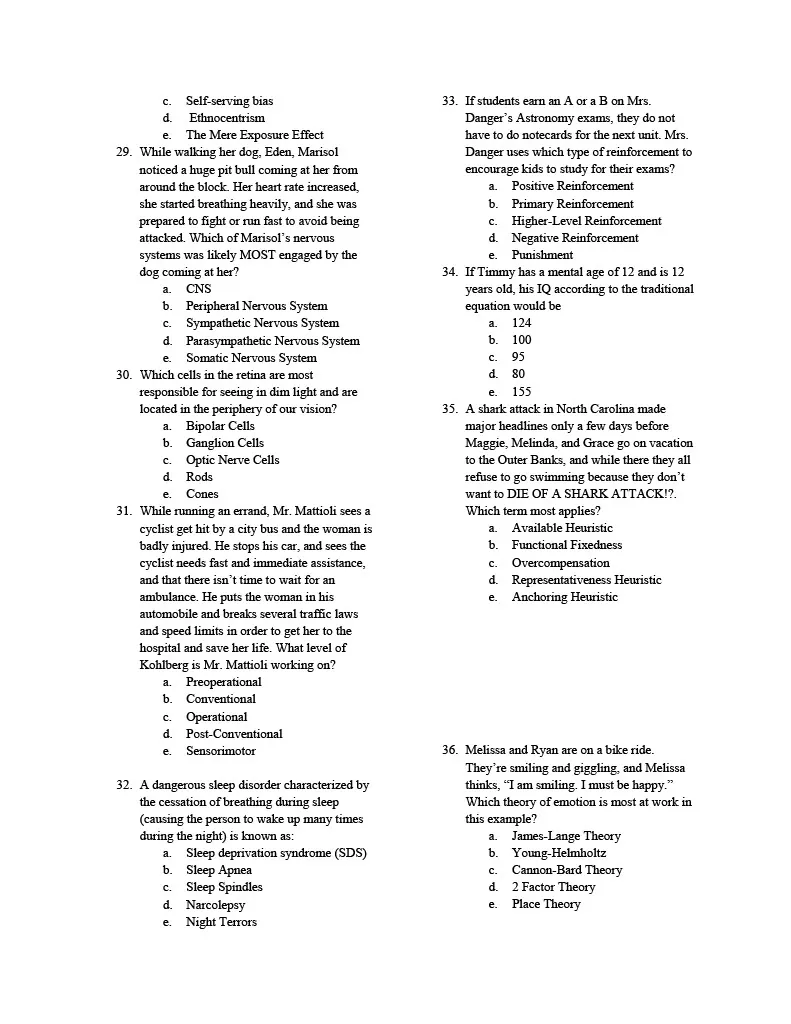
This resource is an AP Psychology Final Exam.
It is a 50 Point Multiple Choice Test.
Related resources
More resources teachers may find useful
24 related resources were found using this product's title, contributor, categories and tags.


In the classroom
Teaching tips & learning objectives

Learning objectives
Identify psychological concepts in short scenarios
Evaluate features of a research design
Recall terminology across the psychology topics sampled

Teaching tips
- Select questions that match the psychology topics your class has studied.
- Use the editable Word document to adjust the selection for your course.
- Discuss the reasoning behind scenario-based responses after students attempt them.

Skills covered
Applied concept recognition — students identify the correct psychological concept, such as a reinforcement schedule or a Gestalt principle, embedded in a short real-world scenario rather than a direct definition.
Research-methods reasoning — students evaluate flaws in a described study design, such as sample size or the absence of an operational definition.
Cross-topic recall under exam conditions — students retrieve and apply terminology across the topics sampled, from neuroanatomy to therapy approaches to statistics.

No reviews yet
Downloaded this resource? Tell other teachers how it went.
Resource details
Concepts & topics
Core concepts
 Core concepts
AP Psychology review
Biological bases of behavior
Learning and conditioning
Social psychology
Research methods and statistics
 Topics
Explore more
Categories this resource belongs to
Explore related searches
More to explore
You may also like