Area and Perimeter Math Maze
- Grades
- Grades 3–5
- Pages
- 7
- File type
- Answer key
- Included


- Subject
- Math, Geometry
- Topic
- Area, Perimeter
- Resource types
- Mazes
- Answer key
- Included
Product description
From the author
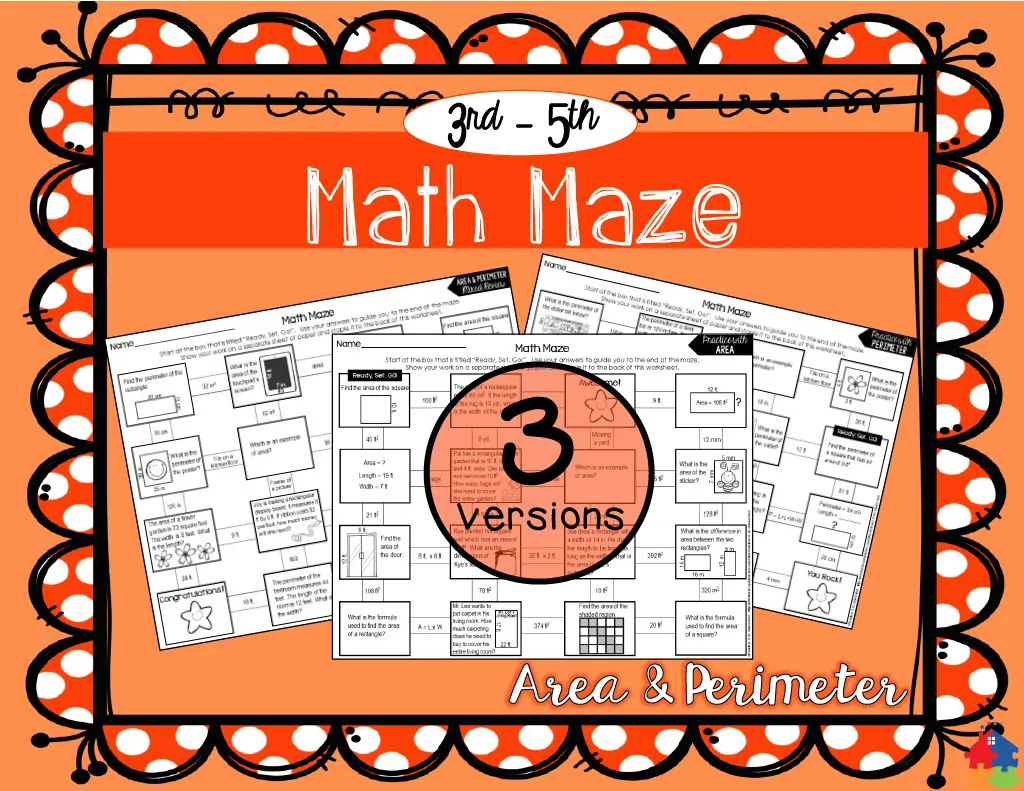
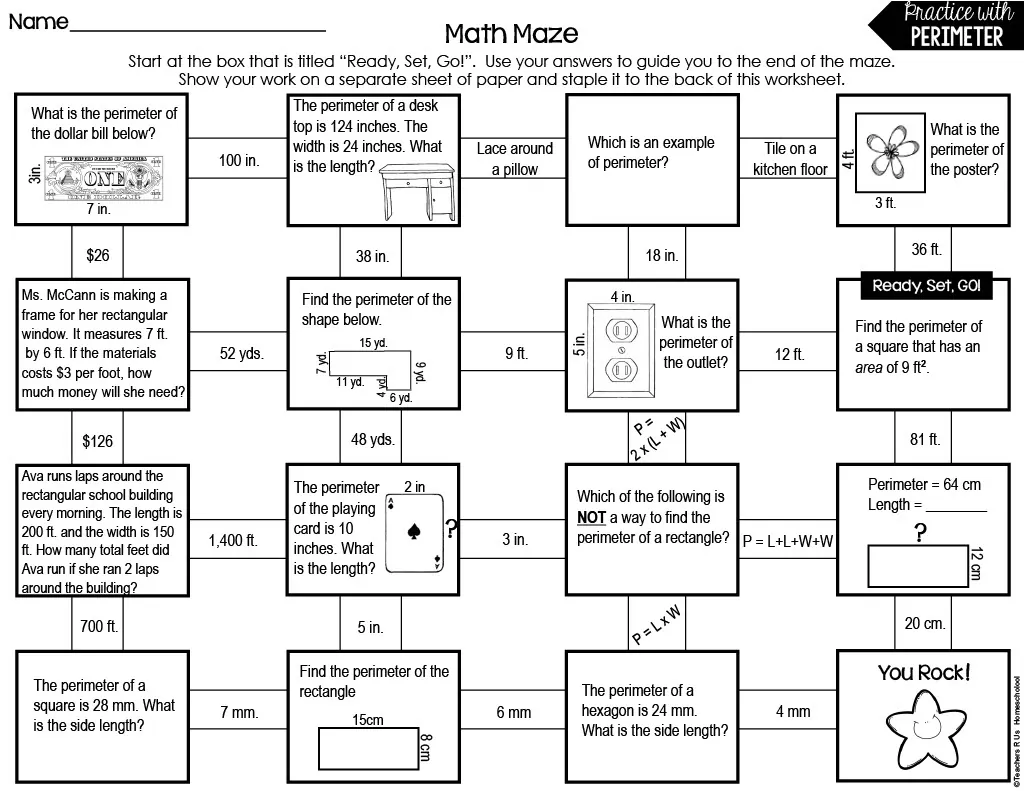
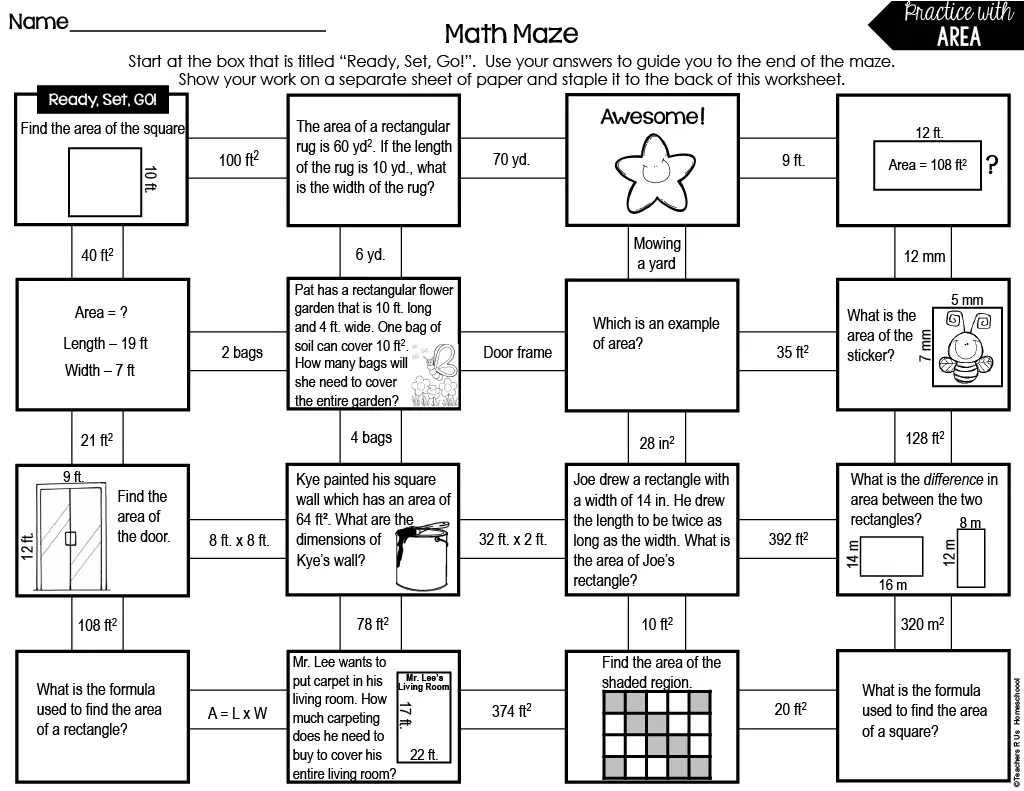
This resource is an Area and Perimeter Math Maze.
Students will start at the box that is titled “Ready, Set, Go!”.
They will use their answers to guide them to the end of the maze.
You may have students show their work on a separate sheet of paper and staple it to the back of this worksheet.
Students may enjoy this as a whole group, small group or station activity.
There are 3 versions to choose from.
Answer key included.
Related resources
More resources teachers may find useful
24 related resources were found using this product's title, contributor, categories and tags.
In the classroom
Teaching tips & learning objectives

Learning objectives
Students will calculate the perimeter of rectangles, squares and irregular shapes from given side lengths or word-problem context.
Students will apply area and perimeter formulas to real-world contexts such as material costs, carpet coverage and fencing.
Students will use one problem's answer to select their next problem, self-checking their path through the maze.

Teaching tips
Because each maze has its own 'Answer Key' page with the identical layout, the marked route can be compared with a student’s route; ask for separate working to understand their calculations.
The three mazes are organized by focus — perimeter only, area only, then mixed review — so they can be assigned in that order to build from single-concept to combined practice.
Several problems (the window-frame cost, the ribbon for a display board) tie the perimeter formula to a per-unit cost, giving students practice combining geometry with a money calculation.

Skills covered
Perimeter calculation — students find the perimeter of rectangles, squares, and shapes with multiple named side lengths across fourteen maze problems.
Formula application in context — students combine perimeter or area with a per-unit cost (fencing, ribbon, carpet, soil) to answer real-world word problems.
Mixed geometric reasoning — the third maze requires deciding whether each problem calls for area or perimeter before solving it.

No reviews yet
Downloaded this resource? Tell other teachers how it went.
Curriculum
Standards, concepts & topics
 Standards
 Core concepts
 Topics
Explore more
Categories this resource belongs to
Explore related searches
More to explore
You may also like