



Chernobyl Nuclear Meltdown STEM Case Study



About This Product
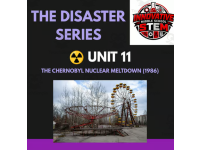
Investigate the world's worst nuclear disaster with this comprehensive, no-prep 6-page printable STEM Case Study Packet! Designed specifically for middle and high school classrooms, this multi-day unit provides an immersive, highly informative look at the tragic 1986 Chernobyl Nuclear Meltdown (Unit 4). By combining nuclear physics, radiochemistry, control room telemetry diagnostics, applied mathematics, and regulatory ethics, this resource transforms a monumental technological catastrophe into a rich, interactive learning experience.
Throughout this unit, students explore critical secondary STEM concepts—including RBMK reactor physics, positive void coefficient reactivity, graphite control rod tip insertion power surges, xenon-135 poisoning kinetics, radioactive half-life decay, and containment engineering—in an accessible, highly engaging format.
What’s Included in this 6-Page Deep-Dive Packet:
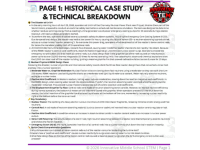
Page 1: Historical Case Study & Technical Breakdown
Features a detailed historical narrative of the April 26, 1986 explosion in Pripyat, USSR. Students examine RBMK-1000 water-cooled graphite-moderated reactor mechanics, the fatal electrical turbine rundown test, positive void coefficient dynamics, graphite-tipped boron control rod surges, and steam explosions before answering targeted comprehension check questions.
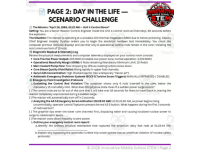
Page 2: Day in the Life Scenario Challenge
Students step into the shoes of a Chief Nuclear Control Room Engineer at 1:23 AM on the night of the accident. In this realistic roleplay assignment, they analyze real-time neutron flux telemetry, evaluate critical coolant flow drops, trace Xenon pit dynamics, and navigate emergency scram button (AZ-5) protocols.
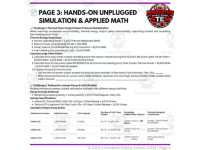
Page 3: Hands-On Unplugged Simulation & Applied Math
Brings nuclear physics math into the classroom with clear, step-by-step calculations. Students compute thermal power spikes in megawatts thermal (MWt) against safety thresholds, calculate positive void coefficient reactivity multiplication, and model radioactive half-life decay rates for Iodine-131 and Cesium-137.
Page 4: Engineering Ethics & Workplace Dilemma
Explores corporate pressure and political secrecy versus public safety. Students analyze the decision to bypass automatic emergency core cooling systems (ECCS) to maintain test schedules, operating the reactor below minimum allowed control rod limits, and the resulting global nuclear regulatory reforms.
Page 5: Redesign Brief & Innovation Lab
A creative blueprinting challenge where students act as nuclear engineers designing "RBMK Nuclear Reactor V-2." Applying fail-safe energy engineering principles, they incorporate negative void coefficient fuel geometry, solid-boron control rods without graphite tips, reinforced steel-and-concrete containment domes, and automated passive cooling loops.
Page 6: Teacher Answer Key & Scoring Rubric
Includes complete, step-by-step solutions for all narrative comprehension questions and mathematical calculations, along with a clear 10-point grading rubric to streamline assessment for the design blueprint assignment.
Teacher Benefits:
100% Unplugged & Copy-Paste Friendly: Clean layout with zero dark background boxes or awkward formatting, ensuring seamless editing in Google Docs, Word, or Canva.
Multi-Day Classroom Value: Designed to cover 3 to 5 full class periods. Perfect for Physics, Chemistry, Physical Science, Environmental Science, Nuclear Engineering, World History electives, or emergency sub plans.
High-Interest Real-World Content: Combines nuclear decay math, reactor physics, control room decision telemetry, nuclear ethics, and power plant engineering redesign into one high-impact unit.
Resource Tags
0 Reviews
Check out these other great products


