



Challenger Disaster STEM Case Study



About This Product
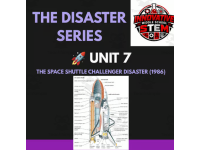
Investigate one of the most pivotal engineering and managerial failures in modern aerospace history with this comprehensive, no-prep 6-page printable STEM Case Study Packet! Designed specifically for middle and high school classrooms, this multi-day unit provides an immersive, highly informative look at the tragic 1986 Space Shuttle Challenger Disaster (STS-51-L). By combining polymer chemistry, rocket physics, forensic investigation, applied mathematics, and organizational ethics, this resource transforms a monumental spaceflight tragedy into a rich, interactive learning experience.
Throughout this unit, students explore critical secondary STEM concepts—including elastomer thermal glass transition temperature, solid rocket booster field joint physics, hot gas blow-by erosion, launch decision protocols, and workplace safety culture—in an accessible, highly engaging format.
What’s Included in this 6-Page Deep-Dive Packet:
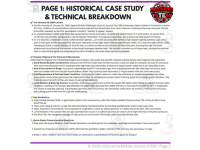
Page 1: Historical Case Study & Technical Breakdown
Features a detailed historical narrative of the January 28, 1986 launch. Students examine solid rocket booster (SRB) field joint mechanics, synthetic rubber O-ring elasticity loss in 36°F weather, joint rotation dynamics, and flame plume ignition of the liquid hydrogen/oxygen external fuel tank before answering targeted comprehension check questions.
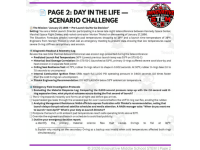
Page 2: Day in the Life Scenario Challenge
Students step into the shoes of a NASA Mission Director at Kennedy Space Center on launch morning. In this realistic roleplay assignment, they analyze pre-launch freezing temperature telemetry, evaluate emergency teleconference warnings from Morton Thiokol engineers, and navigate high-stakes go/no-go launch decision protocols.
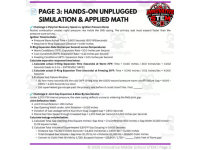
Page 3: Hands-On Unplugged Simulation & Applied Math
Brings materials physics math into the classroom with clear, step-by-step calculations. Students compute O-ring resilience recovery times (comparing milliseconds vs. seconds) across varying ambient temperatures, calculate joint gap expansion pressure (PSI), and analyze gas blow-by leakage rates.
Page 4: Engineering Ethics & Workplace Dilemma
Explores corporate pressure and whistleblower ethics. Students analyze the famous pre-launch teleconference, Roger Boisjoly's urgent engineering warnings, schedule pressure driven by media launch delays, and management overriding technical advice by asking engineers to "take off your engineering hat and put on your management hat."
Page 5: Redesign Brief & Innovation Lab
A creative blueprinting challenge where students act as aerospace engineers designing "Space Shuttle SRB Field Joint V-2." Applying fail-safe rocket design principles, they incorporate an overarching capture latch flange, dynamic heated seal channels, a third redundant O-ring, and automated thermal sensors.
Page 6: Teacher Answer Key & Scoring Rubric
Includes complete, step-by-step solutions for all narrative comprehension questions and mathematical calculations, along with a clear 10-point grading rubric to streamline assessment for the design blueprint assignment.
Teacher Benefits:
100% Unplugged & Copy-Paste Friendly: Clean layout with zero dark background boxes or awkward formatting, ensuring seamless editing in Google Docs, Word, or Canva.
Multi-Day Classroom Value: Designed to cover 3 to 5 full class periods. Perfect for Physics, Physical Science, Aerospace Science, Chemistry, Materials Science, CTE electives, or emergency sub plans.
High-Interest Real-World Content: Combines polymer chemistry, fluid pressure math, teleconference ethics roleplay, launch decision telemetry, and rocket engineering redesign into one high-impact unit.
Resource Tags
0 Reviews
Check out these other great products


