



RMS Titanic Sinking STEM Case Study



About This Product
Investigate the world's most famous maritime disaster with this comprehensive, no-prep 6-page printable STEM Case Study Packet! Designed specifically for middle and high school classrooms, this multi-day unit provides an immersive, highly informative look at the tragic 1912 Sinking of the RMS Titanic. By combining fluid mechanics, metallurgy, forensic engineering, applied mathematics, and regulatory ethics, this resource transforms a landmark ocean catastrophe into a rich, interactive learning experience.
Throughout this unit, students explore critical secondary STEM concepts—including Archimedes' principle of buoyancy, low-temperature steel ductile-to-brittle transitions, slag-heavy wrought iron rivet shear failures, uncapped watertight bulkhead fluid dynamics, and maritime safety regulations—in an accessible, highly engaging format.
What’s Included in this 6-Page Deep-Dive Packet:
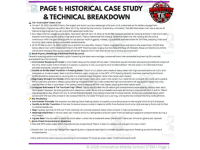
Page 1: Historical Case Study & Technical Breakdown
Features a detailed historical narrative of the April 14, 1912 collision. Students examine "unsinkable" hull myths, freezing 28°F water metallurgy, high-sulfur steel plate embrittlement, slag-filled wrought iron rivets, and uncapped bulkhead spillover dynamics before answering targeted comprehension check questions.
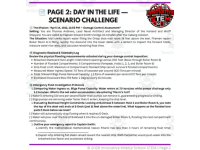
Page 2: Day in the Life Scenario Challenge
Students step into the shoes of Lead Naval Architect Thomas Andrews on the night of the disaster. In this realistic roleplay assignment, they analyze seawater flooding rates in tons per second, evaluate compartment breach telemetry, and calculate ship survival timelines.
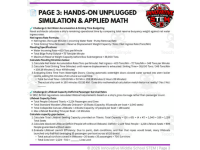
Page 3: Hands-On Unplugged Simulation & Applied Math
Brings naval architecture math into the classroom with clear, step-by-step calculations. Students compute seawater ingress volume rates against bilge pump capacities, calculate downward displacement mass in tons, and model progressive bulkhead spillover timelines.
Page 4: Engineering Ethics & Workplace Dilemma
Explores safety regulations and corporate trade-offs. Students analyze outdated British Board of Trade laws, the choice to carry 20 lifeboats instead of 64 to preserve promenade aesthetics, ignoring 6 iceberg warnings to maintain speed, and eventual maritime safety reforms.
Page 5: Redesign Brief & Innovation Lab
A creative blueprinting challenge where students act as naval architects designing "RMS Titanic V-2." Applying fail-safe engineering principles, they incorporate a complete double hull, ceiling-sealed watertight bulkheads, high-tensile nickel-steel alloy rivets, wireless distress alarms, and 100% lifeboat capacity.
Page 6: Teacher Answer Key & Scoring Rubric
Includes complete, step-by-step solutions for all narrative comprehension questions and mathematical calculations, along with a clear 10-point grading rubric to streamline assessment for the design blueprint assignment.
Teacher Benefits:
100% Unplugged & Copy-Paste Friendly: Clean layout with zero dark background boxes or awkward formatting, ensuring seamless editing in Google Docs, Word, or Canva.
Multi-Day Classroom Value: Designed to cover 3 to 5 full class periods. Perfect for Physics, Physical Science, Earth/Ocean Science, Materials Science, Civil/Naval Engineering, History electives, or emergency sub plans.
High-Interest Real-World Content: Combines buoyancy math, metallurgy chemistry, emergency shipboard diagnostics, maritime ethics, and naval architecture redesign into one high-impact unit.
Resource Tags
0 Reviews
Check out these other great products


