Coastal Ecosystems Investigation | Science Workbook | Grades 3–5



About This Product
Coastal Ecosystems Investigation | Science Workbook | Grades 3–5 | 70 Pages
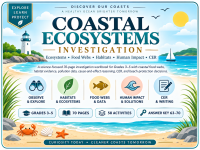
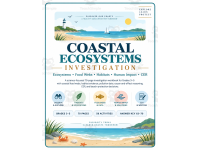
70-Page Elementary Science Resource | Food Webs, Habitats, Human Impact & CER Writing
Help students explore the fascinating world of coastal ecosystems with Coastal Ecosystems Investigation, a science-focused workbook designed for Grades 3–5.
This 70-page resource introduces students to coastal food webs, habitats, ecological relationships, pollution, human impact, and evidence-based scientific reasoning through 58 investigation-themed student activity pages.
Students examine coastal ecosystem scenarios, interpret scientific evidence, compare habitats, explore cause-and-effect relationships, and consider how human activities can affect the environment.
The workbook also incorporates Claim-Evidence-Reasoning (CER) activities to help students develop stronger scientific explanations supported by evidence.
What's Included?
70 total pages
58 student activity pages (Pages 5–62)
Eight answer key pages (Pages 63–70)
Coastal food web investigations
Food chain and ecological relationship activities
Coastal habitat comparisons
Pollution data and human impact scenarios
Cause-and-effect reasoning challenges
Evidence sorting and interpretation
Claim-Evidence-Reasoning (CER) practice
Environmental decision-making activities
Habitat protection and conservation themes
Key Learning Areas
1. Coastal Food Webs & Food Chains
Students investigate relationships among coastal organisms, explore feeding interactions, and examine connections within marine and coastal food webs.
2. Coastal Habitats
Activities focus on habitat characteristics, habitat comparisons, living organisms, and the environmental conditions that support ecosystems.
3. Human Impact & Pollution
Students examine scenarios involving pollution, environmental changes, and the effects of human activities on coastal habitats.
4. Cause-and-Effect Reasoning
Learners practice identifying causes, recognizing effects, and explaining relationships using available scientific information.
5. Claim-Evidence-Reasoning (CER)
Activities introduce students to constructing scientific claims, identifying relevant evidence, and connecting observations with reasoning.
6. Environmental Decision-Making
Students evaluate environmental challenges, compare possible solutions, and consider how choices can influence coastal ecosystems.
Skills Developed
Scientific reasoning
Understanding ecosystems
Food web interpretation
Habitat analysis
Cause-and-effect relationships
Evidence evaluation
CER writing
Data interpretation
Critical thinking
Environmental awareness
Problem-solving
Scientific communication
Comparing possible solutions
Suggested Classroom Uses
This resource is suitable for:
Grades 3–5 science lessons
Elementary life science units
Ecosystems and habitats instruction
Environmental science activities
Marine science enrichment
Independent classroom practice
Small-group investigations
CER writing practice
Science centers
Homework assignments
Earth Day or environmental awareness lessons
Cross-curricular science and literacy activities
Teachers can assign individual investigations to reinforce specific ecosystem concepts or combine multiple activities into a longer coastal environment learning unit.
Answer Key
Pages 63–70 are designated for the teacher answer key, supporting the investigation activities on Pages 5–62.
For evidence-based explanations and open-ended CER responses, student answers may vary when supported by appropriate scientific evidence and reasoning.
Resource Information
Grade Levels: Grades 3–5
Primary Subject: Science / Life Science
Format: Printable PDF
Total Pages: 70
Student Activity Pages: 58
Answer Key: Eight pages
Main Topics: Coastal Ecosystems, Food Webs, Habitats, Human Impact, Pollution & CER Writing
Help students become thoughtful scientific investigators as they explore coastal environments, analyze evidence, understand ecological relationships, and consider ways to protect natural habitats.
Explore. Learn. Protect.
Resource Tags
0 Reviews
Check out these other great products