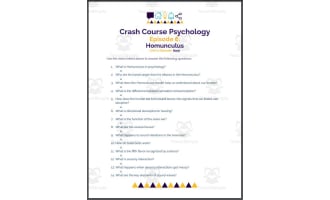
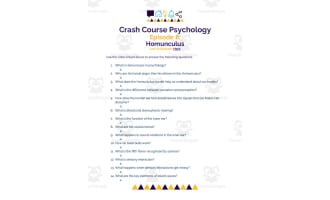
Crash Course Psychology #12: The Bobo Beatdown (Modeling)
- Grades
- Grades 7–12, Middle School, High School
- Pages
- 2
- File type
- Zip


- Subject
- Social Studies, History, Psychology
- Topic
- psychology, Crash Course
- Resource types
- Worksheets & Printables, Worksheets
About this resource
What's inside this resource
Product description
From the author
Related resources
More resources teachers may find useful
24 related resources were found using this product's title, contributor, categories and tags.


In the classroom
Teaching tips & learning objectives

Learning objectives
Summarize Bandura's Bobo doll experiment and its finding on modeled aggression
Define social-cognitive learning and distinguish it from classical and operant conditioning
Explain how Bandura's research challenged pure behaviorist views of learning

Teaching tips
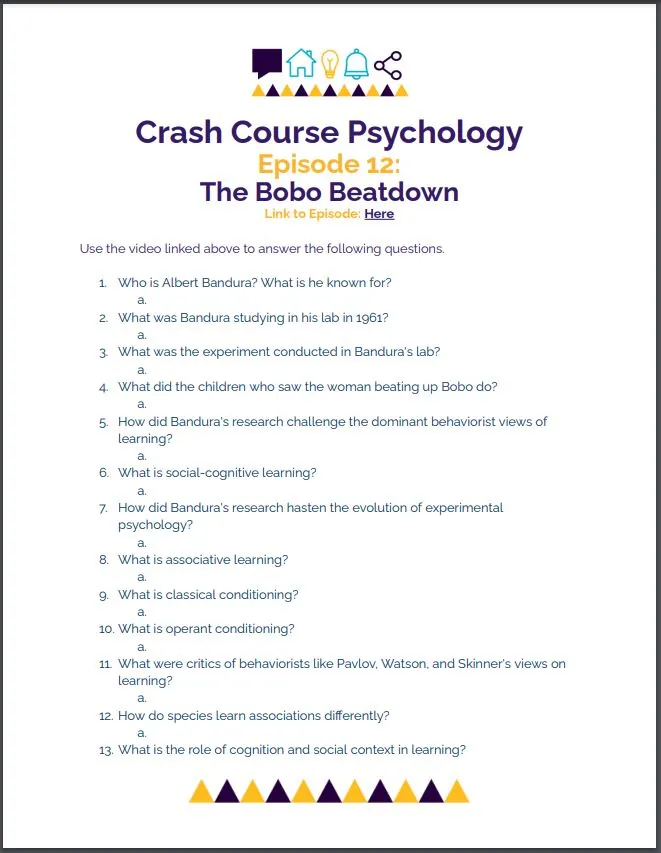
Have students watch the linked episode and answer the questions in order, since later questions (conditioning, cognition's role) build on the experiment described in the earlier ones
Use question 6 (defining social-cognitive learning) as a checkpoint before moving to questions 8-10 on classical and operant conditioning, since the worksheet expects students to already distinguish the three
The included answer key allows this to be assigned as independent viewing homework, with in-class time reserved for discussion

Skills covered
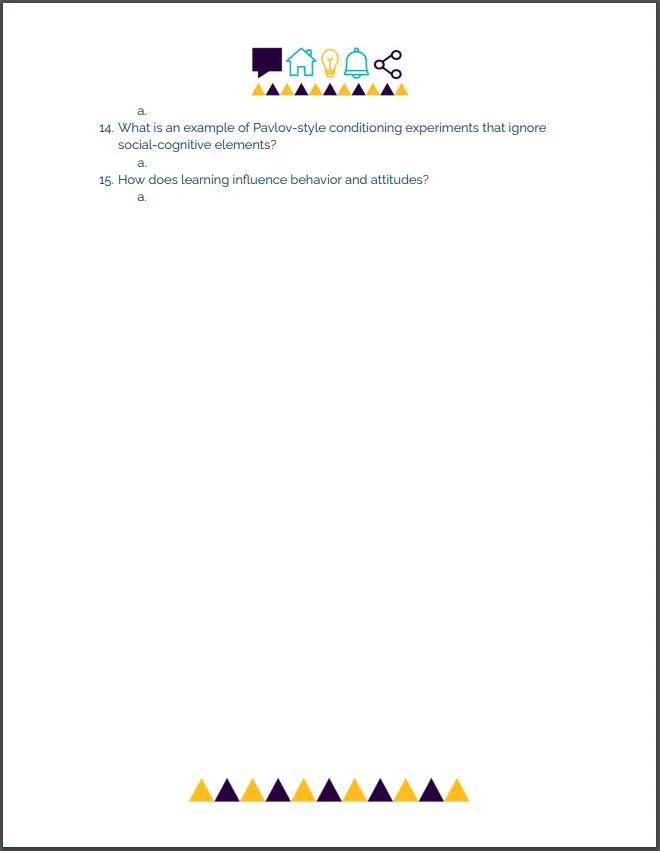
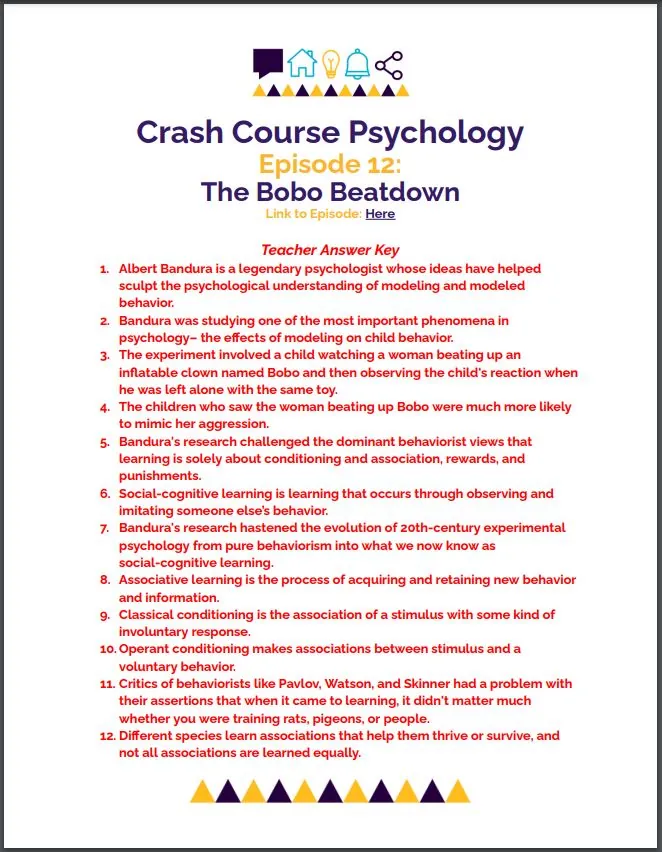
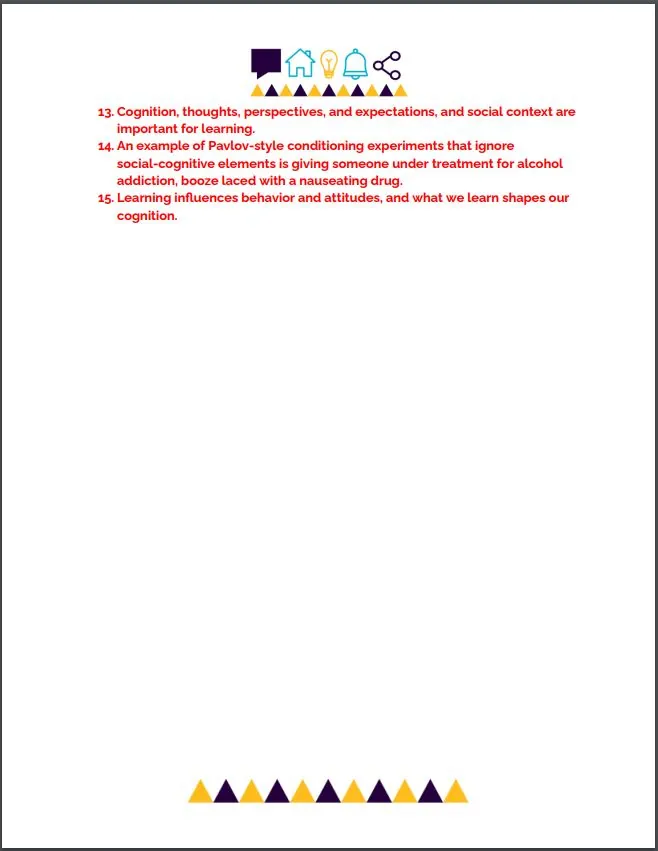
Video-based note-taking — students extract specific facts and definitions from Episode 12 to answer 15 short-answer questions on the Bobo doll experiment.
Concept summarization — students explain social-cognitive learning, classical conditioning, and operant conditioning in their own words.
Comparative analysis — students explain how Bandura's findings challenged the dominant behaviorist view that learning is purely conditioning-based.
Good to know
Questions teachers ask about this resource
What psychology concepts does this worksheet cover beyond the Bobo doll experiment itself?
It has students define social-cognitive learning, classical conditioning, and operant conditioning, and explain how Bandura's findings challenged the dominant behaviorist view that learning is solely about conditioning and reinforcement.

No reviews yet
Downloaded this resource? Tell other teachers how it went.
Resource details
Concepts & topics
Core concepts
 Core concepts
Bandura's Bobo doll experiment
Social-cognitive learning
Classical vs. operant conditioning
Topics
 Topics
Explore more
Categories this resource belongs to
Explore related searches
More to explore
You may also like