



Crash Course Psychology #3: The Chemical Mind
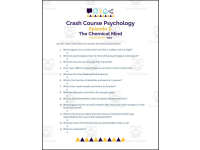
Follow Crash Course Psychology Episode 3 with fifteen questions about neurons and chemical signaling. Students identify neuron parts and trace how messages pass between nerve cells, using the episode as their source.

- Grades
- Grades 9–12
- Pages
- 6
- File type
- Zip
- Answer key
- Included


- Subject
- Science, Psychology
- Topic
- Crash Course Psychology, Chemical mind
- Resource types
- Worksheets, Activities
- Answer key
- Included
Product description
From the author
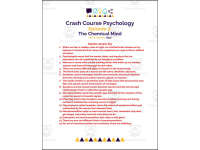
Crash Course Psychology Episode 3: The Chemical Mind is an informative worksheet designed to supplement lessons on the nervous system and brain function. Students will watch the Crash Course video explaining concepts about neurons, neurotransmitters, and how the nervous and endocrine systems work together. Then they will answer 15 critical thinking questions to check comprehension and prompt meaningful discussion. This teaching resource walks students through key topics like parts of a neuron, excitatory and inhibitory neurotransmitters, synapses, reuptake and endorphins. With an included answer key, it works well for in-class activities, homework, or remote learning on Google Classroom. The engaging video and worksheet make neuroscience approachable and memorable.
Related resources
More resources teachers may find useful
24 related resources were found using this product's title, contributor, categories and tags.

In the classroom
Teaching tips & learning objectives

Learning objectives
- Identify neuron structures and describe their roles in communication.
- Explain synaptic signaling using the episode’s terminology.

Teaching tips
- Pause after the neuron-structure questions and ask students to sketch the direction of a signal before continuing to synapses.
Good to know
Questions teachers ask about this resource
Does the download include the video?
The worksheet links to Crash Course Psychology Episode 3. Arrange access to the online episode; the supplied files contain the student questions and teacher key.

No reviews yet
Downloaded this resource? Tell other teachers how it went.
Resource details
Topics covered
 Topics
Explore more
Categories this resource belongs to
Explore related searches
More to explore
You may also like

Worksheets & Printables, Worksheets


Worksheets & Printables, Worksheets
Worksheets & Printables, Worksheets

Worksheets & Printables, Worksheets

Worksheets & Printables, Worksheets

Worksheets & Printables, Worksheets