Crash Course Psychology Worksheet | 23 - Controversy of Intelligence
- Grades
- Grades 9–12
- Pages
- 4
- File type
- Microsoft Word
- Answer key
- Included


- Subject
- Social Studies
- Topic
- Intelligence, IQ testing
- Resource types
- Worksheets, Activities
- Answer key
- Included
- Standards
- L.9.6
Product description
From the author
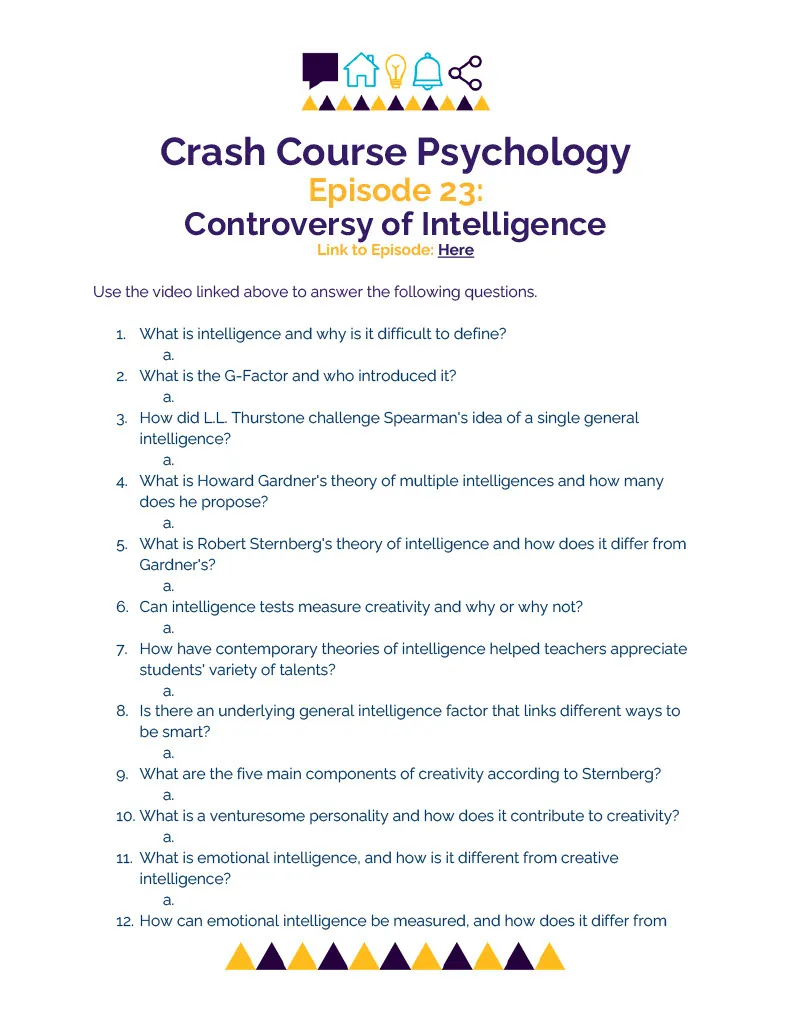
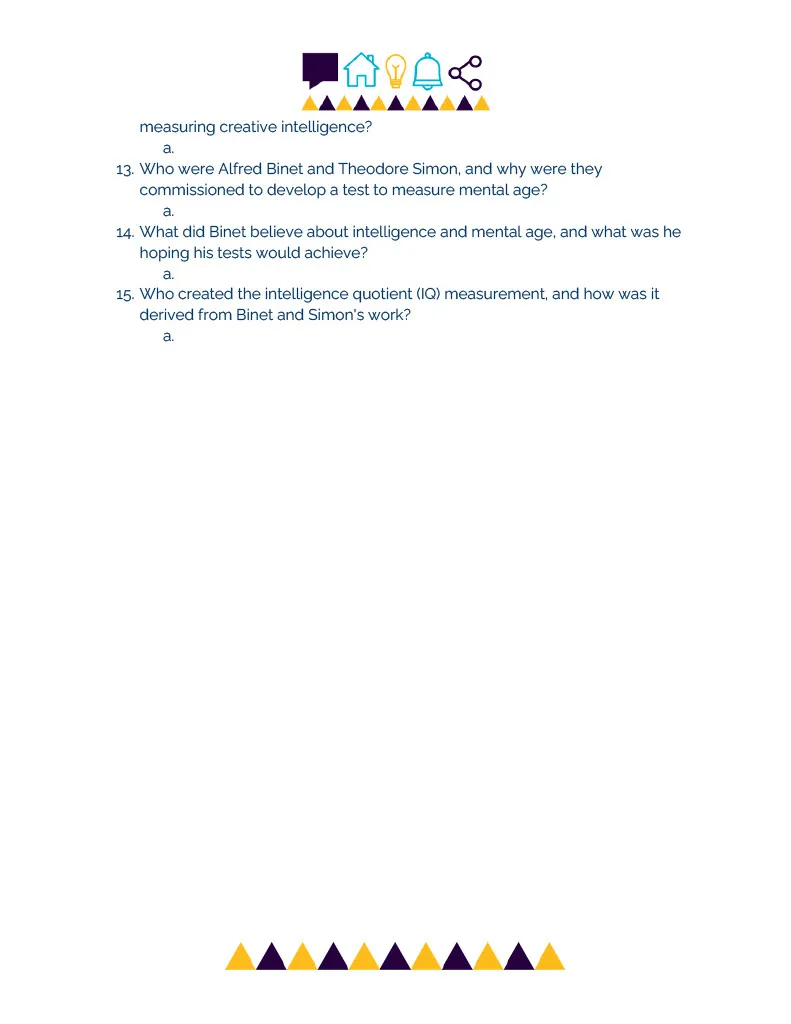
Use fifteen written questions with Crash Course Psychology Episode 23, Controversy of Intelligence. Questions cover competing intelligence theories, creativity, emotional intelligence and the history of testing.
The download contains two editable Word documents: a two-page student guide and a two-page teacher key. Both provide an episode link; arrange and preview video access separately.
Related resources
More resources teachers may find useful
24 related resources were found using this product's title, contributor, categories and tags.


In the classroom
Teaching tips & learning objectives

Learning objectives
State why intelligence is hard to define, noting that the term means different things across cultures, ages and skill sets
Compare four models of intelligence and explain how each one responds to the idea of a single general factor
Explain why traditional intelligence tests struggle with creativity, given that they demand one correct response

Teaching tips
Questions 3 and 5 both ask students to set one theorist against another, so they are the natural pause-and-discuss points during the episode
Use the key to discuss response content; answer lengths vary with the question
Questions 9 to 12 form a creativity and emotional-intelligence block that can be split off as a second lesson if the episode is watched in two sittings

Skills covered
Note-taking from video - students answer fifteen questions while watching a single episode, using the "Link to Episode" line at the top of the sheet.
Defining psychological terms - students explain the G-Factor, a venturesome personality and emotional intelligence in their own words.
Reasoning about measurement - questions ask whether creativity and emotional intelligence can be quantified and what stops standard tests from capturing them.
Good to know
Questions teachers ask about this resource
Do the questions include comparisons between theories?
Yes. Students compare Thurstone with Spearman, Sternberg with Gardner, and aspects of emotional and creative intelligence, alongside definition and testing-history questions.
How is the historical IQ calculation used?
The key discusses the mental-age-to-chronological-age ratio in the history of intelligence testing. Treat this as a historical explanation rather than a formula for assessing students today.

No reviews yet
Downloaded this resource? Tell other teachers how it went.
Curriculum
Standards, concepts & topics
Standards
 Standards
- L.9.6
Core concepts
 Core concepts
Psychology
Intelligence theories
Creativity
Emotional intelligence
IQ testing
 Topics
Explore more
Categories this resource belongs to
Explore related searches
More to explore
You may also like