



Crash Course Psychology #23: Controversy of Intelligence
- Grades
- Grades 9–12, Middle School
- Pages
- 2
- File type
- Zip


- Subject
- Social Studies, History, Psychology
- Resource types
- Worksheets & Printables, Worksheets
About this resource
What's inside this resource
Related resources
More resources teachers may find useful
24 related resources were found using this product's title, contributor, categories and tags.


In the classroom
Teaching tips & learning objectives

Learning objectives
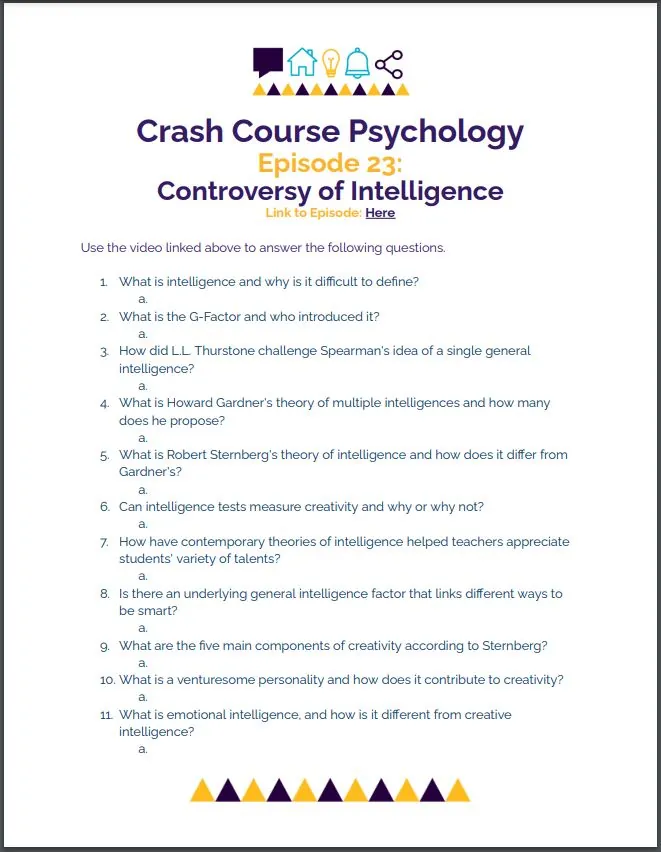
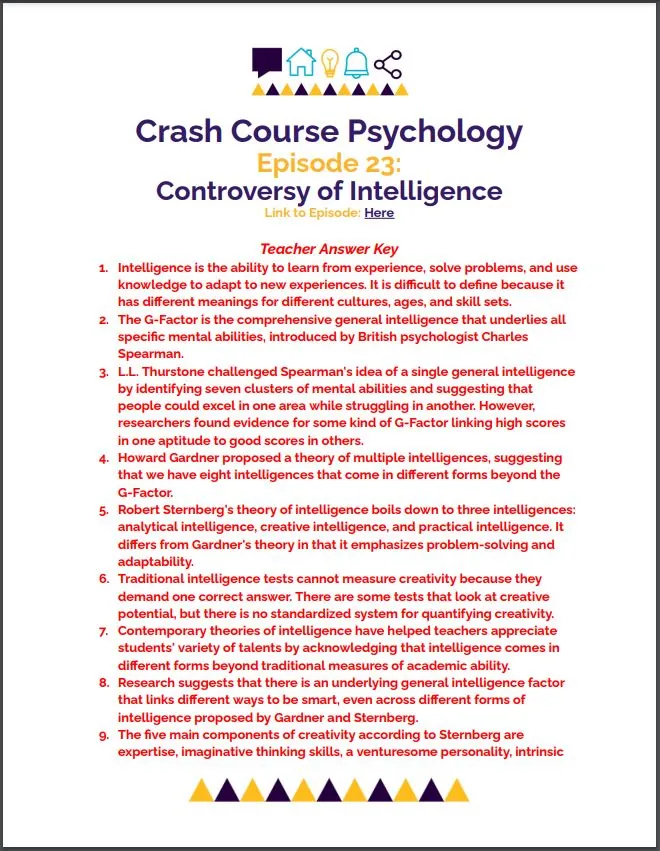
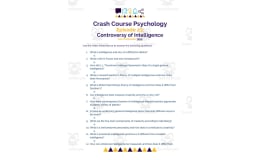
Students explain Spearman's G-Factor and how Thurstone's and Gardner's theories challenge or extend it.
Students compare Sternberg's analytical, creative and practical intelligences to other intelligence models.
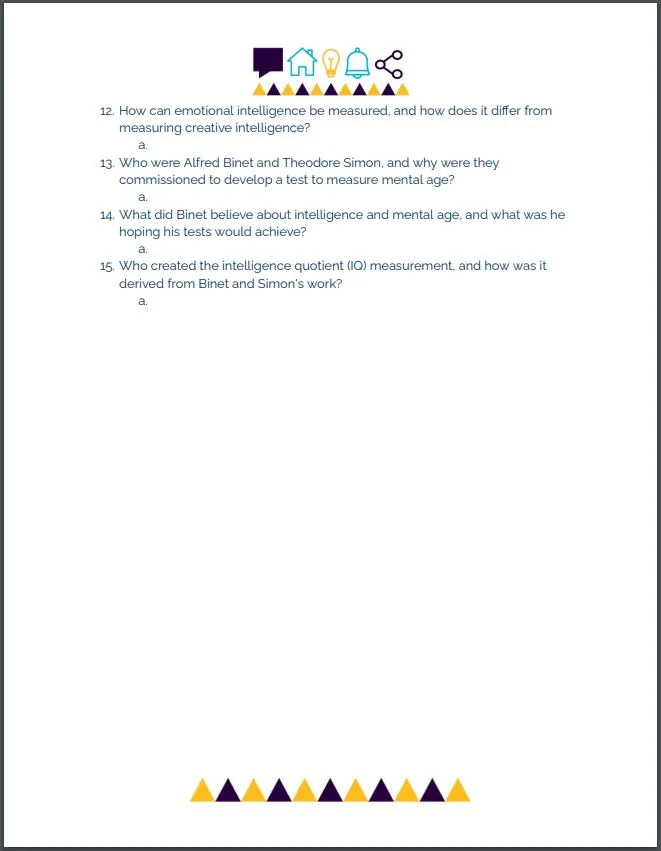
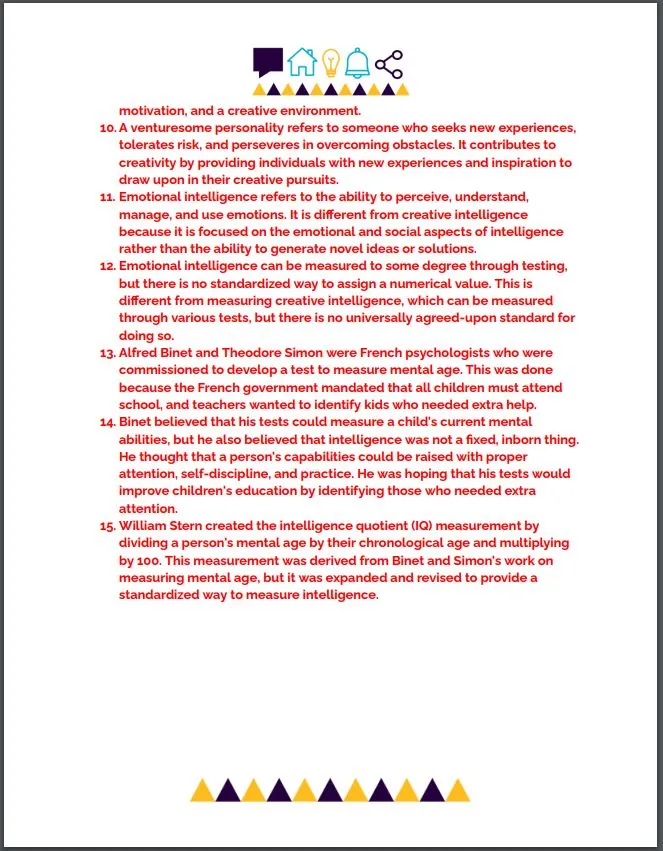
Students describe the historical origin of IQ testing, from Binet and Simon's mental-age test to Stern's IQ formula.

Teaching tips
Assign the linked video before the worksheet, since every question is written to be answered directly from the episode.
Use the editable Word file to shorten or adapt the 15 questions for a shorter class period, or assign the ready-made PDF as-is.
The included answer key allows for quick grading or immediate feedback once students finish.

Skills covered
Video-based note extraction — students record specific concepts (G-Factor, multiple intelligences, IQ) while watching the linked episode.
Comparative analysis — students explain how Thurstone's and Gardner's theories challenge Spearman's single-factor model of intelligence.
Historical reasoning — students trace the development of intelligence testing from Binet and Simon's original purpose through Stern's IQ formula.
Good to know
Questions teachers ask about this resource
Do students need prior psychology background to complete this worksheet?
No — every question is designed to be answered directly from the linked episode, and the questions follow the same order the video introduces the concepts in.

No reviews yet
Downloaded this resource? Tell other teachers how it went.
Resource details
Core concepts
Core concepts
 Core concepts
Intelligence theories (G-Factor, multiple intelligences)
IQ testing history
Emotional intelligence
Creativity components
Explore more
Categories this resource belongs to
Explore related searches
More to explore
You may also like


