Crash Course Sociology Episode Worksheet | 19 - Theory & Deviance
- Grades
- Grades 10–11, High School
- File type
- Microsoft Word
- Editable
- Yes


- Subject
- Social Studies
- Topic
- Sociology Theories, Theory Worksheet
- Resource types
- Worksheets & Printables, Worksheets
- Editable
- Yes
About this resource
What's inside this resource
Related resources
More resources teachers may find useful
24 related resources were found using this product's title, contributor, categories and tags.
In the classroom
Teaching tips & learning objectives

Learning objectives
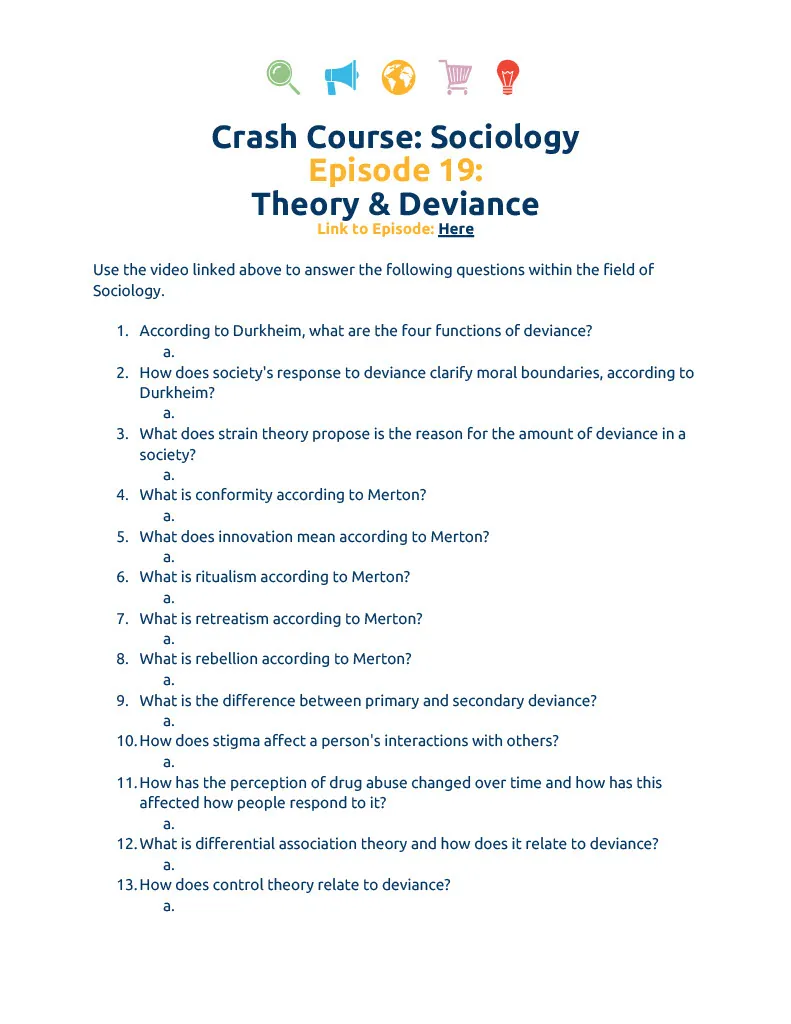
State Durkheim's four functions of deviance and explain how a society's reaction to deviance marks a moral boundary
Define each of Merton's five responses to strain — conformity, innovation, ritualism, retreatism and rebellion — and tell them apart by which of goals and means each accepts or rejects
Distinguish primary from secondary deviance and explain how stigma reshapes a person's self-concept and social identity

Teaching tips
Questions 4 to 8 take Merton's five responses in order, so that block is the natural place to pause the episode and let students build the typology as a table before carrying on.
The worksheet is answered while the linked episode plays; the video is hosted outside the download and both documents carry the link at the top.
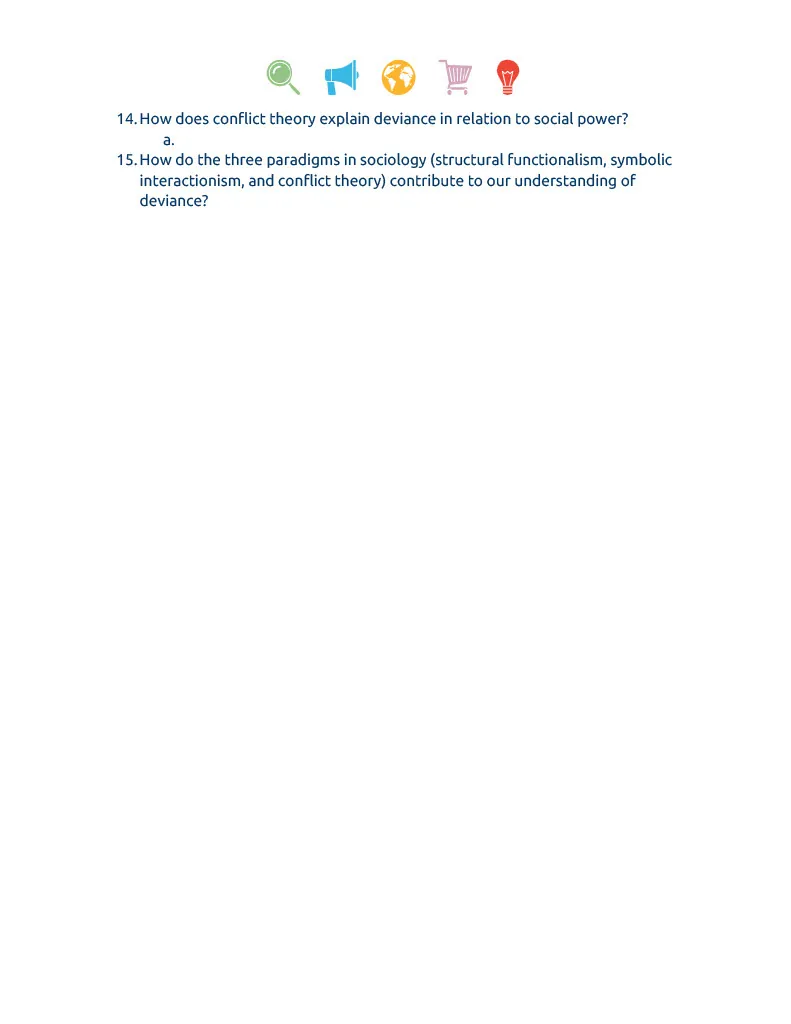
Question 15 is the only synthesis item on the page and works better as a discussion or an extended written response than as a line to fill.

Skills covered
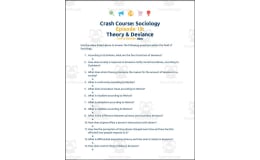
Sociological terminology in use — students write out what conformity, innovation, ritualism, retreatism, rebellion, primary and secondary deviance, stigma, differential association and control theory each mean.
Note-taking from video — fifteen questions are answered as an episode plays, each with its own lettered answer space beneath it.
Distinguishing near-neighbour concepts — ritualism and retreatism, and primary and secondary deviance, differ by a single element, and separate questions force the distinction rather than allowing one answer to cover both.
Good to know
Questions teachers ask about this resource
Which theorists and theories do the fifteen questions run through?
Durkheim on the four functions of deviance and on moral boundaries; Merton's strain theory and its five responses, one question each; primary and secondary deviance and stigma; the shifting perception of drug abuse; differential association theory; control theory; conflict theory and social power; and a closing comparison of the three sociological paradigms.
Do the supplied responses give examples as well as definitions?
Several do. Innovation is illustrated as ranging from petty thievery to organised crime; retreatism through addiction as an escape from goals and means; rebellion through an artist who pursues recognition from peers rather than financial success; and society's sanctioning is shown running from a bank robber sent to jail to someone mocked for the way they dress.
How does the last question differ from the fourteen before it?
It is the only synthesis item. Questions 1 to 14 each take a single theorist, term or theory, while question 15 asks how structural functionalism, symbolic interactionism and conflict theory together contribute to understanding deviance — the supplied response treats each paradigm as a different tool rather than picking a winner.

No reviews yet
Downloaded this resource? Tell other teachers how it went.
Resource details
Concepts & topics
Core concepts
 Core concepts
Deviance
Strain theory
Labelling and stigma
Sociological paradigms
 Topics
Explore more
Categories this resource belongs to
Explore related searches
More to explore
You may also like