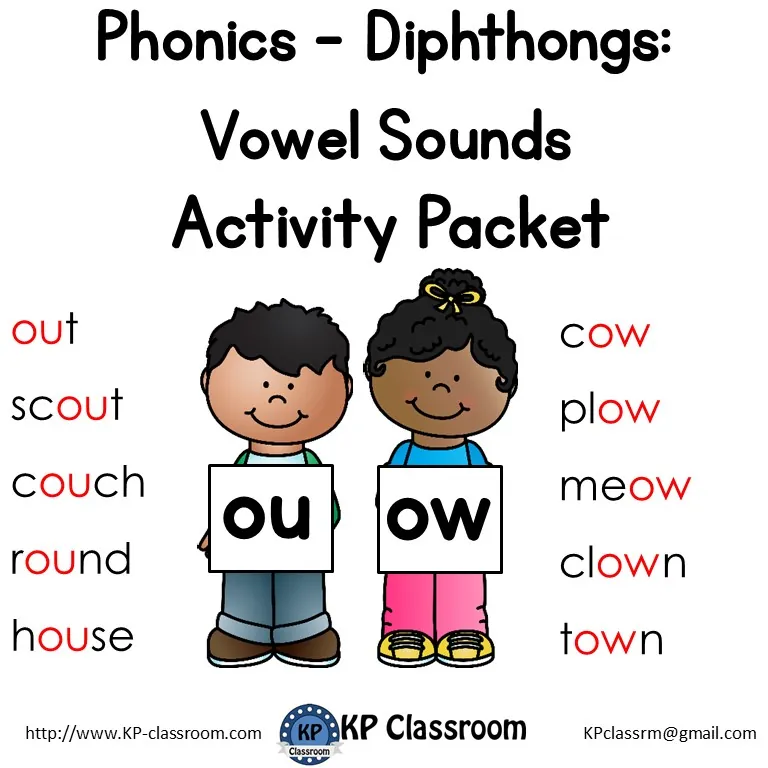
OU OW Diphthong – Phonics Activity Packet
- Grades
- K–2, Elementary
- Pages
- 44
- File type
- Preparation
- Print ready


- Subject
- ELA, Phonics, Language Development, Spelling, Vocabulary, Creative Writing, Writing
- Topic
- Words, Phonics
- Resource types
- Writing Prompts, Worksheets & Printables, Word Searches, Worksheets, Crosswords Puzzles
- Preparation
- Print ready
- Standards
- RF.1.3.b
Product description
From the author
Teach Phonics Skills with the Diphthong OU OW Vowel Sounds Activity Packet
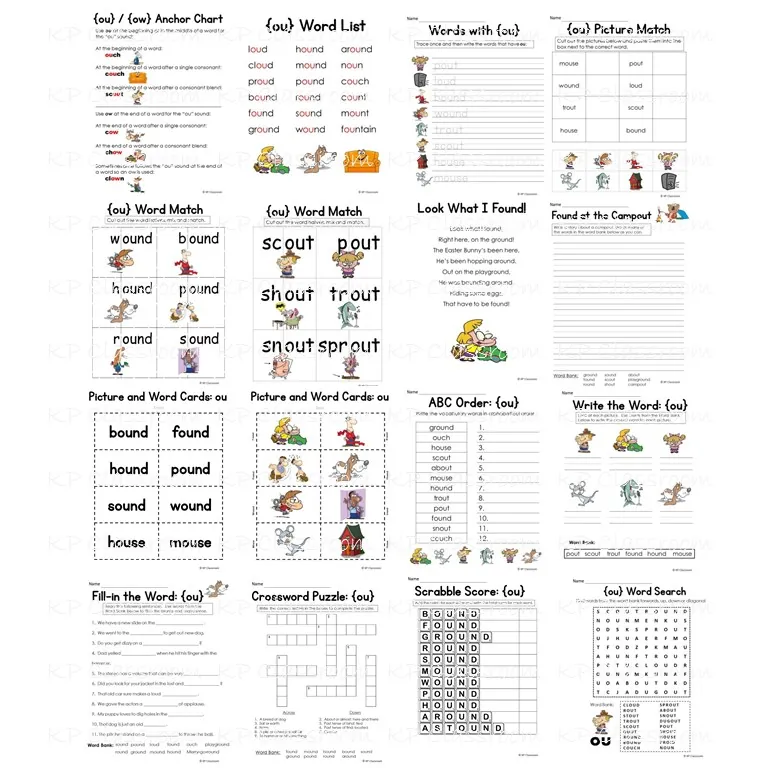
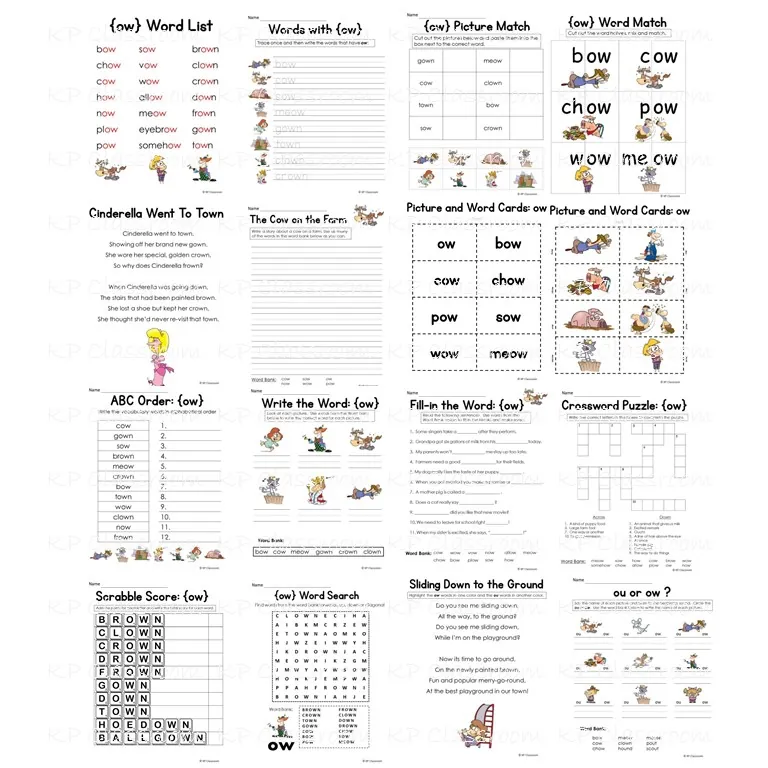
This phonics resource helps students in Kindergarten through 2nd Grade strengthen skills with the vowel diphthongs ou and ow. Created by experienced educators for both classroom teachers and homeschoolers, these printables provide varied practice; prepare scissors, glue and any two-sided cards before use. The packet includes fun worksheets, games, and activities focusing on phonics, spelling, reading comprehension, grammar, and creative writing. Teachers can use these versatile materials for whole-group lessons, small groups, independent work, homework, or assessment. With multiple levels built in, the packet allows learners to work at their own pace while mastering the complex ou and ow sounds. By actively applying their new knowledge, students can practise reading and writing the target words.
Related resources
More resources teachers may find useful
24 related resources were found using this product's title, contributor, categories and tags.


In the classroom
Teaching tips & learning objectives

Learning objectives
Read and spell one-syllable and two-syllable words containing the ou/ow diphthong
Compare the spelling examples on the anchor chart, including ow before a final n
Write original stories that incorporate as many target diphthong words as possible

Teaching tips
Have scissors and glue ready: the picture-match and word-half matching pages for both spellings are cut-and-paste tasks
Print the picture-and-word card pages back-to-back so each card carries the word on its reverse for self-checking
Keep the anchor chart posted or in folders while students work — use its examples alongside the additional ow-before-n pattern in clown

Skills covered
Diphthong spelling patterns — the anchor chart models common uses of ou (beginning or middle: ouch, couch, scout) versus ow (word end: cow, chow; before final n: clown), and every activity practises those spellings.
Handwriting and word tracing — students trace each target word once and rewrite it on the {ou} and {ow} tracing pages.
Sentence-level decoding — fill-in-the-word pages use word banks to complete sentences such as 'The umpire yelled, "You're ______!"'
Good to know
Questions teachers ask about this resource
Are the poems just for reading aloud, or do students work with them?
Look What I Found! and Cinderella Went To Town are reading poems packed with target words, while Sliding Down to the Ground doubles as an activity: students highlight the ow words in one colour and the ou words in another.

No reviews yet
Downloaded this resource? Tell other teachers how it went.
Curriculum
Standards, concepts & topics
 Standards
 Core concepts
 Topics
Explore more
Categories this resource belongs to
Explore related searches
More to explore
You may also like