Environmental Science Bell Ringers FULL YEAR - 180 Daily Warm-Ups



About This Product
This is a full year of environmental science bell-ringers - 180 short daily prompts that give high school students a steady, five-minute way to begin class. The set spans an entire course. It opens with what environmental science is and how it differs from advocacy, then moves through systems and feedback loops, ecosystems, habitat and niche, the world's biomes and the climate patterns that produce them, freshwater and marine systems, energy flow through trophic levels, food webs and biomagnification, and the carbon, water, nitrogen and phosphorus cycles. The second quarter covers population density and distribution, exponential and logistic growth, carrying capacity and limiting factors, reproductive strategies and survivorship curves, human population growth and the demographic transition, age structure, species interactions, ecological succession and keystone species, invasive species, and extinction and conservation biology.
The third quarter turns to resources: freshwater supply and aquifer depletion, water quality and treatment, soil formation and texture, agriculture and soil degradation, sustainable farming and integrated pest management, forests and land use, fossil fuels, nuclear energy and half-life, and renewable energy with the tradeoffs among sources. The final quarter covers air pollution and the criteria pollutants, smog and acid deposition, indoor air quality, stratospheric ozone depletion and its recovery, solid waste and recycling, hazardous waste and dose-response toxicology, the greenhouse effect and the evidence for climate change, impacts along with mitigation and adaptation, externalities and ecosystem services, and environmental law, policy and personal action.
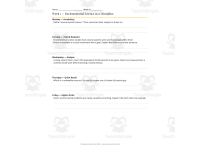
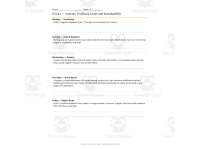
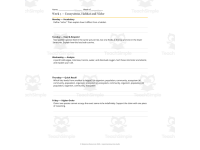
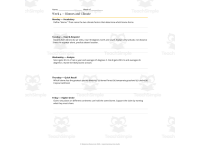
Prompts are arranged into 36 weekly pages, each holding five days of work a teacher can hand out on Monday and collect on Friday. Every week rotates through the same five kinds of thinking: a vocabulary term used rather than recited, a short reading with a question that requires reading it, a data or analysis question, a quick multiple-choice check, and a question that asks students to state a claim and back it with evidence. That last one is the reasoning skill the standards weight most heavily and the one students practice least, so it appears every single Friday for 36 weeks.
Environmental science is a subject argued in numbers, so the Wednesday slot hands students real figures rather than describing them: 850 gigatons of carbon in the atmosphere against 38,000 in the ocean, 8 milligrams per liter of nitrate below a fertilized field against 0.2 in forest, particulate matter at 45 micrograms per cubic meter against a standard of 12, a wind farm at a 35 percent capacity factor against a gas plant at 85, carbon dioxide from 280 parts per million before 1800 to above 420 today. Every one of those calculations was written to resolve to a clean value, so students get real practice reading data without a five-minute warm-up turning into an arithmetic exercise.
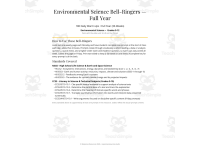
Everything is print-first: one clean PDF that copies well, uses little ink, prints two-sided so a full week fits on a single sheet, and needs no student accounts, devices, or logins. A complete answer key covers all 180 prompts, and a standards page lists the NGSS high school codes and the CCSS literacy in science and technical subjects codes the set actually addresses - each one earned by a recurring prompt slot rather than claimed in general. Built for grades 9-12 and useful in an AP Environmental Science section as daily review, it works as an opener while attendance is taken, as an exit slip at the end of the period, as spiral review before an exam, or as ready-made work to leave for a substitute teacher on short notice.
Resource Tags
0 Reviews
Check out these other great products