ESL Reading Comprehension + Writing Activity Worksheets on "Picnics"


- Grades
- Grades 7–12, Middle School, High School
- Pages
- 3
- File type
- Preparation
- Print ready


- Subject
- ELA, Language Development, ESL, Reading, Reading Comprehension, Writing, Creative Writing, Formal Writing
- Topic
- ESL, English Second Language
- Resource types
- Worksheets & Printables, Writing Prompts, Worksheets
- Preparation
- Print ready
About this resource
What's inside this resource
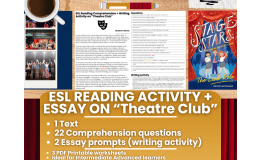
This ESL EFL (English Second or Foreign Language) Teaching Resource on "Picnic" (3 PDF Slides; Reading Comprehension + Writing Activity) can be ideal to train Language skills in English. Suitable participants for this ESL EFL TESOL Reading + Writing Activity are Foreign Students at middle and High School (7th-12th Grade; teens). Newcomers or any ESL Learner is also more than suitable for this ESL EFL (English as a Second or Foreign Language) Activity on "Picnic" (origins, background and history + usual activities and food of a picnic + picnics in literature, art and music). This Teaching Educational Resource Product can also be ideal for ESL EFL Centers worldwide or any English second language tutor.
This ESL EFL TESOL Teaching Resource on "Picnic" (Worksheet; 3 PDF Printable slides) can be ideal for Intermediate English as a Second or Foreign Language (ESL EFL) Learners.
Within this English Second or Foreign Language (ESL EFL) Reading Comprehension + Essay Writing Activity Worksheet on "Picnic" (origins, background and history + usual activities and food of a picnic + picnics in literature, art and music), ESL EFL TESOL teachers can find the following activities:
1 text on "Picnic" (origins, background and history + usual activities and food of a picnic + picnics in literature, art and music)
12 Questions (with space for answers)
2 Essay Prompts (writing an essay on your own personal opinion on picnics; whether you like them or not and why, whether you often go on picnics and whether you would like to go more often on picnics + pretending to go on your dream picnic and describing it in a page of diary)
This ESL Teaching Resource can be ideal for Spring Activities
This ESL, EFL (English Second or Foreign Language) Teaching Resource Reading + Writing Activity on "Picnic" (origins, background and history + usual activities and food of a picnic + picnics in literature, art and music) is great for Intermediate English as a second or foreign language learners (ESL- EFL). This English Second Language Worksheet on "Picnic" (origins, background and history + usual activities and food of a picnic + picnics in literature, art and music) aims to train and Reading Comprehension + Writing Skills.
"Learning with Alan" is dedicated to provide high-quality teaching resources and educational materials for ESL EFL TESOL teachers. It aims to support teachers, educators, and tutors in both online and offline environments, helping them achieve their teaching goals while creating a fun, stimulating atmosphere for learning English. Always remember: learning is fun, and so is English!
If you want to browse more PDF ESL, EFL, TESOL Teaching Resources and Educational Material click here Learning with Alan!
Related resources
More resources teachers may find useful
24 related resources were found using this product's title, contributor, categories and tags.


In the classroom
Teaching tips & learning objectives

Learning objectives
- Identify key facts about the origins and history of picnics from a nonfiction text
- Defend true/false answers by pointing to the passage
- Write an extended opinion or creative response on the topic

Teaching tips
- Because the true/false items ask for a justification, students could underline the supporting sentence in the passage before writing their answer.

Skills covered
- Justifying answers — students explain each true/false decision using a line from the passage
- Vocabulary in context — students give synonyms and explain words as they are used in the text
- Essay writing — students develop extended responses to an opinion prompt and a creative prompt

No reviews yet
Downloaded this resource? Tell other teachers how it went.
Resource details
Concepts & topics
Core concepts
 Core concepts
- Picnic history
- Etymology
- Synonyms
- Opinion writing
 Topics
Explore more
Categories this resource belongs to
Explore related searches
More to explore
You may also like