Factoring Trinomials Worksheet – When a is Not 1
- Grades
- High School
- Pages
- 4
- File type
- Answer key
- Included


- Subject
- Math, Algebra
- Topic
- Factoring trinomials, Leading coefficient
- Answer key
- Included
- Standards
- HSA-SSE.B.3
Product description
From the author
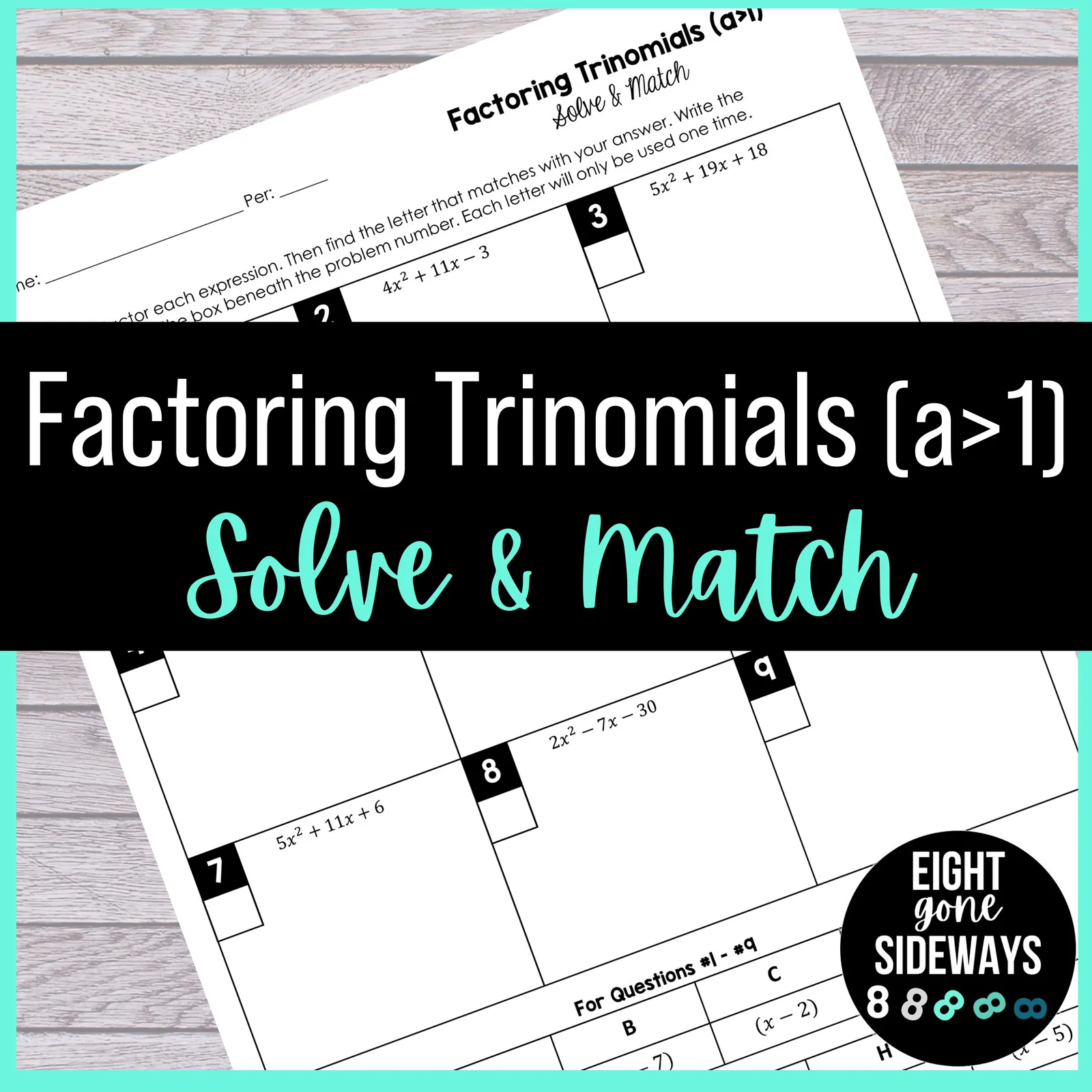
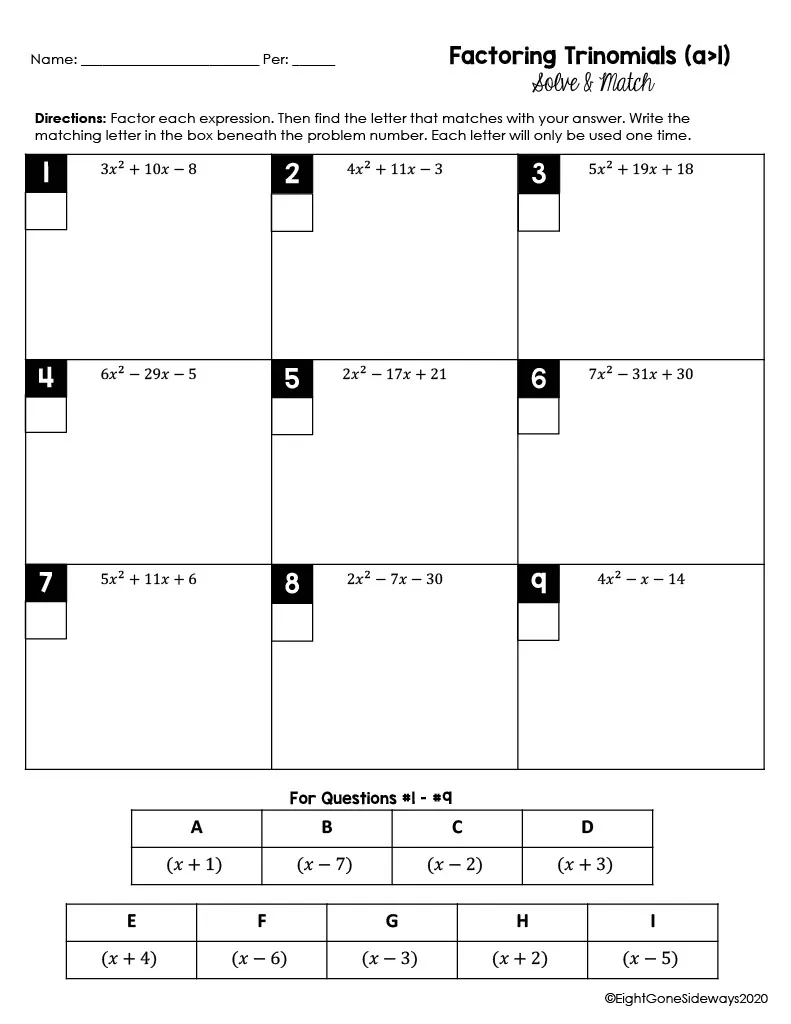
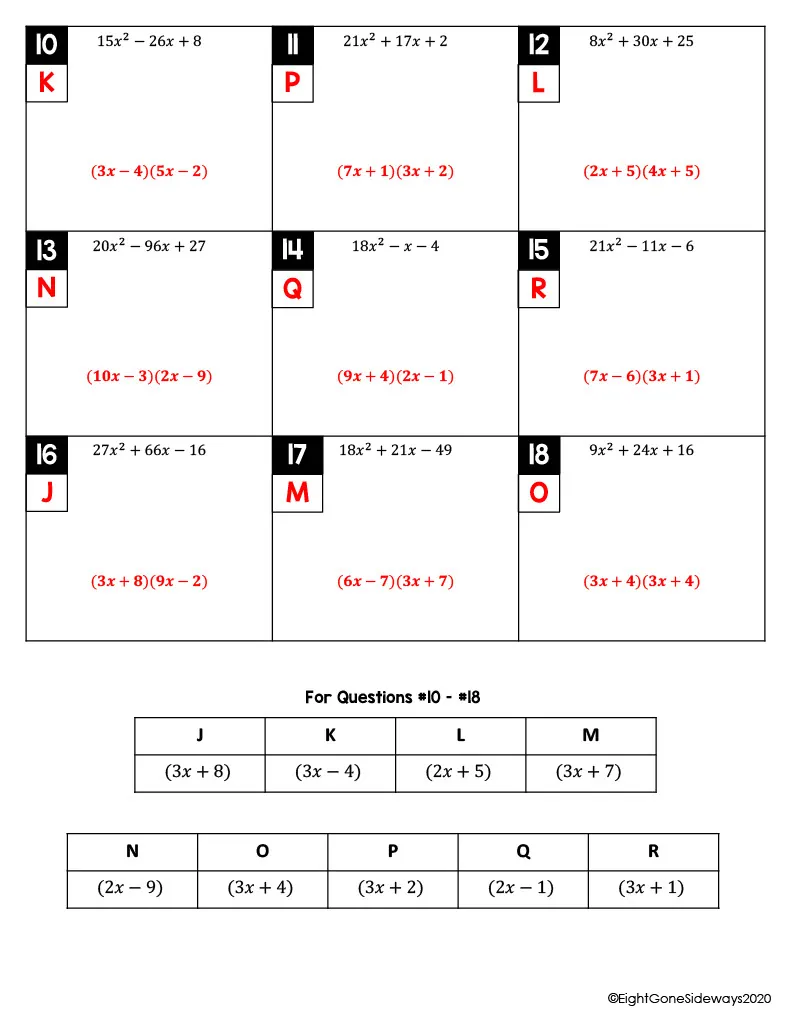
Practice factoring 18 trinomials whose leading coefficient is greater than one. Each student page contains nine expressions and a lettered bank of binomial factors. Students write the complete factorization, then match one factor to a letter in the bank.
The four-page PDF includes two student pages and two answer-key pages showing complete factorizations and matching letters. The task is factoring expressions; it does not ask students to solve equations for zeros.
Related resources available separately
math worksheet
Related resources
More resources teachers may find useful
24 related resources were found using this product's title, contributor, categories and tags.



In the classroom
Teaching tips & learning objectives

Learning objectives
Factor trinomials whose leading coefficient is greater than one
Manage positive and negative terms when testing binomial factors
Recognize the perfect-square expression 9x² + 24x + 16

Teaching tips
Ask students to write both factors before choosing a letter; the bank supplies only one factor from each pair.
Use the first page to practice examples with a monic factor, then move to the second page where the factors have larger leading coefficients.
Expand a completed factorization to check it, even when its matching letter is available.

Skills covered
Factoring quadratic expressions with a leading coefficient greater than one
Testing factor pairs and signs
Recognizing a perfect-square trinomial
Good to know
Questions teachers ask about this resource
Does the matching bank show the complete factorization?
No. It lists one binomial factor for each expression. Students factor the trinomial, find the matching factor in the bank and write its letter. The answer key shows both factors.

No reviews yet
Downloaded this resource? Tell other teachers how it went.
Curriculum
Standards, concepts & topics
Standards
 Standards
- HSA-SSE.B.3
Core concepts
 Core concepts
Factoring trinomials
Quadratic expressions
Binomial factors
Leading coefficient
 Topics
Explore more
Categories this resource belongs to
Explore related searches
More to explore
You may also like