Fibonacci Sequences Worksheet - Examples

- Grades
- Grades 4–6, Elementary, Middle School
- File type
- Preparation
- Print ready


- Subject
- Math, Numbers, Patterns
- Topic
- Statistics
- Resource types
- Worksheets & Printables, Worksheets
- Preparation
- Print ready
About this resource
What's inside this resource
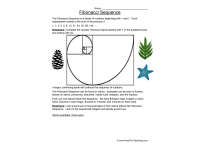
This worksheet uses examples to help students find the Fibonacci Sequence in nature. This is a great way for students to learn about the Fibonacci Sequence and how it appears in nature.
Related resources
More resources teachers may find useful
24 related resources were found using this product's title, contributor, categories and tags.

In the classroom
Teaching tips & learning objectives

Learning objectives
State the rule that generates the Fibonacci sequence (each number is the sum of the previous two)
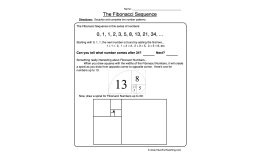
Continue a Fibonacci sequence by filling in a spiral diagram in the correct numerical order
Identify real-world examples where the Fibonacci sequence appears

Teaching tips
Have students verify the hand example on their own hands (one thumb, two thumb bones, three finger bones, five digits, eight fingers) as a hands-on check of the pattern before they complete the spiral.
Review the addition rule (1+1=2, 1+2=3, 2+3=5...) explicitly before assigning the spiral, since the spiral task depends on correctly continuing that rule.

Skills covered
Number-pattern generation — students apply the rule 'add the previous two numbers' to continue the Fibonacci sequence up to 34.
Pattern recognition in context — students connect the abstract sequence to concrete examples in nature and the human hand.
Good to know
Questions teachers ask about this resource
What real-world examples does the worksheet use to show where the Fibonacci sequence appears?
It points to flowers, pinecones, seastars, and the nautilus shell in nature, plus the human hand itself: one thumb per hand, two bones per thumb, three bones per finger, five digits per hand, and eight fingers total.

No reviews yet
Downloaded this resource? Tell other teachers how it went.
Resource details
Concepts & topics
Core concepts
 Core concepts
Fibonacci sequence
Number patterns
Patterns in nature
Topics
 Topics
Explore more
Categories this resource belongs to
Explore related searches
More to explore
You may also like