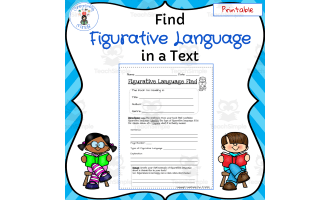
Figurative Language Worksheets Similes, Metaphors, Idioms & More


About This Product
Figurative language trips kids up because it asks them to do something genuinely tricky: hold two meanings at once.
“She had butterflies in her stomach” doesn’t mean butterflies.
A lot of 4th graders will mark that literally and move on, and a quick lesson on the term “idiom” won’t fix it.
These 12 worksheets work through that confusion one skill at a time.
The sequence starts where students actually need to start understanding the basic difference between literal and figurative before moving into specific types: similes, metaphors, personification, hyperbole, idioms, alliteration, onomatopoeia.
Then mixed practice. Then reading figurative language inside a short story.
Then writing their own examples from scratch.
That last part matters.
Writing original examples and explaining thinking is how you find out whether a student actually understood something or just guessed right on a multiple choice question. These worksheets go there.
All 12 are clean black-and-white, print-ready, and include full answer keys.
Activities are mixed up in format classify, underline, match, complete, analyze, write so it doesn’t feel like the same worksheet recycled 12 times.
You can run them as lessons, homework, literacy centers, small group review, or a quick end-of-unit check.
No prep required beyond printing.
Skills covered: Literal vs. figurative · Similes · Metaphors · Personification · Hyperbole · Idioms · Alliteration · Onomatopoeia · Figurative language in context · Simile vs. metaphor ·
Writing original examples
Grades 4–6 ·
12 worksheets ·
24 pages ·
Answer keys included
Resource Tags
0 Reviews
Check out these other great products