French Futur Anterieur – Worksheets & Quizzes



- Grades
- Grades 8–12, Middle School, High School
- File type
- Preparation
- Print ready


- Subject
- Foreign Languages, French
- Topic
- French quizzes, future tense practice
- Resource types
- Worksheets, Worksheets & Printables
- Preparation
- Print ready
About this resource
What's inside this resource
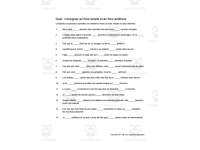
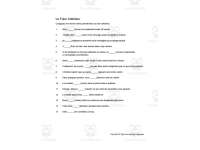
This is a set of 2 French quizzes that could also be used as worksheets. Answer keys are included.
Related resources
More resources teachers may find useful
24 related resources were found using this product's title, contributor, categories and tags.


In the classroom
Teaching tips & learning objectives

Learning objectives
Conjugate French verbs in the futur antérieur (future perfect) tense, including irregular auxiliary forms.
Distinguish when to use futur simple versus futur antérieur within the same sentence to express sequenced future actions.
Apply reflexive and irregular verb conjugation (e.g., se taire, s'inscrire, se connaître) in the futur antérieur.

Teaching tips
Assign the single-tense exercise (futur antérieur only) before the mixed exercise, since the second requires mastering the first tense before combining it with futur simple.
Highlight the time-marker expressions (dès que, une fois que, aussitôt que, lorsque, quand) in the mixed exercise, since they signal when futur antérieur is required.
Use the two separate answer keys to let students self-check each exercise independently rather than revealing both solutions at once.

Skills covered
Futur antérieur conjugation — students conjugate 15 verbs (regular, irregular, and reflexive) entirely in the futur antérieur.
Futur simple vs. futur antérieur sequencing — students conjugate two verbs per sentence to express which action finishes first, using both future tenses together.
Auxiliary verb selection — students choose between être and avoir as the auxiliary (e.g., 'serons arrivés' vs. 'aurons pris') based on the main verb.
Good to know
Questions teachers ask about this resource
Do both exercises test the same tense, or do they combine two tenses?
The first exercise conjugates every verb in the futur antérieur alone, while the second combines the futur antérieur with the futur simple in the same sentence to show which action happens first.
Are irregular and reflexive verbs included, or only regular ones?
Both — the exercises include irregular verbs such as être, avoir, courir, and pouvoir alongside reflexive verbs such as se taire and se connaître.

No reviews yet
Downloaded this resource? Tell other teachers how it went.
Resource details
Concepts & topics
Core concepts
 Core concepts
futur antérieur
futur simple
verb conjugation
auxiliary verbs
 Topics
Explore more
Categories this resource belongs to
Explore related searches
More to explore
You may also like