GCSE Literature: An Inspector Calls | Essay Questions
- Grades
- Grades 9–10
- File type
- Preparation
- Print ready


- Subject
- Literature, Writing
- Topic
- An Inspector Calls, Essay questions
- Preparation
- Print ready
- Standards
- W.9.1
Product description
From the author
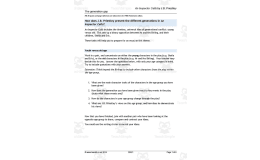
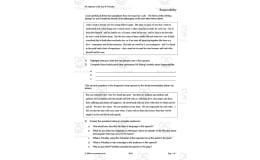
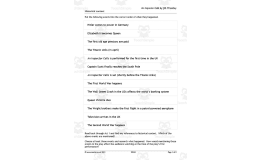
This worksheet pairs with An Inspector Calls.
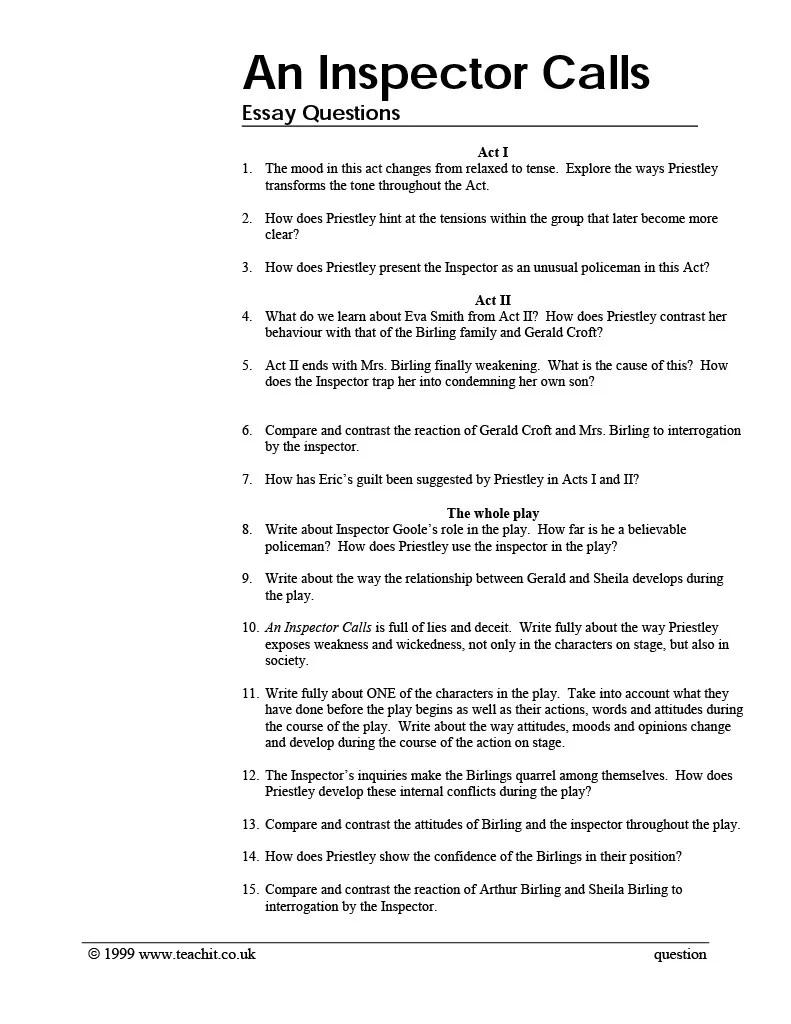
There are 15 essay questions to cover the entire play.
Related resources
More resources teachers may find useful
24 related resources were found using this product's title, contributor, categories and tags.

In the classroom
Teaching tips & learning objectives

Learning objectives
Students analyse how Priestley shifts the mood and tone across Act I of An Inspector Calls.
Students compare characters' contrasting reactions to the Inspector's interrogation (e.g. Gerald Croft vs. Mrs. Birling, Arthur Birling vs. Sheila Birling).
Students construct an extended essay response tracing a character's or theme's development across the whole play, such as Inspector Goole's dramatic function or the Birlings' internal conflicts.

Teaching tips
Assign the Act I and Act II questions as shorter formative essays before the whole-play questions, which require synthesis across the full text.
Use question 11 (write fully about one character) as a flexible essay option for differentiation, since it lets students choose their own character focus.
Pair the comparison questions (6, 13, 15) for a class discussion contrasting how different characters respond to the Inspector's interrogation before students write.

Skills covered
Essay planning and argumentation — students construct an extended response analysing theme, character, or dramatic technique in An Inspector Calls.
Comparative character analysis — students compare and contrast characters' reactions to interrogation, such as Gerald Croft versus Mrs. Birling.
Dramatic technique analysis — students evaluate how Priestley uses the Inspector as a device to expose the Birling family's lies and social attitudes.
Good to know
Questions teachers ask about this resource
Are model essays or a mark scheme included?
No. The one-page handout contains fifteen essay questions. Provide the play and any marking criteria separately.

No reviews yet
Downloaded this resource? Tell other teachers how it went.
Curriculum
Standards, concepts & topics
Standards
 Standards
- W.9.1
Core concepts
 Core concepts
An Inspector Calls
Essay writing
Character analysis
Dramatic technique
Social responsibility theme
 Topics
More to explore
You may also like