Geometry Probability Worksheet with Answer Key




- Grades
- Grades 10–12, High School
- Pages
- 6
- File type
- Answer key
- Included


- Subject
- Math, Geometry
- Topic
- Geometric Probability, Composite Area
- Resource types
- Worksheets & Printables, Worksheets
- Answer key
- Included
- Standards
- HSG-SRT.C.8
Product description
From the author
This review guide comes with an answer key!
Related resources
More resources teachers may find useful
24 related resources were found using this product's title, contributor, categories and tags.

In the classroom
Teaching tips & learning objectives

Learning objectives
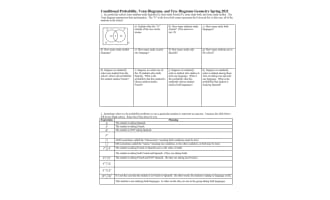
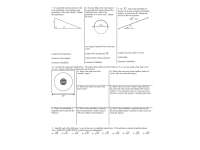
Calculate the probability that a randomly thrown dart lands in a shaded region by forming the ratio of shaded area to total area
Transfer the same ratio idea to one dimension, comparing a shaded length such as a 13-unit hypotenuse or a 6π in arc against a total perimeter
Use the relationship shaded area + unshaded area = total area to reach an answer through whichever region is easier to compute

Teaching tips
The sheet opens with a blank "Appoint a reader" line, so decide before handing it out whether groups will name that reader or the line will simply be left unused
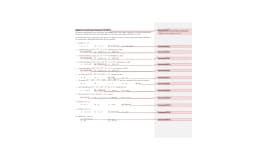
Answers on the worked pages are given in exact form and then as a decimal, which lets you accept either 16 - 3π over 16 or 0.411 depending on what the class is practising
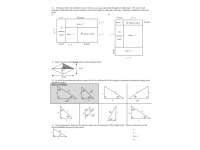
Problems 12 through 15 sit on the last page and can be assigned separately as a composite-area and right-triangle review without touching the probability items

Skills covered
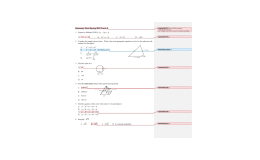
Geometric probability from area — students compute the shaded-to-total ratio for figures such as a 6 in circle inscribed in a square (36π/144) and four circles packed inside a 24 cm square (576 - 108π over 576).
Working with the complement — problem 6 directs students to decide whether the shaded or unshaded region is easier to calculate, then recover the other from the total 576 cm² square.
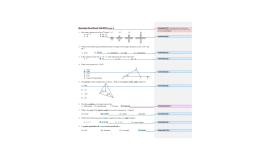
Simplifying radicals — item 11 has students reduce √40 to 2√10, √44 to 2√11 and √48 to 4√3, and mark the primes such as √41 and √47 as already simplified.
Good to know
Questions teachers ask about this resource
Are the solutions written in exact form or as decimals?
The worked pages include exact forms and decimal values. Problem 15 specifies answers to the nearest hundredth with units.

No reviews yet
Downloaded this resource? Tell other teachers how it went.
Curriculum
Standards, concepts & topics
Standards
 Standards
- HSG-SRT.C.8
Core concepts
 Core concepts
Geometric probability
Area of circles and polygons
Perimeter and arc length
Simplifying radicals
Right triangle trigonometry
 Topics
Explore more
Categories this resource belongs to
Explore related searches
More to explore
You may also like