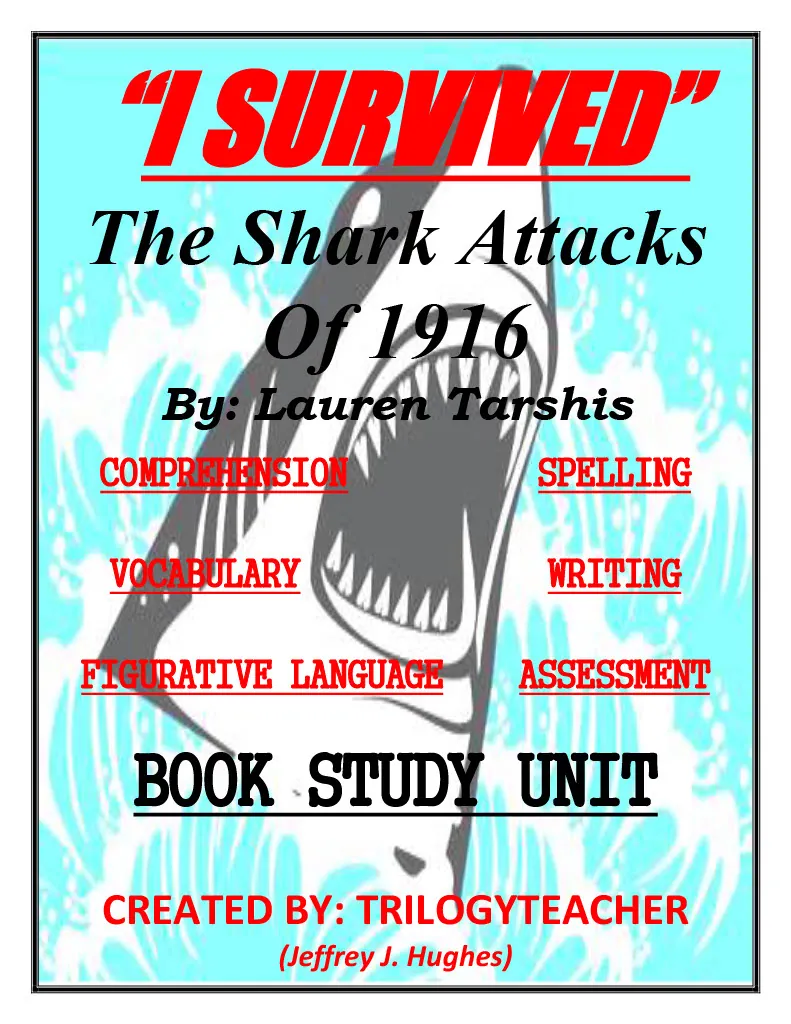
"I Survived The Shark Attacks of 1916" Book Study Unit
- Grades
- Grades 4–6, Elementary, Middle School
- File type
- Preparation
- Print ready


- Subject
- ELA, Literature
- Topic
- book companion, shark attacks
- Resource types
- Novel Studies, Worksheets & Printables
- Preparation
- Print ready
About this resource
What's inside this resource
This "I Survived The Shark Attacks of 1916" Book Study Unit is packed with over 100 pages of engaging resources for students.
Included:
- Chapter comprehension worksheets
- Mystery match vocabulary words
- Exit quizzes
- Group work
- Summative assessment
& so much more.
All you have to do is print and go!
Answer keys included.
Related resources
More resources teachers may find useful
24 related resources were found using this product's title, contributor, categories and tags.



In the classroom
Teaching tips & learning objectives

Learning objectives
Students answer page-specific comprehension questions for each of the book's 15 chapters, including identifying homophones and figurative language (similes, hyperbole, onomatopoeia) the author uses.
Students use context clues to identify vocabulary words from each chapter through a letter-blank "Mystery Match" puzzle format.
Students complete multiple-choice quizzes that test synonym meaning, tone, main idea, inference, and point of view for each chapter.

Teaching tips
Hand out the Student Reading Reference Page at the start of the unit and have students keep it in their folder, since every chapter worksheet and quiz assumes familiarity with its context-clue and figurative-language definitions.
Use the Summary Support Page's 6-8 detail bullets as a scaffolding step before students attempt the full paragraph summary on the Student Summary Template Page.
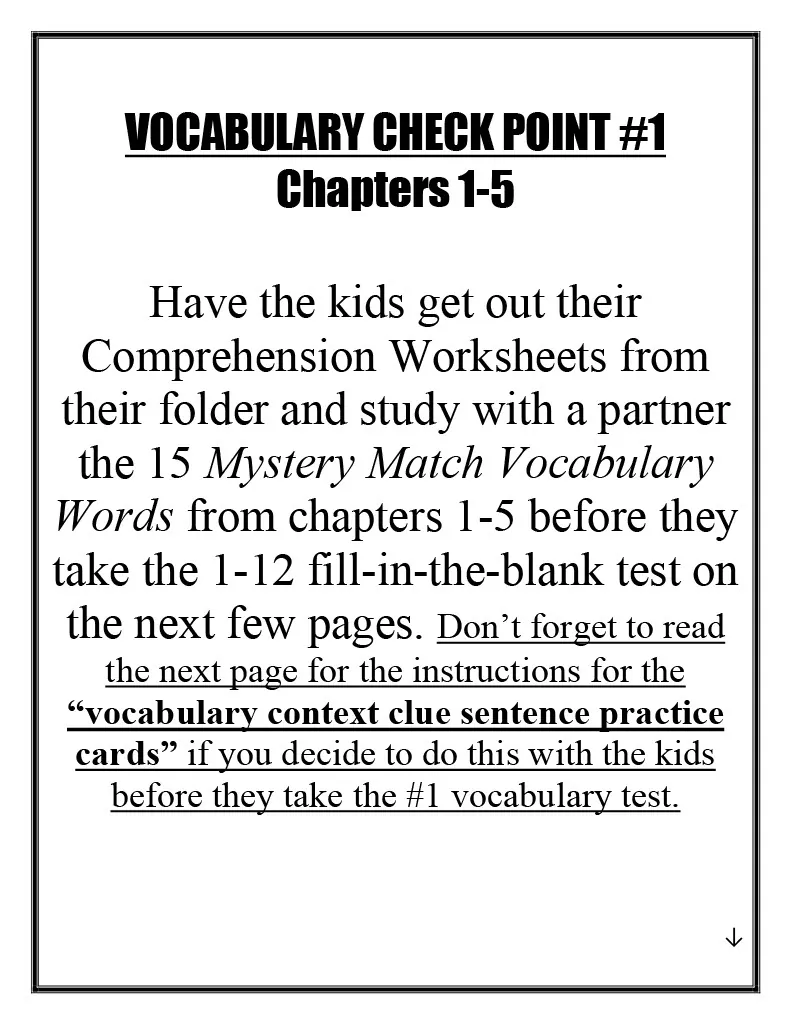
Give the vocabulary and spelling checkpoint tests after every 5 chapters, as the unit is structured, rather than only at the end, so vocabulary gaps surface while chapters are still fresh.

Skills covered
Chapter-level reading comprehension — students answer 10 page-referenced questions per chapter covering plot, character detail, and figurative language.
Context-clue vocabulary acquisition — students use definitions and letter blanks to identify each chapter's key vocabulary word.
Summary and main-idea writing — students isolate a chapter's setting, characters, motivations, and conflict, then compose a paragraph summary using a provided exemplar as a model.
Good to know
Questions teachers ask about this resource
How does this unit help students build vocabulary from the book itself?
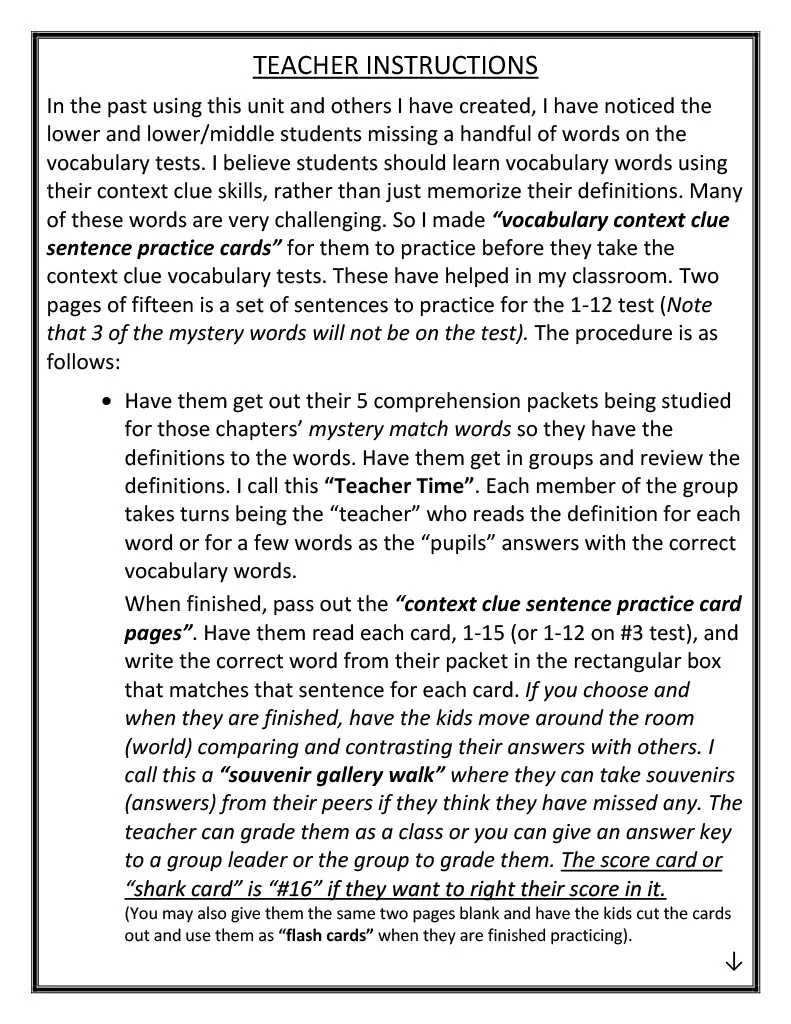
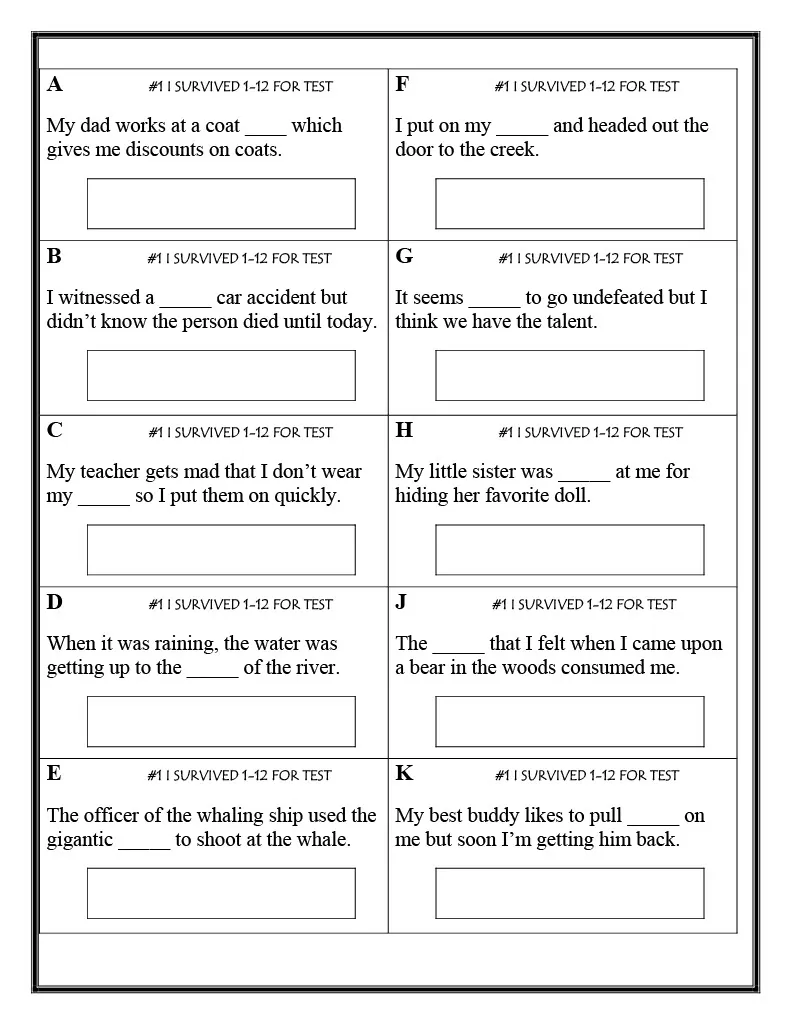
Each chapter has a Mystery Match puzzle where students use a definition and letter blanks to identify the book's own vocabulary word from that chapter, and every five chapters adds a fill-in-the-blank vocabulary test with practice sentence cards drawn from those same words.
What kind of writing does this unit have students practice beyond answering questions?
Students complete a full summary/main-idea packet that walks through identifying a chapter's setting, characters, and conflict before writing a paragraph summary, plus three reflection prompts scored against a rubric covering focus, idea development, sentence structure, and conventions.

No reviews yet
Downloaded this resource? Tell other teachers how it went.
Resource details
Concepts & topics
Core concepts
 Core concepts
novel study guide
reading comprehension
context clues
figurative language
vocabulary
 Topics
Explore more
Categories this resource belongs to
Explore related searches
More to explore
You may also like